
La Sibilla Libica: l’eleganza della posa
In ordine temporale, la Sibilla Libica, fu l’ultima veggente a cui misi mano, realizzandola in una scala tre volte maggiore della grandezza naturale.
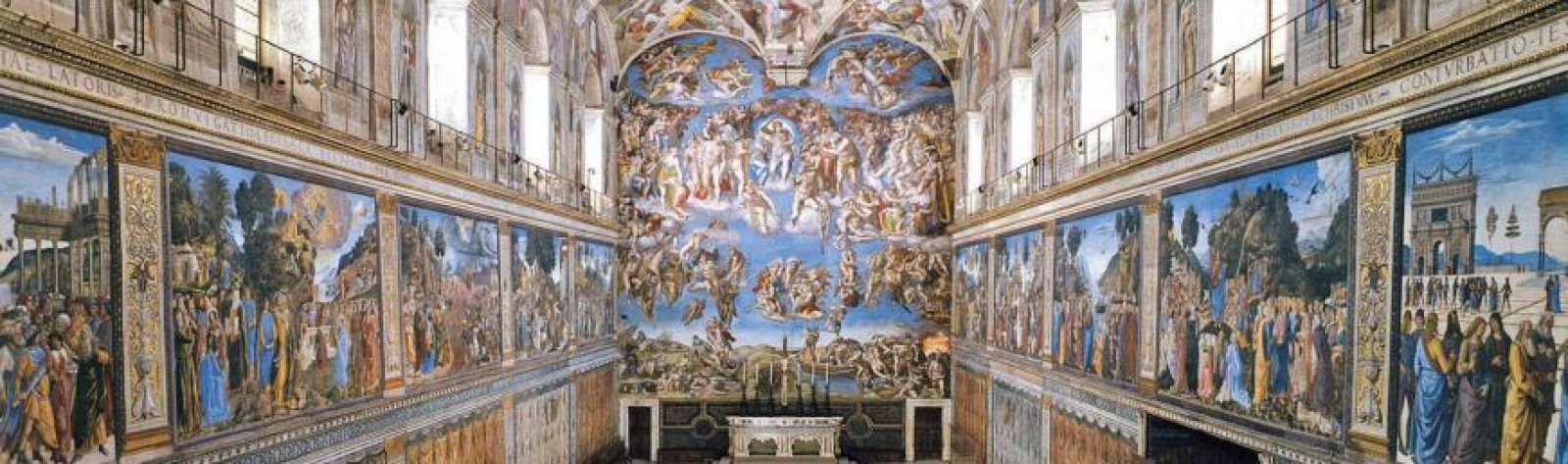
La potete trovare alzando lo sguardo verso la volta della Cappella, direzionando lo sguardo verso l’estremità nord est della della Sistina, nella nona campata campata contando a partire dalla porta d’accesso.
Vista da terra a così tanti metri di distanza non sembra possa essere così grande ma invece ha dimensioni colossali.
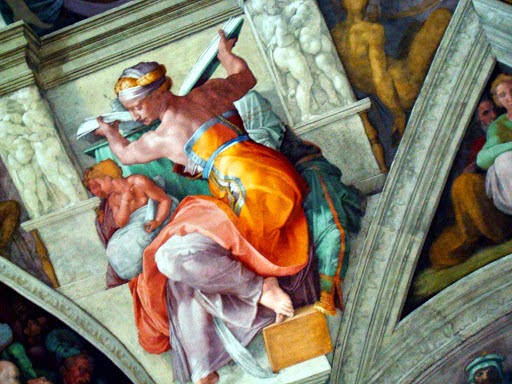
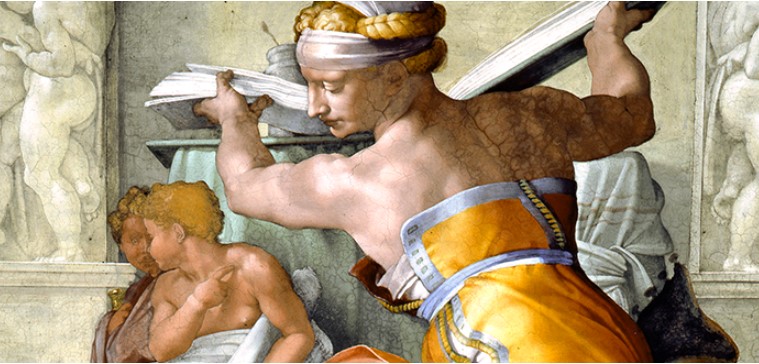
La sua posa azzardata in contrapposto è particolarmente efficace e, se aguzzate la vista, noterete che è una caratteristica che riguarda molte mie opere.
Il contrapposto infatti mi consentiva di dare dinamicità a sculture, disegni e dipinti evitando forzature.
La Sibilla Libica sembra stia prendendo o riponendo il libro che tiene fra le mani: è il libro degli oracoli. Quel gesto è stato interpretato dagli esperti come la chiusura del libro.
Essendo la veggente più prossima all’altare, potrebbe essere intenzionata a mettere via le sue profezie nel momento in cui vede avverarsi la sua veggenza relativa alla venuta del Messia.

La veggente è abbigliata con un abito giallo che si piega sulle gambe rivelando una sottoveste bianca. Ha il capo stretto in una fascia che lascia intravedere una raffinata acconciatura.
Il grande libro è appoggiato sopra un tavolo che sembra sia ricoperto con il soprabito che sembra essersi appena tolta. La veste non cela le forme ma anzi, le mette in evidenza lasciando scoperte le spalle muscolose.
Dietro di lei si nota la presenza dei due genietti che stanno discutendo fra di loro.
Studiai la posa e le forme della Sibilla Libica dal vero, prendendo a modello molto probabilmente un mio assistente. Esiste uno studio della sibilla molto particolareggiato, realizzato a gesso rosso, caratterizzato in questo caso da una tonalità quasi violacea.
Sapete, questo tipo di medium era perfetto per gli studi dei corpi: aveva una resa impeccabile con con i dettagli anatomici.
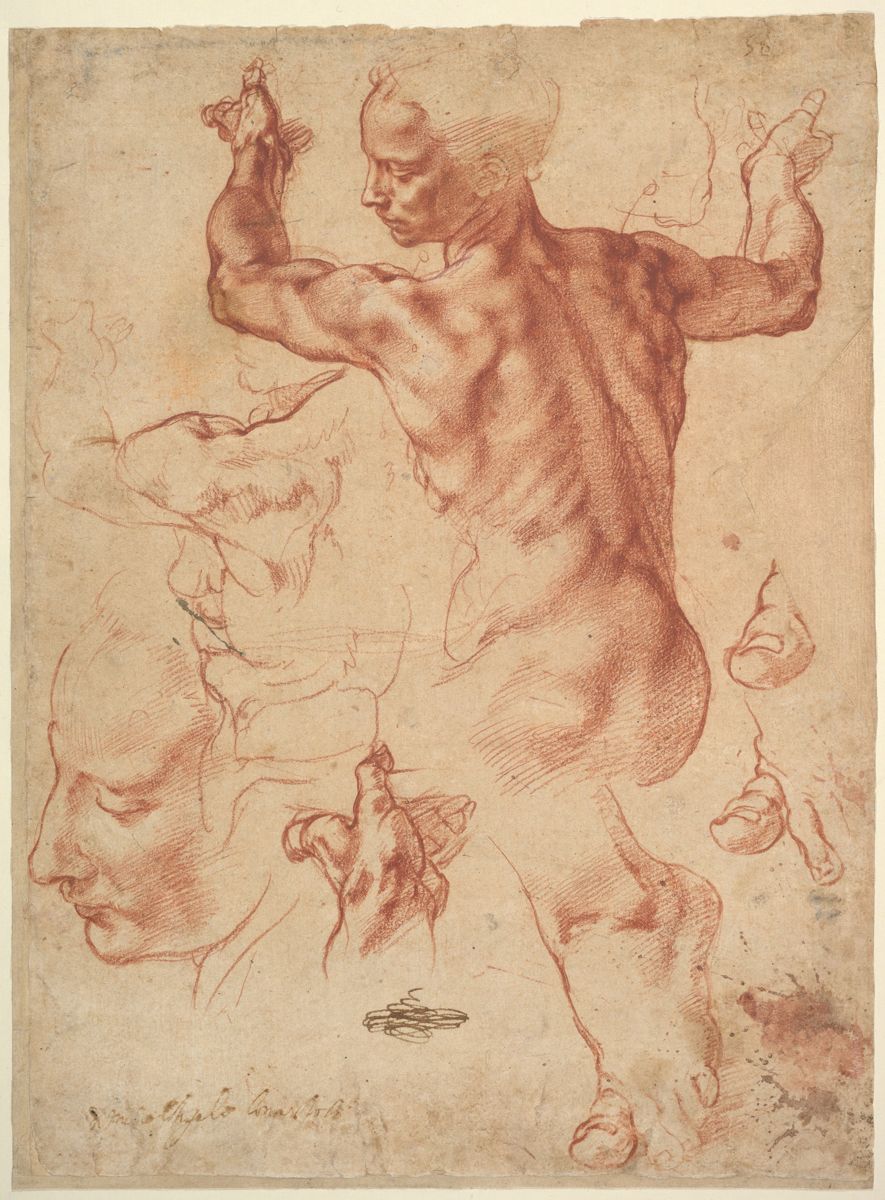
Il foglio fu acquistato dal Metropolitan Museum of Art l’8 agosto del 1924, grazie alle trattative avviate dal pittore John Singer Sergent con la vedova di Aureliano de Beruete che ne era in possesso.
Per il momento il vostro Michelangelo Buonarroti vi saluta dandovi appuntamento ai prossimi post e sui social.
The Libyan Sibyl: the elegance of the pose
In chronological order, the Libyan Sibyl was the last seer I worked on, making her on a scale three times larger than life size. You can find it by looking up towards the vault of the Chapel, directing your gaze towards the north-east end of the Sistine Chapel, in the ninth span counting from the access door.
Seen from the ground so many meters away it doesn’t seem like it could be that big but instead it has colossal dimensions.
His risky contrapposto pose is particularly effective and if you sharpen your eyes, you will notice that it is a feature that affects many of my works. In fact, the contrapposto allowed me to give dynamism to sculptures, drawings and paintings, avoiding forcing.
The Libyan Sibyl seems to be taking or putting away the book she is holding in her hands: it is the book of oracles. That gesture was interpreted by experts as closing the book. Being the seer closest to the altar, she may be willing to put away her prophecies of hers the moment she sees her prophecies of hers concerning the coming of the Messiah come true.
The seer is dressed in a yellow dress that folds at both sides revealing a white petticoat. Her head is wrapped in a band that reveals a refined hairstyle.
The large book is placed on a table that seems to be covered with the overcoat that she seems to have just taken off. Her dress does not hide her shapes but rather, it highlights them leaving the muscular shoulders uncovered.
Behind her we notice the presence of the two little geniuses who are arguing with each other.
I studied the pose and shapes of the Libyan Sibyl from life, most likely taking one of my assistants as a model. There is a very detailed study of the sibyl, made in red plaster, characterized in this case by an almost purplish hue.
You know, this type of medium was perfect for studies of bodies: it had an impeccable rendering with anatomical details.
The sheet was acquired by the Metropolitan Museum of Art on 8 August 1924, thanks to the negotiations initiated by the painter John Singer Sergent with the widow of Aureliano de Beruete who was in possession of it.
For the moment, your Michelangelo Buonarroti greets you by making an appointment for the next posts and on social media.

Sostienici – Support Us
Se questo blog ti piace e ti appassiona, puoi aiutarci a farlo crescere sempre più sostenendoci in modo concreto condividendo i post, seguendo le pagine social e con un contributo che ci aiuta ad andare avanti con il nostro lavoro di divulgazione. . ENGLISH: If you like and are passionate about this blog, you can help us make it grow more and more by supporting us in a concrete way by sharing posts, following social pages and with a contribution that helps us to move forward with our dissemination work.
10,00 €
-
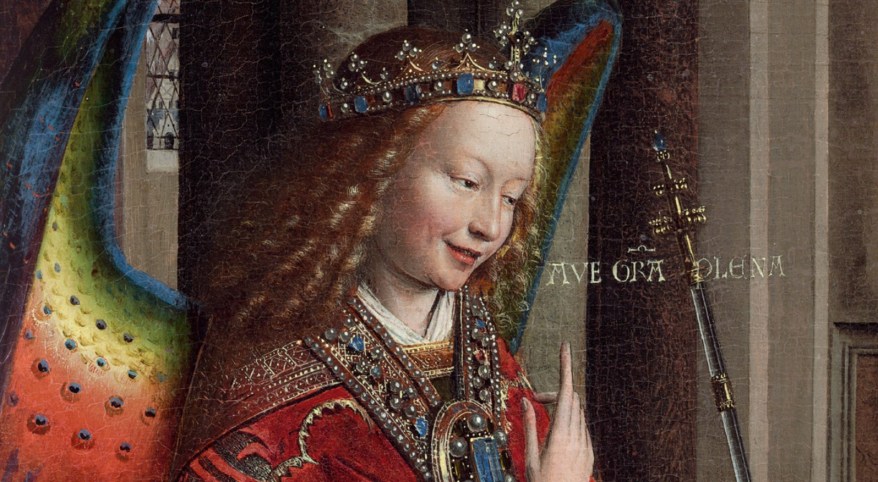
25 marzo: l’Annunciazione di Jan van Eyck, capolavoro fiammingo
🇮🇹Nel giorno del 25 marzo, tradizionalmente legato al mistero dell’Annunciazione, lo sguardo si posa su uno dei capolavori più raffinati della pittura nordica: l’Annunciazione di Jan van Eyck… 🇬🇧On March 25, traditionally linked to the mystery of the Annunciation, our gaze falls on one of the finest masterpieces of Northern European painting: The Annunciation by…
-

Van Dyck a Genova: la mostra che emoziona tra luce, mirabili dettagli e sguardi indimenticabili
🇮🇹Ho avuto modo di visitare la mostra “Van Dyck l’Europeo” a Genova: un viaggio emozionante tra Anversa, Genova e Londra attraverso dettagli, sguardi e capolavori senza tempo… 🇬🇧I had the opportunity to visit the exhibition “Van Dyck the European” in Genoa: an exciting journey between Antwerp, Genoa, and London through details, glances, and timeless masterpieces…
-
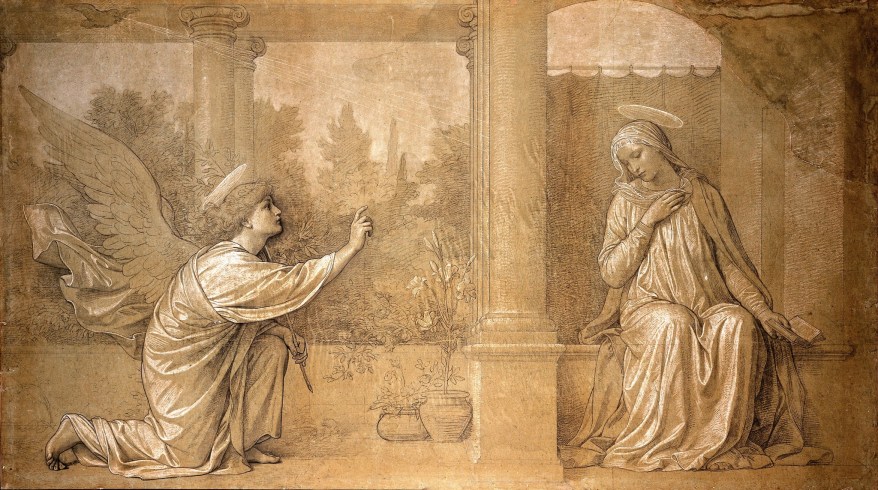
Quando il Capodanno cadeva il 25 marzo: l’Annunciazione di Alessandro Franchi
🇮🇹Il 25 marzo si celebra l’Annunciazione che per secoli, a Firenze e nel resto della Toscana, segnava l’inizio del nuovo anno. Tra le opere più suggestive che raffigurano l’Annunciazione, vi propongo il cartone realizzato da Alessandro Franchi intorno al 1884… 🇬🇧March 25th marks the celebration of the Annunciation, which for centuries marked the beginning of…
Condividi:


Questo sono io





sostienici

Sostienici – Support Us
Se questo blog ti piace e ti appassiona, puoi aiutarci a farlo crescere sempre più sostenendoci in modo concreto condividendo i post, seguendo le pagine social e con un contributo che ci aiuta ad andare avanti con il nostro lavoro di divulgazione. . ENGLISH: If you like and are passionate about this blog, you can help us make it grow more and more by supporting us in a concrete way by sharing posts, following social pages and with a contribution that helps us to move forward with our dissemination work.
€10,00


1 commento »