

Cristo Crocifisso col capo chino
Il disegno che vi propongo appartiene al gruppo delle ultime Crocifissioni che ideai. Questa, in particolare, la realizzai attorno al 1557 o poco dopo.
Tracciai la commovente scena a carboncino nero su carta ingiallita che, ahimè, oggi risulta danneggiata sia all’altezza della testa di Nostro Signore che nella parte più bassa.
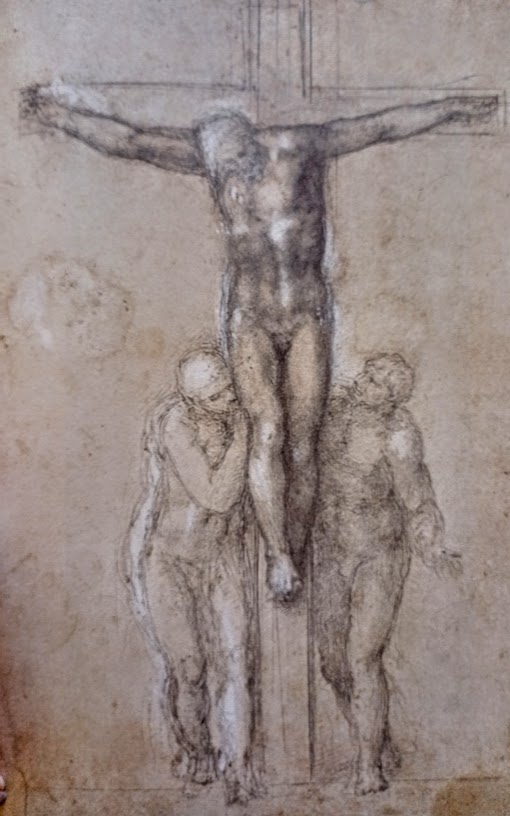
Il disegno presenta molti pentimenti. Se guardate bene le linee presenti, noterete che le braccia hanno subito un cambio di posizione: prima infatti apparivano un po’ più in basso e formavano quasi una T con il corpo.
Cambiai radicalmente anche la posizione della testa che all’inizio avevo disegnato di tre quarti girata verso sinistra mentre nel disegno finito è posizionata frontalmente con una vista di scorcio.
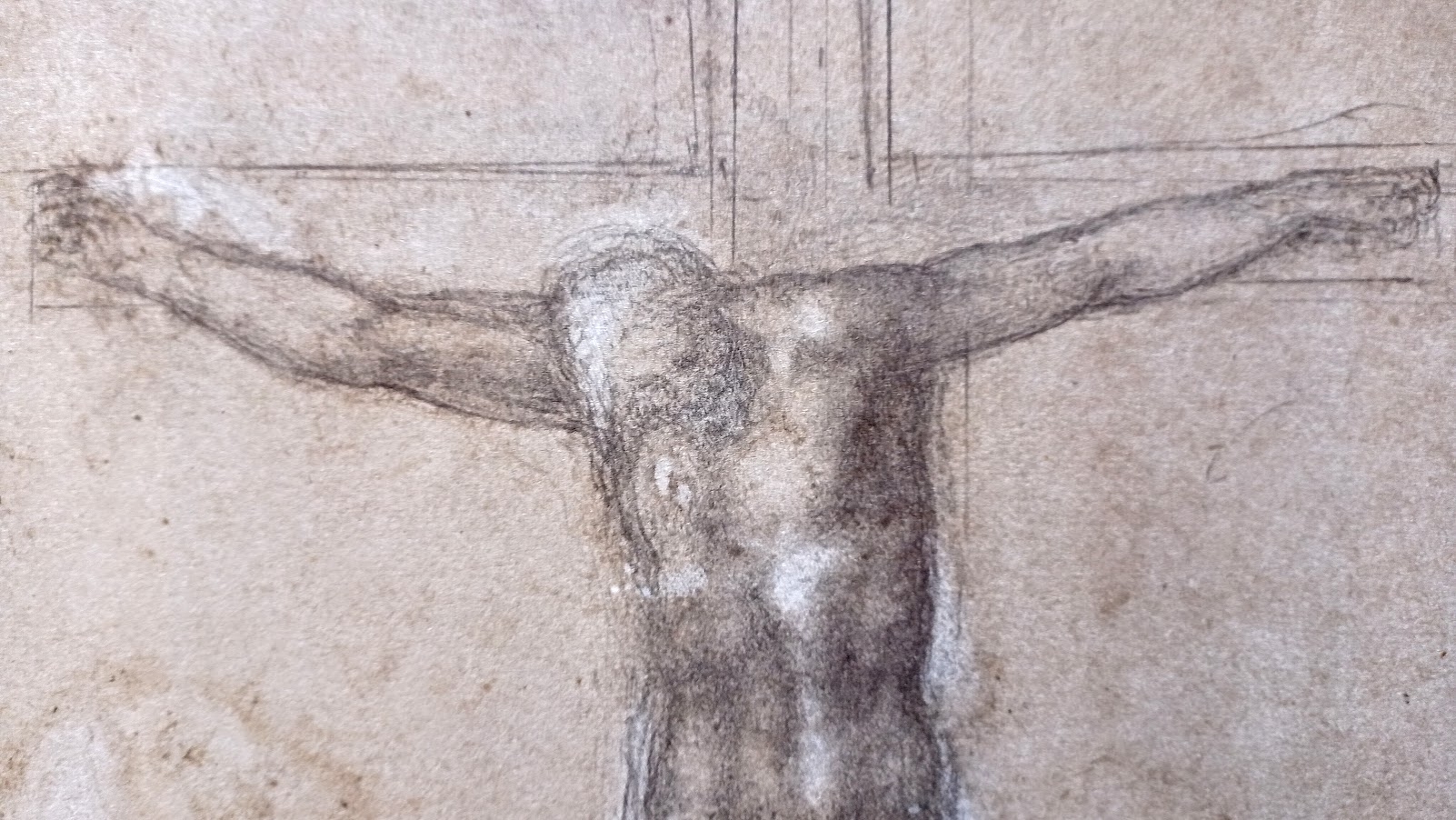
Mentre nelle precedenti figure, disegnate, scolpite e dipinte ai corpi davo un buon dinamismo con pose sempre serpentinate, in questo caso il contrapposto è appena accennato nel busto e nella gamba destra piegata.
Il Cristo qui appare molto più statico rispetto a quello che ideai per Vittoria Colonna.
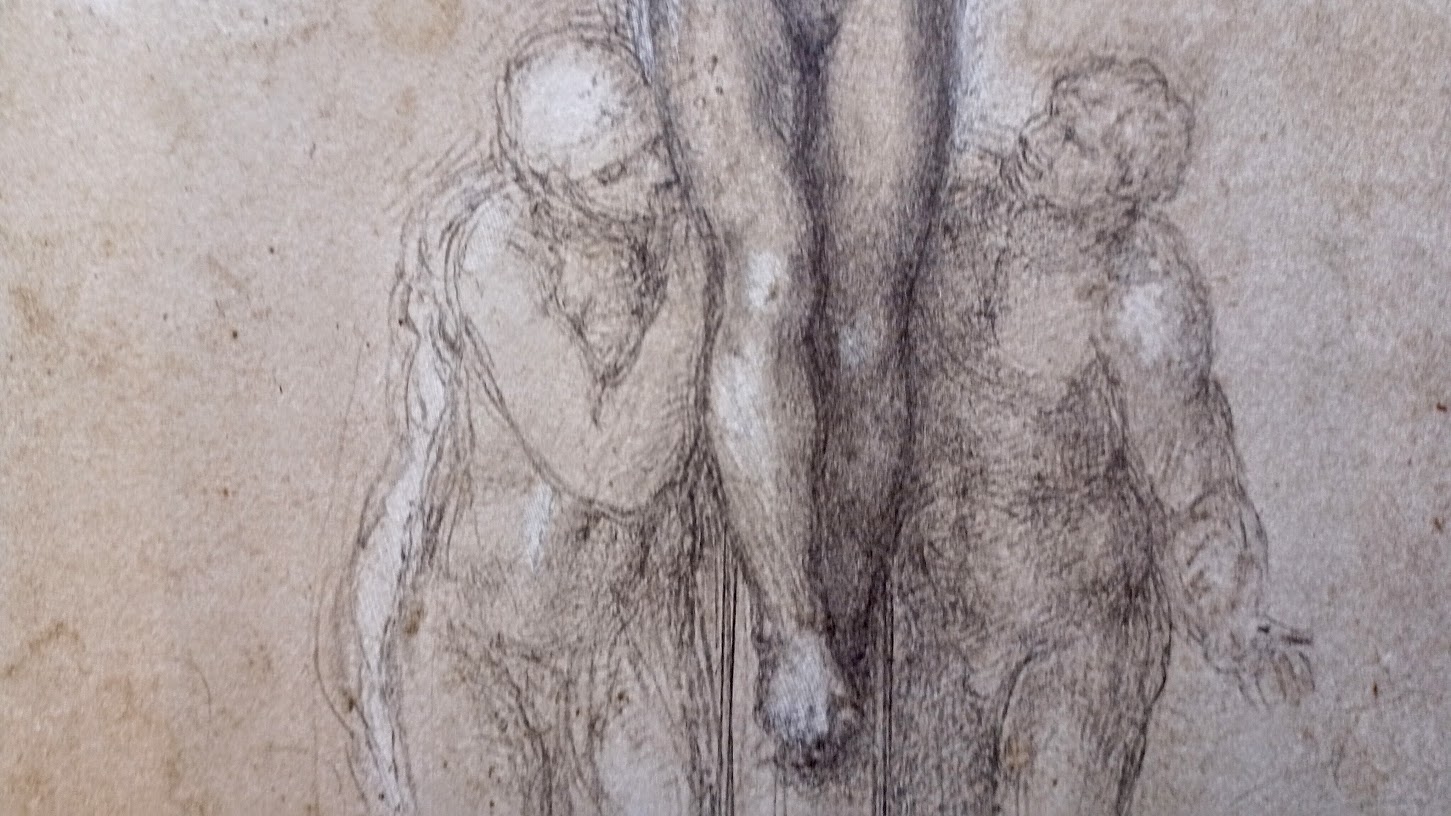
Ai due lati della Croce disegnai la Madonna e San Giovanni.
Il disegno in questione appartiene a una collezione privata londinese, ovvero la Count Antoine Seilern. Per il momento il vostro Michelangelo Buonarroti vi saluta dandovi appuntamento ai prossimi post e sui social.
Crucified Christ with bowed head
The drawing that I propose to you belongs to the group of the last Crucifixions that I created. This one, in particular, I made around 1557 or shortly after.
I traced the moving scene in black charcoal on yellowed paper which, alas, today is damaged both at the height of Our Lord’s head and in the lower part.
The drawing has many repentances. If you look closely at the lines present, you will notice that the arms have undergone a change of position: before, in fact, they appeared a little lower and almost formed a T with the body.
I also radically changed the position of the head which at the beginning I had drawn in three quarters turned to the left while in the finished drawing it is positioned frontally with a foreshortened view.
While in the previous figures, drawn, sculpted and painted, I gave the bodies a good dynamism with always serpentine poses, in this case the contrapposto is barely hinted at in the bust and bent right leg.
Christ here appears much more static than the one I conceived for Vittoria Colonna.
On the two sides of the Cross I drew the Madonna and Saint John.
The drawing in question belongs to a private collection in London, namely the Count Antoine Seilern. For the moment, your Michelangelo Buonarroti greets you by making an appointment for the next posts and on social media.

Sostienici – Support Us
Se questo blog ti piace e ti appassiona, puoi aiutarci a farlo crescere sempre più sostenendoci in modo concreto condividendo i post, seguendo le pagine social e con un contributo che ci aiuta ad andare avanti con il nostro lavoro di divulgazione. . ENGLISH: If you like and are passionate about this blog, you can help us make it grow more and more by supporting us in a concrete way by sharing posts, following social pages and with a contribution that helps us to move forward with our dissemination work.
10,00 €
-
Cena in Emmaus di Pontormo: il pane, il gatto e il cane alle Scuderie del Quirinale
La Cena in Emmaus di Pontormo nasconde dettagli sorprendenti: il significato del pane, i simboli e il mistero della Resurrezione. Scopri il capolavoro del 1525 in mostra alle Scuderie del Quirinale a Roma… 🇬🇧Pontormo’s *Supper at Emmaus* conceals surprising details: the significance of the bread, various symbols, and the mystery of the Resurrection. Discover this…
-
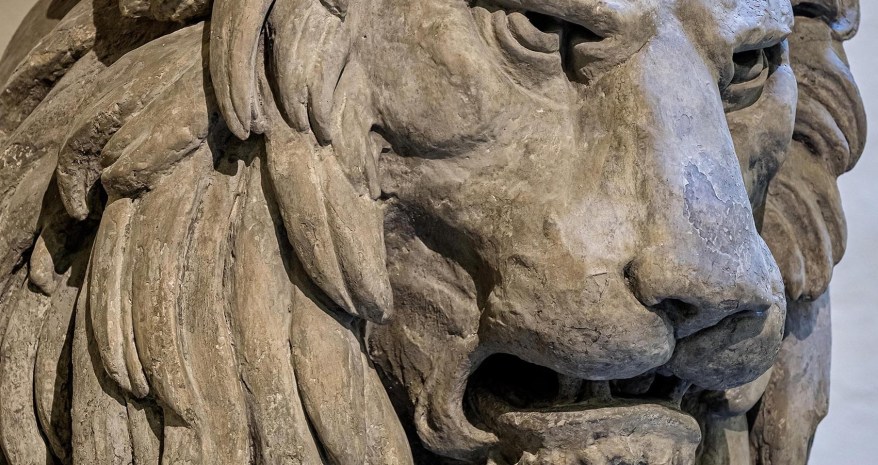
Palazzo Vecchio, il restauro svela la vera natura dei quattro leoni e il mistero della fontana greca
🇮🇹Restaurato il Cortile della Dogana di Palazzo Vecchio a Firenze: i quattro leoni sono calchi, una fontana conserva un’iscrizione greca da studiare e tornano a funzionare entrambe le fontane… 🇬🇧The Cortile della Dogana (Customs Courtyard) at Palazzo Vecchio in Florence has been restored: the four lions are casts, one fountain features a Greek inscription that…
-
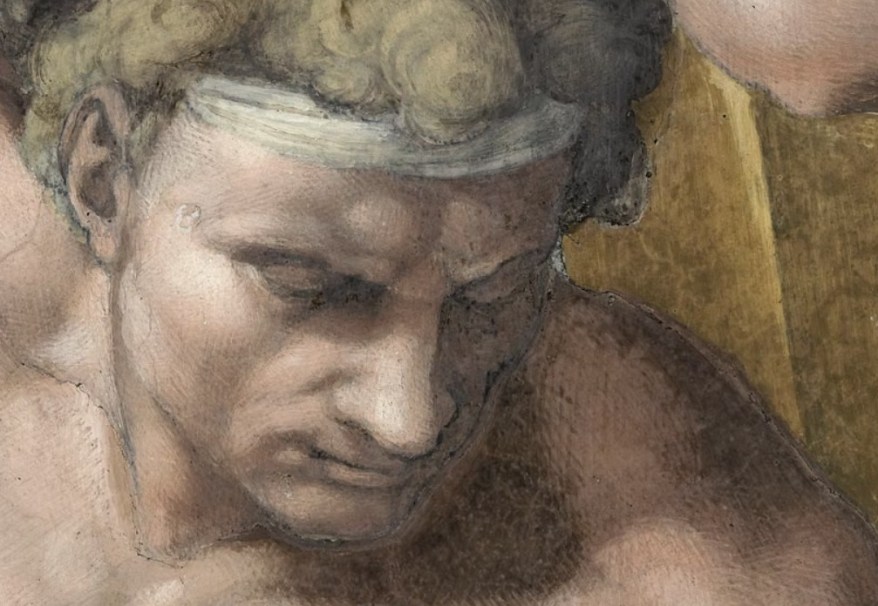
Disma, il buon ladrone nel Giudizio Universale: la misericordia e la giustizia divina
Nel Giudizio Universale della Cappella Sistina ci sono particolari che rischiano di passare inosservati, anche a chi ha avuto la fortuna di alzare gli occhi verso la mia grande parete. Tra i corpi che si sollevano, gli angeli che suonano le trombe e le anime che cercano di raggiungere il cielo, ci sono figure che…
Condividi:


Questo sono io




sostienici

Sostienici – Support Us
Se questo blog ti piace e ti appassiona, puoi aiutarci a farlo crescere sempre più sostenendoci in modo concreto condividendo i post, seguendo le pagine social e con un contributo che ci aiuta ad andare avanti con il nostro lavoro di divulgazione. . ENGLISH: If you like and are passionate about this blog, you can help us make it grow more and more by supporting us in a concrete way by sharing posts, following social pages and with a contribution that helps us to move forward with our dissemination work.
€10,00


