
Battaglia di Cascina: la scelta del soggetto fuori dal comune
La realizzazione del grande affresco della Battaglia di Cascina mi fu commissionata fra l’agosto e il settembre del 1504 dal gonfaloniere della Repubblica Fiorentina Pier Soderini.
Voleva mi mettessi al lavoro per raffigurare sulla parete Est della Sala del Gran Consiglio la vittoria dell’armata fiorentina sulle truppe pisane, avvenuta a Cascina il 28 luglio del 1364.
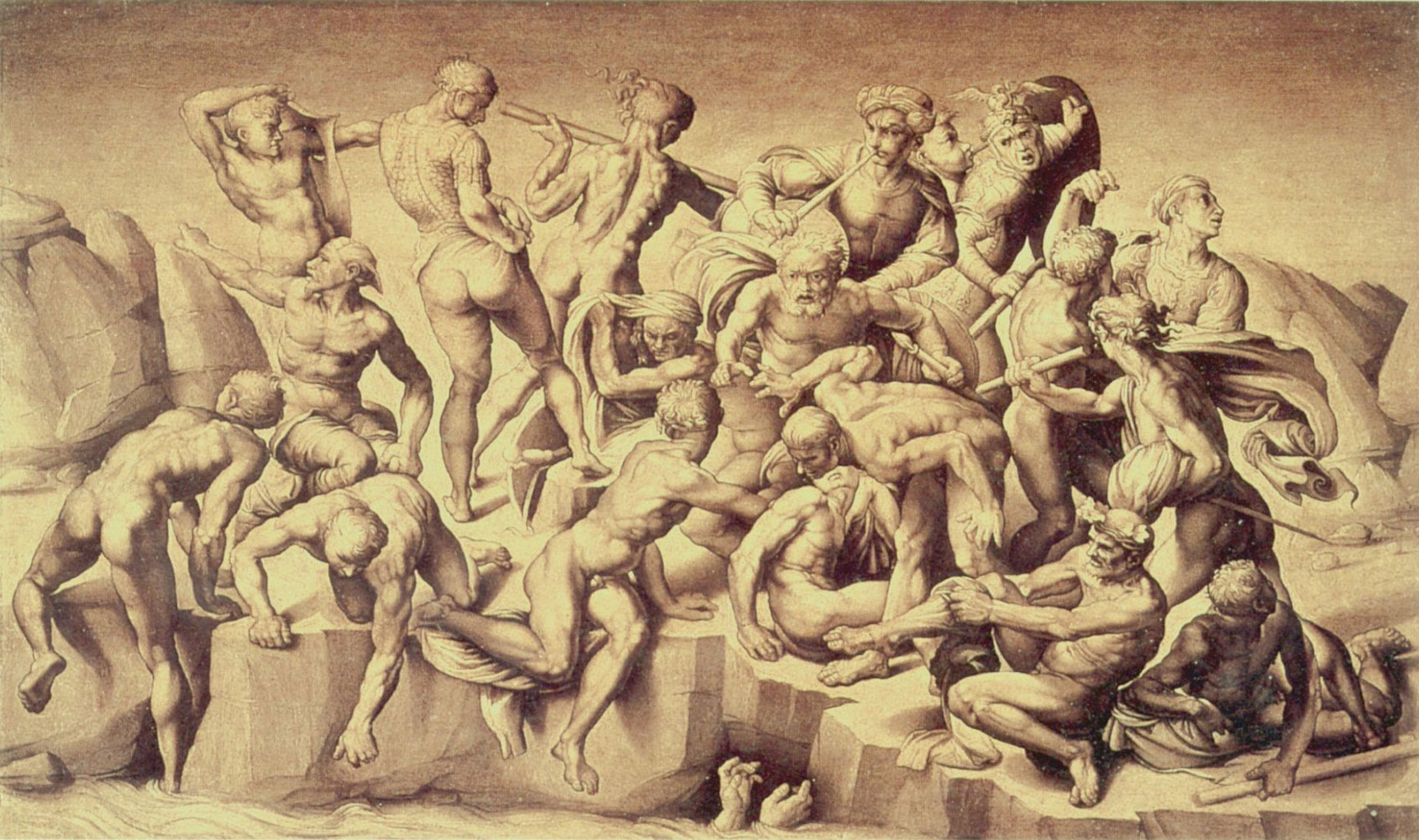
I pisani in quello scontro subirono danni notevoli e persero un numero importante di uomini. A me però non m’andava di mostrare le budella all’aria dei nemici e mostrare tutto quel sangue versato. Che senso avrebbe avuto qualcosa di così truce affrescato nella sala più importante del Palazzo della Signoria?

Il tema doveva per forza di cose essere attinente a quello scontro ma preferii di gran lunga spostare l’attenzione dallo scontro fra le due parti per rivolgerlo verso il momento in cui le truppe fiorentine s’erano decise a darsi una rinfrescata in Arno.
Vi immaginate il caldo che faceva a luglio e i soldati che sudavano anche l’anima sotto le corazze? Così quegli uomini iniziarono a spogliarsi e a mettersi a mollo per cercare un po’ di refrigerio in quella torrida estate.
Dopo poco però arrivò di corsa Manno Donati, uno dei combattenti più in vista gridando “Siamo perduti!”. Quello è il momento che scelsi di rappresentare, fra il drammatico e il farsesco.
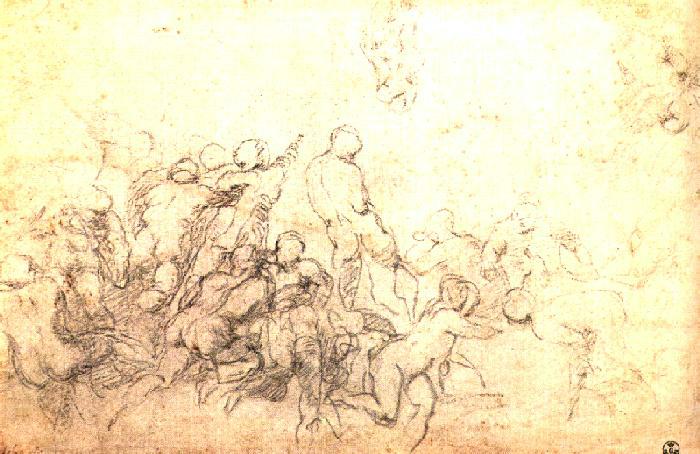
I soldati colti di sorpresa uscirono dall’acqua e iniziarono rapidamente a rivestirsi. Avete presente quando uscite dalla doccia e provate a mettervi i pantaloni con le gambe asciutte ma umide? Ecco, è una roba assai complicata. Immaginatevi questi poveri soldati disarmati e con il nemico che sta arrivando che provano a infilarsi calzamaglie varie e l’armatura senza aver avuto il tempo di asciugarsi.
Quel contorcersi di corpi che escono dall’acqua e tentano goffamente di rivestirsi fu per me un momento straordinario da rappresentare. Non solo a dimensione più umana dei vari sbudellamenti in battaglia ma anche perfetto per dipingere i corpi in tutti gli atteggiamenti possibili.
Nemmeno mi preoccupai di pensare di mettere sullo sfondo le truppe pisane in arrivo: era chiaro che i soldati in primo piano avessero fretta di indossare le armature e riprendere in mano le armi per combattere i nemici in procinto di arrivare.
Per il momento il vostro Michelangelo Buonarroti vi saluta dandovi appuntamento ai prossimi post e sui social.
Battle of Cascina: the choice of the subject out of the ordinary
The realization of the large fresco of the Battle of Cascina was commissioned to me between August and September 1504 by the gonfalonier of the Florentine Republic Pier Soderini.
He wanted me to get to work to depict on the east wall of the Sala del Gran Consiglio the victory of the Florentine army over the Pisan troops, which took place in Cascina on July 28, 1364.
The Pisans in that clash suffered considerable damage and lost an important number of men. But I didn’t want to show the guts to the air of the enemies and show all that shed blood. What sense would something so grim frescoed in the most important room of the Palazzo della Signoria have had?
The theme had to necessarily be related to that clash but I much preferred to shift attention from the clash between the two sides to turn it towards the moment when the Florentine troops had decided to freshen up in the Arno.
Can you imagine the heat it was in July and the soldiers sweating their souls under their armor? So those men began to undress and soak to find some refreshment in that hot summer.
After a while, however, Manno Donati came running, one of the most prominent fighters shouting “We are lost!”. That is the moment I chose to represent, between the dramatic and the farcical.
The soldiers taken by surprise came out of the water and quickly began to get dressed. You know when you come out of the shower and try to put on your pants with dry but wet legs? Here, it’s a very complicated stuff. Imagine these poor unarmed soldiers and the enemy who is arriving trying to put on various tights and armor without having had time to dry.
That writhing of bodies coming out of the water and awkwardly trying to get dressed was an extraordinary moment for me to represent. Not only in a more human dimension of the various guts in battle but also perfect for painting bodies in all possible attitudes.
I didn’t even bother to think about putting the incoming Pisan troops in the background: it was clear that the soldiers in the foreground were in a hurry to put on their armor and pick up their weapons again to fight the approaching enemies.
For the moment, your Michelangelo Buonarroti greets you by giving you an appointment at the next posts and on social networks.

Sostienici – Support Us
Se questo blog ti piace e ti appassiona, puoi aiutarci a farlo crescere sempre più sostenendoci in modo concreto condividendo i post, seguendo le pagine social e con un contributo che ci aiuta ad andare avanti con il nostro lavoro di divulgazione. . ENGLISH: If you like and are passionate about this blog, you can help us make it grow more and more by supporting us in a concrete way by sharing posts, following social pages and with a contribution that helps us to move forward with our dissemination work.
5,00 €
-
Festival La Versiliana 2026: tra musica, teatro e grandi narrazioni
Dal 17 luglio al 23 agosto 2026, la pineta di Marina di Pietrasanta ospiterà la 47ª edizione del Festival La Versiliana. Una kermesse aperta a tutti nella quale linguaggi diversi dialogano tra loro in un equilibrio tra tradizione e contemporaneità.
-
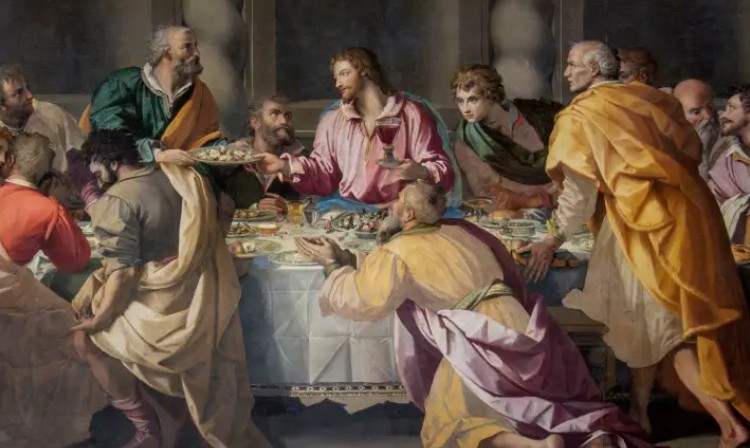
Giovedì Santo: l’Ultima Cena di Allori che pochi conoscono a Firenze
🇮🇹Nel cuore di Museo di Santa Maria Novella, a Firenze, si conserva una delle interpretazioni più affascinanti e meno note dell’Ultima Cena: quella realizzata da Alessandro Allori nel 1584… 🇬🇧In the heart of the Santa Maria Novella Museum in Florence, one of the most fascinating and least-known interpretations of the Last Supper is preserved: the…
-
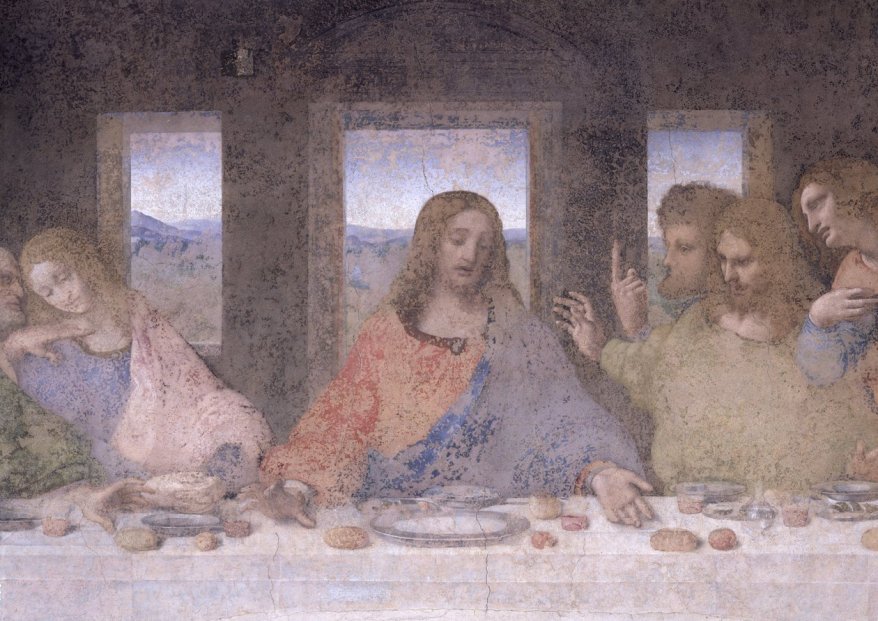
Cenacolo di Leonardo: i dettagli che raccontano il tradimento
🇮🇹Nel Cenacolo di Leonardo da Vinci, custodito a Santa Maria delle Grazie, Cristo annuncia il tradimento e il tempo si ferma… 🇬🇧In Leonardo da Vinci’s Last Supper, housed in Santa Maria delle Grazie, Christ announces the betrayal and time stands still…
Condividi:


Questo sono io





sostienici

Sostienici – Support Us
Se questo blog ti piace e ti appassiona, puoi aiutarci a farlo crescere sempre più sostenendoci in modo concreto condividendo i post, seguendo le pagine social e con un contributo che ci aiuta ad andare avanti con il nostro lavoro di divulgazione. . ENGLISH: If you like and are passionate about this blog, you can help us make it grow more and more by supporting us in a concrete way by sharing posts, following social pages and with a contribution that helps us to move forward with our dissemination work.
€10,00


1 commento »