

Le particolarità del Tondo Pitti del Bargello
Il Tondo Pitti , oggi conservato al Museo Nazionale del Bargello, mi fu commissionato da Bartolomeo di Silvestro di Roberto Pitti, operaio di Santa Maria del Fiore.
Per dar forma a questo tondo scelsi il candido marmo di Carrara e iniziai a lavorarci fra il 1503 e il 1505. La Madonna seduta su una pietra a forma di cubo occupa la parte centrale dell’opera e con il capo velato sfora la cornice.

Gesù Bambino se ne sta in piedi fra le gambe della Madre. Sostiene il capo con la mano destra, appoggiando il braccio proprio sopra il libro aperto tenuto dalla Madonna.
Alle spalle della Vergine Madre scolpii in secondo piano il San Giovannino, patrono di Firenze. Come un po’ tutte le mie opere, la Madonna non guarda il Figlio ma ha uno sguardo assente e turbato dal destino che lo attenderà.

Guardate il capo della Madonna con i capelli che si intravedono raccolti sotto un velo e con quella fascia che le cinge la testa, decorata con un cherubino. Sembra proprio che quel piccolo angioletto stia a significare il dono profetico della Vergine che riesce a vedere la Passione di Cristo prima che accada.
Anche la sonnolenza che pare mostrare il Bambino non è casuale ma anticipa la morte.

Osservando a distanza ravvicinata l’opera si notano i diversi segni lasciati dagli strumenti che adoperai per scolpire il marmo.
Sullo sfondo a sinistra si vedono i solchi profondi e paralleli della subbia mentre su braccio destro della Madonna, sul libro e in altre zone si notano i segni incrociati delle gradine a più denti.

Quando partii alla volta di Roma nel 1505, ancora non avevo portato a termine l’opera che così rimase incompiuta. Bartolomeo Pitti passò a miglior vita qualche anno dopo e il Tondo passò nelle mani del su figliolo Miniato che nel frattempo s’era fatto frate. Miniato fece poi dono del Tondo Pitti a Luigi Guicciardini.

Per il momento il vostro Michelangelo Buonarroti vi saluta dandovi appuntamento ai prossimi post e sui social.
The particularities of the Tondo Pitti del Bargello
The Pitti Tondo, now kept in the Bargello National Museum, was commissioned to me by Bartolomeo di Silvestro di Roberto Pitti, a worker from Santa Maria del Fiore.
To give shape to this tondo, I chose white Carrara marble and started working on it between 1503 and 1505. The Madonna seated on a cube-shaped stone occupies the central part of the work and with her veiled head pierces the frame.
Baby Jesus is standing between the legs of the Mother. He supports his head with his right hand, leaning his arm right over the open book held by the Madonna.
Behind the Virgin Mother I sculpted San Giovannino, patron saint of Florence, in the background. Like all my works, Our Lady does not look at her Son but she has an absent gaze and is troubled by the destiny that awaits him.
Look at the head of the Madonna with her hair that can be seen gathered under a veil and with that band that surrounds her head, decorated with a cherub. It seems that that little angel stands to signify the prophetic gift of the Virgin that she can see the Passion of Christ before it happens.
Even the drowsiness that the Child seems to show is not accidental but anticipates death.
Observing the work at close range, you can see the different marks left by the tools you used to carve the marble.
In the background on the left you can see the deep and parallel furrows of the subbia while on the right arm of the Madonna, on the book and in other areas you can see the crossed marks of the multi-toothed steps.
When I left for Rome in 1505, I had not yet completed the work which thus remained unfinished. Bartolomeo Pitti passed away a few years later and the Tondo passed into the hands of his son Miniato who in the meantime had become a friar. Miniato then made a gift of the Pitti Tondo to Luigi Guicciardini.
For the moment, your Michelangelo Buonarroti greets you by giving you an appointment at the next posts and on social networks.

Sostienici – Support Us
Se questo blog ti piace e ti appassiona, puoi aiutarci a farlo crescere sempre più sostenendoci in modo concreto condividendo i post, seguendo le pagine social e con un contributo che ci aiuta ad andare avanti con il nostro lavoro di divulgazione. . ENGLISH: If you like and are passionate about this blog, you can help us make it grow more and more by supporting us in a concrete way by sharing posts, following social pages and with a contribution that helps us to move forward with our dissemination work.
5,00 €
-
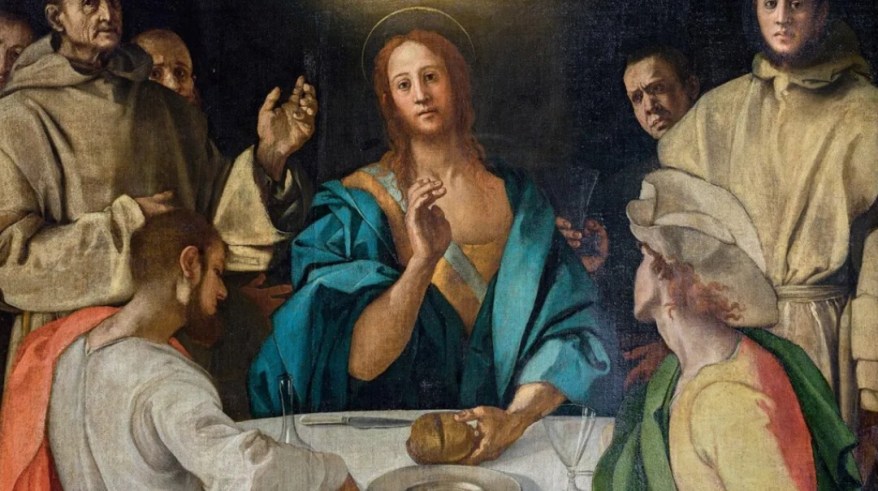
Cena in Emmaus di Pontormo: il pane, il gatto e il cane alle Scuderie del Quirinale
La Cena in Emmaus di Pontormo nasconde dettagli sorprendenti: il significato del pane, i simboli e il mistero della Resurrezione. Scopri il capolavoro del 1525 in mostra alle Scuderie del Quirinale a Roma… 🇬🇧Pontormo’s *Supper at Emmaus* conceals surprising details: the significance of the bread, various symbols, and the mystery of the Resurrection. Discover this…
-
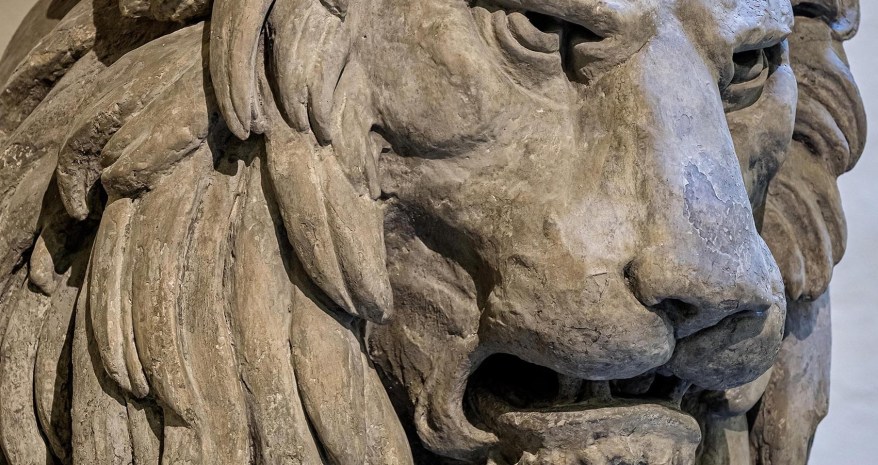
Palazzo Vecchio, il restauro svela la vera natura dei quattro leoni e il mistero della fontana greca
🇮🇹Restaurato il Cortile della Dogana di Palazzo Vecchio a Firenze: i quattro leoni sono calchi, una fontana conserva un’iscrizione greca da studiare e tornano a funzionare entrambe le fontane… 🇬🇧The Cortile della Dogana (Customs Courtyard) at Palazzo Vecchio in Florence has been restored: the four lions are casts, one fountain features a Greek inscription that…
-
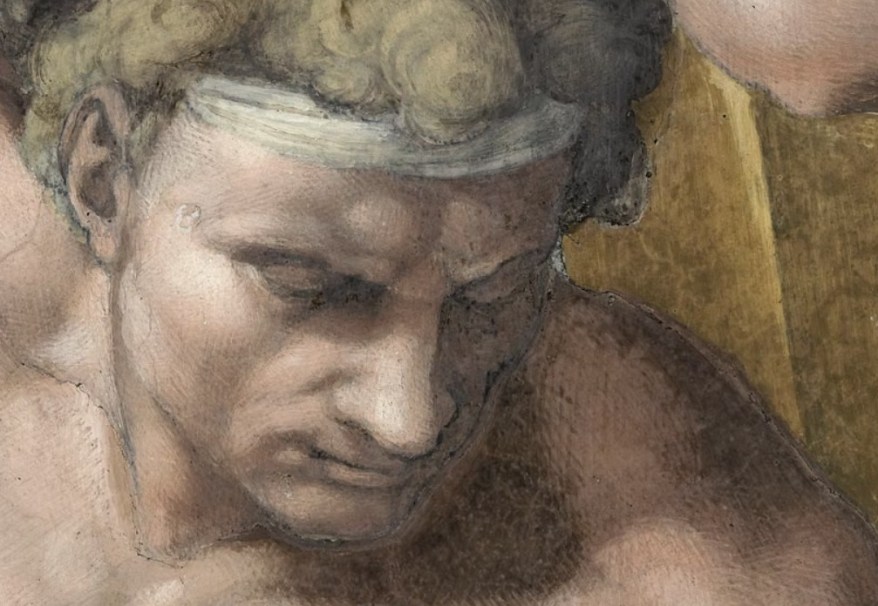
Disma, il buon ladrone nel Giudizio Universale: la misericordia e la giustizia divina
Nel Giudizio Universale della Cappella Sistina ci sono particolari che rischiano di passare inosservati, anche a chi ha avuto la fortuna di alzare gli occhi verso la mia grande parete. Tra i corpi che si sollevano, gli angeli che suonano le trombe e le anime che cercano di raggiungere il cielo, ci sono figure che…
Condividi:


Questo sono io




sostienici

Sostienici – Support Us
Se questo blog ti piace e ti appassiona, puoi aiutarci a farlo crescere sempre più sostenendoci in modo concreto condividendo i post, seguendo le pagine social e con un contributo che ci aiuta ad andare avanti con il nostro lavoro di divulgazione. . ENGLISH: If you like and are passionate about this blog, you can help us make it grow more and more by supporting us in a concrete way by sharing posts, following social pages and with a contribution that helps us to move forward with our dissemination work.
€10,00


