

La Pietà Rondanini: un’opera in fornace
La Pietà Rondanini si trovava nella mia casa di Macel de’ Corvi a Roma quando passai a miglior vita. L’avevo promessa anni prima al mio servitore Antonio del Francese da Casteldurante.
Antonio del Francese, poco dopo la mia morte, aveva aperto una fornace di ceramica a Roma che nel corso degli anni acquisì sempre più prestigio.

La Pietà Rondanini fu collocata proprio all’interno della fornace. Essere esposta a lungo tempo al calore presente all’interno di quel luogo e alle polveri terrose non gli fece di certo un gran ché bene.
Chissà, forse con quella presenza che mi riguardava da vicino voleva far conquistare ancor più prestigio alla sua bottega o semplicemente voleva in qualche modo tenere vicino il pensiero di me con quell’opera mentre lavorava.
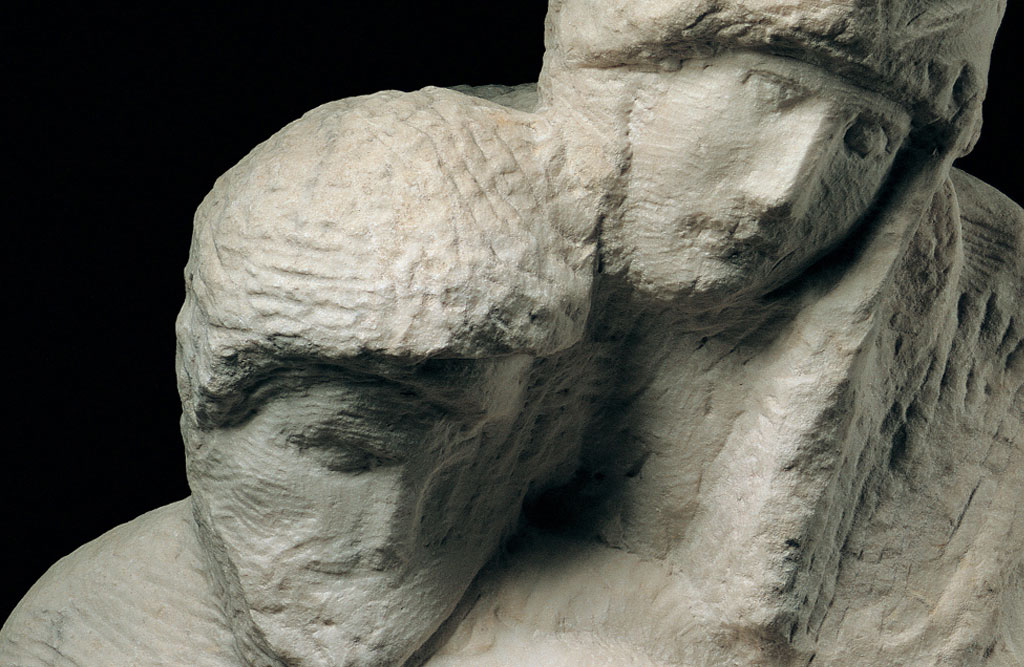
Adolfo Venturi scrisse sulla Pietà Rondanini:
“Ecco, nella Pietà Rondanini, sul breve prlinto circolare scavato dai puntellati, dai piedi di Cristo, ergersi due spettrali statue sovrapposte, strette l’una all’altra come se uno steso sudario le avvolgesse, curvate insieme, quasi asta di un solo stendardo ammainata per lutto.
Il Corpo di Cristo, spezzato dalla morte, piega verso il suolo, e la madre, nello stringerlo a sé, per sorreggerlo, vien meno: della terza figura solo rimane un frammento, un braccio teso a porger sostegno al cadavere, puntello di resistenza alla caduta mortale dei due corpi avvinghiati. L’incanalamento del gruppo esalta la terribile accasciante gravità del corpo di Cristo…“
Per il momento il vostro Michelangelo Buonarroti vi saluta dandovi appuntamento ai prossimi post e sui social.
La Pietà Rondanini: a sculpture in the furnace
The Pietà Rondanini was in my house in Macel de ‘Corvi in Rome when I passed away. I had promised it years earlier to my servant Antonio del Francese from Casteldurante.
Antonio del Francese, shortly after my death, had opened a ceramic kiln in Rome which over the years acquired more and more prestige.
The Pietà Rondanini was placed right inside the furnace. Being exposed for a long time to the heat present inside that place and the earthy dust certainly didn’t do him much good.
Who knows, maybe with that presence that closely concerned me he wanted to gain even more prestige in his shop or he simply wanted to somehow keep the thought of me close to that work while he worked.
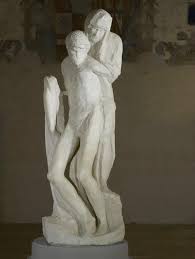
Adolfo Venturi wrote on the Rondanini Pietà:
“Here, in the Rondanini Pietà, on the short circular prlinto dug by the shores, from the feet of Christ, two ghostly superimposed statues stand, tightened one to the other as if a stretched shroud wrapped them, curved together, almost the pole of a single banner lowered for mourning.
The Body of Christ, broken by death, bends towards the ground, and the mother, in holding it to herself, to support it, fails: of the third figure only a fragment remains, an arm stretched to offer support to the corpse, a prop of resistance to the fatal fall of the two bodies entwined. The channeling of the group enhances the terrible overwhelming gravity of the body of Christ … “
For the moment, your Michelangelo Buonarroti greets you by giving you an appointment at the next posts and on social networks.

Sostienici – Support Us
Se questo blog ti piace e ti appassiona, puoi aiutarci a farlo crescere sempre più sostenendoci in modo concreto condividendo i post, seguendo le pagine social e con un contributo che ci aiuta ad andare avanti con il nostro lavoro di divulgazione. . ENGLISH: If you like and are passionate about this blog, you can help us make it grow more and more by supporting us in a concrete way by sharing posts, following social pages and with a contribution that helps us to move forward with our dissemination work.
5,00 €
-
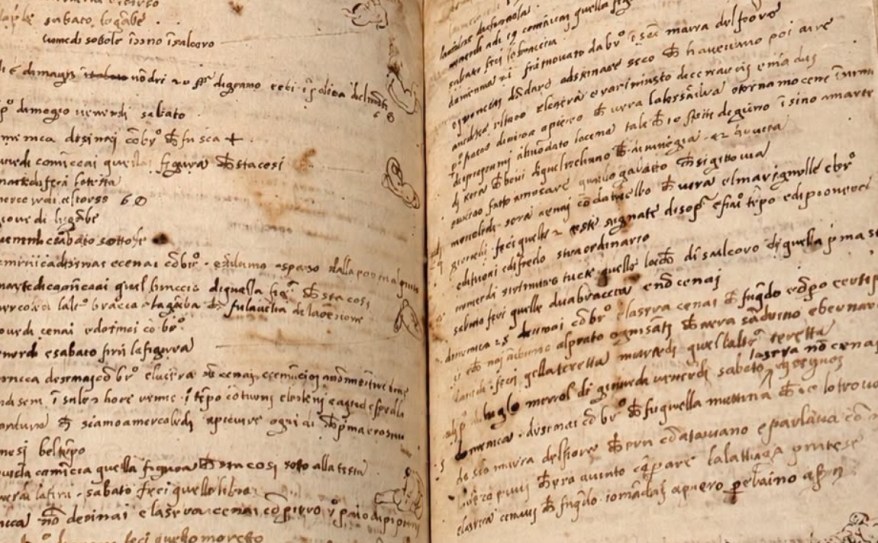
Pontormo, il diario segreto del pittore: malattie, pasti e piccoli disegni che raccontano la sua vita
🇮🇹Il diario di Pontormo: malattie, pasti, amicizie e piccoli disegni raccontano la vita privata del pittore e il lavoro perduto a San Lorenzo… 🇬🇧Pontormo’s diary—with its accounts of illnesses, meals, friendships, and small sketches—reveals the painter’s private life and his lost work at San Lorenzo…
-
25 ottobre 1815: le opere rubate da Napoleone tornarono in Italia, ma 248 rimasero in Francia
🇮🇹Il 25 ottobre 1815 partì da Parigi un convoglio di 41 carri trainati da circa 200 cavalli, con 249 opere d’arte destinate a tornare in Italia… 🇬🇧On October 25, 1815, a convoy of 41 wagons, pulled by approximately 200 horses, departed from Paris, carrying 249 works of art destined to return to Italy…
-

Più forte della morte
🇮🇹Può l’amore superare la morte? In un madrigale sorprendente, il desiderio di chi amo arriva fino all’Inferno e al Paradiso… 🇬🇧Can love transcend death? In a striking madrigal, the longing for the one I love reaches as far as Hell and Paradise…
Condividi:


Questo sono io




sostienici

Sostienici – Support Us
Se questo blog ti piace e ti appassiona, puoi aiutarci a farlo crescere sempre più sostenendoci in modo concreto condividendo i post, seguendo le pagine social e con un contributo che ci aiuta ad andare avanti con il nostro lavoro di divulgazione. . ENGLISH: If you like and are passionate about this blog, you can help us make it grow more and more by supporting us in a concrete way by sharing posts, following social pages and with a contribution that helps us to move forward with our dissemination work.
€10,00


1 commento »