

Atelier Mitoraj a Pietrasanta: il mito di Icaro tra arte, teatro e musica
Il dipinto Ikaro Cielo Bianco di Igor Mitoraj ha ispirato Icaro Infinito, la pièce teatrale presentata in prima nazionale all’Atelier Mitoraj di Pietrasanta. Sabato 24 ottobre, la seconda edizione di Mitoraj, Mito e Musica ha riunito pittura, teatro e musica in un omaggio allo scultore di origini polacche, a dodici anni dalla sua scomparsa.
Il mito di Icaro, con il suo desiderio di libertà e la tensione verso l’impossibile, è stato il filo conduttore della serata, trasformando uno dei temi cari all’immaginario di Mitoraj in un’esperienza artistica capace di intrecciare linguaggi differenti.
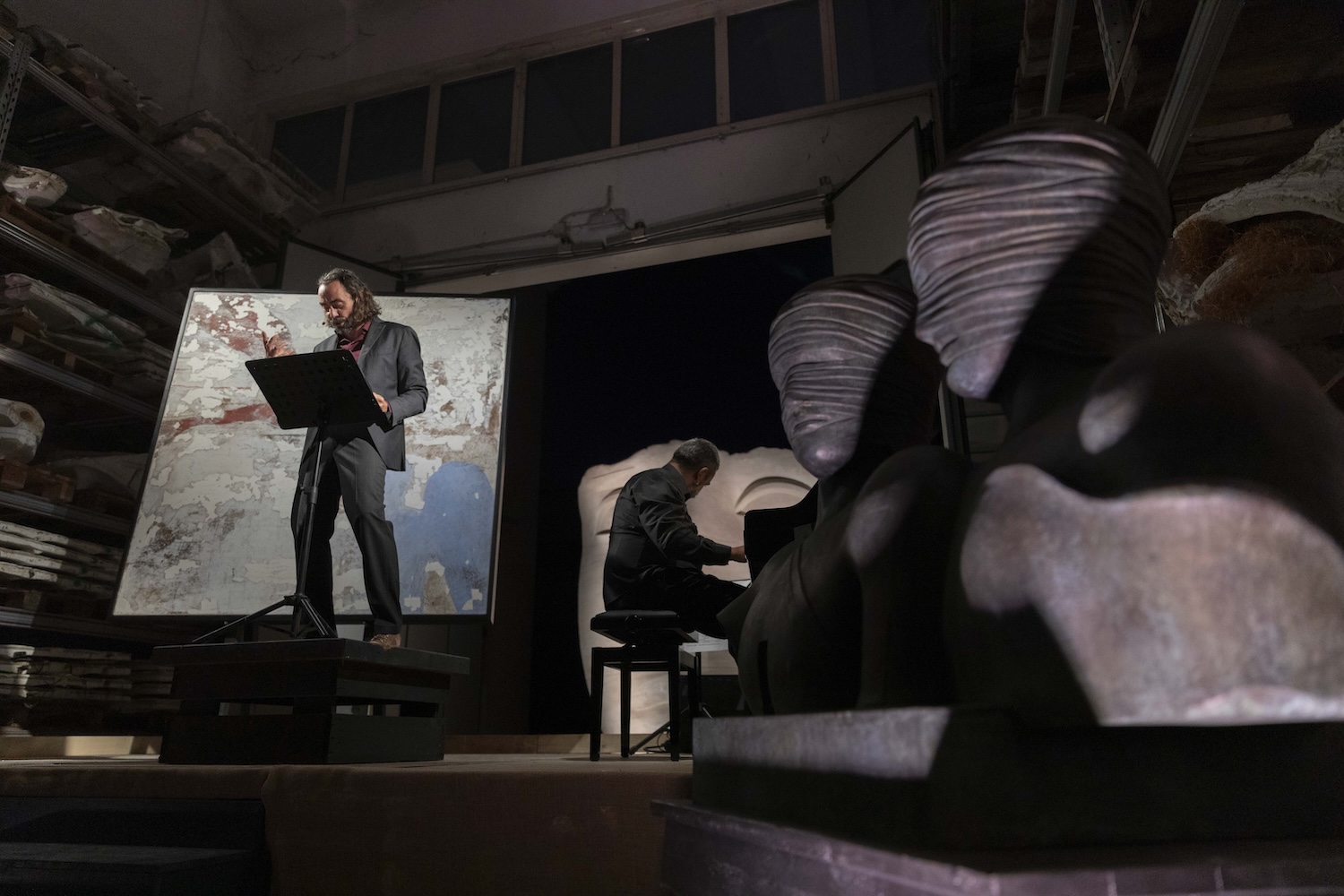
All’Atelier Mitoraj il dipinto diventa teatro
Protagonista dell’iniziativa è stato Ikaro Cielo Bianco, opera del 2014 realizzata con tecnica a encausto e acrilico su tela, rientrata dalla Puglia dopo la mostra Barocco e neobarocco, da Rubens a Mitoraj.
Dal dipinto è nata Icaro Infinito, pièce di e con Giuseppe Ciciriello, prodotta da Scintilla e Atelier Mitoraj in partnership con Fondazione Arte Bvlg. Le musiche originali per pianoforte, composte ed eseguite da Mirko Lodedo su un’idea di Gianluca Zurlo, hanno accompagnato la narrazione, creando un dialogo tra parola, immagine e suono.
«Per me Icaro è il mito di chi osa tendere all’eterno, all’infinito», ha raccontato Ciciriello. L’autore ha voluto superare la tradizionale interpretazione del giovane come simbolo di fallimento, mettendo al centro il coraggio di inseguire i propri desideri e di oltrepassare i limiti della paura.
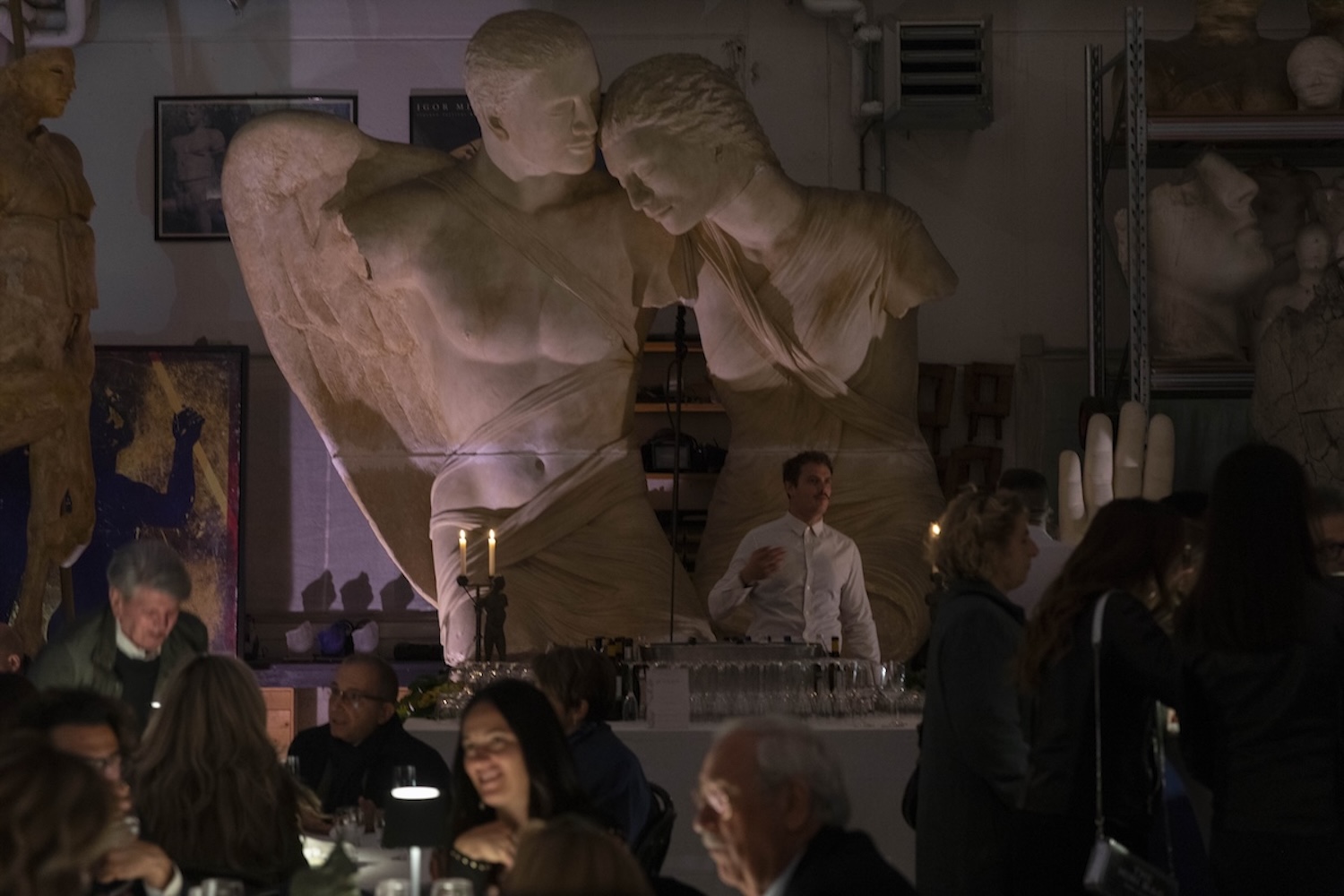
Tra gli stampi e le sculture monumentali di Mitoraj
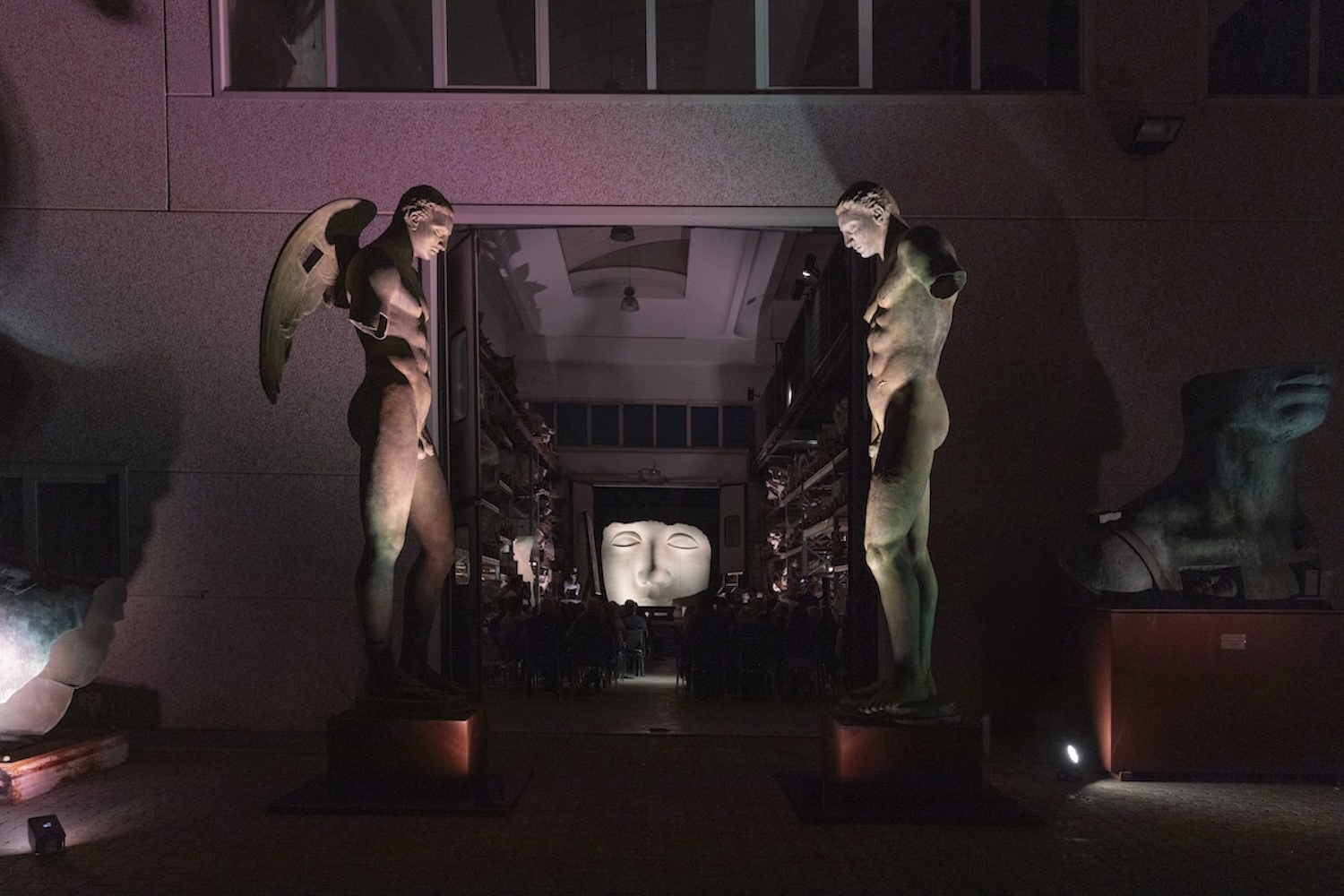
A rendere particolare l’appuntamento è stata anche la location. Il palcoscenico è stato allestito nel magazzino dell’Atelier, circondato dagli stampi e dai negativi utilizzati per realizzare in fonderia i bronzi dello scultore.
Due sculture monumentali di Icaro accoglievano il pubblico, mentre alle spalle della scena si stagliava una grande Dea Roma. Un ambiente che ha permesso di entrare nel cuore del processo creativo di Mitoraj, dove la materia si trasforma fino a diventare opera d’arte.
Come ha spiegato Luca Pizzi, direttore dell’Atelier e scenografo della pièce, proprio questo spazio rappresenta il luogo ideale per raccontare il Maestro attraverso una tela diventata teatro, circondata dagli stampi di alcune delle sue opere più importanti.
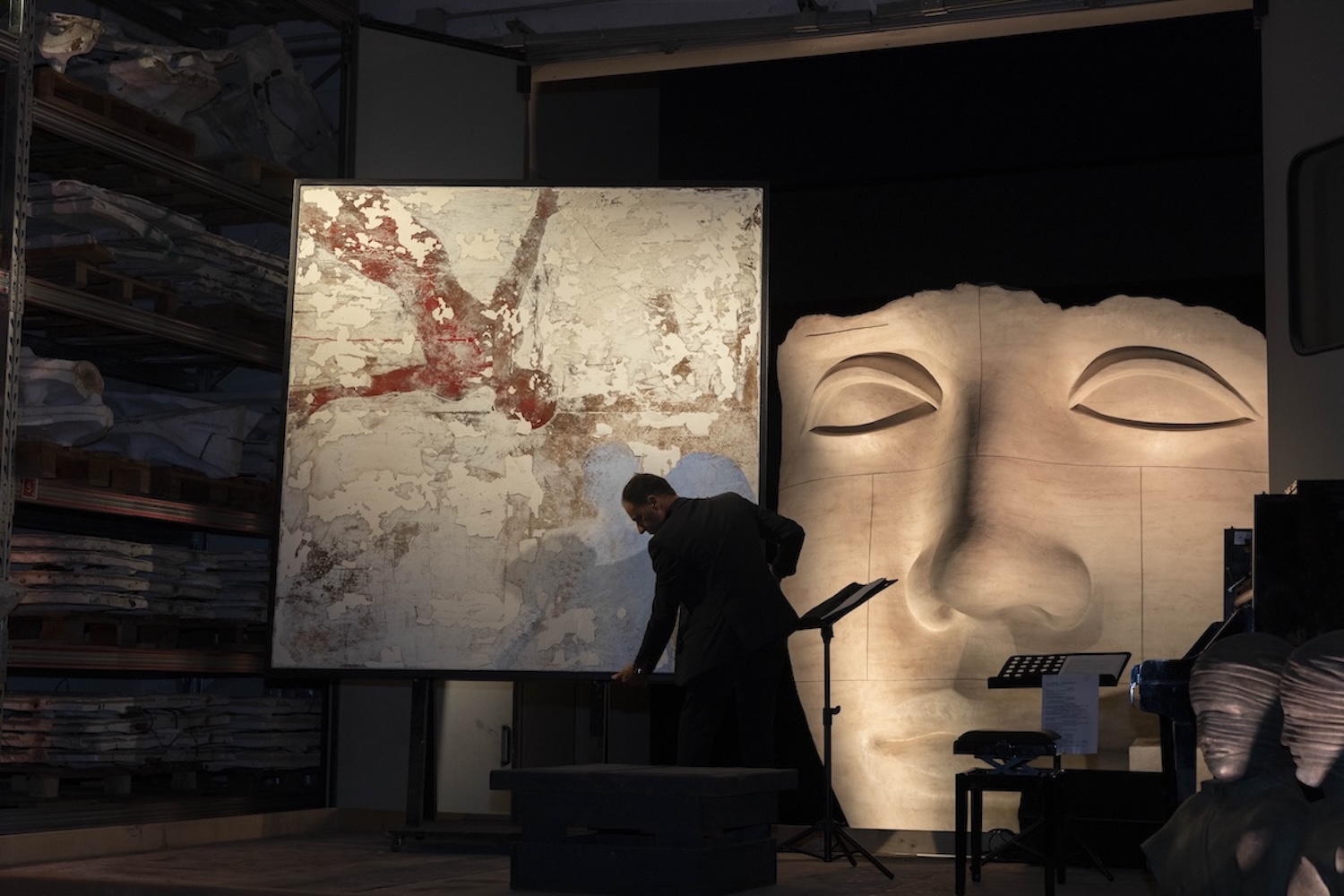
Un omaggio alla memoria di Igor Mitoraj
L’iniziativa è stata sostenuta anche da Arte Bvlg. Il presidente Enzo Stamati ha ribadito la vicinanza al progetto dell’Atelier e alle attività dedicate a mantenere viva l’eredità dello scultore.
A concludere la serata è stato Jean-Paul Sabatié, presidente dell’Atelier Mitoraj, che ha ringraziato il pubblico e il direttore Luca Pizzi per il lavoro svolto.
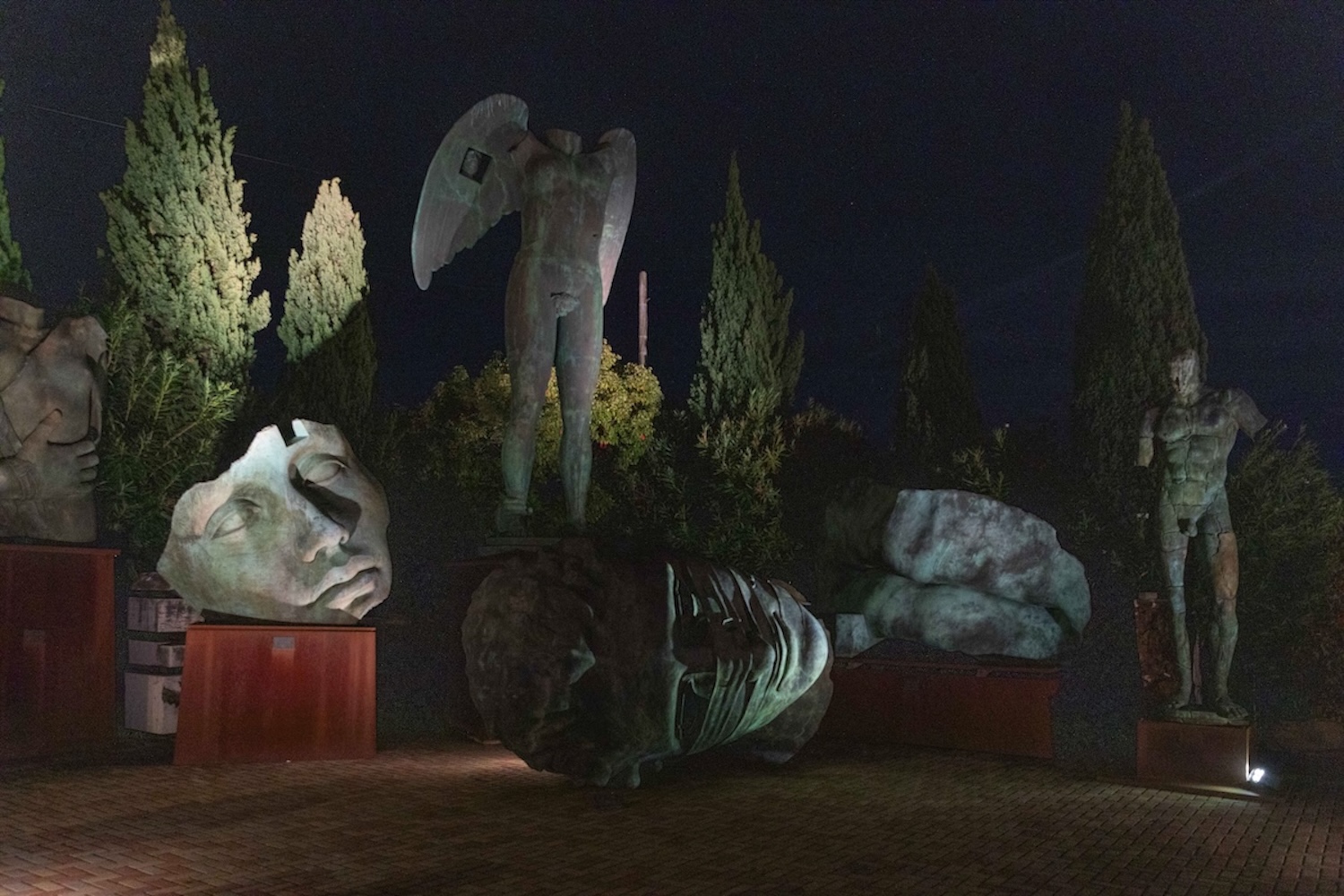
A dodici anni dalla scomparsa di Mitoraj, Mitoraj, Mito e Musica conferma la volontà di far dialogare le sue opere con nuove forme espressive. Il mito di Icaro, con la sua fragilità e il desiderio di volare oltre ogni confine, si è rivelato una chiave per rileggere l’universo dello scultore e la sua costante ricerca di armonia in un mondo spezzato.
Per il momento il sempre vostro Michelangelo Buonarroti vi saluta dandovi appuntamento ai prossimi post e sui social.
Atelier Mitoraj in Pietrasanta: The Myth of Icarus Through Art, Theater, and Music
The painting Ikaro Cielo Bianco (Icarus White Sky) by Igor Mitoraj served as the inspiration for Icaro Infinito (Infinite Icarus), a theatrical piece that held its national premiere at the Atelier Mitoraj in Pietrasanta. On Saturday, October 24, the second edition of “Mitoraj, Myth, and Music” brought together painting, theater, and music in a tribute to the Polish-born sculptor, twelve years after his passing.
The myth of Icarus—with its yearning for freedom and its reach toward the impossible—served as the evening’s central theme, transforming one of the motifs dear to Mitoraj’s imagination into an artistic experience that wove together various forms of expression.
At the Atelier Mitoraj, a painting becomes theater
The focal point of the event was Ikaro Cielo Bianco, a 2014 work created using encaustic and acrylic on canvas, which had recently returned from Puglia following the exhibition Baroque and Neo-Baroque: From Rubens to Mitoraj.
The painting inspired Icaro Infinito, a piece written by and featuring Giuseppe Ciciriello, produced by Scintilla and the Atelier Mitoraj in partnership with the Fondazione Arte Bvlg. Original piano music, composed and performed by Mirko Lodedo—based on a concept by Gianluca Zurlo—accompanied the narrative, fostering a dialogue between word, image, and sound.
“For me, Icarus represents the myth of those who dare to reach for the eternal, for the infinite,” explained Ciciriello. The author sought to move beyond the traditional interpretation of the youth as a symbol of failure, focusing instead on the courage required to pursue one’s desires and to transcend the boundaries of fear.
Amidst Mitoraj’s Molds and Monumental Sculptures
The venue itself made the event truly unique. The stage was set up within the Atelier’s storage space, surrounded by the molds and casts used to create the sculptor’s bronze works at the foundry.
Two monumental sculptures of Icarus greeted the audience, while a large Dea Roma (Goddess Rome) loomed in the background. The setting offered a glimpse into the heart of Mitoraj’s creative process—a space where raw material is transformed into a work of art.
As explained by Luca Pizzi, director of the Atelier and set designer for the piece, this space is the ideal setting to tell the story of the Maestro; it is a canvas turned into a theater, encircled by the molds of some of his most significant works.
A Tribute to the Memory of Igor Mitoraj
The initiative was also supported by Arte Bvlg. Its president, Enzo Stamati, reaffirmed the organization’s commitment to the Atelier’s project and to the various activities dedicated to keeping the sculptor’s legacy alive.
The evening concluded with remarks from Jean-Paul Sabatié, president of the Atelier Mitoraj, who thanked the audience and director Luca Pizzi for their efforts.
Twelve years after Mitoraj’s passing, Mitoraj, Myth, and Music reaffirms the desire to foster a dialogue between his works and new forms of expression. The myth of Icarus—with its inherent fragility and the longing to soar beyond all boundaries—proved to be a key to reinterpreting the sculptor’s universe and his persistent quest for harmony within a fractured world.
For now, yours truly, Michelangelo Buonarroti, bids you farewell—until the next post, and see you on social media.
Sostienici – Support Us
Se questo blog ti piace e ti appassiona, puoi aiutarci a farlo crescere sempre più sostenendoci in modo concreto condividendo i post, seguendo le pagine social e con un contributo che ci aiuta ad andare avanti con il nostro lavoro di divulgazione. . ENGLISH: If you like and are passionate about this blog, you can help us make it grow more and more by supporting us in a concrete way by sharing posts, following social pages and with a contribution that helps us to move forward with our dissemination work.
10,00 €
Condividi:


Questo sono io



sostienici

Sostienici - Support Us
Se questo blog ti piace e ti appassiona, puoi aiutarci a farlo crescere sempre più sostenendoci in modo concreto condividendo i post, seguendo le pagine social e con un contributo che ci aiuta ad andare avanti con il nostro lavoro di divulgazione. . ENGLISH: If you like and are passionate about this blog, you can help us make it grow more and more by supporting us in a concrete way by sharing posts, following social pages and with a contribution that helps us to move forward with our dissemination work.
€10,00


