

Orvieto, il Giudizio Universale del Signorelli: tra Inferno, Paradiso e corpi nudi
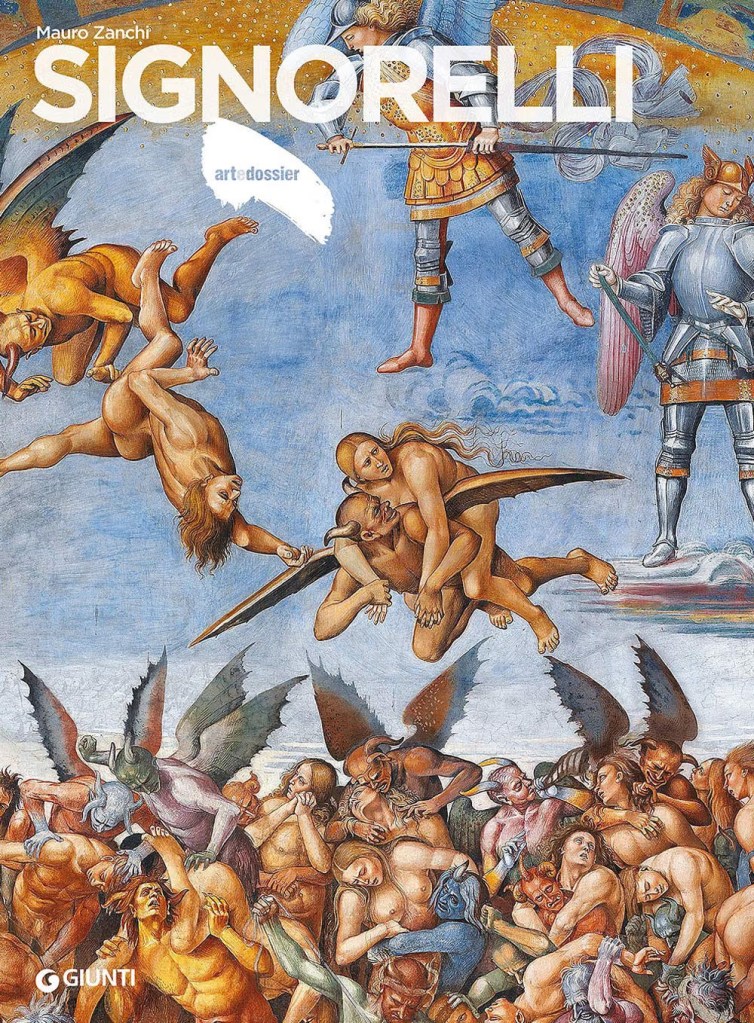
Nella Cappella di San Brizio, nel Duomo di Orvieto, le pareti sembrano improvvisamente dilatarsi, i corpi escono dagli spazi architettonici, gli angeli suonano le trombe, i morti risorgono dalla terra, i dannati precipitano verso l’Inferno e una folla sterminata di uomini sembra muoversi davanti ai nostri occhi.
È il mondo visionario di Luca Signorelli, che tra il 1499 e il 1504 trasformò questa cappella in uno dei più spettacolari racconti dell’aldilà del Rinascimento italiano.
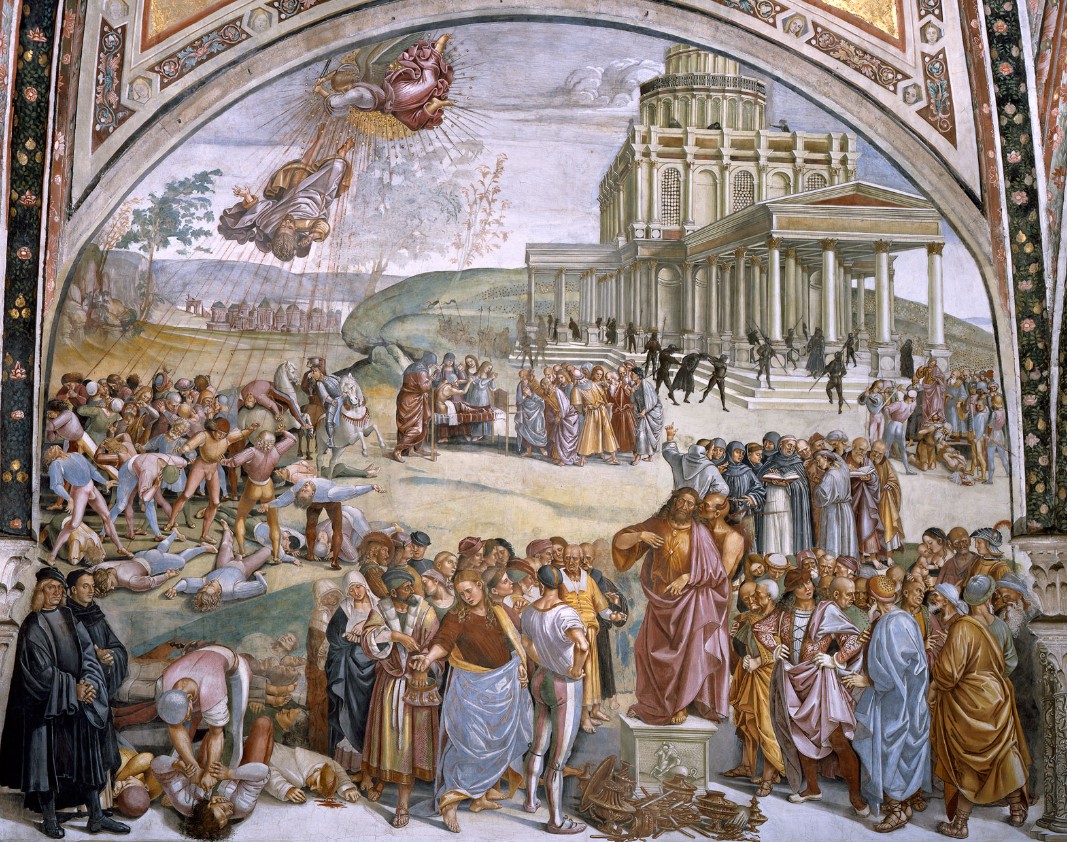
Il tema era il Giudizio Universale, ma Signorelli costruì un vero e proprio racconto dell’Apocalisse: la predicazione dell’Anticristo, la fine del mondo, la resurrezione dei morti, la separazione degli uomini, il Paradiso e l’Inferno.
Dentro questo immenso teatro dell’eternità inserì anche qualcosa di sorprendentemente umano: se stesso, il suo predecessore Beato Angelico, poeti, filosofi e perfino una quantità impressionante di corpi nudi studiati con attenzione quasi ossessiva.
Una cappella rimasta incompiuta per oltre cinquant’anni
La storia del capolavoro comincia molto prima del Signorelli. La cappella era stata progettata alla fine del Trecento per volontà testamentaria dell’orvietano Tommaso di Micheluccio e venne completata nel 1444. Il primo grande artista chiamato a decorarla fu Beato Angelico, al quale l’Opera del Duomo affidò nel 1447 il compito di rappresentare il tema del Giudizio Universale.
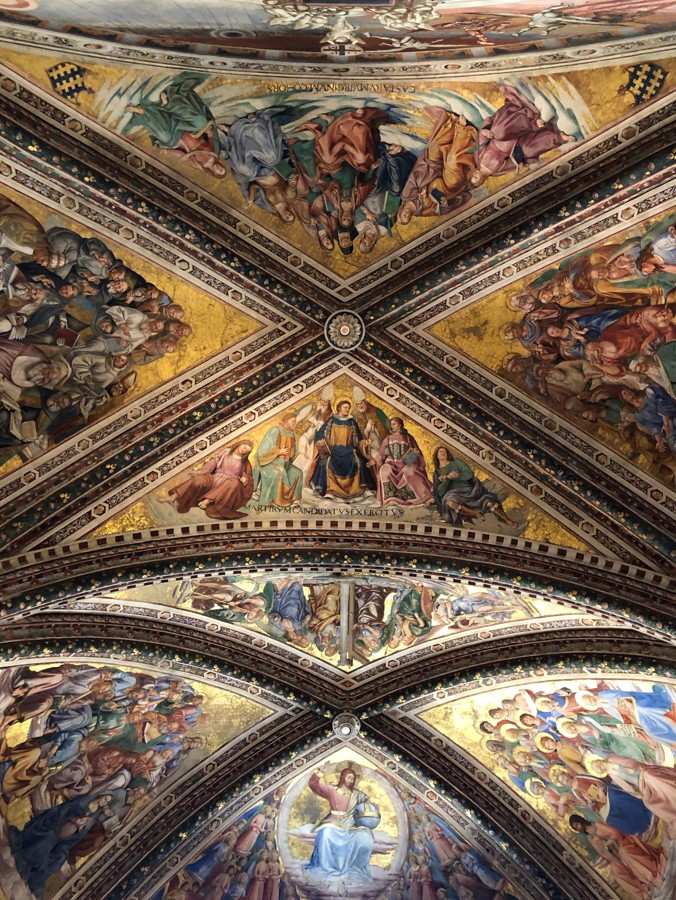
Angelico lavorò soltanto ad alcune parti della volta: realizzò il Cristo Giudice e il coro dei Profeti, mentre il resto del progetto rimase incompiuto. Con lui lavorò anche il giovane Benozzo Gozzoli poi il cantiere si fermò.
Per decenni si cercò un artista disposto a riprendere il progetto. Si pensò anche al Perugino, ma le trattative non arrivarono a buon fine. Nel 1499 la scelta cadde infine su Luca Signorelli, pittore originario di Cortona già celebre in tutta l’Italia centrale. Il 5 aprile di quell’anno venne firmato il contratto per il completamento della volta.
Signorelli fu talmente rapido da convincere l’Opera del Duomo ad affidargli l’intera decorazione. Il 27 aprile 1500 ricevette un secondo incarico per dipingere le pareti della cappella.
Signorelli non dipinse soltanto il Giudizio
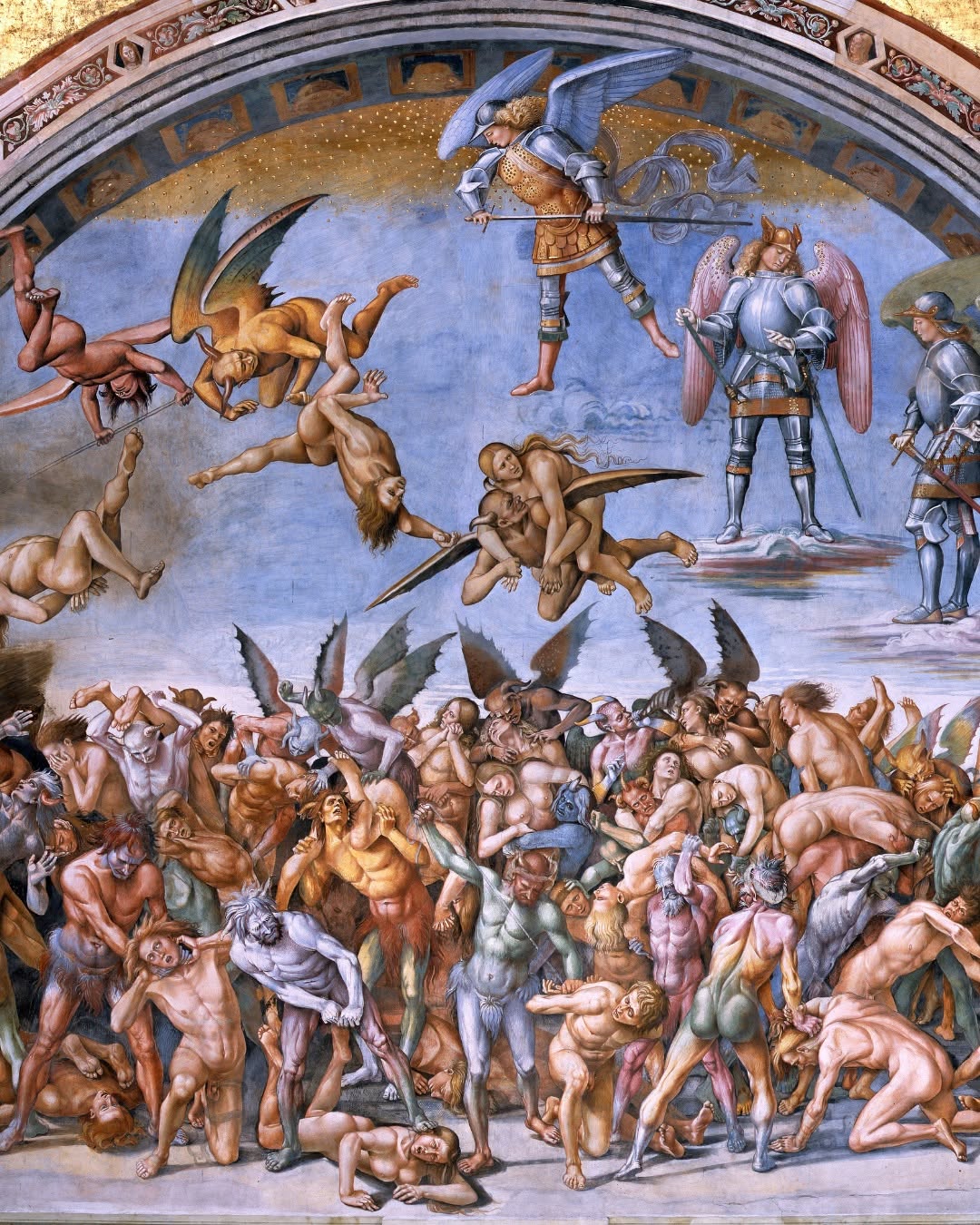
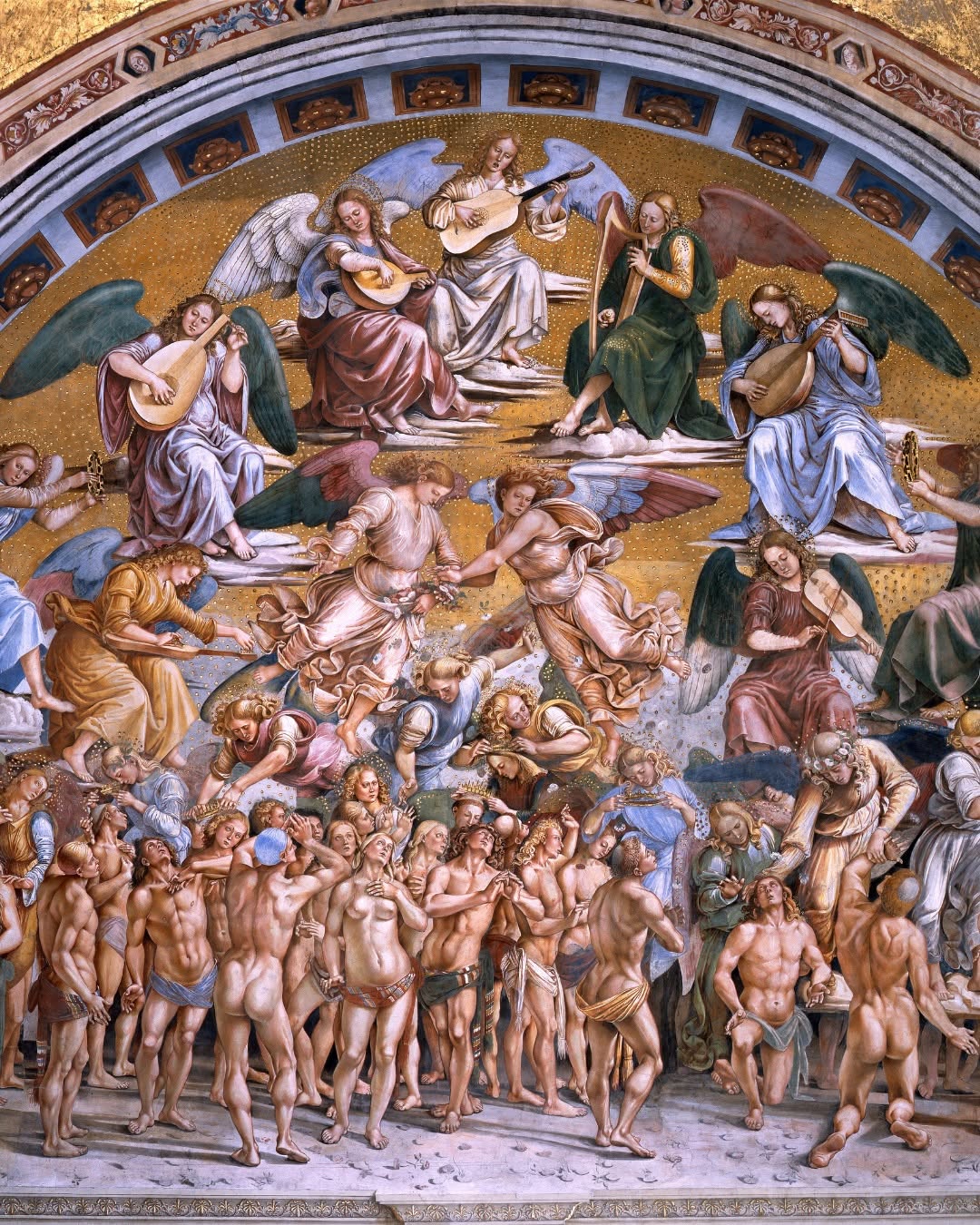
Signorelli organizza un gigantesco racconto degli ultimi tempi dell’umanità con la Predica dell’Anticristo; il Finimondo; la Resurrezione della carne; la Chiamata degli eletti; l’Antinferno; il Paradiso e l’Inferno.
Le scene sono collegate tra loro e trasformano la cappella in una sorta di percorso narrativo nel quale lo spettatore passa dalla vita terrena alla fine dei tempi e quindi alla destinazione eterna delle anime.
La Resurrezione della carne: una scena rivoluzionaria
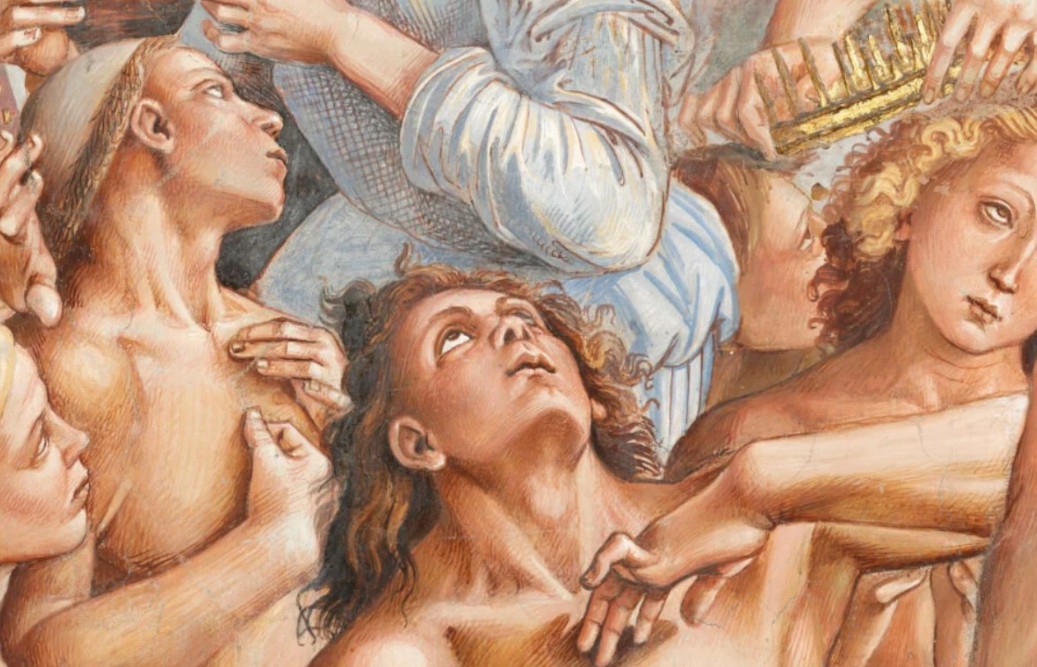
Nella Resurrezione della carne la terra si apre e dalle profondità emergono uomini e donne. Non sono ancora creature trasfigurate: sono esseri umani che ritrovano il proprio corpo.
Signorelli sfrutta questo soggetto per mettere in scena una sorta di laboratorio anatomico monumentale.
Le figure sono nude, giovani, possenti, spesso viste frontalmente o di spalle. Alcune sembrano ancora incompiute nel loro emergere dalla terra. È un’immagine teologica, naturalmente, ma anche una straordinaria dimostrazione delle possibilità offerte dalla rappresentazione del corpo umano.
Il pittore riesce così a trasformare una dottrina religiosa in uno spettacolo visivo di enorme potenza.
Dante entra nella Cappella di San Brizio
Il programma decorativo di dialoga anche con Dante. Nel registro inferiore delle pareti compaiono ritratti di poeti e pensatori accompagnati da scene monocrome ispirate alle loro opere. Tra questi compare anche Dante.
Non solo. Il modo in cui Signorelli rappresenta la massa dei dannati, il movimento, la violenza delle passioni e il contrasto tra la salvezza e la dannazione sembra trovare nella Commedia un interlocutore ideale.
Una curiosità: Signorelli e Beato Angelico si sono fatti un autoritratto insieme
Signorelli inserì il proprio autoritratto all’interno del ciclo e accanto a lui rappresentò anche Beato Angelico. I due artisti compaiono all’interno della stessa grande narrazione che avevano contribuito, a distanza di più di cinquant’anni, a costruire.
Nell’Anticristo c’è il mondo contemporaneo
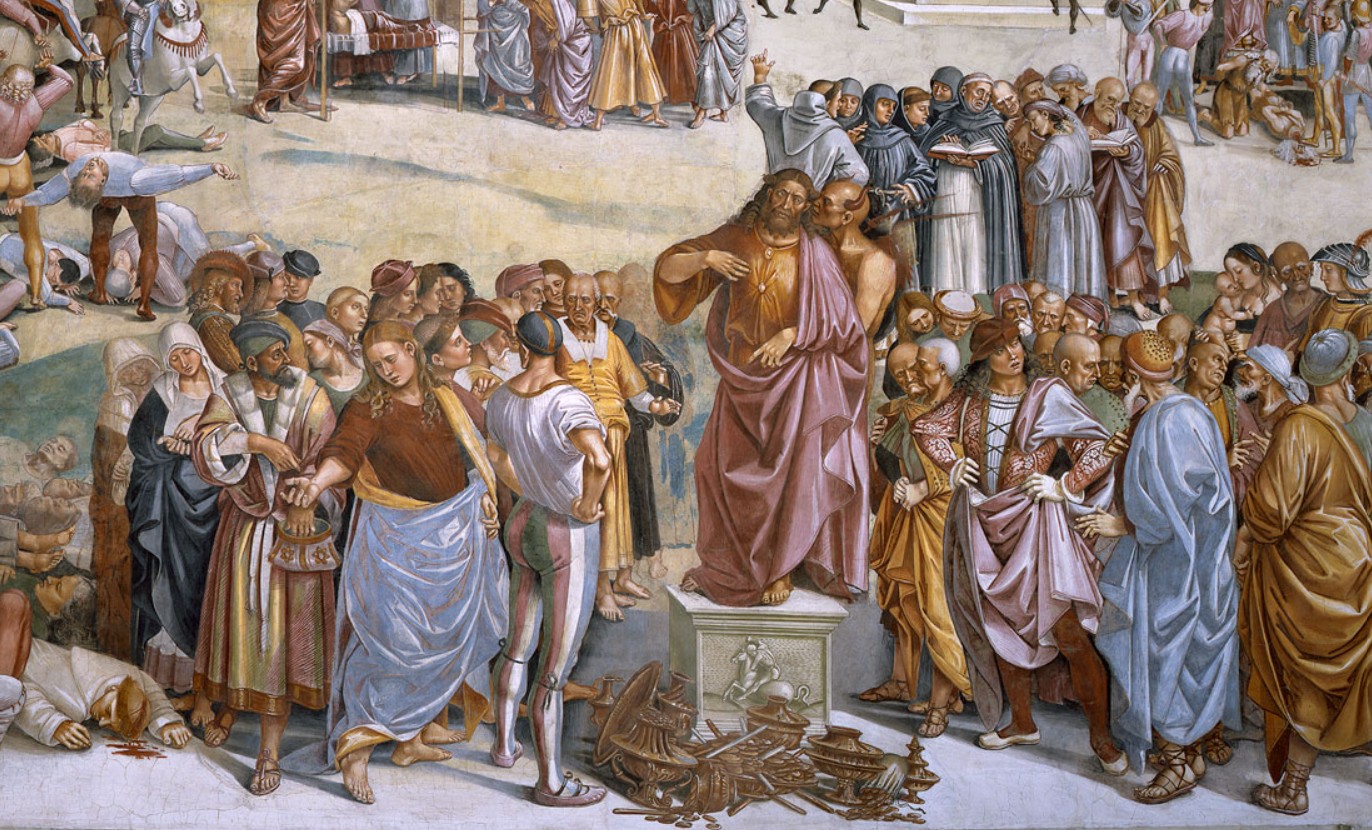
Una delle scene più interessanti è la Predica dell’Anticristo. Non sembra un racconto ambientato in un passato remoto. Signorelli inserisce infatti figure, abiti e situazioni riconducibili al proprio tempo. L’Anticristo predica davanti alla folla mentre intorno si svolge una sorta di teatro della società contemporanea.
Questa scelta rende la scena molto più inquietante: l’Apocalisse non appartiene soltanto al futuro ma è nel presente.
Gli studiosi hanno collegato il programma dell’Anticristo anche al clima religioso e politico dell’Italia della fine del Quattrocento, compreso il trauma suscitato dalle vicende di Girolamo Savonarola. Si tratta però di una lettura interpretativa e non di un’identificazione letterale condivisa da tutti gli studiosi.
È proprio questa ambiguità a rendere la scena interessante: Signorelli parla dell’Apocalisse, ma sembra contemporaneamente parlare del proprio presente.
Il figlio del Signorelli
La storia della Cappella di San Brizio è anche attraversata da una vicenda personale molto dolorosa.
Nel 1502, mentre il grande cantiere era ancora in corso, il figlio di Signorelli, Antonio, morì a Cortona durante un’epidemia.
La documentazione storico-artistica registra l’interruzione dei lavori orvietani e il ritorno dell’artista nella sua città. In seguito è stata avanzata l’ipotesi che il dolore per la morte del figlio abbia avuto un riflesso nelle opere realizzate in quel periodo.
È una storia che ha alimentato anche una tradizione secondo la quale Signorelli avrebbe utilizzato le sembianze del figlio per il volto di Cristo in un Compianto sul Cristo morto realizzato a Cortona.
Quanto venne pagato Signorelli
Per la decorazione dell’intera cappella il compenso concordato arrivò a 575 ducati, accompagnati anche da forniture di grano e vino. L’Opera del Duomo fornì inoltre al pittore oro e azzurro e gli mise a disposizione un alloggio con due letti, uno per Signorelli e uno per il figlio.
I contratti del 1499-1500 sono ancora oggi conservati ed esposti nel Duomo di Orvieto.
Un’opera pensata per essere guardata dal basso
Signorelli sapeva perfettamente che i suoi affreschi avrebbero dovuto essere visti dal basso. Le figure sono quindi costruite con una monumentalità straordinaria e con scorci capaci di accentuare la profondità.
Il risultato è teatrale. Non osserviamo semplicemente una successione di quadri appesi a una parete: siamo dentro la scena. I corpi sembrano avanzare verso lo spettatore, mentre gli spazi architettonici della cappella diventano parte integrante del racconto.
È uno dei motivi per cui la Cappella di San Brizio riesce ancora oggi a produrre un effetto fisico molto forte.
La firma di Signorelli è nella cornice
Nel registro inferiore il pittore non lascia uno spazio vuoto o puramente ornamentale. Inserisce grottesche, medaglioni, ritratti di poeti e pensatori e scene monocrome ispirate alle loro opere.
La decorazione è una sorta di biblioteca dipinta. Sopra abbiamo il destino ultimo dell’umanità; sotto, la cultura degli uomini. Teologia, poesia, filosofia e pittura convivono nella stessa parete.
Dove si trova
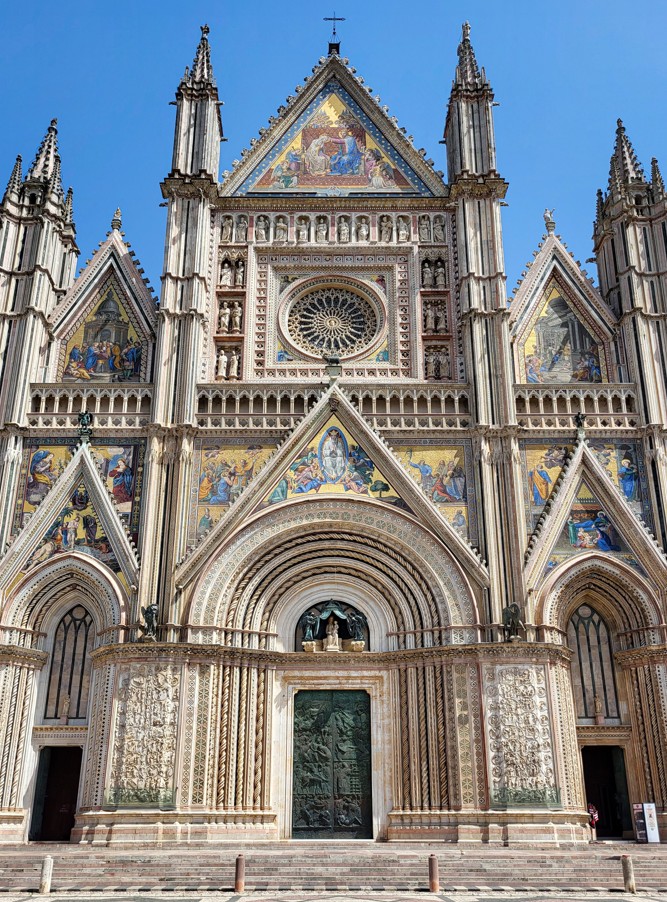
La Cappella di San Brizio si trova nel transetto destro del Duomo di Orvieto, in Piazza del Duomo. Il ciclo fu iniziato dal Beato Angelico nel 1447 e completato da Luca Signorelli tra il 1499 e il 1504.
Per il momento il sempre vostro Michelangelo Buonarroti vi saluta dandovi appuntamento ai prossimi post e sui social.
Orvieto, Signorelli’s Last Judgment: Hell, Paradise, and Nude Bodies
In the Chapel of San Brizio within the Orvieto Cathedral, the walls seem to suddenly expand: bodies break free from architectural confines, angels sound their trumpets, the dead rise from the earth, the damned plunge toward Hell, and a vast multitude of humanity appears to stir before our very eyes.
This is the visionary world of Luca Signorelli, who, between 1499 and 1504, transformed this chapel into one of the Italian Renaissance’s most spectacular depictions of the afterlife.
The theme was the Last Judgment, yet Signorelli constructed a full-scale narrative of the Apocalypse: the preaching of the Antichrist, the end of the world, the resurrection of the dead, the separation of souls, and the realms of Paradise and Hell.
Into this immense theater of eternity, he also introduced elements that were strikingly human: himself, his predecessor Fra Angelico, poets, philosophers, and—notably—an astonishing number of nude bodies rendered with almost obsessive attention to detail.
A chapel left unfinished for over fifty years
The story of this masterpiece begins long before Signorelli’s time. The chapel was commissioned in the late 14th century in accordance with the will of Tommaso di Micheluccio, a native of Orvieto, and was completed structurally in 1444. The first major artist summoned to decorate it was Fra Angelico; in 1447, the Opera del Duomo (Cathedral Works Board) entrusted him with the task of depicting the Last Judgment.
Angelico worked only on sections of the vault, painting Christ the Judge and the Choir of Prophets, while the remainder of the project was left unfinished. The young Benozzo Gozzoli worked alongside him, but eventually, work on the site came to a halt.
For decades, a search ensued for an artist willing to resume the project. Perugino was also considered, but negotiations were unsuccessful. In 1499, the choice finally fell on Luca Signorelli, a painter from Cortona who was already renowned throughout central Italy. The contract for the completion of the vault was signed on April 5 of that year.
Signorelli worked so swiftly that he convinced the Opera del Duomo (Cathedral Works Board) to entrust him with the entire decorative scheme. On April 27, 1500, he received a second commission to paint the chapel walls.
Signorelli did not paint only the Last Judgment
Signorelli orchestrates a colossal narrative of humanity’s final days, comprising The Sermon of the Antichrist, The End of the World, The Resurrection of the Flesh, The Calling of the Elect, The Ante-Hell, Paradise, and Hell.
The scenes are interconnected, transforming the chapel into a narrative journey in which the viewer moves from earthly life to the end of time and, ultimately, to the eternal destiny of souls.
The Resurrection of the Flesh: a revolutionary scene
In The Resurrection of the Flesh, the earth opens up, and men and women emerge from the depths. They are not yet transfigured creatures; they are human beings reclaiming their bodies.
Signorelli uses this subject to stage a sort of monumental anatomical laboratory.
The figures are nude, youthful, and powerful, often depicted from the front or the back. Some appear still unfinished as they emerge from the earth. It is a theological image, naturally, but also an extraordinary demonstration of the possibilities offered by the depiction of the human body.
The painter thus succeeds in transforming a religious doctrine into a visual spectacle of immense power.
Dante enters the Chapel of San Brizio
The decorative program also engages in a dialogue with Dante. Portraits of poets and thinkers appear in the lower register of the walls, accompanied by monochrome scenes inspired by their works. Dante is among them.
And that is not all. The way Signorelli depicts the mass of the damned, the movement, the intensity of the passions, and the contrast between salvation and damnation seems to find an ideal counterpart in the Divine Comedy.
An interesting detail: Signorelli and Fra Angelico included a joint self-portrait.
Signorelli incorporated his own self-portrait into the cycle and depicted Fra Angelico alongside him. The two artists appear within the same grand narrative that they had helped to construct, albeit more than fifty years apart.
The contemporary world appears in The Antichrist
One of the most compelling scenes is The Sermon of the Antichrist. It does not feel like a story set in the distant past; indeed, Signorelli includes figures, clothing, and situations drawn from his own era. The Antichrist preaches to the crowd while a tableau of contemporary society unfolds around him.
This choice makes the scene far more unsettling: the Apocalypse belongs not only to the future but to the present.
Scholars have also linked the Antichrist cycle to the religious and political climate of late 15th-century Italy, including the trauma caused by the events surrounding Girolamo Savonarola. However, this remains a matter of interpretation rather than a literal identification shared by all scholars.
It is precisely this ambiguity that makes the scene so compelling: Signorelli addresses the subject of the Apocalypse, yet simultaneously seems to be speaking about his own times.
Signorelli’s Son
The history of the Chapel of San Brizio is also marked by a deeply painful personal event.
In 1502, while the major project was still underway, Signorelli’s son, Antonio, died in Cortona during an epidemic.
Historical and artistic records document the interruption of the work in Orvieto and the artist’s return to his hometown. It has since been suggested that his grief over his son’s death influenced the works created during that period.
This story also gave rise to a tradition claiming that Signorelli used his son’s features for the face of Christ in a Lamentation over the Dead Christ painted in Cortona.
Signorelli’s Payment
The agreed fee for decorating the entire chapel amounted to 575 ducats, supplemented by supplies of grain and wine. The Opera del Duomo (Cathedral Works Board) also provided the painter with gold leaf and blue pigment, and arranged accommodation with two beds—one for Signorelli and one for his son.
The contracts from 1499–1500 are still preserved and on display in the Orvieto Cathedral today.
A Work Designed to Be Viewed from Below
Signorelli was well aware that his frescoes would be viewed from below. Consequently, the figures are rendered with extraordinary monumentality and foreshortening techniques that accentuate depth.
The effect is theatrical. We are not merely observing a series of paintings hung on a wall; we are inside the scene. The figures seem to advance toward the viewer, while the chapel’s architectural spaces become an integral part of the narrative.
This is one of the reasons why the Chapel of San Brizio still evokes such a powerful physical impact today. Signorelli’s signature appears within the frame.
In the lower register, the painter leaves no space empty or purely ornamental. He incorporates grotesques, medallions, portraits of poets and thinkers, and monochrome scenes inspired by their works.
The decoration forms a sort of painted library. Above, we see humanity’s ultimate destiny; below, human culture. Theology, poetry, philosophy, and painting coexist on the same wall.
Location
The Chapel of San Brizio is located in the right transept of the Orvieto Cathedral, in Piazza del Duomo. The cycle was begun by Fra Angelico in 1447 and completed by Luca Signorelli between 1499 and 1504.
For now, yours truly, Michelangelo Buonarroti, bids you farewell and looks forward to seeing you in future posts and on social media.

Sostienici – Support Us
Se questo blog ti piace e ti appassiona, puoi aiutarci a farlo crescere sempre più sostenendoci in modo concreto condividendo i post, seguendo le pagine social e con un contributo che ci aiuta ad andare avanti con il nostro lavoro di divulgazione. . ENGLISH: If you like and are passionate about this blog, you can help us make it grow more and more by supporting us in a concrete way by sharing posts, following social pages and with a contribution that helps us to move forward with our dissemination work.
10,00 €
-
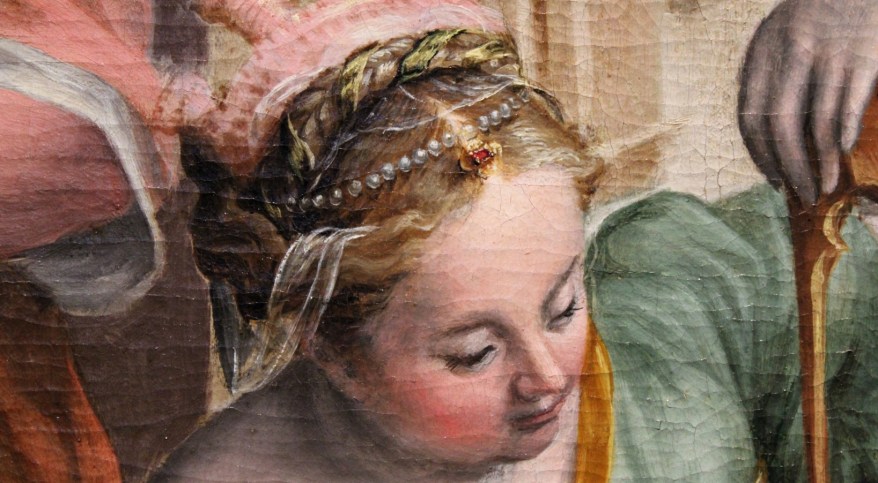
L’Allegoria della Geometria di Prospero Fontana: il dipinto attribuito per errore a Jacopo Coppi
🇮🇹L’Allegoria della Geometria, attribuita un tempo a Jacopo Coppi, è stata restituita a Prospero Fontana: storia, significato e segreti del dipinto… 🇬🇧The Allegory of Geometry, once attributed to Jacopo Coppi, has been reattributed to Prospero Fontana: the history, meaning, and secrets of the painting…
-
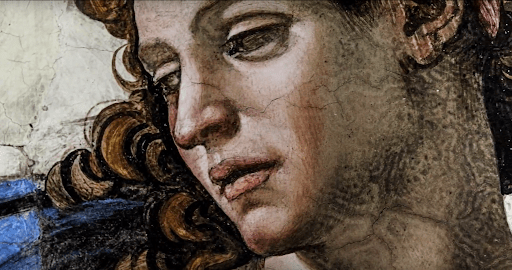
Il mio cuore prigioniero
🇮🇹Nei miei versi l’amore diventa tormento, prigionia e vita… 🇬🇧In my verses, love becomes torment, imprisonment, and life…
-
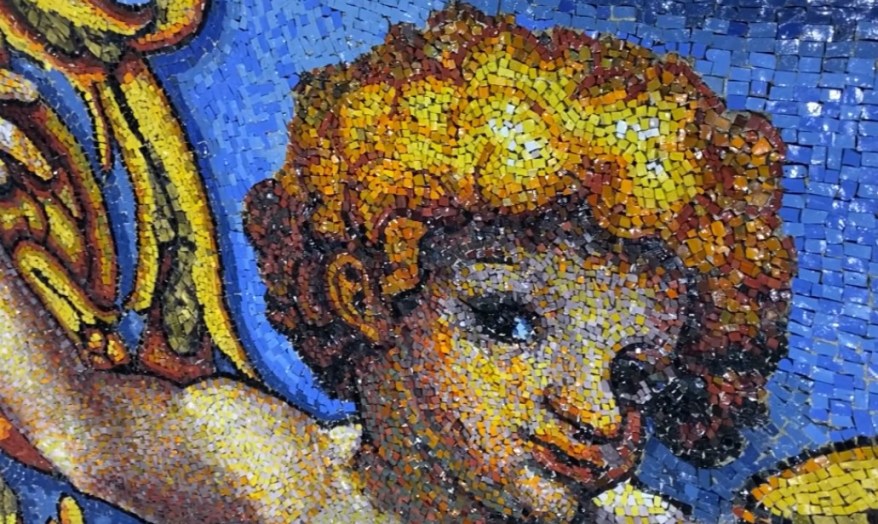
San Pietro: nella cupola ritrovate tessere minuscole e scritte nascoste da secoli
🇮🇹Tessere grandi pochi millimetri, volti forse realizzati in laboratorio e appunti lasciati dai restauratori di secoli fa: il restauro di una cupola poco conosciuta di San Pietro porta alla luce dettagli sorprendenti… 🇬🇧Tiles measuring just a few millimeters, faces perhaps created in a workshop, and notes left by restorers centuries ago: the restoration of a…
Condividi:


Questo sono io




sostienici

Sostienici – Support Us
Se questo blog ti piace e ti appassiona, puoi aiutarci a farlo crescere sempre più sostenendoci in modo concreto condividendo i post, seguendo le pagine social e con un contributo che ci aiuta ad andare avanti con il nostro lavoro di divulgazione. . ENGLISH: If you like and are passionate about this blog, you can help us make it grow more and more by supporting us in a concrete way by sharing posts, following social pages and with a contribution that helps us to move forward with our dissemination work.
€10,00


