
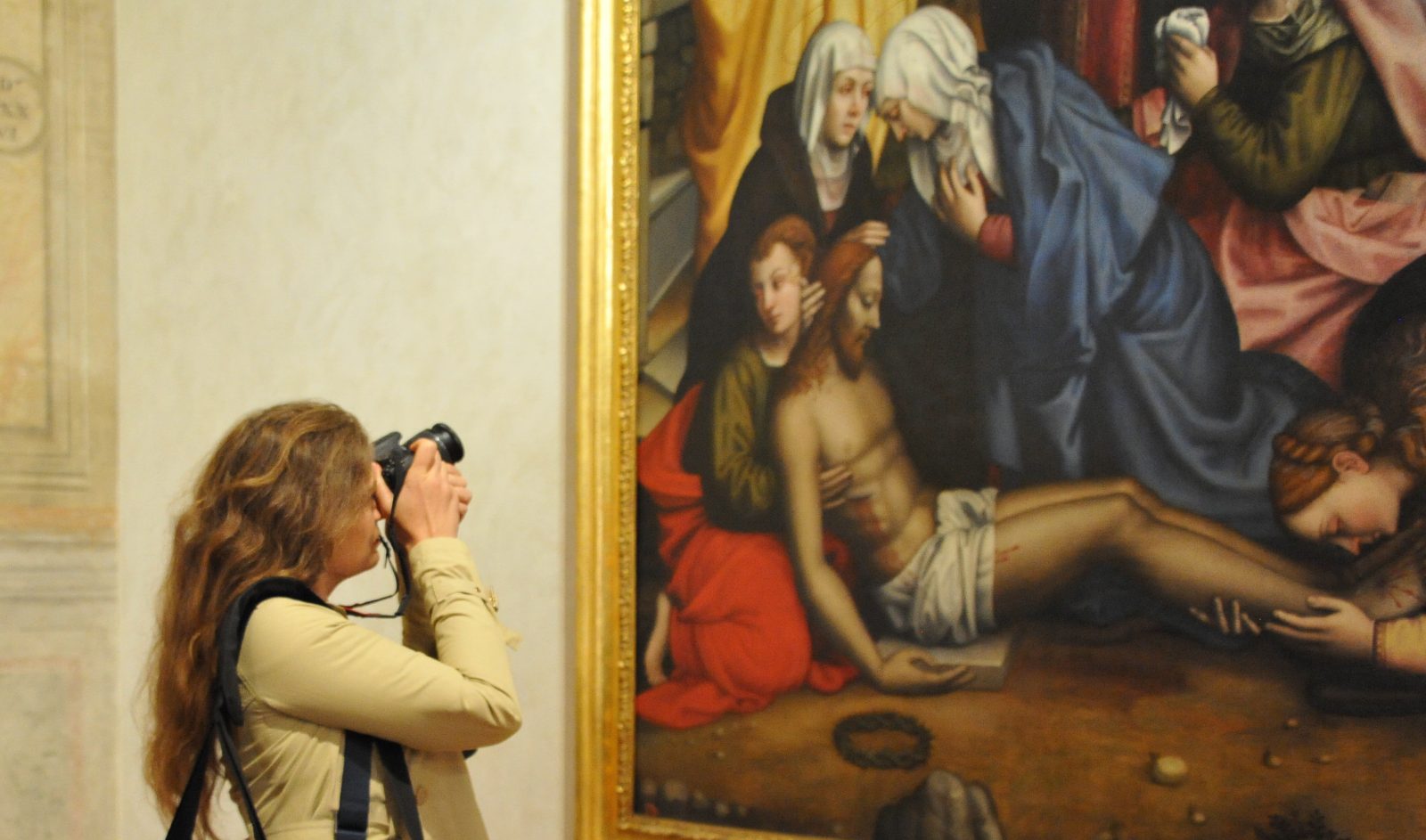
‘Non degno di un tanto uomo’: la durissima critica di Canova al mio Bacco
Antonio Canova affidò a una lettera indirizzata a Leopoldo Cicognara, il 25 febbraio 1815, una dura critica al mio Bacco che avevo scolpito a Roma, per il cardinale Riario.
In quelle righe, la mia scultura venne giudicata dall’artista “non degna di un tanto uomo”, priva di stile e di buone forme. E’ un Bacco ebbro e instabile, cedevole, oscillante: il suo corpo non deve rassicurare ma raccontare.

Canova scrive che nemmeno l’ubriachezza giustifica certe mancanze di forma e d’insieme. Ma io non ho mai creduto che l’arte debba giustificarsi. L’arte afferma. L’insieme che lui cercava era l’armonia: nelle opere mie c’è la potenza, quella fisica e quella divina di un creatore che ci volle fare a sua immagine e somiglianza.
In questo caso specifico, essendo il Bacco un Dio pagano, non poteva avere un corpo perfetto: si entra nella mitologia e la perfezione di Dio rimane estranea a questi figuri a lungo venerati da chi ha creduto alle favole del mondo.
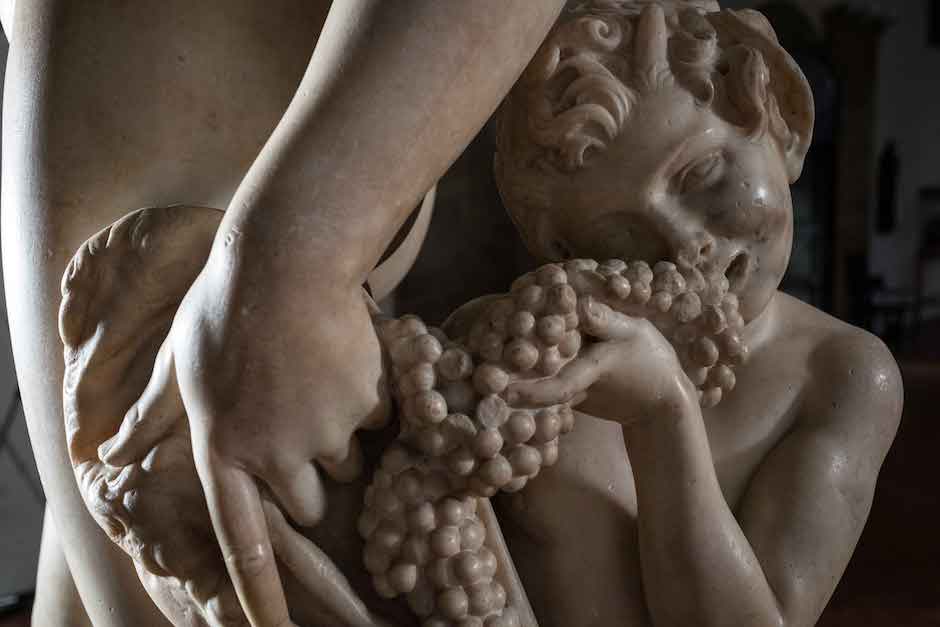
Gli antichi come studio, non come vincolo
Non seguii l’esempio degli antichi Bacchi, sempre composti anche nel disordine come per altro fa notare a Cicognara Canova. Ma sia chiaro: io non ho copiato l’antico: l’ho interrogato, sfidato e talvolta finanche superato, come mise nero su bianco il mio caro amico Giorgio Vasari.
Studiai il Torso del Belvedere, e forse no, non ebbi modo di vedere l’Ercole e Anteo che oggi si trova a Palazzo Pitti prima di scolpire il Bacco. L’opera viene citata solo a partire dal 1509 nel cortile del Belvedere a Roma ma non si hanno notizie precedenti: probabilmente fu rinvenuta in quello stesso anno quando oramai il Bacco l’avevo scolpito da lungi.
Lo studio mio non servì a imitare gli antichi ma per comprendere fin dove poteva spingersi il corpo umano quando il fuoco del pensiero lo attraversa. L’antico è stato per me una sorgente, non una legge.
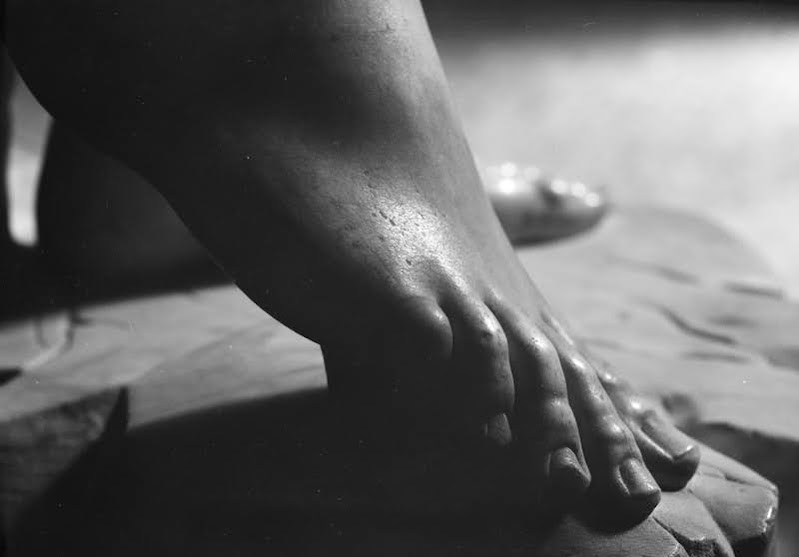
Anatomia: non scienza fredda, ma carne viva
Canova scrive di “mosse contorte e convulse”, di braccia piegate “a foggia di zeta”, di muscoli pronunciati “con violenza più che naturale” ma il corpo umano non è una scultura di statuario ben levigata e basta. E’ tensione, sforzo, contraddizione e soprattutto anima.
I muscoli non si dispongono per piacere all’occhio, ma per rispondere al peso, al movimento, alla caduta imminente.
Non scolpii saggi anatomici ma feci parlare la carne. Può essere considerato questo mio modo di scolpire eccesso, gonfiore ed esagerazione? Non mi sembra.
Stile proprio, non stile corretto
Canova scrisse che piegai l’antico al mio “senso particolare”, imprimendo alle mie opere un carattere personale, gonfio, esasperato.
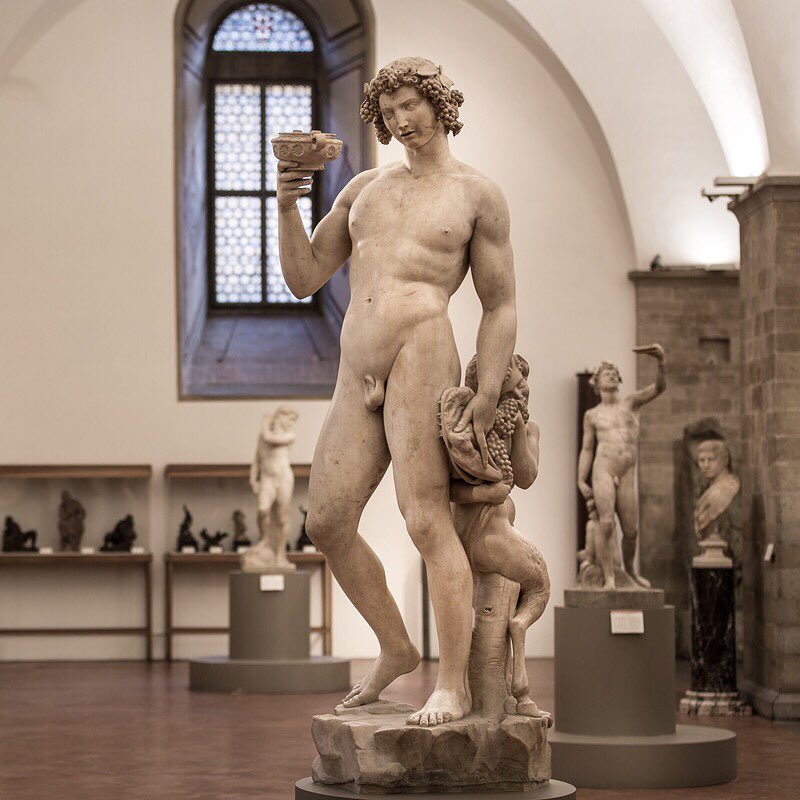
L’ arte nasce da una necessità interiore, non dall’obbedienza a un canone. Io non ho mai cercato uno stile corretto: ho cercato il mio stile, perché solo così l’opera può essere viva. L’armonia universale che Canova persegue è nobile ma se ne facesse una ragione. Io scelsi un’altra strada: quella del conflitto, della lotta tra forma e spirito.
Scrisse Canova che il Bacco non era degno di me. Non ho scolpito per essere degno ma per raccontare.
A seguire vi riporto per intero ciò che Canova scrisse in quella lettera al Cicognara datata 25 febbraio del 1815.
“… parlando del Bacco semibriaco con un Satiretto, lo applaudite come opera di una maestrevole eccellenza. Confesso che questa è la più comune opinione: ma io oserei altrimenti, e dire che la mi pare opera non degna di un tanto uomo, per la mancanza di stile, di buone forme, e soprattutto d’insieme; difetti a senso mio, non compensabili certamente dall’attitudine del soggetto, rappresentato come briaco: poiché gli antichi solevano costantemente unire e stile, e forma, e insieme a tutti i Bacchi, anche briachi, facendoli sostenere da qualche Satiro o Sileno.
Non saprei poi cosa intendere per ciò che voi appellate in Michelangelo scienza anatomica. A me sembra ch’egli abbia eletto espressamente delle mosse contorte e convulse, specialmente nelle braccia, atteggiate a foggia di zeta, per aver campo di esprimere e scolpire le parti e i muscoli più rilevati, pronunciandoli con violenza più che naturale.
A ciò che voi dite, che il torso di Belvedere ha servito di studio e di esempio a Michelangelo, io aggiugnerei che il gruppo d’Ercole con Anteo nel cortile Pitti a Firenze gli abbia mostrato più chiaramente il cammino; ma lo studio di queste forme era poi sempre subordinato al genio e senso particolare del Buonarotti, il quale si è valuto costantemente delle opere antiche per modellarle sullo stile suo proprio, e per imprimere nelle produzioni sue quel carattere gonfio, esagerato, com’era il suo elemento.”
Per il momento il sempre vostro Michelangelo Buonarroti vi saluta dandovi appuntamento ai prossimi post e sui social.
‘Not worthy of such a man’: Canova’s harsh criticism of my Bacchus
Antonio Canova wrote a harsh criticism of my Bacchus, which I had sculpted in Rome for Cardinal Riario, in a letter addressed to Leopoldo Cicognara on February 25, 1815.
In those lines, the artist deemed my sculpture “not worthy of such a man,” lacking style and good form. It is a drunken and unstable Bacchus, yielding, wavering: his body should not reassure but narrate.
Canova writes that not even drunkenness justifies certain lacks of form and harmony. But I have never believed that art should justify itself. Art affirms. The harmony he sought was harmony: in my works there is power, both physical and divine, of a creator who wanted to make us in his image and likeness.
In this specific case, since Bacchus was a pagan god, he could not have had a perfect body: we enter mythology, and the perfection of God remains foreign to these figures long revered by those who believed in the fairy tales of the world.
The ancients as a study, not as a constraint
I did not follow the example of the ancient Bacchus, always composed even in disorder, as Canova pointed out to Cicognara. But let it be clear: I did not copy the ancient: I questioned it, challenged it, and sometimes even surpassed it, as my dear friend Giorgio Vasari wrote in black and white.
I studied the Belvedere Torso, and perhaps not, I did not have the opportunity to see the Hercules and Antaeus, now in the Pitti Palace, before sculpting the Bacchus. The work is only mentioned in 1509 in the Belvedere courtyard in Rome, but there is no prior information about it: it was probably discovered that same year, when I had already sculpted the Bacchus from afar.
My study did not serve to imitate the ancients but to understand how far the human body could go when the fire of thought pierces it. The ancient was for me a source, not a law.
Anatomy: not cold science, but living flesh
Canova writes of “contorted and convulsive movements,” of arms bent “in the shape of a Z,” of muscles pronounced “with more than natural violence,” but the human body is not simply a well-polished statuary sculpture. It is tension, effort, contradiction, and above all, soul.
Muscles are not arranged to please the eye, but to respond to weight, movement, and the impending fall.
I did not sculpt anatomical essays, but I made the flesh speak. Can my way of sculpting be considered excess, swelling, and exaggeration? I don’t think so.
My own style, not the correct style
Canova wrote that I bent the ancient to my “particular sense,” giving my works a personal, bloated, exaggerated character.
Art arises from an inner need, not from obedience to a canon. I have never sought a correct style: I have sought my own, because only in this way can the work be alive. The universal harmony that Canova pursues is noble, but he should accept it. I chose another path: that of conflict, of the struggle between form and spirit.
Canova wrote that Bacchus was not worthy of me. I sculpted not to be worthy but to tell a story.
Below I report in full what Canova wrote in that letter to Cicognara dated February 25, 1815.
“… speaking of the semi-drunken Bacchus with a Little Satyr, you applaud it as a work of masterly excellence. I confess that this is the most common opinion: but I would dare to say otherwise, and say that it seems to me a work unworthy of such a man, due to the lack of style, good form, and above all overall effect; defects, in my opinion, certainly not compensated for by the attitude of the subject, represented as drunk: since the ancients consistently combined style and form, and together with all the Bacchus, even the drunk ones, having them supported by some Satyr or Silenus. I do not know what to mean by what you call anatomical science in Michelangelo.
It seems to me that he expressly chose contorted and convulsive movements, especially in the arms, which are slanted in the shape of a Z, to have room to express and sculpt the most prominent parts and muscles, pronouncing them with more than natural violence.
To what you say, that the Belvedere torso served as a study and example for Michelangelo, I would add that the group of Hercules with Antaeus in the Pitti courtyard in Florence showed him the way more clearly; but the study of these forms was always subordinate to the genius and particular sense of Buonarroti, who constantly evaluated the ancient works to model them in his own style and to imprint on his own productions that pompous, exaggerated character, which was his element.”
For now, yours truly, Michelangelo Buonarroti bids you farewell, and invites you to see him in future posts and on social media.

Sostienici – Support Us
Se questo blog ti piace e ti appassiona, puoi aiutarci a farlo crescere sempre più sostenendoci in modo concreto condividendo i post, seguendo le pagine social e con un contributo che ci aiuta ad andare avanti con il nostro lavoro di divulgazione. . ENGLISH: If you like and are passionate about this blog, you can help us make it grow more and more by supporting us in a concrete way by sharing posts, following social pages and with a contribution that helps us to move forward with our dissemination work.
10,00 €
Articoli
Condividi:


Questo sono io





sostienici

Sostienici – Support Us
Se questo blog ti piace e ti appassiona, puoi aiutarci a farlo crescere sempre più sostenendoci in modo concreto condividendo i post, seguendo le pagine social e con un contributo che ci aiuta ad andare avanti con il nostro lavoro di divulgazione. . ENGLISH: If you like and are passionate about this blog, you can help us make it grow more and more by supporting us in a concrete way by sharing posts, following social pages and with a contribution that helps us to move forward with our dissemination work.
€10,00


