
Il Pontefice nudo e seduto ma con la mitra sul capo
Tra i disegni più singolari che realizzai nel corso della vita, c’è quello in cui raffigurai papa Giulio II della Rovere privo di vesti, seduto e già deceduto con la mitra calzata sul capo.
Si tratta di uno studio di figure per la tomba di papa Giulio II della Rovere che realizzai attorno al 1516. Il foglio custodito abitualmente a Casa Buonarroti e al momento esposto nella mostra ‘Michelangelo e Bologna’ racconta una delle vicende più complesse e tormentate che dovetti affrontare: la tragedia della sepoltura che mi trascinai dietro per oltre quarant’anni tra diverse peripezie.
La commissione della tomba di Giulio II
Nel 1505, quando ormai il mio nome risuonava in tutte le corti d’Europa, venni chiamato a Roma da papa Giulio II per realizzare il suo grandioso monumento funebre: un’opera tanto grande che non aveva precedenti. Il mio carissimo amico Giorgio Vasari mise nero su bianco che il sepolcro avrebbe dovuto superare per magnificenza tutte le tombe antiche e imperiali. L’ambizione del progetto causò non pochi problemi a me e pure al papa tra ripensamenti continui, palanche che mancavano a fasi alterne e fughe a perdifiato.
Ora non vi sto a raccontare per filo e per segno tutta la vicenda: in questo mio sito vi ho parlato ripetutamente della complessa storia della commissione in questione. Vi dico solo che il progetto della tomba fu cambiato dai committenti con nuove versioni contrattuali nel 1513, 1516, 1519-1520 e 1532, fino alla collocazione definitiva del monumento in San Pietro in Vincoli tra il 1542 e il 1545.
Il disegno del 1516 conservato a Casa Buonarroti
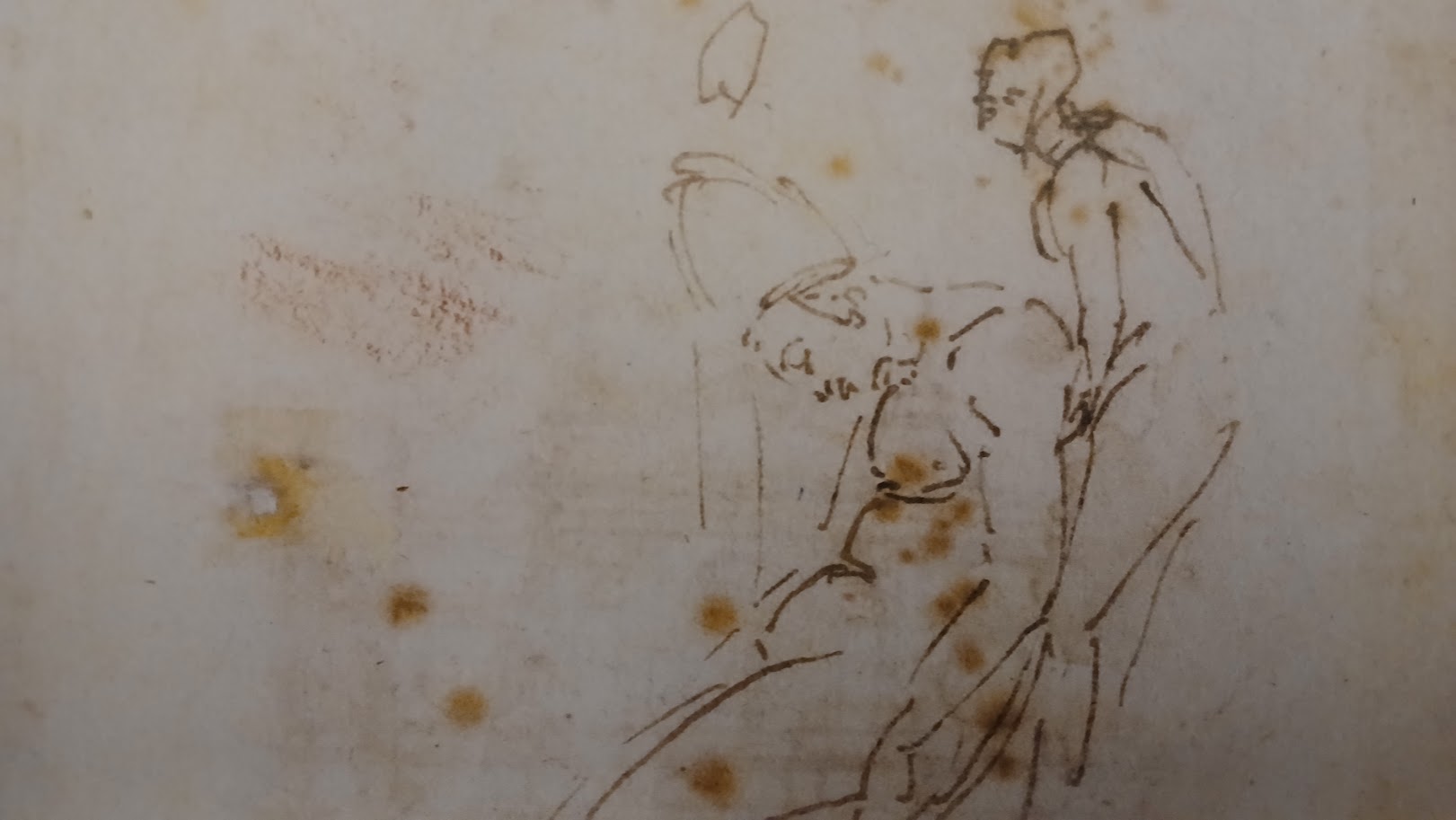
Lo schizzo custodito a Casa Buonarroti è riferibile al contratto del 16 luglio 1516, che stipulai con gli eredi della famiglia Della Rovere. In questa fase il progetto prevedeva una tomba a parete, più ridotta rispetto all’idea originaria, con ali laterali di limitata profondità.
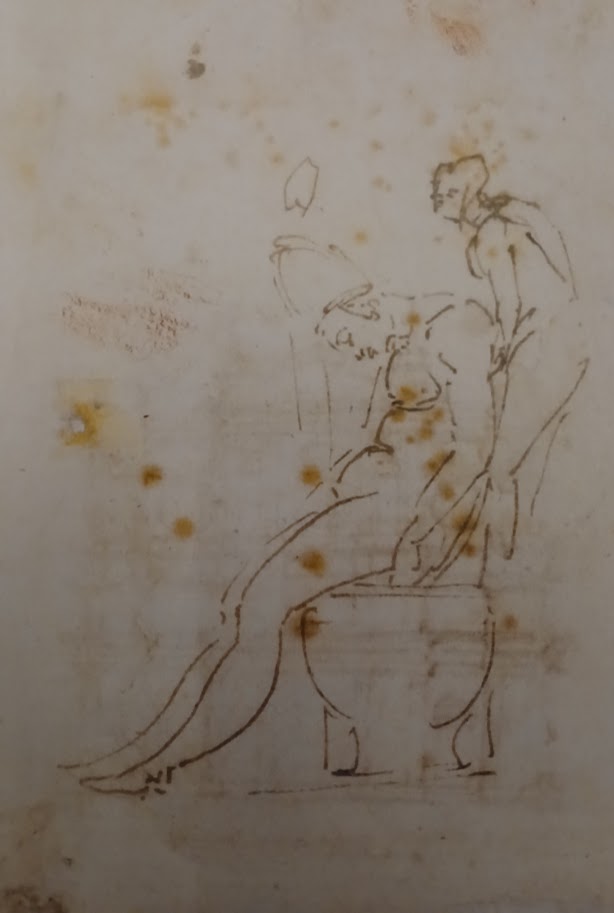
Il disegno raffigura il profilo laterale del gruppo scultoreo superiore: il corpo di Giulio II, riconoscibile dalla mitra, è rappresentato nudo e privo di vita, seduto sopra il sarcofago, abbandonato a se stesso.
Il Pontefice è sorretto sotto le ascelle da un angelo di dimensioni minori, in una composizione che risulta a chi la osserva drammatica e persino instabile.
Analisi stilistica e iconografica
Eseguito a penna e inchiostro bruno, lo schizzo colpisce per la rapidità e l’energia del tratto. Il profilo della figura papale, tracciato a mano libera, ricalca parzialmente un precedente segno a stilo, ancora visibile a un’osservazione ravvicinata. Accanto alla mitria compare una piccola forma geometrica, interpretata come l’estremità di uno scettro, simbolo del potere che Giulio II sembra stringere anche dopo la morte.
Le dimensioni ridotte della nicchia superiore, imposte dal contratto, mi obbligarono a soluzioni compositive ardite. Il corpo del Papa appare appoggiato su un piano obliquo, sostenuto esclusivamente dagli angeli, accentuando l’idea di precarietà e il senso tragico della scena.
Questo disegno si inserisce in una più ampia serie di studi che avevo dedicato all’iconografia di Giulio II, avviati già al momento della commissione della tomba. L’immagine del Pontefice, destinata a coronare il mausoleo marmoreo, può rendere in parte l’idea della perduta statua bronzea di Giulio II che avevo fuso su commissione del pontefice stesso per l facciata di San Petronio a Bologna.
Capolavoro su carta
Lo schizzo del 1516 rappresenta anche un momento di riflessione sulla morte, sul potere e sulla fragilità dell’uomo. Lontano da ogni celebrazione retorica, il disegno mostra il papa svuotato di vita, reso con una potenza espressiva che anticipa la drammaticità delle mie opere più tarde.
Per il momento il sempre vostro Michelangelo Buonarroti vi saluta dandovi appuntamento ai prossimi post e sui social.
The Pontiff, naked and seated, but with a miter on his head
Among the most singular drawings I made in my life is one in which I depicted Pope Julius II della Rovere, naked, seated, and already deceased, with his miter on his head.
It is a figure study for the tomb of Pope Julius II della Rovere, which I created around 1516. The drawing, usually kept at Casa Buonarroti and currently on display in the exhibition “Michelangelo and Bologna,” recounts one of the most complex and tormented events I have ever faced: the tragedy of the burial, which I endured for over forty years, through various vicissitudes.
The Commission for the Tomb of Julius II
In 1505, when my name was already resounding throughout the courts of Europe, I was summoned to Rome by Pope Julius II to create his grandiose funerary monument: a work so vast it was unprecedented. My dear friend Giorgio Vasari wrote in black and white that the tomb would surpass all ancient and imperial tombs in magnificence. The project’s ambitious nature caused me and the Pope no small number of problems, with constant second thoughts, intermittent shortages of funds, and breathless escapes.
I won’t go into the entire story now: I’ve repeatedly discussed the complex history of the commission in question on this website. I’ll simply say that the tomb’s design was modified by the clients with new contractual versions in 1513, 1516, 1519-1520, and 1532, until the monument’s final placement in San Pietro in Vincoli between 1542 and 1545.
The 1516 drawing preserved in Casa Buonarroti
The sketch preserved in Casa Buonarroti refers to the contract of July 16, 1516, which I signed with the heirs of the Della Rovere family. At this stage, the project envisioned a wall tomb, smaller than the original idea, with shallow lateral wings.
The drawing depicts the side profile of the upper sculptural group: the body of Julius II, recognizable by his miter, is depicted naked and lifeless, sitting on the sarcophagus, abandoned to its fate.
The Pontiff is supported under the armpits by a smaller angel, in a composition that appears dramatic and even unstable to the observer.
Stylistic and Iconographic Analysis
Drawn in pen and brown ink, the sketch is striking for its rapidity and energy. The freehand profile of the papal figure partially traces a previous stylus mark, still visible upon close observation. Next to the miter is a small geometric shape, interpreted as the tip of a scepter, a symbol of the power that Julius II seems to wield even after death.
The small size of the upper niche, imposed by the contract, forced me to adopt bold compositional solutions. The Pope’s body appears to rest on an oblique plane, supported exclusively by angels, accentuating the sense of precariousness and the tragic nature of the scene.
This drawing is part of a broader series of studies I had dedicated to the iconography of Julius II, begun when the tomb was commissioned. The image of the Pontiff, intended to crown the marble mausoleum, can convey some idea of the lost bronze statue of Julius II that I had cast at the pontiff’s request for the façade of San Petronio in Bologna.
Masterpiece on paper
The 1516 sketch also represents a moment of reflection on death, power, and the fragility of man. Far from any rhetorical celebration, the drawing shows the Pope drained of life, rendered with an expressive power that anticipates the drama of my later works.
For now, yours truly, Michelangelo Buonarroti, bids farewell and invites you to join him in future posts and on social media.

Sostienici – Support Us
Se questo blog ti piace e ti appassiona, puoi aiutarci a farlo crescere sempre più sostenendoci in modo concreto condividendo i post, seguendo le pagine social e con un contributo che ci aiuta ad andare avanti con il nostro lavoro di divulgazione. . ENGLISH: If you like and are passionate about this blog, you can help us make it grow more and more by supporting us in a concrete way by sharing posts, following social pages and with a contribution that helps us to move forward with our dissemination work.
10,00 €
Condividi:


Questo sono io





sostienici

Sostienici – Support Us
Se questo blog ti piace e ti appassiona, puoi aiutarci a farlo crescere sempre più sostenendoci in modo concreto condividendo i post, seguendo le pagine social e con un contributo che ci aiuta ad andare avanti con il nostro lavoro di divulgazione. . ENGLISH: If you like and are passionate about this blog, you can help us make it grow more and more by supporting us in a concrete way by sharing posts, following social pages and with a contribution that helps us to move forward with our dissemination work.
€10,00


