
Il Diluvio Universale: chi pensa a salvar cose e chi persone
La scena del Diluvio Universale è la prima che affrescai nella volta della Cappella Sistina. Fateci caso: è il riquadro più affollato di tutti e quello che ha le figure più piccole rispetto agli altri.
Mi resi ben presto conto che i tanti personaggi che si muovevano sulla scena, visti da basso, diventavano poco distinguibili. Scelsi così da allora in poi di dipingere meno soggetti e di aumentare le proporzioni per far distinguere nettamente da terra le storie narrate.
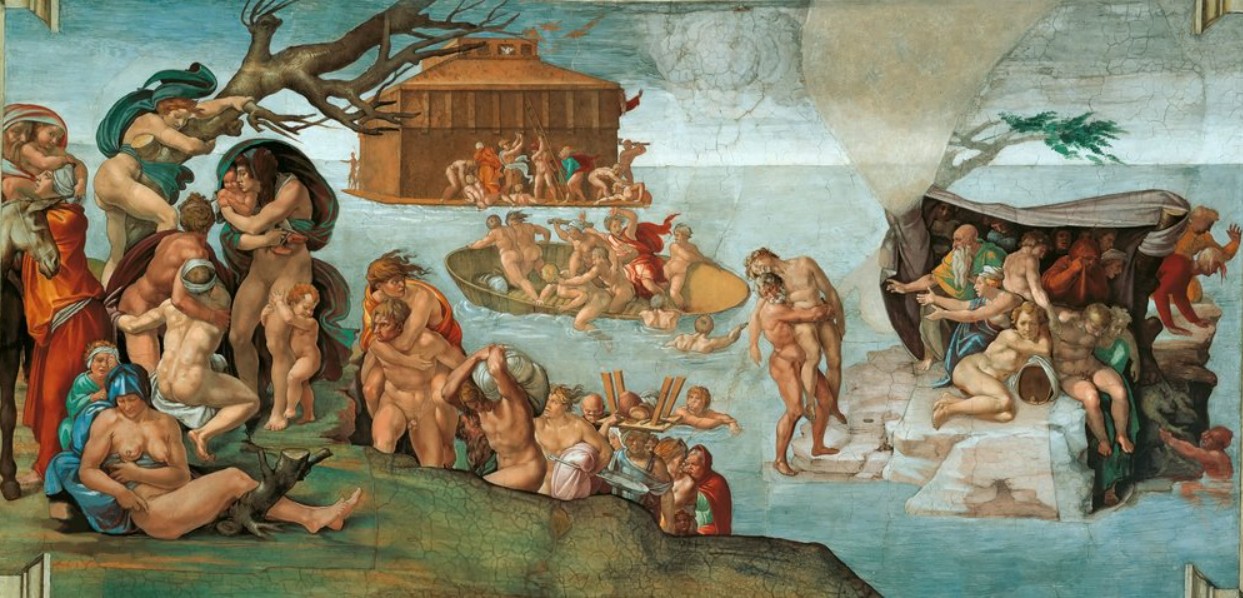
Il Diluvio è la scena più drammatica di tutta la volta. Le persone tentano di salvarsi dalla furia delle acque ma non hanno niente per riuscire a scampare dalla morte se non la speranza di farcela. C’è chi si carica sulle spalle la mobilia mostrando un mero attaccamento alle cose materiali e chi invece cerca di trarre in salvo figli e mogli.
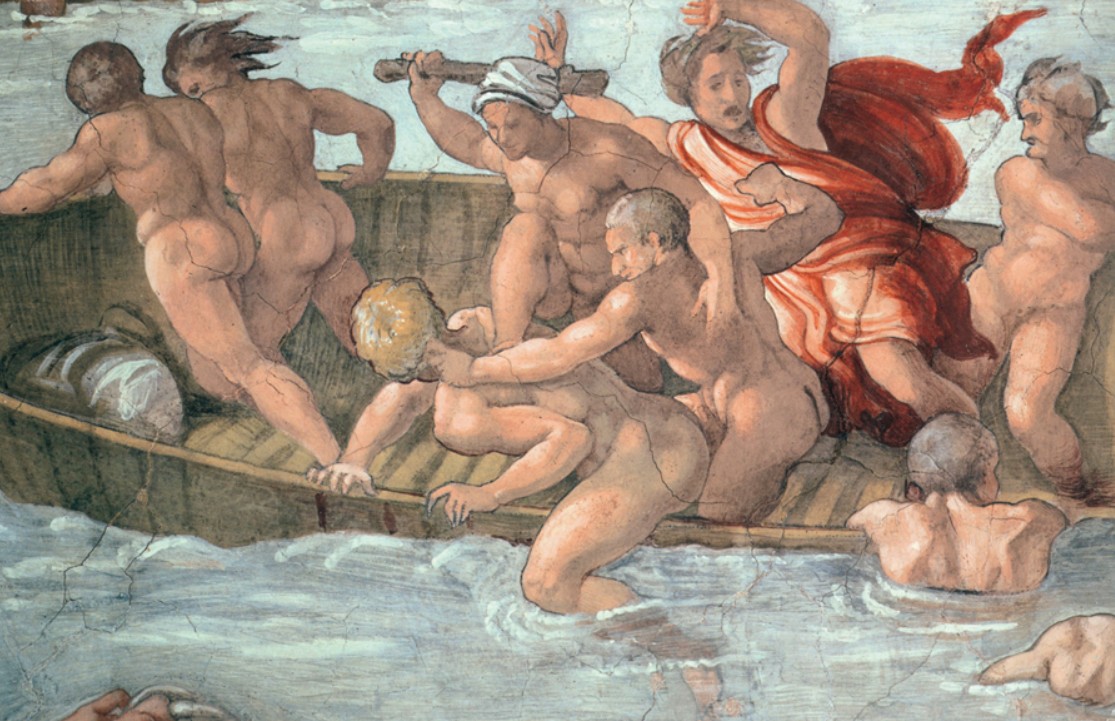
La povera imbarcazione che sta navigando verso l’Arca di Noè è strapiena di persone e sembra sia sul punto di rovesciarsi. Tra i fortunati che sono riusciti a salire la lotta è continua. Al centro si vedono una donna con un bastone e un uomo che, con un pugno, provano a far scivolare in acqua un uomo che ha tentato di salvarsi aggrappandosi alla falchetta.
Osservare i vari m omenti che affrescai nel diluvio è un po’ come osservare la vita di tutti i giorni. C’è poco da fare: nelle situazioni più drammatiche l’uomo è in grado di dare il meglio e il peggio di sé. Chi si prodiga per salvare gli altri e chi invece non ha altro interesse che salvaguardare se stesso a scapito di tutti gli altri.
In lontananza si vede l’Arca di Noè che riesce a rimanere sul pelo delle acque che hanno occupato tutta la superficie terrestre. Qualcuno prova a salire a bordo servendosi finanche con un’ascia o provando a utilizzare una scala per riuscire a entrare dalla parte più alta della grande imbarcazione.
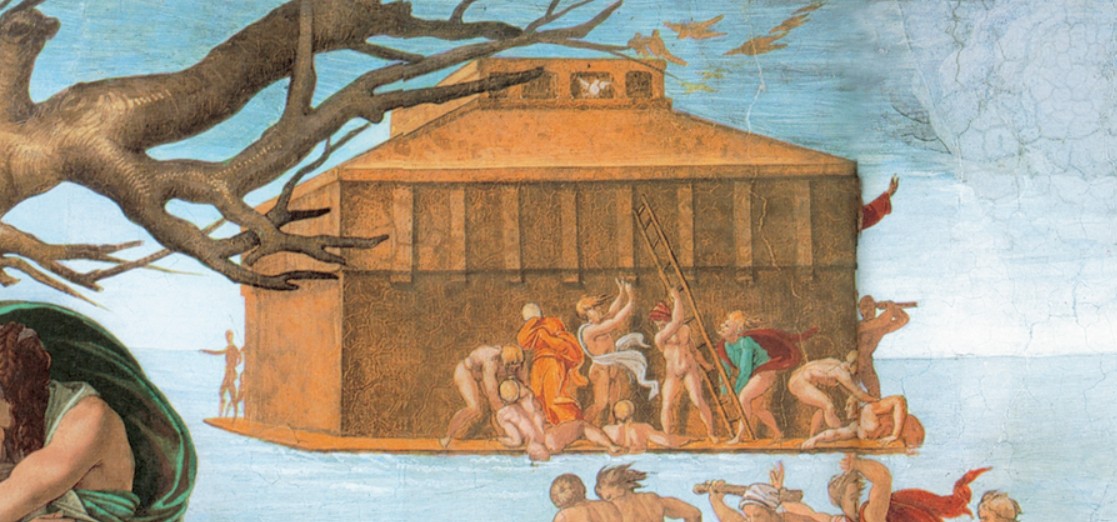
Noè fa capolino da una finestra laterale e tende il braccio in direzione del cielo per capire se piova ancora o stia per smettere.
La colomba della pace sta per partire da una nicchia, alla ricerca di terra ferma e già anticipa il trionfo del bene.
“E la colomba tornò a lui sul far della sera; ecco, essa aveva nel becco un ramoscello di ulivo. Noè comprese che le acque si erano ritirate dalla terra”, sta scritto nella Genesi.
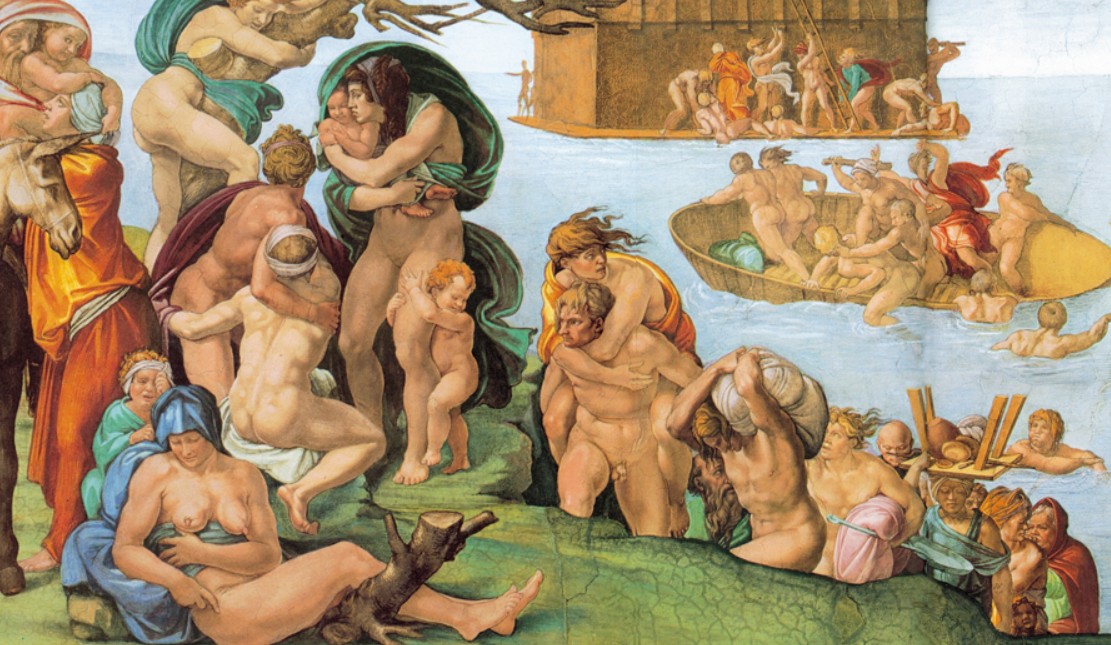
Nella fascia più in basso, più prossima allo spettatore, alcuni personaggi provano a trarre in salvo le loro cose. Non è un caso sia il gruppo più numerose: troppi infatti sono quelli che, troppo attaccati alle cose materiali, rischiano di perdere pure sé stessi.
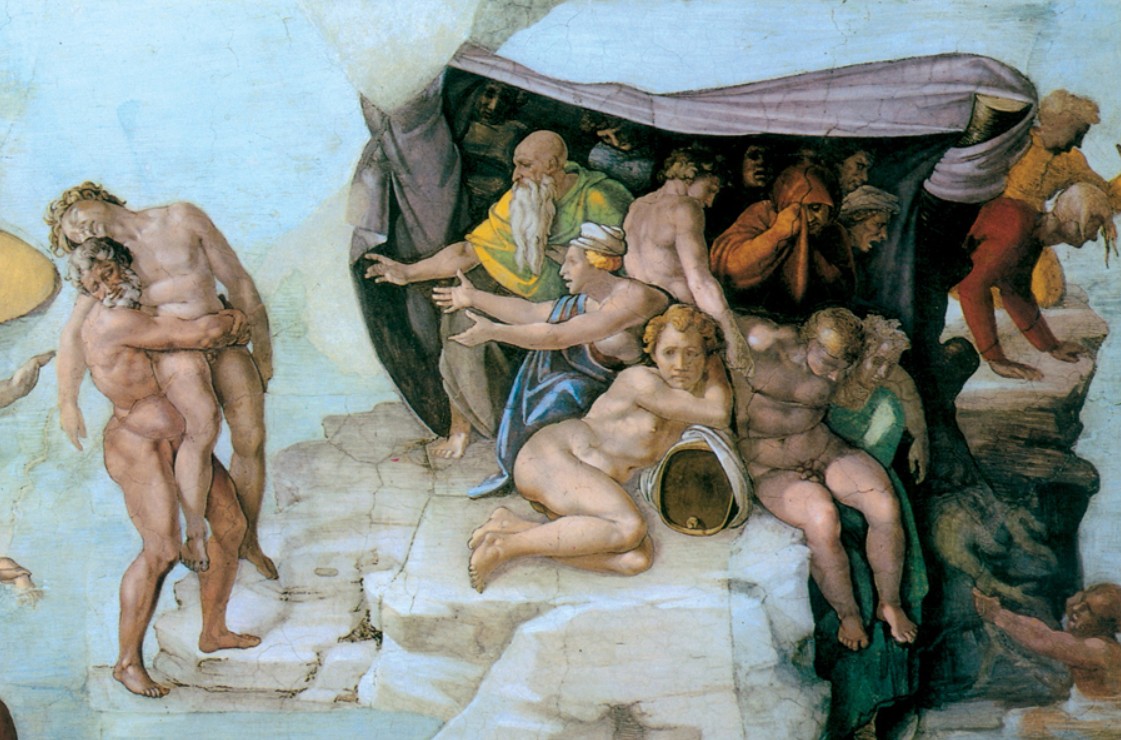
Sull’isolotto che si vede in secondo piano qualche superstite prova a salvare coloro che ancora sono in acqua, tendendo le mano. Come scrisse il mio caro amico Giorgio Vasari: “Appariscono diverse morti d’uomini che, spaventati dal terror di que’ giorni cercano il più che possono per diverse vie scampo alle lor vite. Vedevasi la pietà di molti, aiutandosi l’un l’altro tirarsi al sommo di un sasso, cercando scampo: tra quelli vi è uno che abbracciato un mezzo morto, cerca il più che può di camparlo, che la natura non lo mostra meglio”.
Per il momento il sempre vostro Michelangelo Buonarroti vi saluta dandovi appuntamento ai prossimi post e sui social.
The Great Flood: Who Thinks of Saving Things, Who Thinks of Saving People
The Great Flood scene is the first I frescoed on the Sistine Chapel ceiling. Notice: it’s the most crowded panel of all and the one with the smallest figures compared to the others.
I soon realized that the many characters moving across the scene, seen from below, became difficult to distinguish. So from then on, I chose to paint fewer subjects and increase the proportions to make the stories being told stand out clearly from the ground.
The Flood is the most dramatic scene in the entire ceiling. People attempt to save themselves from the fury of the waters but have nothing to save them from death except the hope of survival. Some carry furniture on their shoulders, showing a mere attachment to material things, while others instead try to save their children and wives.
The wretched boat sailing toward Noah’s Ark is packed with people and seems on the verge of capsizing. The struggle continues among those fortunate enough to climb aboard. In the center, a woman with a stick and a man are seen punching a man who is trying to save himself by clinging to the gunwale.
Observing the various moments I painted in the flood is a bit like observing everyday life. There’s little you can do: in the most dramatic situations, humans are capable of giving the best and the worst of themselves. Some do their utmost to save others, while others have no other interest than protecting themselves at the expense of everyone else.
In the distance, Noah’s Ark can be seen, managing to stay afloat in the waters that have covered the entire surface of the earth. Some are trying to climb aboard, even using an axe or a ladder to gain entry from the highest point of the great vessel.
Noah is making clay from a side window and stretching his arm toward the sky to see if it’s still raining or about to stop.
The dove of peace is about to depart from a niche, seeking solid ground, already anticipating the triumph of good.
“And the dove returned to him in the evening, and behold, in her beak was an olive branch. Then Noah knew that the waters had receded from the earth,” as Genesis says.
In the lower section, closest to the viewer, several figures are trying to save their belongings. It is no coincidence that this is the largest group: too many, in fact, are too attached to material things to risk losing themselves.
On the small island visible in the background, a few survivors are trying to save those still in the water, holding out their hands. As my dear friend Giorgio Vasari wrote: “Different deaths appear, those of men who, terrified by the terror of those days, seek as best they can, by various means, escape their lives. The compassion of many was seen, helping one another to pull themselves to the top of a rock, seeking escape: among them is one who, embracing a half-dead man, tries as best he can to save him, since nature shows him no better.”
For now, yours truly, Michelangelo Buonarroti bids you farewell, saying he will see you in future posts and on social media.

Sostienici – Support Us
Se questo blog ti piace e ti appassiona, puoi aiutarci a farlo crescere sempre più sostenendoci in modo concreto condividendo i post, seguendo le pagine social e con un contributo che ci aiuta ad andare avanti con il nostro lavoro di divulgazione. . ENGLISH: If you like and are passionate about this blog, you can help us make it grow more and more by supporting us in a concrete way by sharing posts, following social pages and with a contribution that helps us to move forward with our dissemination work.
10,00 €
Condividi:


Questo sono io





sostienici

Sostienici – Support Us
Se questo blog ti piace e ti appassiona, puoi aiutarci a farlo crescere sempre più sostenendoci in modo concreto condividendo i post, seguendo le pagine social e con un contributo che ci aiuta ad andare avanti con il nostro lavoro di divulgazione. . ENGLISH: If you like and are passionate about this blog, you can help us make it grow more and more by supporting us in a concrete way by sharing posts, following social pages and with a contribution that helps us to move forward with our dissemination work.
€10,00


