
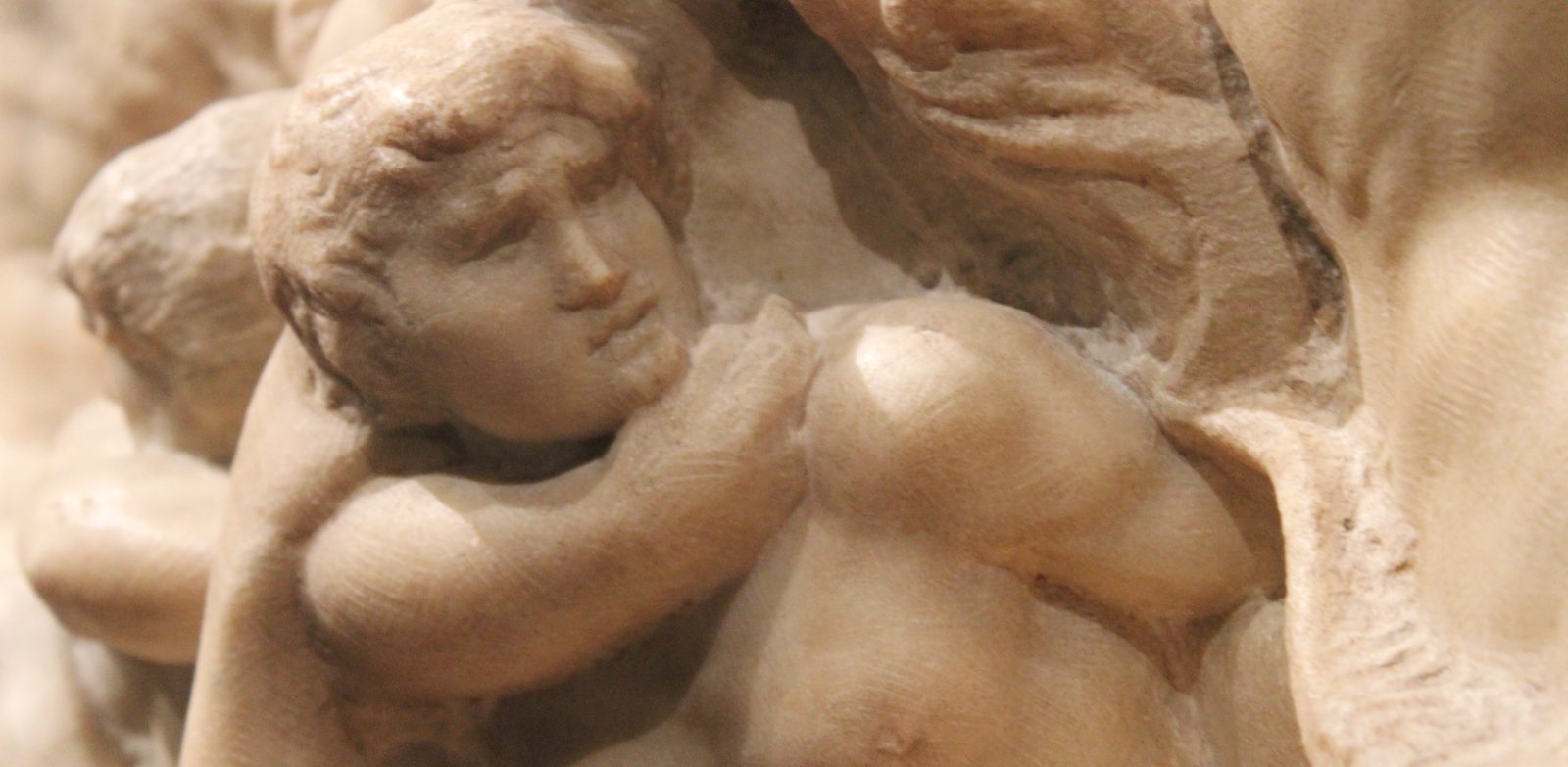
Il Cavaspina che trasse in inganno anche Giovanni Battista Borghese
A Galleria Borghese, nella Sala di Didone, un ragazzino tenta di togliersi una spina che s’è conficcata nella pianta del piede: è il Cavaspina, replica realizzata alla fine del Cinquecento da un più antico modello in bronzo, noto come Lo Spinario, custodito ai Musei Capitolini.
Sapete chi rappresenta il Cavaspina? È una figura avvolta dalla leggenda che ha un nome e un cognome: Marzio Fedele.

Costui era un ragazzino quando, nel IV secolo a.C., durante la guerra contro Veio, gli fu affidato il compito di andare a Roma correndo per avvisare dell’attacco etrusco che stava per essere sferrato.
Riuscì a compiere quella titanica impresa privo di qualsiasi tipo di calzatura e senza rendersi conto d’avere una spina sotto il piede.
Considerato un eroe e un simbolo della tenacia, sono diversi gli scultori antichi che hanno voluto rendere omaggio a questo giovane leggendario rappresentandolo privo di vesti e seduto sopra una roccia mentre tenta di togliersi la spina dal piede sinistro.

Sicuramente la scultura dello Spinario più nota è quella in bronzo custodita ai Musei Capitolini che venne realizzata molto probabilmente nel I secolo a.C.
La scultura del Cavaspina in questione è una copia di quel bronzo come si evince dal medesimo tipo di capigliatura. Sono diverse però le dimensioni e anche la raffigurazione della nudità: la scultura di Galleria Borghese infatti ha il pube pudicamente coperto con una foglia.
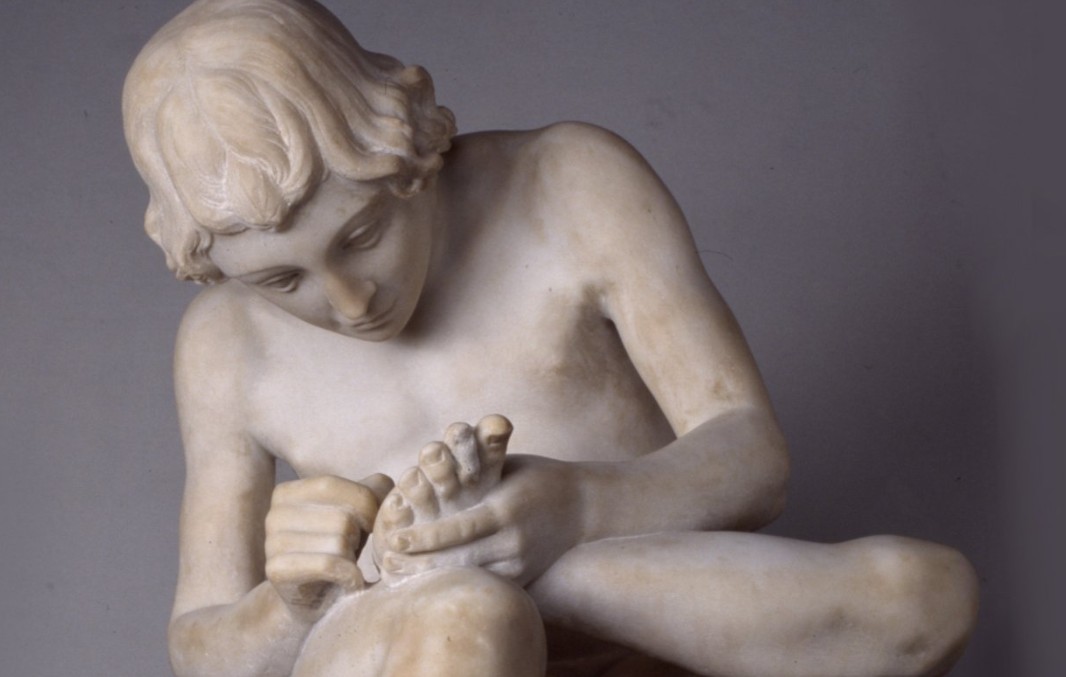
Il Cavaspina viene citato nell’inventario di Galleria Borghese nel 1765 al di sopra di un piedistallo in legno, oggi andato perduto.
Nell’archivio Segreto del Vaticano è custodito un documento che annovera l’opera come un acquisto di Scipione da Giovanni Battista Borghese dagli eredi di Girolamo Pichi nel 1608 per la notevole cifra di 300 scudi.
Visto il prezzo pagato da Borghese, è molto probabile sia stata comprata come opera antica.
Per il momento il sempre vostro Michelangelo Buonarroti vi saluta dandovi appuntamento ai prossimi post e sui social.
The Thorn-Eater that Deceived Even Giovanni Battista Borghese
In the Borghese Gallery, in the Hall of Dido, a young boy attempts to remove a thorn lodged in the sole of his foot: it is the Thorn-Eater, a replica made in the late 16th century from an older bronze model, known as the Spinario, housed in the Capitoline Museums.
Do you know who the Thorn-Eater represents? He is a figure shrouded in legend with a name and surname: Marzio Fedele.
He was a young boy when, in the 4th century BC, during the war against Veii, he was given the task of running to Rome to warn of the impending Etruscan attack.
He managed to accomplish this titanic feat without any footwear and without realizing he had a thorn under his foot. Considered a hero and a symbol of tenacity, several ancient sculptors paid homage to this legendary youth by depicting him naked and seated on a rock, attempting to remove the thorn from his left foot.
The most famous sculpture of the Spinario is undoubtedly the bronze one housed in the Capitoline Museums, most likely created in the 1st century BC.
The Cavaspina sculpture in question is a copy of that bronze, as evidenced by the identical hairstyle. However, the dimensions and the depiction of nudity are different: the Galleria Borghese sculpture, in fact, has his pubic area modestly covered with a leaf.
The Cavaspina is mentioned in the Galleria Borghese inventory in 1765, atop a wooden pedestal, now lost.
The Vatican Secret Archives contain a document that lists the work as having been purchased by Scipione from Giovanni Battista Borghese from the heirs of Girolamo Pichi in 1608 for the considerable sum of 300 scudi. Given the price paid by Borghese, it is highly likely that it was purchased as an antique.
For now, yours truly, Michelangelo Buonarroti bids farewell and invites you to see him in future posts and on social media.

Sostienici – Support Us
Se questo blog ti piace e ti appassiona, puoi aiutarci a farlo crescere sempre più sostenendoci in modo concreto condividendo i post, seguendo le pagine social e con un contributo che ci aiuta ad andare avanti con il nostro lavoro di divulgazione. . ENGLISH: If you like and are passionate about this blog, you can help us make it grow more and more by supporting us in a concrete way by sharing posts, following social pages and with a contribution that helps us to move forward with our dissemination work.
10,00 €
Articoli

Condividi:


Questo sono io





sostienici

Sostienici – Support Us
Se questo blog ti piace e ti appassiona, puoi aiutarci a farlo crescere sempre più sostenendoci in modo concreto condividendo i post, seguendo le pagine social e con un contributo che ci aiuta ad andare avanti con il nostro lavoro di divulgazione. . ENGLISH: If you like and are passionate about this blog, you can help us make it grow more and more by supporting us in a concrete way by sharing posts, following social pages and with a contribution that helps us to move forward with our dissemination work.
€10,00


Che informazione interessante. Nonostante ciò la replica fa veramente impressione.
"Mi piace"Piace a 1 persona