

1° settembre 1485: la commissione degli affreschi della Cappella Tornabuoni al Ghirlandaio
Era il primo giorno di settembre del 1485 quando Giovanni Tornabuoni commissionò a Domenico Ghirlandaio e al fratello Davide la realizzazione degli affreschi nella sua cappella, ubicata dietro l’altare maggiore di Santa Maria Novella, a Firenze.
Tornabuoni era un ricco banchiere, mecenate strettamente collegato alla famiglia de’ Medici.
Era infatti il fratello di Lucrezia Tornabuoni che s’era legata in matrimonio con Piero il Gottoso, babbo di Lorenzo il Magnifico.
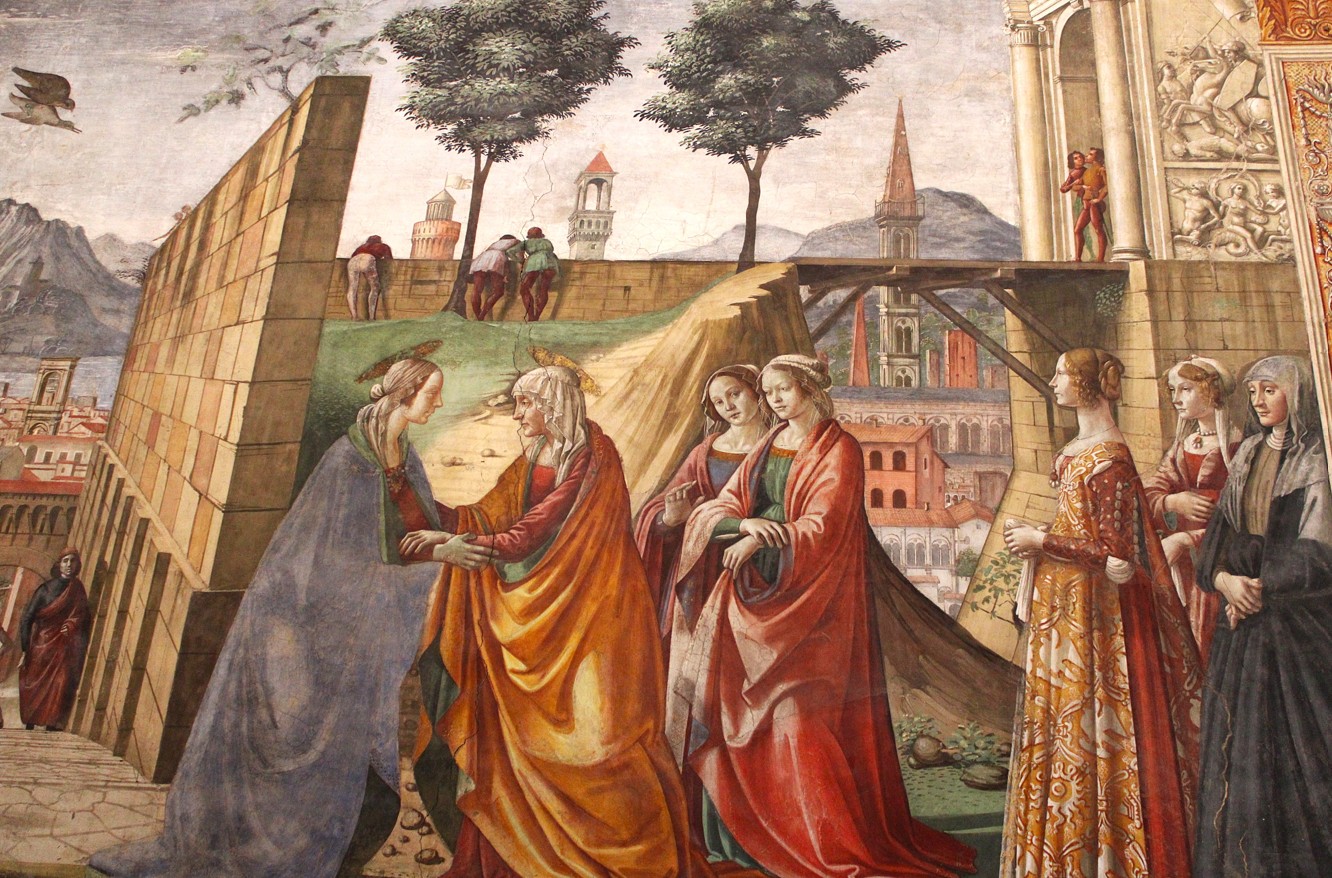
La decorazione della Cappella risultò fin da subito essere un progetto ambiziosissimo e il Ghirlandaio, che aveva alle spalle già la fama che gli avevano dato gli affreschi della Cappella Sassetti in Santa Trinita, avrebbe superato le aspettative del committente.
Il dettagliato contratto
Sapete, il contratto che il Ghirlandaio stipulò con il Tornabuoni era ricco di dettagli. Vennero specificati uno a uno i soggetti da rappresentare e venne descritta minuziosamente la qualità dei colori da segliere.
Ogni cartone, prima di essere trasposto sull’intonaco fresco, avrebbe dovuto essere approvato personalmente dal committente.
Il Tornabuoni desiderava un ciclo pittorico che in qualche modo celebrasse anche la propria familgia e la città di Firenze. Avrebbe dovuto quindi includere non solo scene di vita contemporanea ma anche ritrarre alcuni degli esponenti Tornabuoni più noti.
Il ciclo pittorico
Io ero entrato in via ufficiale a bottega dai Ghirlandaio il 1° aprile del 1488 anche se la mia presenza è documentata lì fin dall’anno precedente. Ebbi modo di preparare i colori per quell’importante lavoro e forse di metter mano su figure di secondaria importanza.
Il tema iconografico degli affreschi realizzati nella Cappella Tornabuoni si divide in due cicli: le ”Storie di San Giovanni Battista‘, patrono di Firenze e omonimo del committente, e le Storie della Vergine Maria.

Sulla parete sinistra furono narrate per immagini le Storie della Vergine con le scene della Cacciata di Gioacchino dal Tempio, la Natività della Vergine, la Presentazione al Tempio, lo Sposalizio della Vergine, l’Adorazione dei Magi, la Strage degli Innocenti e, nella lunetta, la Morte e Assunzione della Vergine.
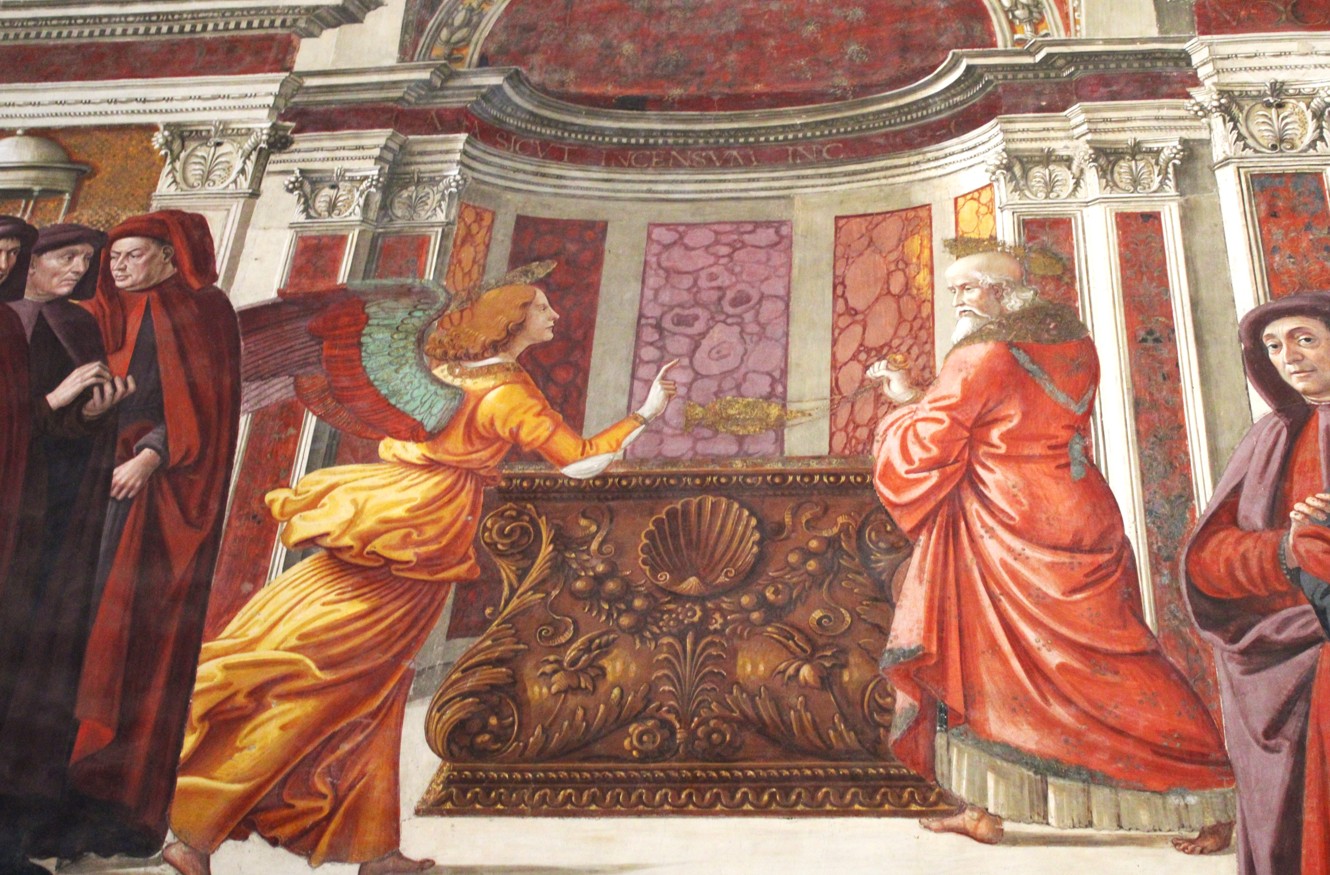
Sulla parete destra invece vennero raccontate le Storie del Battista con l’Apparizione dell’angelo a Zaccaria, la Visitazione, la Nascita del Battista, l’Imposizione del nome al figlio, la Predicazione del Battista, il Battesimo di Cristo e la Festa di Erode.
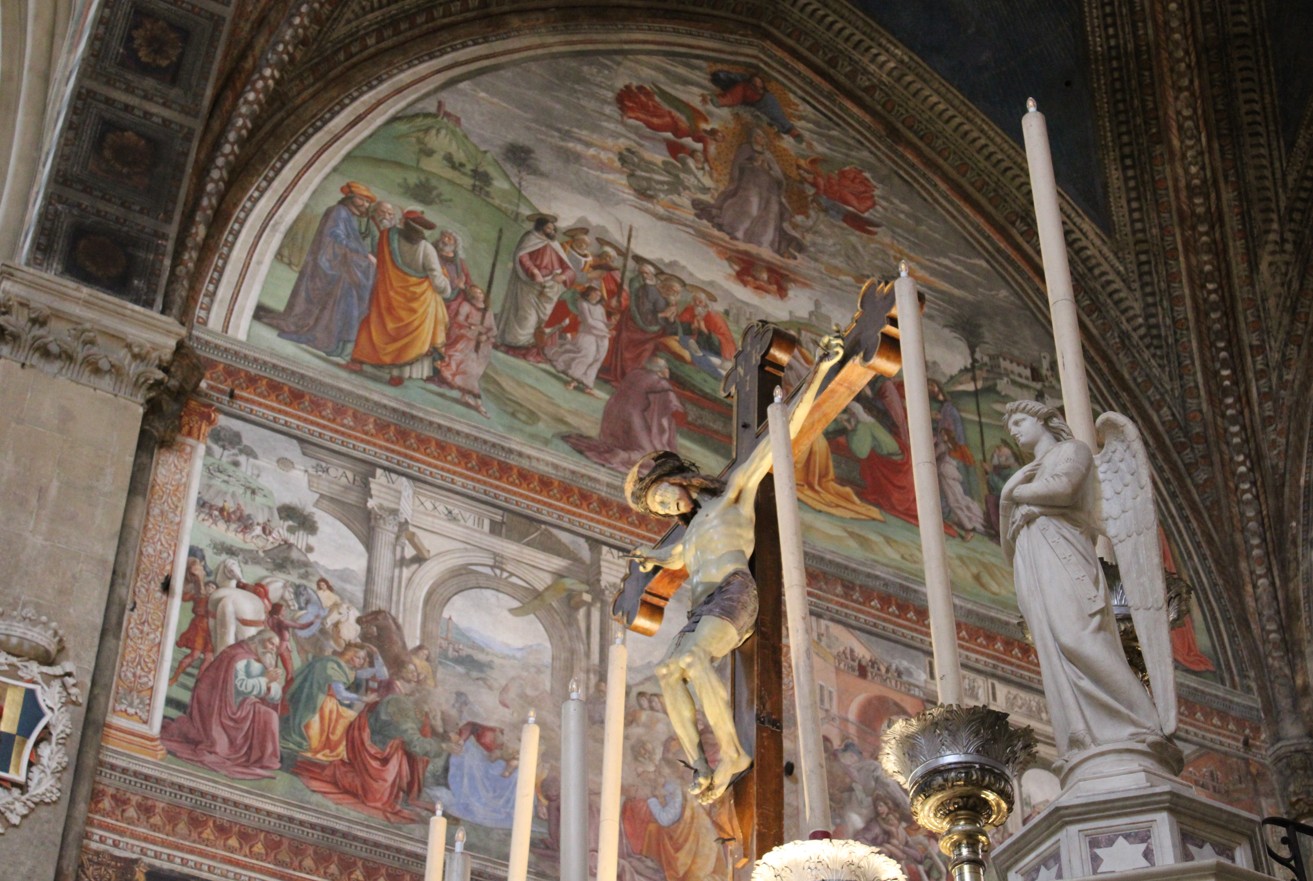
Infine, sulla parete di fondo, compare la vetrata centrale, realizzata sempre su disegno di Domenico Ghirlandaio, circondata da affreschi che raffigurano scene minori, i ritratti dei committenti Giovanni Tornabuoni e della moglie Francesca Pitti inginocchiati.
Su esplicita richiesta del Tornabuoni, il Ghirlandaio, con una ricercatezza dei dettagli che avvicina la pittura dell’artista al gusto fiammingo, oltre a rappresentare i soggetti sacri, volle ambientarli in sontuosi interni e paesaggi fiorentini.
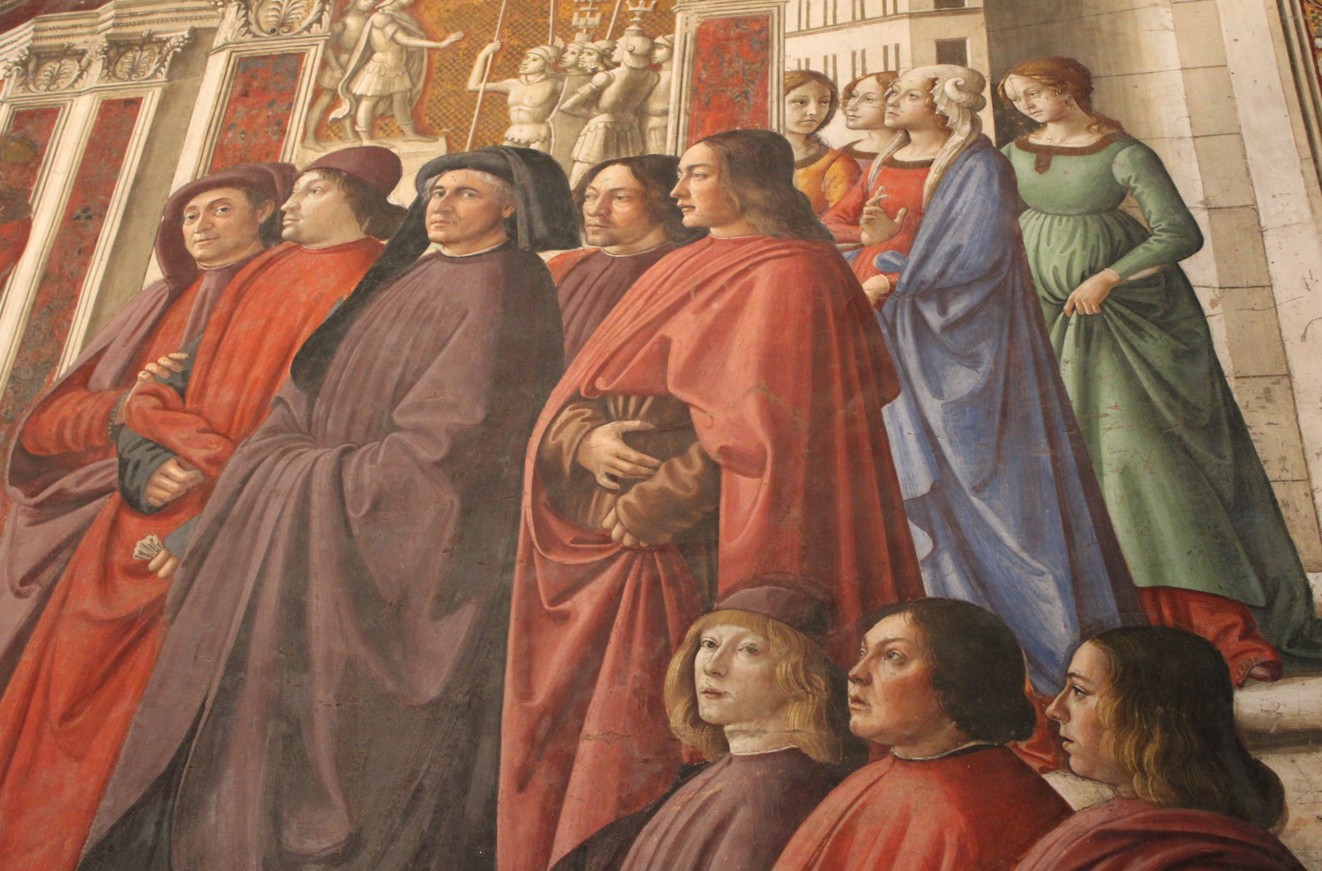
Gli affreschi sono popolati di ritratti dei personaggi contemporanei più in vista, a partire dai membri della famiglia Tornabuoni e i loro conoscenti. Di fatto questi affreschi sono un vero e proprio spaccato della società del tempo e mostrano usi e costumi dell’epoca, architetture e usanze.
Per il momento il sempre vostro Michelangelo Buonarroti vi saluta dandovi appuntamento ai prossimi post e sui social.
September 1, 1485: Ghirlandaio’s commission for the frescoes in the Tornabuoni Chapel
It was the first day of September 1485 when Giovanni Tornabuoni commissioned Domenico Ghirlandaio and his brother Davide to paint the frescoes in his chapel, located behind the high altar of Santa Maria Novella in Florence.
Tornabuoni was a wealthy banker and a patron closely connected to the Medici family. He was, in fact, the brother of Lucrezia Tornabuoni, who had married Piero the Gouty, father of Lorenzo the Magnificent.
The decoration of the chapel immediately proved to be an extremely ambitious project, and Ghirlandaio, already well-known for his frescoes in the Sassetti Chapel in Santa Trinita, would exceed the client’s expectations.
The detailed contract
You know, the contract that Ghirlandaio signed with Tornabuoni was rich in detail. The subjects to be depicted were specified one by one, and the quality of the colors to be chosen was meticulously described.
Each cartoon, before being transferred to the fresh plaster, had to be personally approved by the client. Tornabuoni wanted a pictorial cycle that in some way also celebrated his family and the city of Florence. It therefore needed to include not only scenes of contemporary life but also portraits of some of the most famous Tornabuoni figures.
The pictorial cycle
I had officially entered the Ghirlandaio workshop on April 1, 1488, although my presence is documented as early as the previous year. I had the opportunity to prepare the colors for that important work and perhaps to work on secondary figures.
The iconographic theme of the frescoes in the Tornabuoni Chapel is divided into two cycles: the “Stories of Saint John the Baptist,” patron saint of Florence and namesake of the patron, and the Stories of the Virgin Mary.
On the left wall, the Stories of the Virgin were narrated through images, with scenes of the Expulsion of Joachim from the Temple, the Nativity of the Virgin, the Presentation in the Temple, the Marriage of the Virgin, the Adoration of the Magi, the Massacre of the Innocents, and, in the lunette, the Death and Assumption of the Virgin.
On the right wall, the Stories of the Baptist were narrated, with the Apparition of the Angel to Zechariah, the Visitation, the Birth of the Baptist, the Naming of the Son, the Preaching of the Baptist, the Baptism of Christ, and the Feast of Herod.
Finally, on the back wall, the central stained-glass window, also designed by Domenico Ghirlandaio, is surrounded by frescoes depicting Minor scenes include kneeling portraits of patrons Giovanni Tornabuoni and his wife Francesca Pitti.
At Tornabuoni’s express request, Ghirlandaio, with a refinement of detail that brings the artist’s painting closer to Flemish taste, not only depicted religious subjects but also set them in sumptuous Florentine interiors and landscapes.
The frescoes are populated with portraits of prominent contemporary figures, starting with members of the Tornabuoni family and their acquaintances. These frescoes provide a true snapshot of contemporary society, showcasing era customs, architecture, and traditions.
For now, yours truly, Michelangelo Buonarroti bids you farewell and invites you to join him in future posts and on social media.

Sostienici – Support Us
Se questo blog ti piace e ti appassiona, puoi aiutarci a farlo crescere sempre più sostenendoci in modo concreto condividendo i post, seguendo le pagine social e con un contributo che ci aiuta ad andare avanti con il nostro lavoro di divulgazione. . ENGLISH: If you like and are passionate about this blog, you can help us make it grow more and more by supporting us in a concrete way by sharing posts, following social pages and with a contribution that helps us to move forward with our dissemination work.
10,00 €
Articoli
Condividi:


Questo sono io





sostienici

Sostienici – Support Us
Se questo blog ti piace e ti appassiona, puoi aiutarci a farlo crescere sempre più sostenendoci in modo concreto condividendo i post, seguendo le pagine social e con un contributo che ci aiuta ad andare avanti con il nostro lavoro di divulgazione. . ENGLISH: If you like and are passionate about this blog, you can help us make it grow more and more by supporting us in a concrete way by sharing posts, following social pages and with a contribution that helps us to move forward with our dissemination work.
€10,00


