

Pisa: avviato il restauro del mosaico con il Cristo Pantocratore del duomo
È stato avviato in questi giorni il restauro del grande mosaico di ‘Cristo in trono tra la Vergine e San Giovanni’ che si trova ne catino absidale del Duomo di Pisa.
Si tratta dell’unica opera ben documentata di Cimabue che lavorò al progetto a partire dal 1301 fino alla sua morte, avvenuta l’anno successivo. Il progetto poi fu portato avanti da Francesco da Pisa e da Vincino da Pistoia fino al completamento, avvenuto nel 1320.

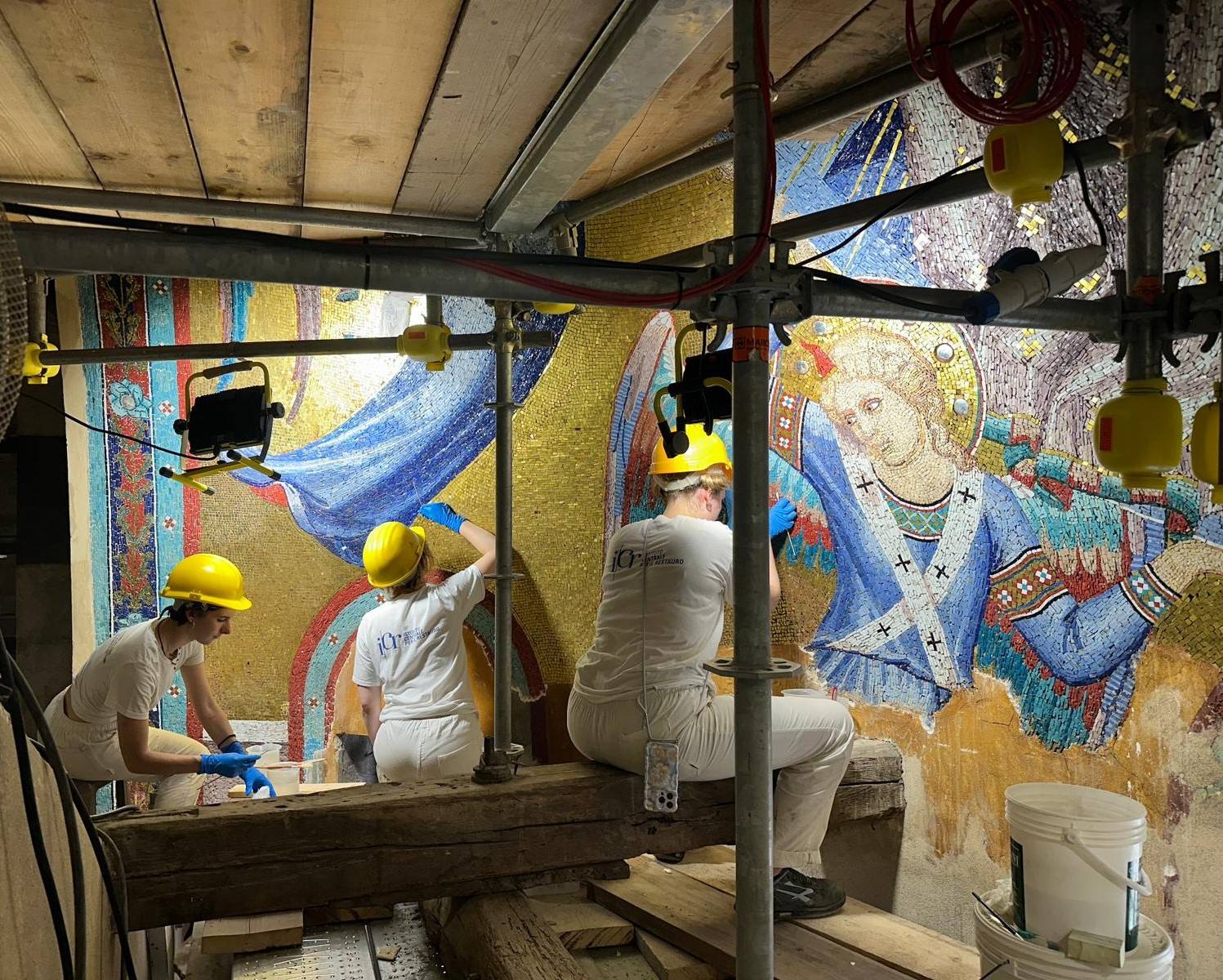
Durante questo importante progetto di restauro saranno coinvolti anche gli studenti del IV anno della Scuola di Alta Formazione per il Restauro – ICR sede di Roma. Saranno incaricati di studiare la tecnica esecutiva e metteranno mano al mosaico parietale che raffigura la Madonna nella mandorla di luce con gli angeli, realizzato con tessere lapidee, paste vitree e tessere di stucco.
Il cartone preparatorio di tale lavoro è stato attribuito nel corso della storia a diversi artisti come Francesco Traini, Lippi Memmi e Simone Martini.
Cristo Pantocratore
Al centro dell’abside è raffigurato Cristo Pantocratore seduto in trono che benedice con la mano destra mentre con l’altra sorregge un libro aperto.
Proprio all’interno del libro è riportata l’iscrizione EGO SUM LUX MU(N)DI, ovvero ‘Io sono la luce del mondo’.
Indossa una veste rossa e un manto azzurro. Il trono sul quale siede è decorato con motivi geometrici e sopra fanno la loro comparsa due leoni e due draghi.
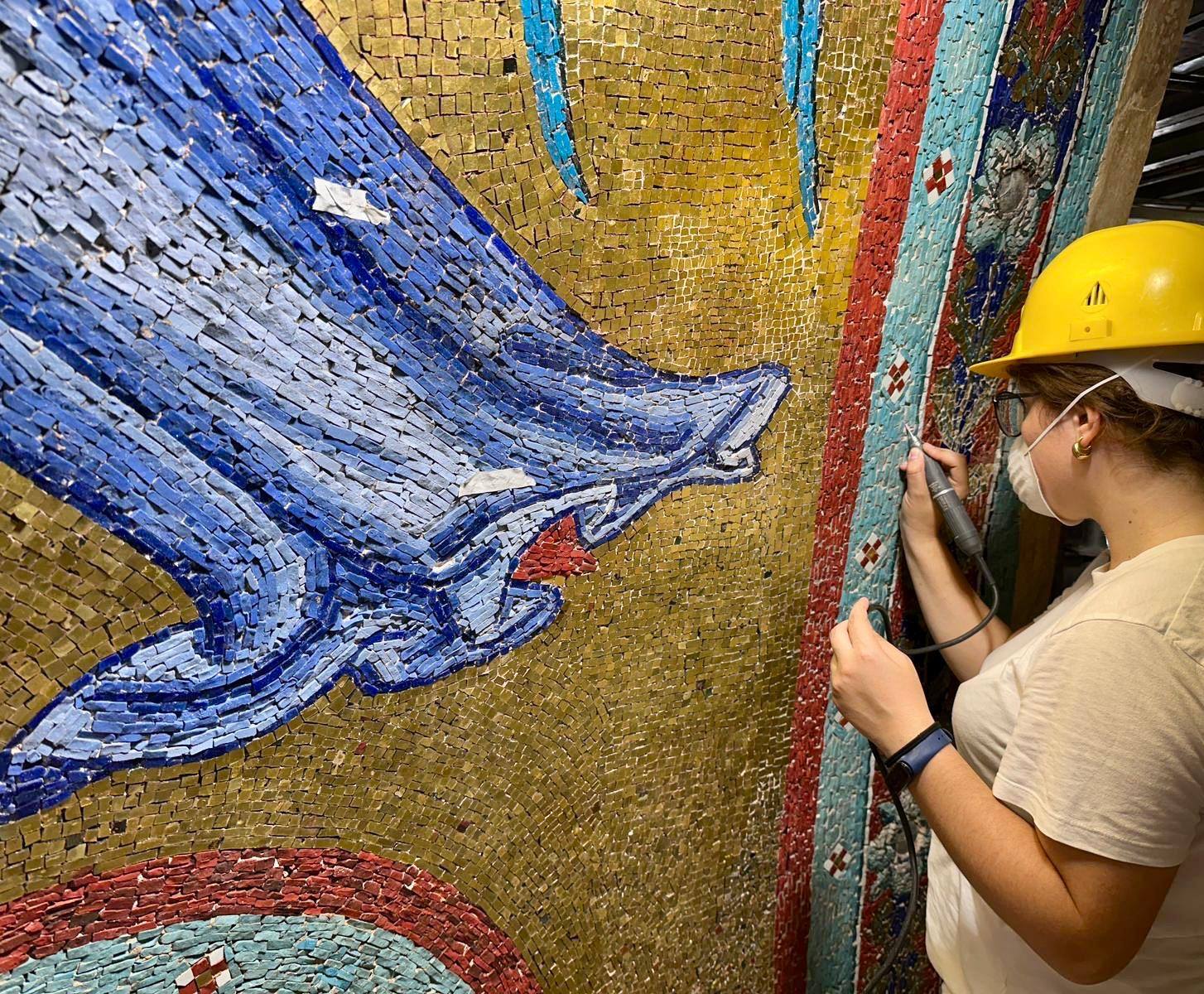
Guardate bene i piedi di Cristo che schiacciano un aspide e un basilisco. Come accennato prima, Cimabue lavorò al progetto, proseguendo l’opera avviata poco prima da Francesco da Pisa. Dopo la morte di Cimabue il cantiere venne sospeso e riaprì solo nel 1320, quando Vinicio da Pistoia completò la figura della Vergine.
Il restauro
L’intervento di restauro del catino absidale prevede sia la pulitura delle tessere che la rimozione di stuccature non idonee e il riordino degli intonaci adiacenti.
Per il momento il sempre vostro Michelangelo Buonarroti vi saluta dandovi appuntamento ai prossimi post e sui social.
Pisa: Restoration of the Cathedral’s Christ Pantocrator Mosaic Underway
Restoration of the large mosaic of “Christ Enthroned between the Virgin and Saint John” in the apse of Pisa Cathedral has recently begun.
It is the only well-documented work by Cimabue, who worked on the project from 1301 until his death the following year. The project was then continued by Francesco da Pisa and da Vincino da Pistoia until its completion in 1320.
This important restoration project will also involve fourth-year students from the Scuola di Alta Formazione per il Restauro (Higher Education School for Restoration) – ICR (Rome campus). They will be responsible for studying the execution technique and will work on the wall mosaic depicting the Madonna in a mandorla of light with angels, made with stone tesserae, glass paste, and stucco tesserae.
The preparatory cartoon for this work has been attributed throughout history to various artists, including Francesco Traini, Lippi Memmi, and Simone Martini.
Christ Pantocrator
At the center of the apse, Christ Pantocrator is depicted seated on a throne, blessing with his right hand while holding an open book with the other.
Inside the book is the inscription EGO SUM LUX MU(N)DI, meaning “I am the light of the world.” He wears a red robe and a blue cloak. The throne on which he sits is decorated with geometric motifs, and above it appear two lions and two dragons.
Look closely at Christ’s feet crushing an asp and a basilisk. As mentioned above, Cimabue worked on the project, continuing the work begun shortly before by Francesco da Pisa. After Cimabue’s death, construction work was suspended and reopened only in 1320, when Vinicio da Pistoia completed the figure of the Virgin.
The Restoration
The restoration of the apse includes cleaning the tiles, removing unsuitable stucco, and reorganizing the adjacent plaster.
For now, yours truly, Michelangelo Buonarroti, bids farewell and invites you to join us in future posts and on social media.

Sostienici – Support Us
Se questo blog ti piace e ti appassiona, puoi aiutarci a farlo crescere sempre più sostenendoci in modo concreto condividendo i post, seguendo le pagine social e con un contributo che ci aiuta ad andare avanti con il nostro lavoro di divulgazione. . ENGLISH: If you like and are passionate about this blog, you can help us make it grow more and more by supporting us in a concrete way by sharing posts, following social pages and with a contribution that helps us to move forward with our dissemination work.
10,00 €
Condividi:


Questo sono io





sostienici

Sostienici – Support Us
Se questo blog ti piace e ti appassiona, puoi aiutarci a farlo crescere sempre più sostenendoci in modo concreto condividendo i post, seguendo le pagine social e con un contributo che ci aiuta ad andare avanti con il nostro lavoro di divulgazione. . ENGLISH: If you like and are passionate about this blog, you can help us make it grow more and more by supporting us in a concrete way by sharing posts, following social pages and with a contribution that helps us to move forward with our dissemination work.
€10,00


