

13 maggio 1981: l’attentato a papa Wojtyła e la targa che lo ricorda a San Pietro
Il 13 maggio 1981, in una soleggiata Piazza San Pietro gremita di fedeli, Papa Giovanni Paolo II, al secolo Karol Wojtyla, stava salutando la folla a bordo di una jeep scoperta poco prima dell’udienza generale del mercoledì. Poco dopo, alle ore 17:17, si udirono degli spari e il pontefice risultò essere gravemente ferito.
Un uomo, identificato in seguito come Mehmet Ali Ağca, terrorista turco con un passato criminale, aveva estratto una pistola semiautomatica per sparare al papa. Furono due i proiettili calibro 9mm che lo colpirono all’addome e alla mano destra.
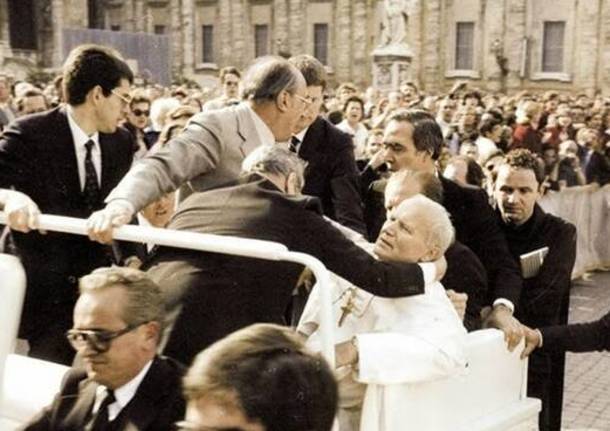
Il Papa si accasciò tra le braccia del suo segretario particolare, Stanisław Dziwisz, e della guardia del corpo Angelo Gugel. Il panico si diffuse rapidamente tra la folla. Alcune suore presenti reagirono con prontezza, gettandosi sull’attentatore per impedirgli di continuare a sparare, fino all’arrivo delle forze di sicurezza che lo arrestarono.
Giovanni Paolo II fu immediatamente trasportato d’urgenza al Policlinico Gemelli, dove subì un delicato intervento chirurgico durato diverse ore. Le sue condizioni erano critiche a causa della grave perdita di sangue e dei danni agli organi interni. Il mondo intero seguì con apprensione le notizie sulla sua salute.
Nei giorni successivi, nonostante la gravità delle ferite, il Papa mostrò una sorprendente forza d’animo e una grande fede. Si riprese lentamente, e il suo primo pensiero fu di perdono verso il suo aggressore.
Le indagini sull’attentato furono complesse e cercarono di far luce sui possibili mandanti. Diverse ipotesi furono avanzate, coinvolgendo servizi segreti di paesi dell’Est e organizzazioni terroristiche, ma la verità completa non è mai stata accertata.
Un gesto significativo avvenne nel dicembre 1983, quando Papa Giovanni Paolo II incontrò Mehmet Ali Ağca nel carcere di Rebibbia. Si strinsero la mano e parlarono in privato. Il Papa gli offrì il suo perdono, un messaggio di riconciliazione che colpì profondamente l’opinione pubblica mondiale.
Giovanni Paolo II attribuì la sua sopravvivenza all’intercessione della Madonna di Fátima, la cui festa liturgica ricorre proprio il 13 maggio. In segno di gratitudine, fece incastonare uno dei proiettili che lo avevano colpito nella corona della statua della Vergine nel santuario portoghese.
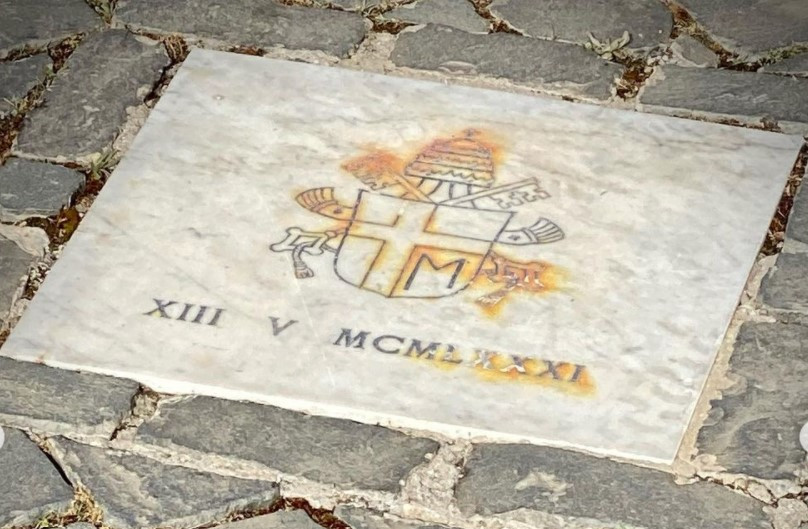
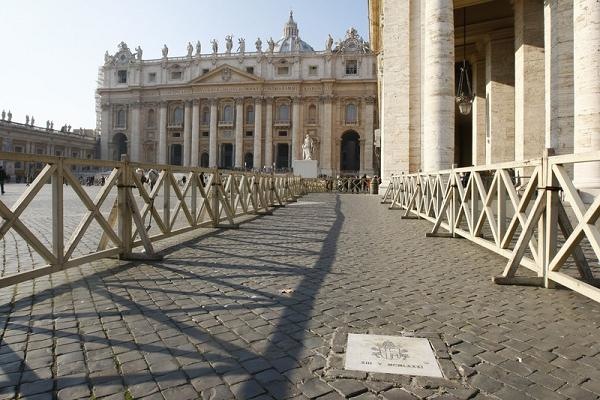
Nella pavimentazione di Piazza San Pietro è stata posta una lapide in marmo laddove avvenne l’attentato, proprio per ricordare quell’increscioso episodio che tenne tutto il mondo con il fiato sospeso. Sulla superficie sono incise le insegne papali di Wojtyla e la data dell’accaduto in numeri romani.
Per il momento il sempre vostro Michelangelo Buonarroti vi saluta dandovi appuntamento ai prossimi post e sui social.
May 13, 1981: the assassination attempt on Pope Wojtyła and that plaque commemorating him in St. Peter’s Square
On May 13, 1981, in a sunny St. Peter’s Square packed with faithful, Pope John Paul II, born Karol Wojtyla, was greeting the crowd aboard an open jeep shortly before the Wednesday general audience. Shortly afterward, at 5:17 p.m., shots were heard and the pontiff was found to be seriously injured.
A man, later identified as Mehmet Ali Ağca, a Turkish terrorist with a criminal past, had pulled out a semi-automatic pistol to shoot the pope. Two 9mm bullets struck him in the abdomen and right hand.
The Pope collapsed in the arms of his personal secretary, Stanisław Dziwisz, and his bodyguard Angelo Gugel. Panic quickly spread through the crowd. Some nuns present reacted promptly, throwing themselves on the attacker to prevent him from continuing to shoot, until the security forces arrived and arrested him.
John Paul II was immediately rushed to the Gemelli Polyclinic, where he underwent a delicate surgical operation that lasted several hours. His condition was critical due to severe blood loss and damage to his internal organs. The entire world followed the news about his health with apprehension.
In the following days, despite the severity of his wounds, the Pope showed surprising strength of spirit and great faith. He slowly recovered, and his first thought was to forgive his attacker.
The investigations into the attack were complex and sought to shed light on the possible instigators. Various hypotheses were advanced, involving secret services from Eastern countries and terrorist organizations, but the complete truth has never been ascertained.
A significant gesture occurred in December 1983, when Pope John Paul II met Mehmet Ali Ağca in Rebibbia prison. They shook hands and spoke in private. The Pope offered him his forgiveness, a message of reconciliation that deeply affected world public opinion.
John Paul II attributed his survival to the intercession of Our Lady of Fátima, whose liturgical feast falls on May 13. As a sign of gratitude, he had one of the bullets that had hit him embedded in the crown of the statue of the Virgin in the Portuguese sanctuary.
A marble plaque was placed in the pavement of St. Peter’s Square where the attack took place, to commemorate that unfortunate episode that kept the whole world in suspense. The papal insignia of Wojtyla and the date of the event in Roman numerals are engraved on the surface.
For the moment, yours truly, Michelangelo Buonarroti bids you farewell, and will see you in the next posts and on social media.

Sostienici – Support Us
Se questo blog ti piace e ti appassiona, puoi aiutarci a farlo crescere sempre più sostenendoci in modo concreto condividendo i post, seguendo le pagine social e con un contributo che ci aiuta ad andare avanti con il nostro lavoro di divulgazione. . ENGLISH: If you like and are passionate about this blog, you can help us make it grow more and more by supporting us in a concrete way by sharing posts, following social pages and with a contribution that helps us to move forward with our dissemination work.
10,00 €
Condividi:


Questo sono io





sostienici

Sostienici – Support Us
Se questo blog ti piace e ti appassiona, puoi aiutarci a farlo crescere sempre più sostenendoci in modo concreto condividendo i post, seguendo le pagine social e con un contributo che ci aiuta ad andare avanti con il nostro lavoro di divulgazione. . ENGLISH: If you like and are passionate about this blog, you can help us make it grow more and more by supporting us in a concrete way by sharing posts, following social pages and with a contribution that helps us to move forward with our dissemination work.
€10,00


