
La Scultura del 14 febbraio: Paolo e Francesca di Puttinati. Amore e Destino
In occasione di questo San Valentino, voglio raccontarvi la storia di una scultura che racconta un amore potente: quello di Paolo e Francesca.
La scultura fu realizzata dall’artista veronese Alessandro Puttinati, tra il 1862 e il 1863 su commissione di Francesco Ponti.

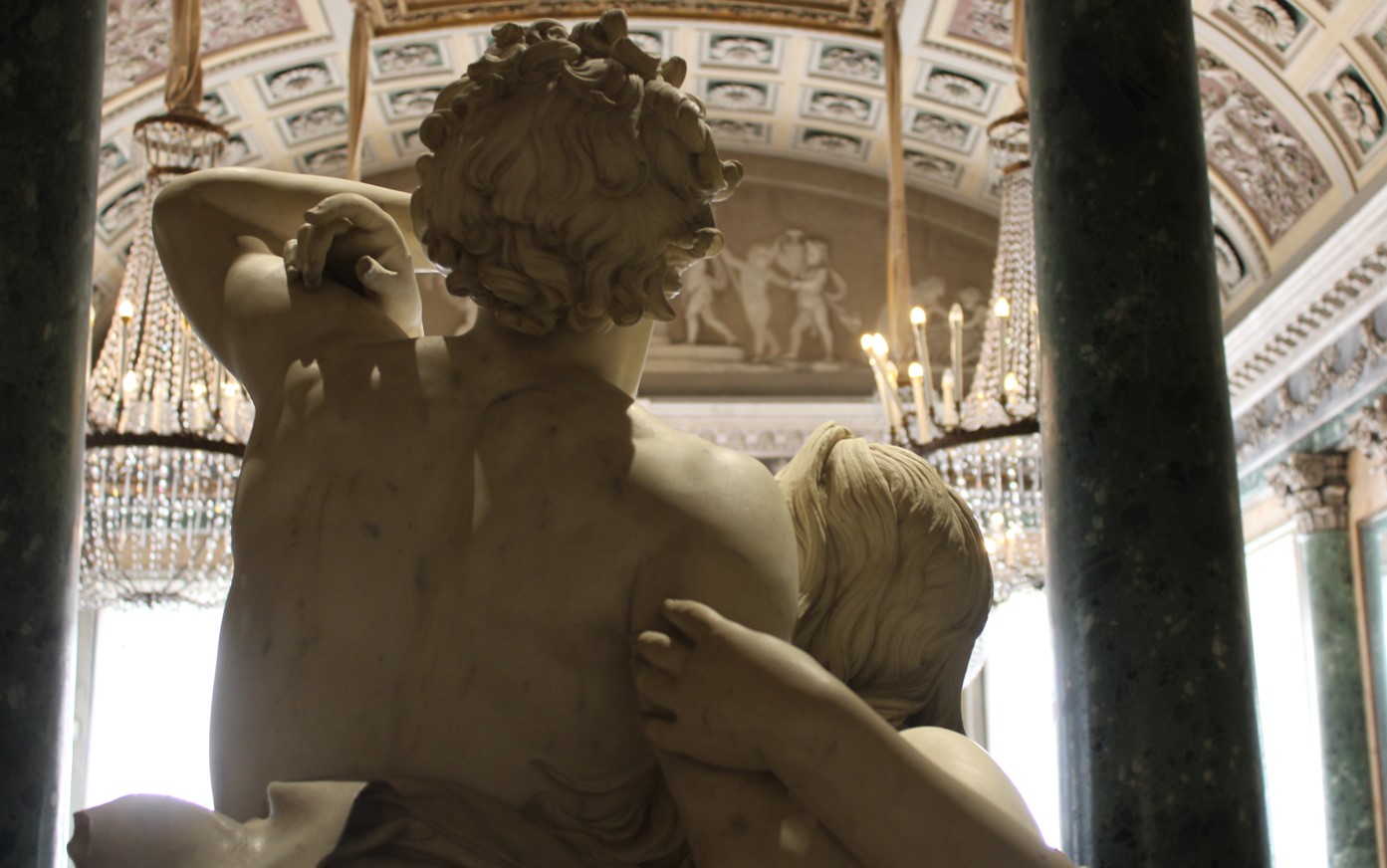
Osservandola con un pizzico di attenzione, sicuramente troverete qualche affinità nella posa e nell’espressione del volto di Paolo riconducibili direttamente al più noto Orfeo, scolpito tempo prima da Antonio Canova.
Il gruppo dei due amanti slanciati in avanti, sono una vera e propria sfida contro la forza di gravità. L’artista dovette affrontare un bilanciamento arduo, vincendo la gara a mani basse contro la la distribuzione dei pesi.

Puttinati, nel gruppo di scultoreo di Paolo e Francesca, riuscì a raffigurare in modo magistrale i venti di burrasca che investono turbinando i due giovani.
Se da venti di passione furono travolti in vita, da venti saranno travolti dopo la morte, secondo quanto Dante narra nei gironi infernali che la sua fantasia creò.
Francesca si aggrappa con forza a Paolo ma il dolore che provano, segna le espressioni di entrambi i volti. Il romanticismo di quella resistenza eterna è messo in evidenza da una sorta di ascesa verso l’alto degli amanti, fermata per sempre nel marmo da Puttinati.
L’artista riprese alla lettera il passo della Divina Commedia del secondo girone dell’Inferno. Dante accompagnato da Virgilio, dopo aver oltrepassato Minosse, entra nel luogo oscuro dove la bufera incessante trascina i dannati.
Proprio in quel girone il Sommo Poeta incontra i lussuriosi e si emoziona alla vista dei due amanti Paolo Malatesta e Francesca da Rimini, assassinati da Gianciotto Malatesta.
La scultura di Puttinati fu esposta per la prima volta al pubblico nel 1863 a Brera. Lo spettatore che si trovi dinanzi all’opera, è chiamato a fare le veci di Dante mentre osserva i due trascinati dai venti.

A colpire in modo particolare di quest’opera non è tanto il modellato classicista ma piuttosto l’impronta teatrale delle due figure che fa pensare a una vera e propria messa in scena delle loro vite. Lo scorcio prospettico che si ha guardando la scultura dalla parte anteriore non è sufficiente per apprezzarne appieno il dinamismo.
Lo scultore infatti, con questo gruppo, invita lo spettatore a girargli attorno per comprenderne meglio la leggerezza di quel marmo che sembra essere sorretto solo dall’aria che lo circonda.

Se volete apprezzare quest’opera dal vivo, non vi rimane altro che andare alla Galleria di Arte Moderna di Milano.
Per il momento il vostro Michelangelo Buonarroti vi saluta dandovi appuntamento ai prossimi post e sui social.

The sculpture of February 14: Paolo and Francesca by Puttinati
On the occasion of this Valentine’s Day, I want to tell you the story of a sculpture that tells of a powerful love: that of Paolo and Francesca.
The sculpture was created by the Veronese artist Alessandro Puttinati, between 1862 and 1863, commissioned by Francesco Ponti.
Looking at it with a little attention, you will surely find some similarities in the pose and expression of Paolo’s face directly attributable to the more famous Orpheus, sculpted some time before by Antonio Canova.
The group of the two lovers leaping forward are a real challenge against the force of gravity. The artist had to face a difficult balance, winning the race hands down against the distribution of weights.
Puttinati, in the sculpture group of Paolo and Francesca, managed to masterfully depict the stormy winds that hit the two young people in a whirlwind.
If they were swept away by winds of passion in life, they will be swept away by winds after death, according to what Dante narrates in the circles of hell that his imagination created.
Francesca clings tightly to Paolo but the pain they feel marks the expressions on both their faces. The romanticism of that eternal resistance is highlighted by a sort of ascent of the lovers upwards, forever captured in marble by Puttinati.
The artist took up literally the passage from the Divine Comedy of the second circle of Hell. Dante accompanied by Virgil, after having passed Minos, enters the dark place where the incessant storm drags the damned.
It is precisely in that circle that the Supreme Poet meets the lustful and is moved by the sight of the two lovers Paolo Malatesta and Francesca da Rimini, murdered by Gianciotto Malatesta.
Puttinati’s sculpture was exhibited for the first time to the public in 1863 in Brera. The spectator who finds himself in front of the work is called to take the place of Dante as he observes the two being dragged by the winds.
What is particularly striking about this work is not so much the classicist modeling but rather the theatrical imprint of the two figures that makes one think of a real staging of their lives. The perspective glimpse that one has when looking at the sculpture from the front is not enough to fully appreciate its dynamism.
In fact, with this group, the sculptor invites the spectator to walk around it to better understand the lightness of that marble that seems to be supported only by the air that surrounds it.
If you want to appreciate this work in person, all you have to do is go to the Galleria di Arte Moderna in Milan.
For the moment, your Michelangelo Buonarroti bids you farewell, making an appointment with you in the next posts and on social media.

Sostienici – Support Us
Se questo blog ti piace e ti appassiona, puoi aiutarci a farlo crescere sempre più sostenendoci in modo concreto condividendo i post, seguendo le pagine social e con un contributo che ci aiuta ad andare avanti con il nostro lavoro di divulgazione. . ENGLISH: If you like and are passionate about this blog, you can help us make it grow more and more by supporting us in a concrete way by sharing posts, following social pages and with a contribution that helps us to move forward with our dissemination work.
10,00 €
Condividi:


Questo sono io





sostienici

Sostienici – Support Us
Se questo blog ti piace e ti appassiona, puoi aiutarci a farlo crescere sempre più sostenendoci in modo concreto condividendo i post, seguendo le pagine social e con un contributo che ci aiuta ad andare avanti con il nostro lavoro di divulgazione. . ENGLISH: If you like and are passionate about this blog, you can help us make it grow more and more by supporting us in a concrete way by sharing posts, following social pages and with a contribution that helps us to move forward with our dissemination work.
€10,00


