
Le Ore Danzanti del Finelli: il mattino, il mezzodì e la malinconica sera
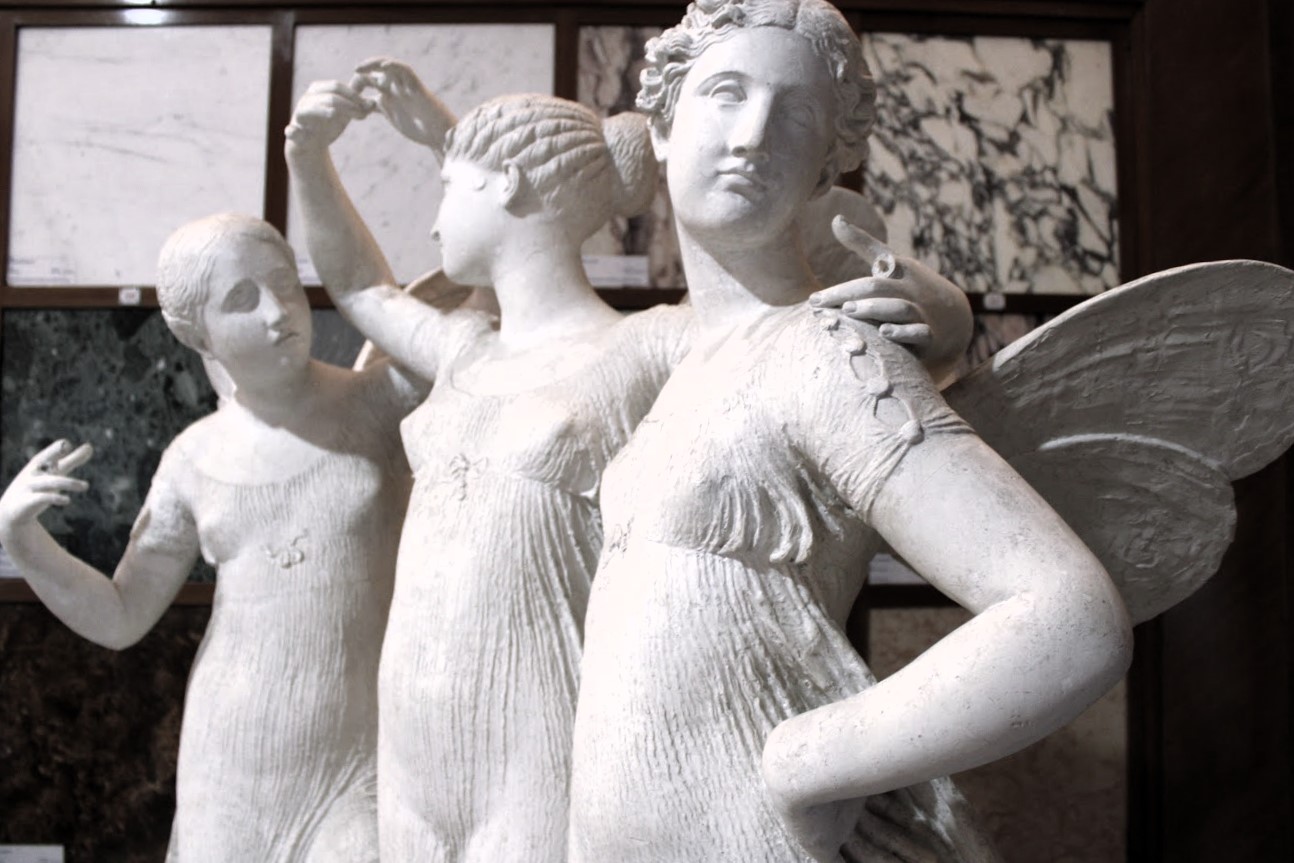
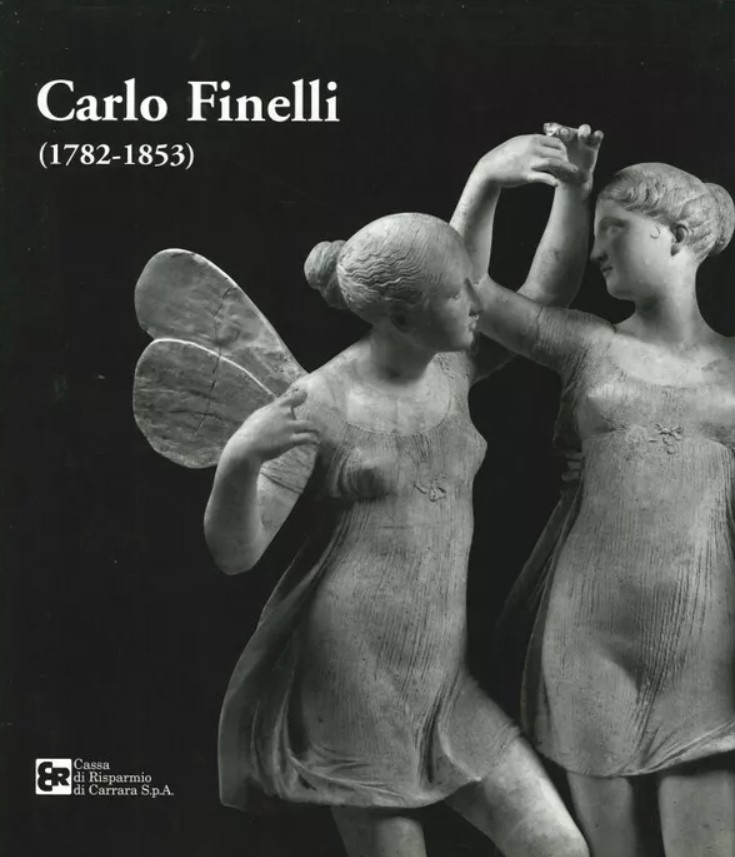
La scultura di cui voglio parlarvi oggi è il meraviglioso gruppo delle Ore Danzanti, scolpito nel marmo di Carrara nel 1824 da Carlo Finelli.
Carlo Finelli nacque a Carrara il 25 aprile del 1782 dal babbo scultore Vitale Finelli e dalla mamma Maria Antonia Silici. Il fratello maggiore Pietro allora aveva dodici anni e già era stato avviato dal padre all’arte della scultura.
Carlo mosse i primi passi nel mondo dell’arte fin da piccino, incoraggiato e spinto dal padre che già discendeva da generazioni di scultori. Tra i suoi avi si annovera anche il più celebre Giuliano Finelli che aveva avuto modo di lavorare con Gian Lorenzo Bernini.
Il talento prorompente di Giuliano era stato notato da Pietro Bernini, padre di Gian Lorenzo, che lo volle accogliere nella sua bottega. Divenne un vero maestro del traforo tanto che il Bernini lo volle con sé per dar vita al delicatissimo fogliame dell’Apollo e Dafne, oggi alla Galleria Borghese.

Ma torniamo a noi e a Carlo Finelli. Ultimati gli studi all’Accademia di Belle Arti di Carrara, andò a Firenze per perfezionarsi, avendo la possibilità di studiare dal vero capolavoro assoluti di artisti come me, il Giambologna, Donatello e tanti altri.
A 22 anni si trasferì a Roma dove lo aspettava il fratello maggiore scultore che aveva rapporti niente meno che con Antonio Canova.
Il gruppo delle Ore Danzanti fu scolpito dall’artista nel 1824, seguendo un tema mitologico raro nella scultura ottocentesca e poco rappresentato anche nella tradizione più antica.
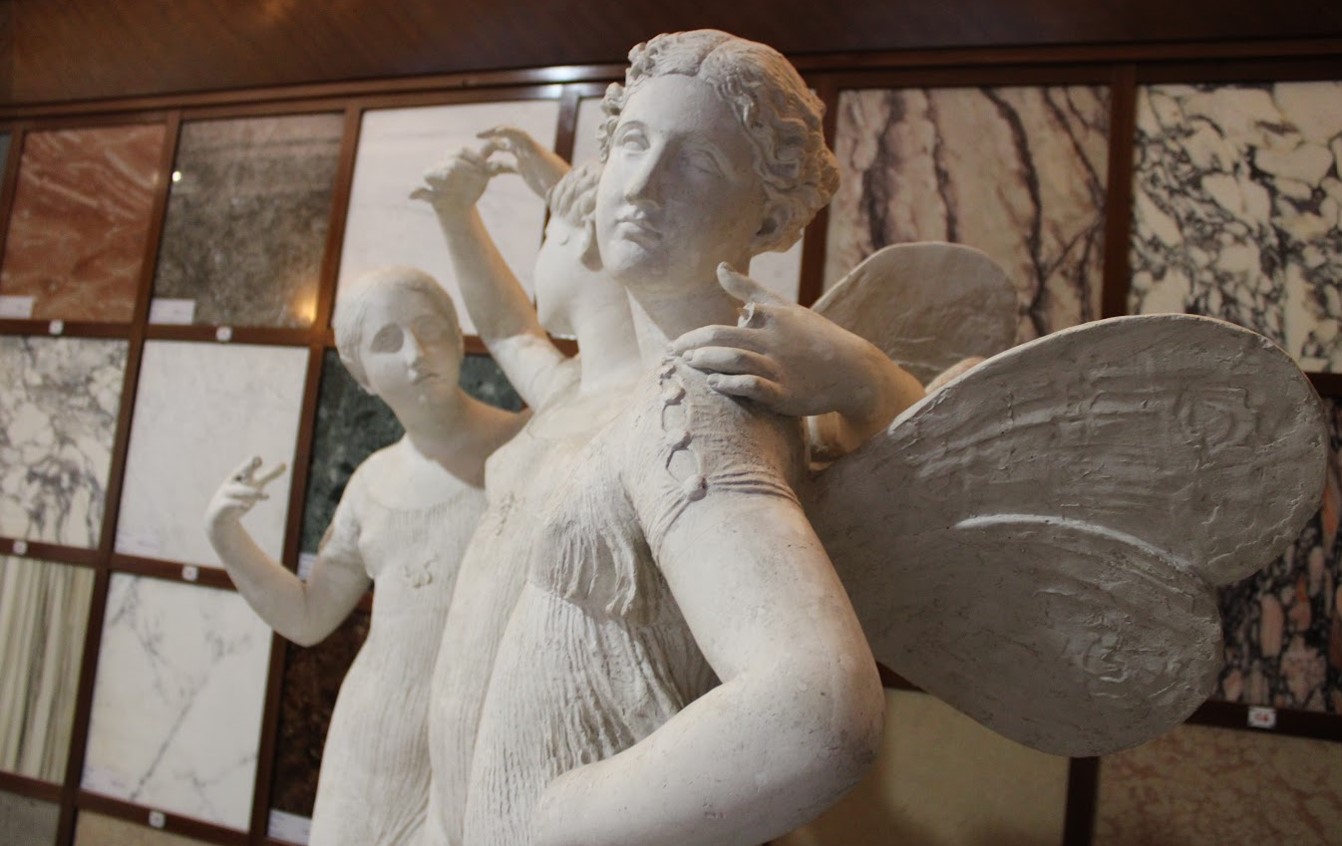
Di questo gruppo scrisse Giuseppe Checchitelli: “Chi non vede a partire da destra il sorriso del mattino, le solenni gioie di mezzodì e la melanconia della sera”. Di fatto è la spiegazione dei tre diversi atteggiamenti delle fanciulle che rispecchiano i tre differenti momenti della giornata. Sono anche l’allegoria della vita di ciascuno: la giovinezza, l’età adulta e la vecchiaia.
Perfezionista e con una cura estrema dei dettagli, il Finelli era uno di quelli che, un po’ come me, sentiva sempre che avrebbe potuto fare meglio.
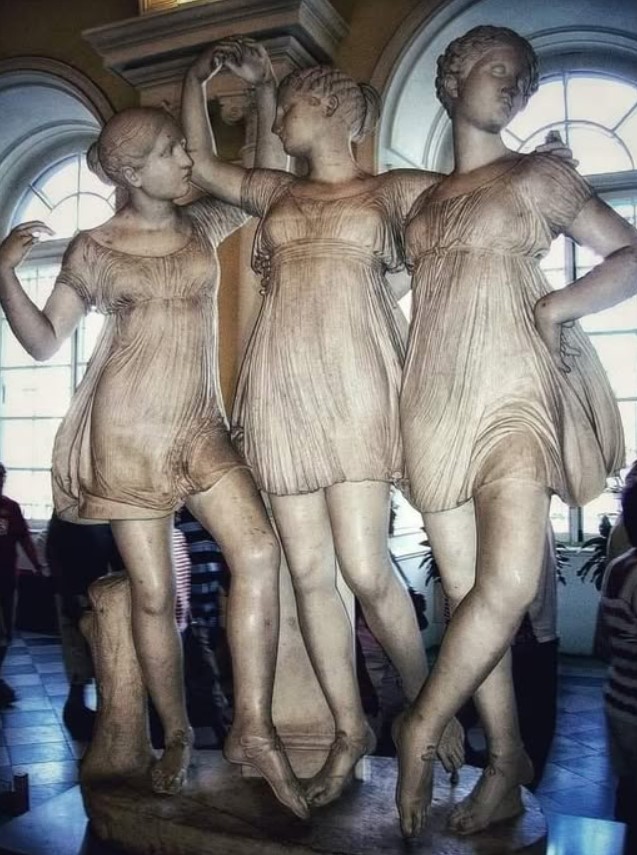
Dotate di ali da farfalla, le Ore Danzanti diventano fuggevoli. Non è forse il tempo veloce nello scorrere via?
Del gruppo delle Ore Danzanti sorprende la raffinatezza degli abiti che indossano le tre donne. Sembrano veli sottili che, con le loro infinite pieghe, esaltano le forme dei corpi senza celarle del tutto alla vista dell’osservatore.
Leggermente mosse da un alito di vento, seguono l’andamento dei loro movimenti, dei loro corpo. Sono l’espressione più tangibile del virtuosismo di un grande artista, quale Carlo Finelli era.
Il principe Demidoff rimase così affascinato dalle Ore Danzanti che volle comprare l’opera che tutt’oggi è custodita all’Hermitage di San Pietroburgo.

Per il momento il sempre vostro Michelangelo Buonarroti vi saluta dandovi appuntamento ai prossimi post e sui social.
Finelli’s Dancing Hours: Morning, Midday and the Melancholy Evening
The sculpture I want to talk to you about today is the wonderful group of Finelli’s Dancing Hours, carved in Carrara marble in 1824 by Carlo FInelli.
Carlo Finelli was born in Carrara on April 25, 1782 to his father, the sculptor Vitale Finelli, and his mother, Maria Antonia Silici. His older brother Pietro was twelve years old at the time and had already been introduced to the art of sculpture by his father.
Carlo took his first steps in the world of art as a child, encouraged and pushed by his father who already descended from generations of sculptors. Among his ancestors is also the more famous Giuliano Finelli who had had the opportunity to work with Gian Lorenzo Bernini. Giuliano’s bursting talent had been noticed by Pietro Bernini, Gian Lorenzo’s father, who wanted to welcome him into his workshop. He became a true master of fretwork, so much so that Bernini wanted him with him to give life to the delicate foliage of Apollo and Daphne, today at the Borghese Gallery.
But let’s get back to us and Carlo Finelli. After completing his studies at the Academy of Fine Arts in Carrara, he went to Florence to perfect himself, having the opportunity to study from the true absolute masterpieces of artists like me, Giambologna, Donatello and many others.
At 22 he moved to Rome where his older brother, a sculptor who had relations with none other than Antonio Canova, was waiting for him.
The group of the Dancing Hours was sculpted by the artist in 1824, following a mythological theme rare in nineteenth-century sculpture and little represented even in the most ancient tradition.
Giuseppe Checchitelli wrote about this group: “Who does not see starting from the right the smile of the morning, the solemn joys of midday and the melancholy of the evening”. In fact, it is the explanation of the three different attitudes of the girls that reflect the three different moments of the day. They are also the allegory of each person’s life: youth, adulthood and old age.
A perfectionist and with extreme attention to detail, Finelli was one of those who, a bit like me, always felt that he could have done better.
The refinement of the clothes worn by the three women in the Dancing Hours group is surprising. They seem like thin veils that with their infinite folds enhance the shapes of the bodies without completely hiding them from the view of the observer.
Lightly moved by a breath of wind, they follow the flow of their movements, of their bodies. They are the most tangible expression of the virtuosity of a great artist, such as Carlo Finelli.
Prince Demidoff was so fascinated by the Dancing Hours that he wanted to buy the work that is still kept at the Hermitage in St. Petersburg.
The original plaster model of the work is instead kept in the Sala dei Marmi of the Academy of Fine Arts of Carrara.
For the moment, yours ever Michelangelo Buonarroti bids you farewell, making an appointment with you in the next posts and on social media

Sostienici – Support Us
Se questo blog ti piace e ti appassiona, puoi aiutarci a farlo crescere sempre più sostenendoci in modo concreto condividendo i post, seguendo le pagine social e con un contributo che ci aiuta ad andare avanti con il nostro lavoro di divulgazione. . ENGLISH: If you like and are passionate about this blog, you can help us make it grow more and more by supporting us in a concrete way by sharing posts, following social pages and with a contribution that helps us to move forward with our dissemination work.
10,00 €

Condividi:


Questo sono io





sostienici

Sostienici – Support Us
Se questo blog ti piace e ti appassiona, puoi aiutarci a farlo crescere sempre più sostenendoci in modo concreto condividendo i post, seguendo le pagine social e con un contributo che ci aiuta ad andare avanti con il nostro lavoro di divulgazione. . ENGLISH: If you like and are passionate about this blog, you can help us make it grow more and more by supporting us in a concrete way by sharing posts, following social pages and with a contribution that helps us to move forward with our dissemination work.
€10,00


santo cielo, quanta grazia!
"Mi piace"Piace a 1 persona
bellissima opera, con una cura dei dettagli incredibile
"Mi piace"Piace a 1 persona