
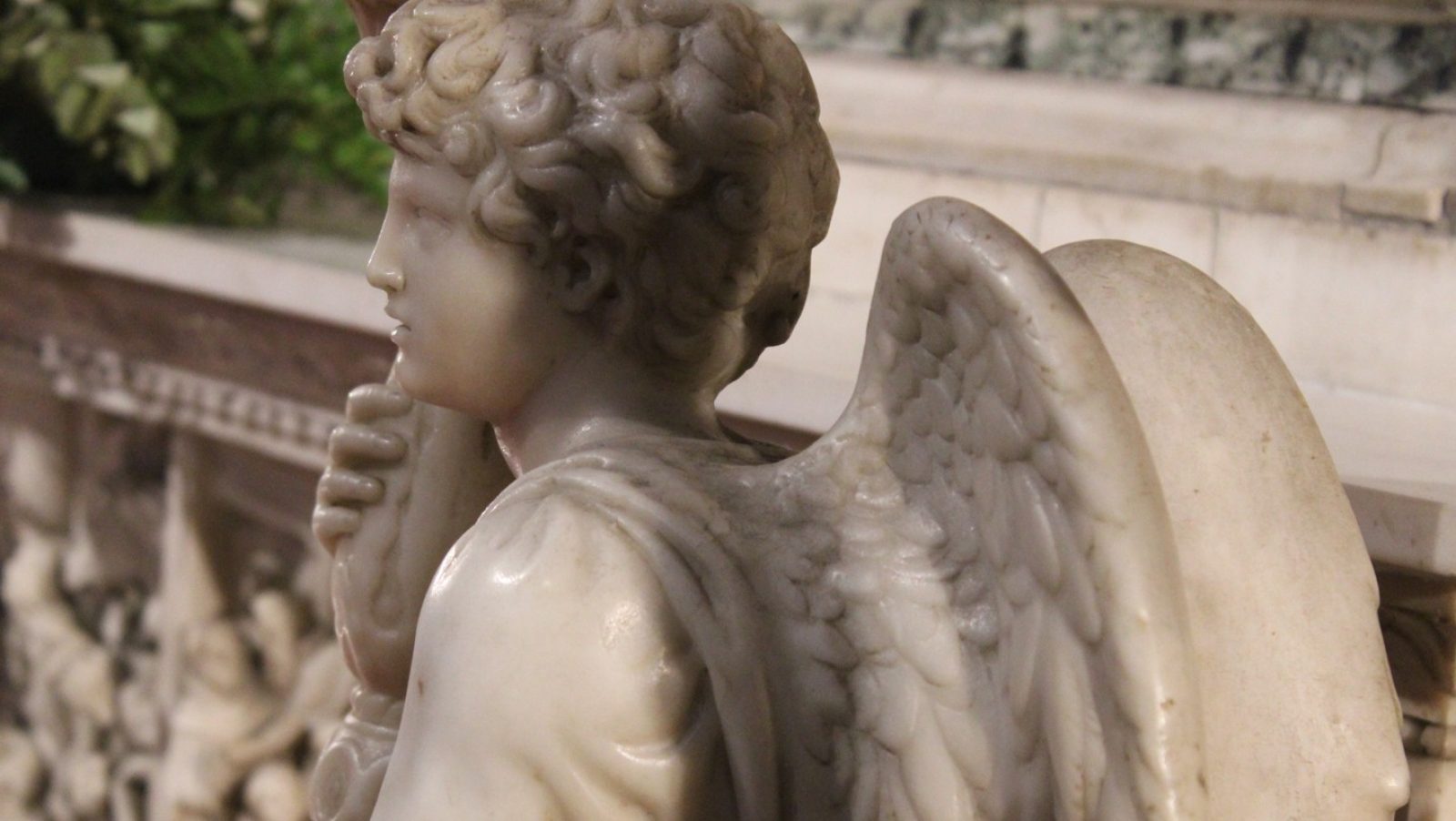
Roma: il palazzo con gli sgraffiti di via Crispi
A Roma, in Via Crispi, sotto lo sguardo distratto di turisti che passano davanti senza nemmeno notarlo, c’è un palazzo che ha la facciata decorata con sgraffiti tutt’altro che trascurabili.
Si trova al civico 89 e fu realizzato nel 1890, come riporta la data in numeri romani presente sull’opera stessa, in pieno periodo risorgimentale, quando si riscoperse un grande interesse per il periodo del Rinascimento.
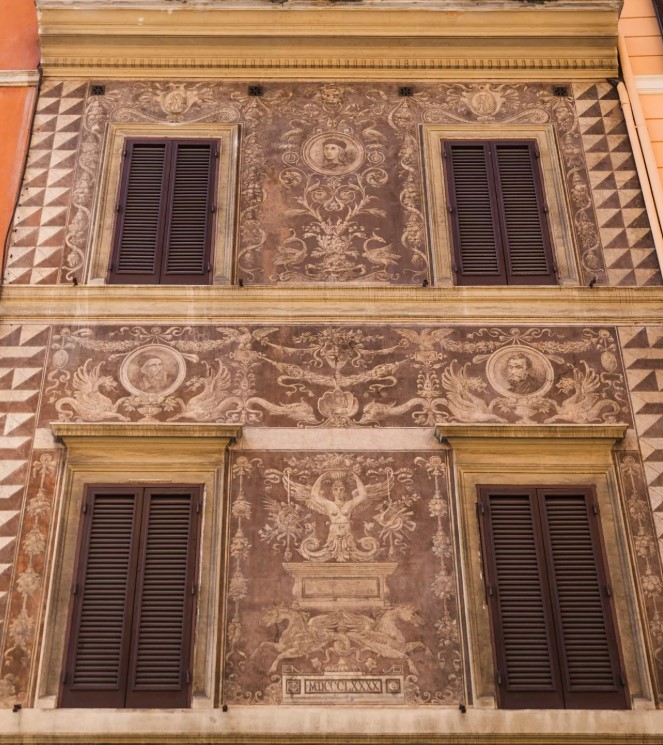
Lo sgraffito era una tecnica molto usata nel Cinquecento per decorare le facciate dei palazzi: basta farsi un giro per Firenze per notarne alcuni mirabili esempi. Il mio caro amico Giorgio Vasari scrisse in merito “hanno i pittori un’altra sorte di pittura, che è disegno e pittura insieme, e questo si domanda sgraffito”.
Non è dato sapere chi sia l’autore o gli autori che realizzarono questa decorazione in Via Crispi: Probabilmente erano maestranze che lavorarono su commissione del proprietario e di loro purtroppo non è rimasta traccia documentaria.
Come vengono realizzati gli sgraffiti
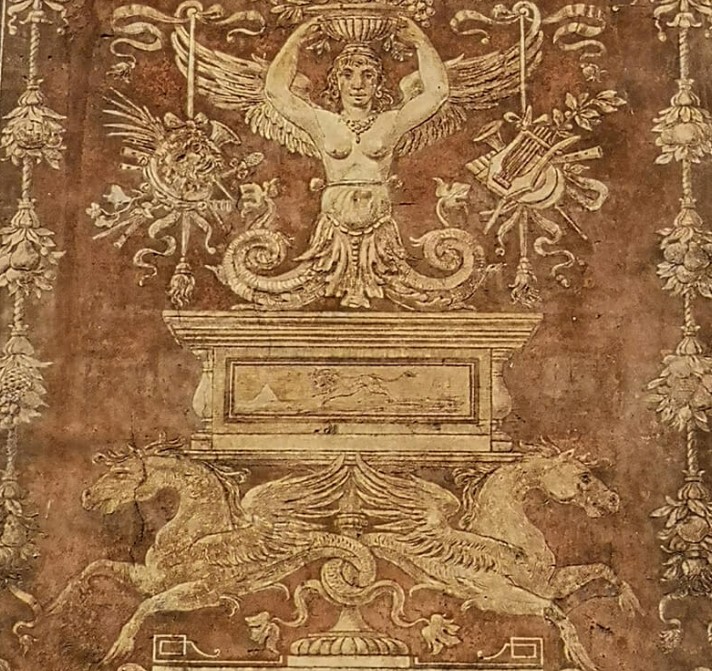
Gli sgraffiti sono una tecnica decorativa che consiste nel rimuovere strati superficiali di intonaco per rivelare i colori sottostanti e creare un disegno. È una tecnica antica, utilizzata in diverse culture e periodi storici, e ancora oggi apprezzata per il suo effetto visivo di grande impatto.
Generalmente si utilizzano almeno due intonaci di colori contrastanti.
Il primo, più scuro, funge da sfondo, mentre il secondo, più chiaro, viene applicato sopra per creare il disegno. Per sgraffiare la superficie si adoperano strumenti come punte metalliche, coltelli, aghi o chiodi, a seconda della dimensione e della complessità del disegno.
Cosa raffigura lo sgraffito di Via Crispi a Roma
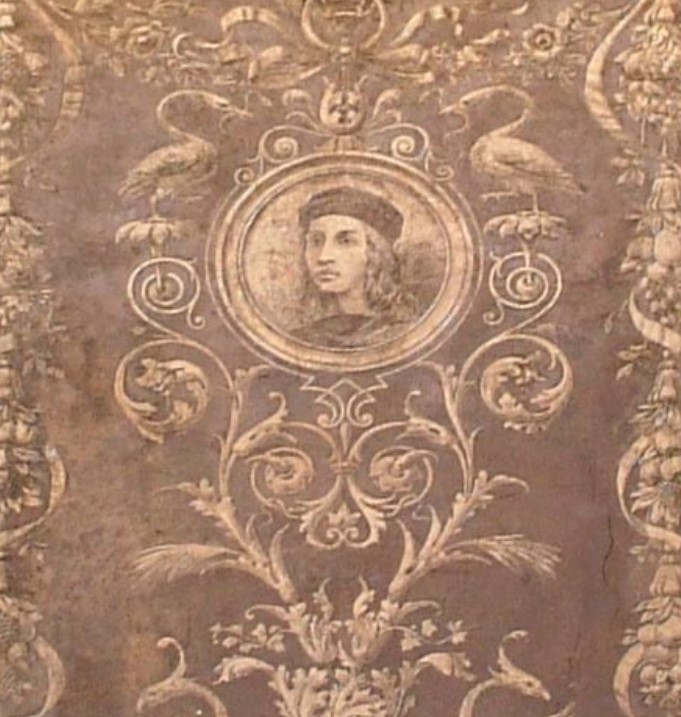
Nell facciata decorata con la tecnica dello sgraffito ci sono rappresentato io, Raffaello e Tiziano. Seguendo un po’ lo stile delle grottesche, alle effigi di noi tre artisti del Rinascimento, sono stati aggiunti draghi, chimere, cavalli alati ma anche ghirlande, coppe di frutta, figure antropomorfe e le immancabili foglie di acanto.
La prossima volta che passate da Via Crispi a Roma fateci caso: al numero civico 89 troverete il palazzo con gli sfraffiti che vale la pena guardare con un po’ più di attenzione.
Per il momento il sempre vostro Michelangelo Buonarroti vi saluta dandovi appuntamento ai prossimi post e sui social.
Rome: the building with the sgraffiti of via Crispi
In Rome, on Via Crispi, under the distracted gaze of tourists who pass by without even noticing it, there is a building whose façade is decorated with sgraffiti that is anything but negligible.
It is located at number 89 and was built in 1890, as reported by the date in Roman numerals on the work itself, in the midst of the Risorgimento, when a great interest in the Renaissance period was rediscovered.
Sgraffito was a technique widely used in the sixteenth century to decorate the façades of buildings: just take a walk around Florence to notice some wonderful examples. My dear friend Giorgio Vasari wrote about it, “painters have another kind of painting, which is drawing and painting together, and this is called sgraffito”.
It is not known who the author or authors are who created this decoration in Via Crispi: They were probably craftsmen who worked on commission from the owner and unfortunately there is no documentary trace of them.
How sgraffiti are made
Sgraffiti are a decorative technique that consists of removing superficial layers of plaster to reveal the underlying colors and create a design. It is an ancient technique, used in different cultures and historical periods, and still appreciated today for its visual effect of great impact.
Generally at least two plasters of contrasting colors are used. The first, darker, acts as a background, while the second, lighter, is applied on top to create the design. To scratch the surface, tools such as metal tips, knives, needles or nails are used, depending on the size and complexity of the design.
What does the sgraffito of Via Crispi in Rome depict
In the facade decorated with the sgraffito technique, I, Raphael and Titian are represented. Following a bit of the style of the grotesques, to the effigies of us three Renaissance artists, dragons, chimeras, winged horses but also garlands, fruit bowls, anthropomorphic figures and the inevitable acanthus leaves have been added.
Next time you pass by Via Crispi in Rome, pay attention: at number 89 you will find the building with the sfraffiti that is worth looking at with a little more attention.
For the moment, the always your Michelangelo Buonarroti bids you farewell, giving you an appointment for the next posts and on social media.

Sostienici – Support Us
Se questo blog ti piace e ti appassiona, puoi aiutarci a farlo crescere sempre più sostenendoci in modo concreto condividendo i post, seguendo le pagine social e con un contributo che ci aiuta ad andare avanti con il nostro lavoro di divulgazione. . ENGLISH: If you like and are passionate about this blog, you can help us make it grow more and more by supporting us in a concrete way by sharing posts, following social pages and with a contribution that helps us to move forward with our dissemination work.
10,00 €

Condividi:


Questo sono io




sostienici

Sostienici – Support Us
Se questo blog ti piace e ti appassiona, puoi aiutarci a farlo crescere sempre più sostenendoci in modo concreto condividendo i post, seguendo le pagine social e con un contributo che ci aiuta ad andare avanti con il nostro lavoro di divulgazione. . ENGLISH: If you like and are passionate about this blog, you can help us make it grow more and more by supporting us in a concrete way by sharing posts, following social pages and with a contribution that helps us to move forward with our dissemination work.
€10,00


per questo motivo quando vado in giro per città che non conosco sembro un gufo pazzo, perchè ho gli occhi quasi sempre volti all’insù 😀
"Mi piace"Piace a 1 persona
Ci sono città straordinarie con opere quasi sconosciute. Sebbene Firenze e Roma siano celeberrime, continuano ad avere angoli poco noti ma non per questo non degni di nota :-*
"Mi piace"Piace a 1 persona
forse manca il piacere della scoperta individuae, si viaggia troppo con itinerari preconfezionati senza permettersi un minimo di avventura per le strade meno rinomate e citate dalle guide
"Mi piace"Piace a 1 persona
si, si segue l’onda dei luoghi più celebri tralasciando quello che non è noto e instagrammabile
"Mi piace"Piace a 1 persona