
Galleria dell’Accademia: al via il restauro del trittico della Madonna in trono di Spinello Aretino
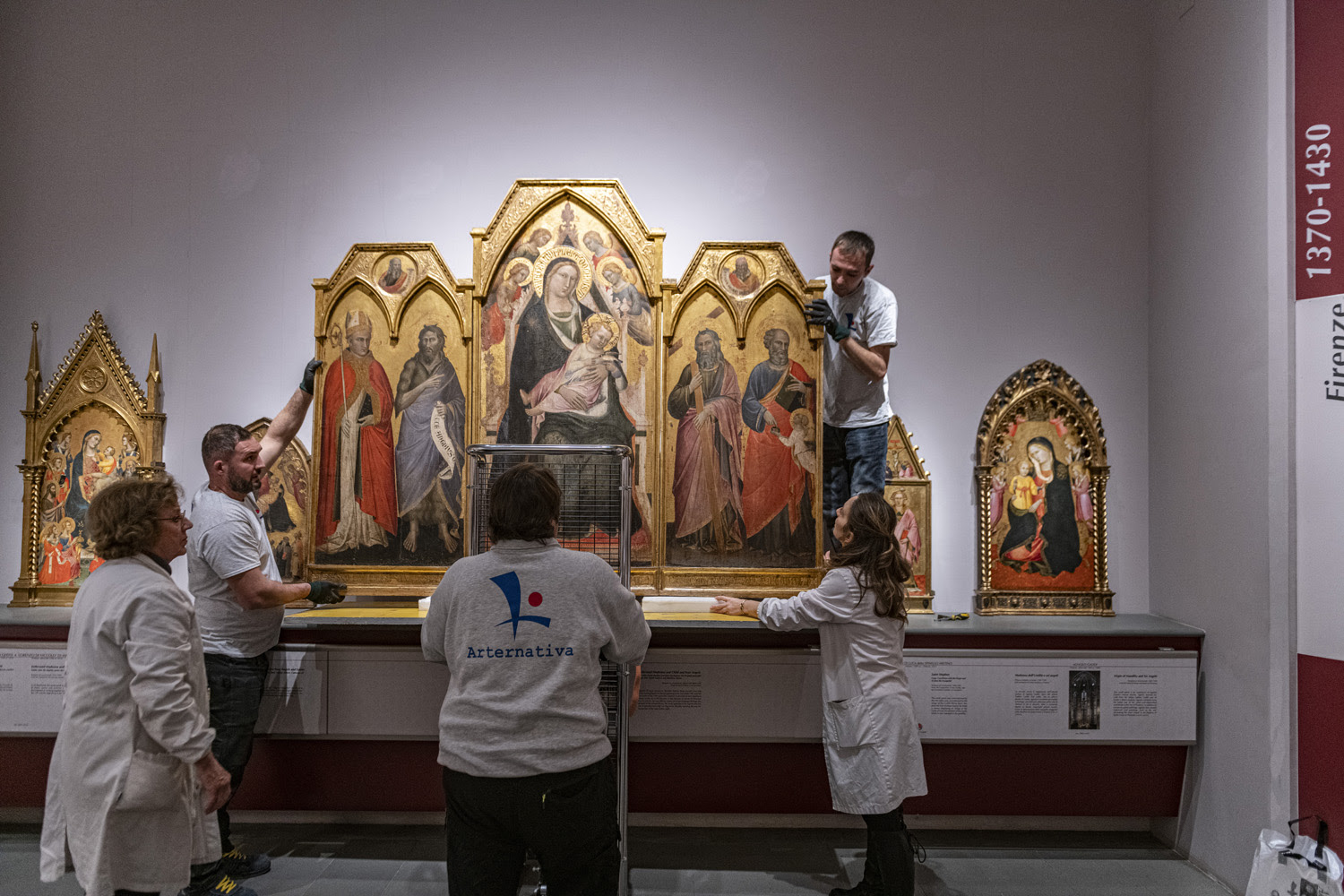
Il trittico Madonna col Bambino in trono e quattro angeli fra i santi Paolino, Giovanni Battista, Andrea e Matteo realizzato nel 1391 dal pittore Spinello Aretino, sarà sottoposto a un intervento di restauro che avrà la durata approssimativa di un anno.
L’opera intanto ha lasciato la Galleria dell’Accademia di Firenze e durante il periodo della sua assenza, verrà sostituito nel percorso espositivo dalla Madonna col Bambino in trono fra i santi Giovanni Battista e Zanobi di Niccolò di Pietro Gerini, realizzata tra il 1395 e 1400, un’opera abitualmente custodita nei depositi.
Spinello di Luca, più noto come Spinello Aretino, fu un eccellente pittore particolarmente ricercato dai committenti tra la fine del Trecento e l’inizio del Quattrocento.
Durante il corso della vita gli furono affidate numerose e prestigiose commissioni sia nella sua città Natale di Arezzo che a Firenze, Pistoia, Lucca e Pisa.
Il trittico in questione è un’opera fondamentale per comprendere appieno la sua produzione artistica. Fu commissionato dal mercante lucchese Paolino di Simonino di Bonagiunta per arricchire l’Oratorio di Sant’Andrea a Lucca. L’artista firmò e datò l’opera e quindi non ci sono dubbi in merito all’autore né al periodo di esecuzione di questo raffinato lavoro.
I quattro Santi che vengono rappresentati nei pannelli laterali rappresentano Sant’Andrea, titolare dell’oratorio a cui l’opera era destinata ma anche ai nomi del donatore e dei suoi fratelli. Purtroppo mancano le cuspidi e lo zoccolo, andati perduti chissà come e quando.
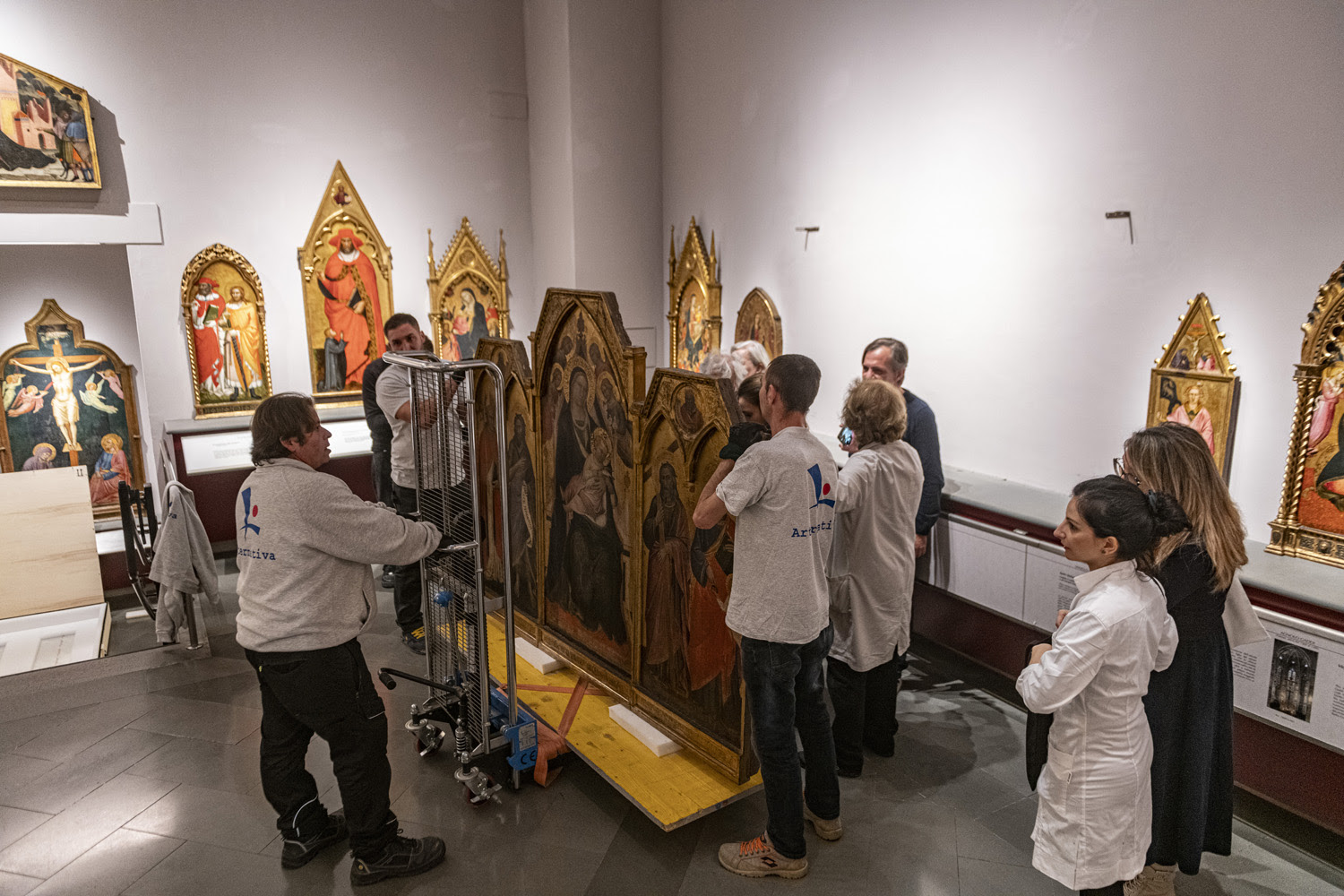
Il restauro sarà preceduto da una campagna diagnostica e di imaging fotografico che permetterà di approfondire la conoscenza sui pigmenti adoperati e sulle tecniche esecutive.
Dagli studi effettuati fino al momento è stato possibile comprendere che la pala d’altare ha subito restauri, probabilmente nel periodo che ha preceduto l’acquisto da parte delle Gallerie Fiorentine, risalente al 1850.
Al momento la superficie pittorica è oscurata da depositi di povere e sovrammissioni di varia natura che nel corso dei decenni si sono alterate. L’intervento di pulitura e le reintegrazioni permetteranno di restituire all’opera un buon equilibrio formale e cromatico.
La Direzione dei lavori è affidata ai funzionari della Galleria dell’Accademia di Firenze Elvira Altiero e Eleonora Pucci.
Per il momento il sempre vostro Michelangelo Buonarroti vi saluta dandovi appuntamento ai prossimi post e sui social.
Galleria dell’Accademia: the restoration of the triptych of the Madonna enthroned by Spinello Aretino begins
The triptych Madonna and Child enthroned with four angels between the saints Paulinus, John the Baptist, Andrew and Matthew, created in 1391 by the painter Spinello Aretino, will undergo a restoration project that will last approximately one year.
In the meantime, the work has left the Galleria dell’Accademia in Florence and during the period of its absence, it will be replaced in the exhibition by the Madonna and Child enthroned between the saints John the Baptist and Zanobi by Niccolò di Pietro Gerini, created between 1395 and 1400, a work usually kept in storage.
Spinello di Luca, better known as Spinello Aretino, was an excellent painter who was particularly sought after by clients between the end of the fourteenth century and the beginning of the fifteenth century.
During the course of his life, he was entrusted with numerous and prestigious commissions both in his hometown of Arezzo and in Florence, Pistoia, Lucca and Pisa.
The triptych in question is a fundamental work to fully understand his artistic production. It was commissioned by the Lucca merchant Paolino di Simonino di Bonagiunta to enrich the Oratory of Sant’Andrea in Lucca. The artist signed and dated the work and therefore there is no doubt about the author or the period of execution of this refined work.
The four Saints depicted in the side panels represent Sant’Andrea, the patron saint of the oratory for which the work was intended, but also the names of the donor and his brothers. Unfortunately, the cusps and the base are missing, having been lost who knows how and when.
The restoration will be preceded by a diagnostic and photographic imaging campaign that will allow us to deepen our knowledge of the pigments used and the execution techniques.
From the studies carried out so far it has been possible to understand that the altarpiece has undergone restoration, probably in the period preceding the purchase by the Florentine Galleries, dating back to 1850.
At the moment the pictorial surface is obscured by deposits of dust and overlays of various nature that have altered over the decades.
The cleaning intervention and the reintegrations will allow the work to return a good formal and chromatic balance.
The direction of the works is entrusted to the officials of the Galleria dell’Accademia of Florence Elvira Altiero and Eleonora Pucci.
For the moment, the always your Michelangelo Buonarroti bids you farewell, making an appointment with you in the next posts and on social media.

Sostienici – Support Us
Se questo blog ti piace e ti appassiona, puoi aiutarci a farlo crescere sempre più sostenendoci in modo concreto condividendo i post, seguendo le pagine social e con un contributo che ci aiuta ad andare avanti con il nostro lavoro di divulgazione. . ENGLISH: If you like and are passionate about this blog, you can help us make it grow more and more by supporting us in a concrete way by sharing posts, following social pages and with a contribution that helps us to move forward with our dissemination work.
10,00 €
-
Festival La Versiliana 2026: tra musica, teatro e grandi narrazioni
Dal 17 luglio al 23 agosto 2026, la pineta di Marina di Pietrasanta ospiterà la 47ª edizione del Festival La Versiliana. Una kermesse aperta a tutti nella quale linguaggi diversi dialogano tra loro in un equilibrio tra tradizione e contemporaneità.
-
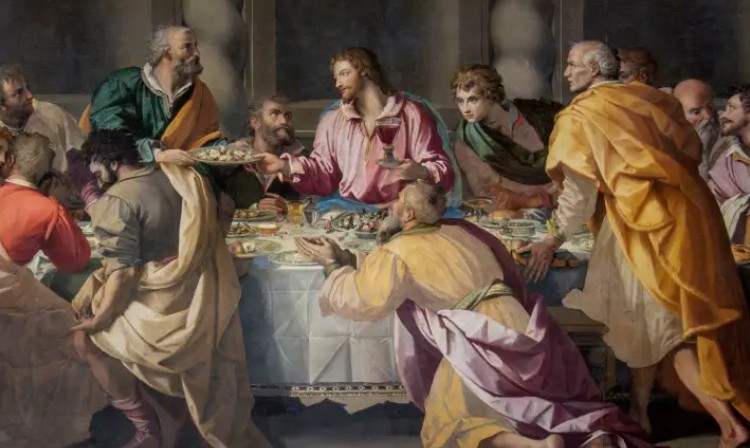
Giovedì Santo: l’Ultima Cena di Allori che pochi conoscono a Firenze
🇮🇹Nel cuore di Museo di Santa Maria Novella, a Firenze, si conserva una delle interpretazioni più affascinanti e meno note dell’Ultima Cena: quella realizzata da Alessandro Allori nel 1584… 🇬🇧In the heart of the Santa Maria Novella Museum in Florence, one of the most fascinating and least-known interpretations of the Last Supper is preserved: the…
-
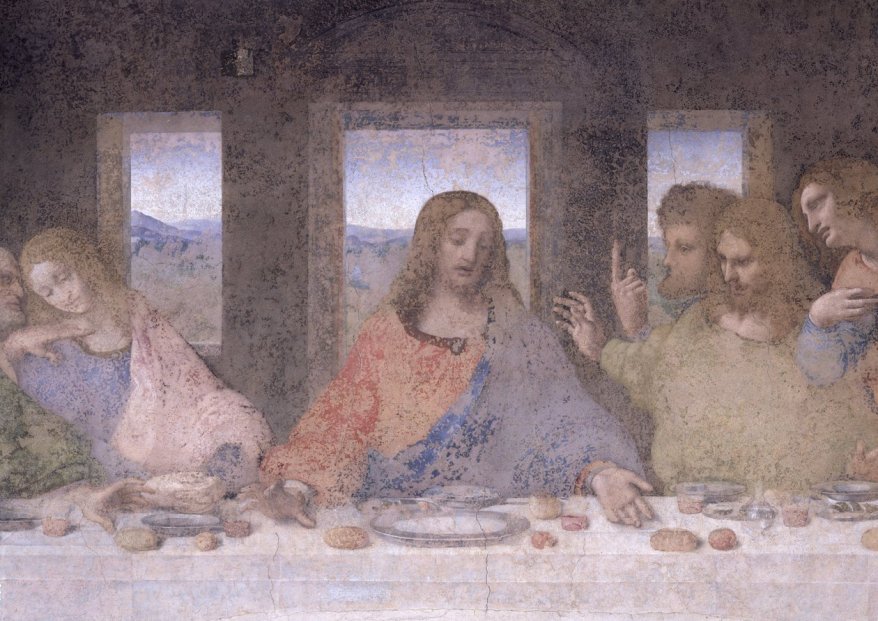
Cenacolo di Leonardo: i dettagli che raccontano il tradimento
🇮🇹Nel Cenacolo di Leonardo da Vinci, custodito a Santa Maria delle Grazie, Cristo annuncia il tradimento e il tempo si ferma… 🇬🇧In Leonardo da Vinci’s Last Supper, housed in Santa Maria delle Grazie, Christ announces the betrayal and time stands still…
Condividi:


Questo sono io





sostienici

Sostienici – Support Us
Se questo blog ti piace e ti appassiona, puoi aiutarci a farlo crescere sempre più sostenendoci in modo concreto condividendo i post, seguendo le pagine social e con un contributo che ci aiuta ad andare avanti con il nostro lavoro di divulgazione. . ENGLISH: If you like and are passionate about this blog, you can help us make it grow more and more by supporting us in a concrete way by sharing posts, following social pages and with a contribution that helps us to move forward with our dissemination work.
€10,00


