
Apollo del Belvedere: terminato il restauro dopo 5 anni
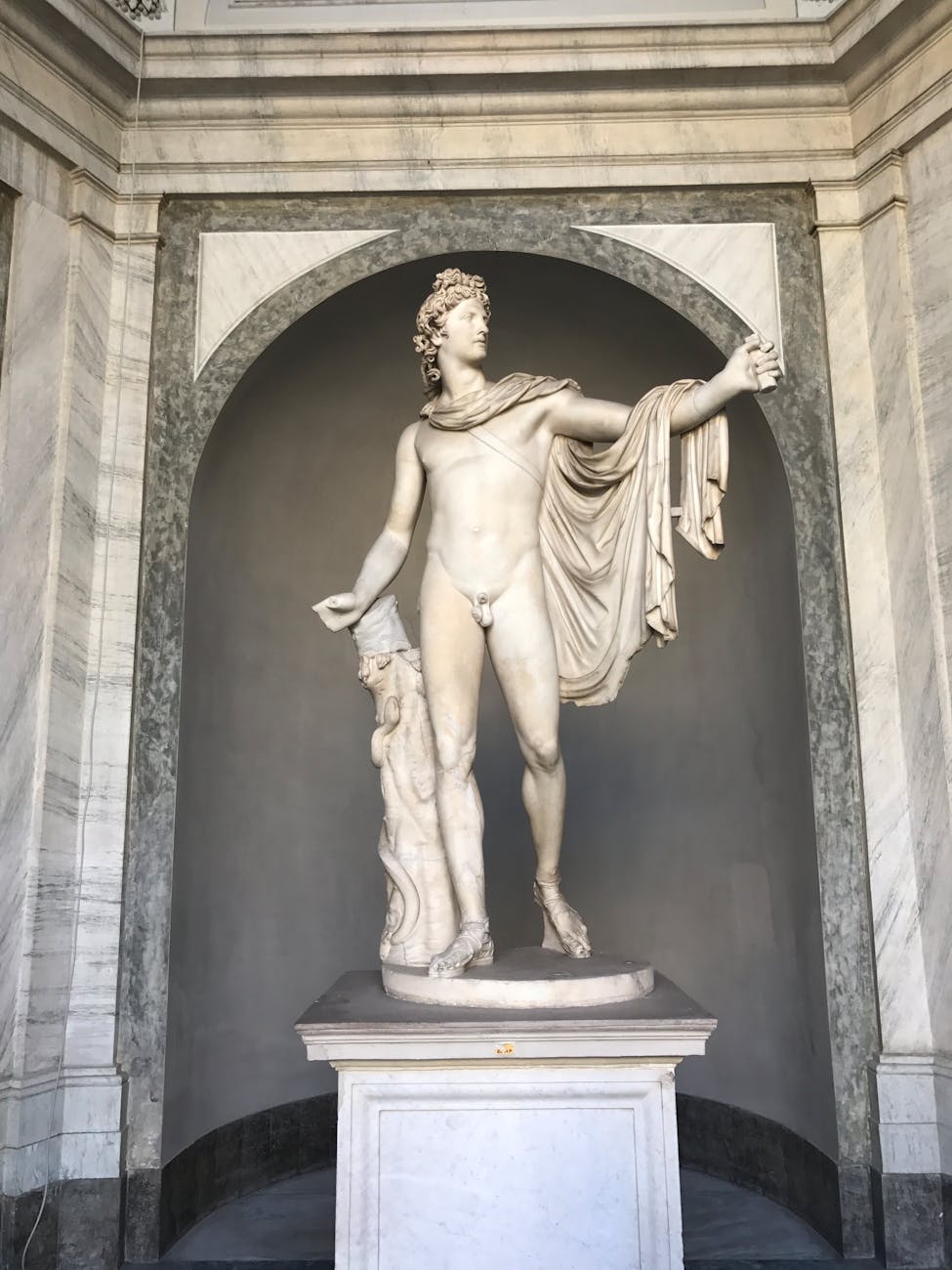
Dopo quasi 5 anni, è stato portato a termine il restauro dell’Apollo del Belvedere appartenente alla vasta collezione dei Musei Vaticani.
“di tutte le opere dell’antichità scampate alla distruzione, la statua di Apollo rappresenta il più alto ideale dell’arte. “Johann Joachim Winckelmann

Il restauro
Torna così visibile al pubblico una delle opere identitarie dei Musei Vaticani dopo il complesso intervento di restauro che ha contribuito a restituire al capolavoro la stabilità perduta. Nel dicembre del 2019 erano venute alla luce criticità strutturali importanti da risolvere al più presto.
Già Canova nel 1816, al rientro del capolavoro dopo il furto napoleonico, aveva provveduto a collocare un sostegno posteriore.
Il precedente sostegno è stato sostituito con uno più funzionale in fibra di carbonio, ancorato al basamento. La mano sinistra realizzata dal Montorsoli è stata sostituita con un calco tratto dalla cosiddetta ‘mano di Baia’, cioè il frammento di una copia in gesso che era stata eseguita in epoca romana sull’originale di bronzo greco.

Il ritrovamento dell’Apollo
La scultura fu rinvenuta a Roma nel 1489 tra i ruderi di una domus ubicata sul Viminale. Il cardinale Giuliano della Rovere, successivamente divenuto Papa Giulio II nel 1503, ,non perse tempo e la acquistò immediatamente. Fece portare quel capolavoro in Vaticano dove, a partire dal 1508, viene già documentato nel Belvedere.
A quel tempo la scultura era integra, ad eccezion fatta dalla mano sinistra e delle dita della destra. Qualche decennio dopo, tra il 1532 e il 1533, fu commissionato il restauro integrativo al Montorsoli che completò il braccio sinistro poi sostituì il destro e apportò un’integrazione al broncone per farci appoggiare sopra il nuovo braccio.
Chi ha scolpito l’Apollo
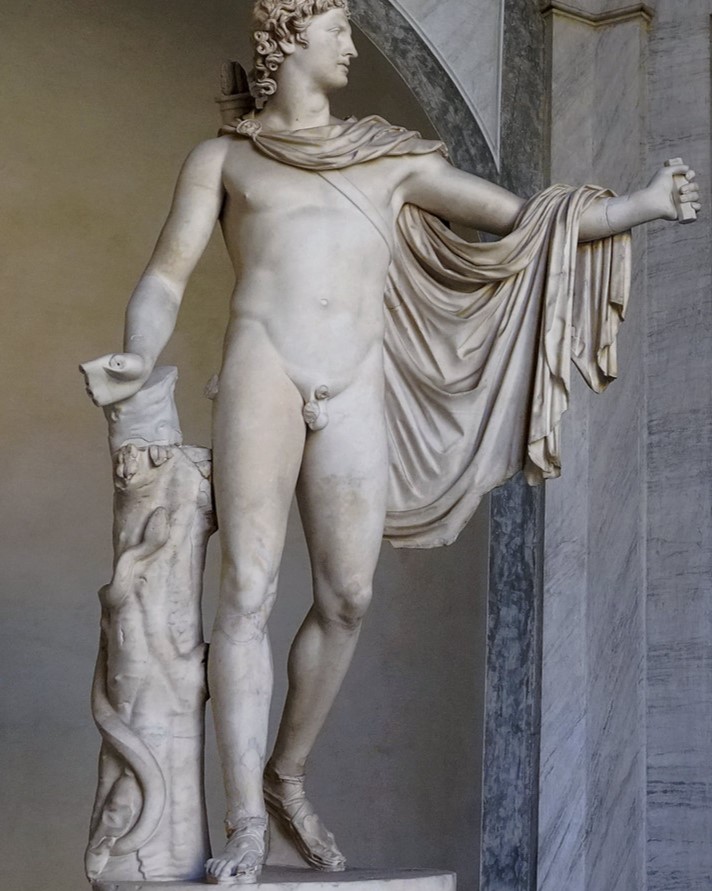
Osservato bene questo capolavoro si nota che il dio ha appena scoccato una freccia con l’arco che in origine impugnava con la sinistra.
L’opera fu realizzata da una bottega romana attiva nei primi decenni del II secolo d.C, bottega che si dedicava alla copia delle opere in bronzo. L’originale infatti fu fuso in bronzo attorno al 330 a.C. in Grecia, forse da Leochares, uno degli artisti più celebri, noto anche per aver messo mano al sepolcro di Caria Mausolo considerato una delle sette meraviglie dell’antichità.
La presentazione del restauro
La Direzione dei Musei Vaticani e dei Beni Culturali il 15 ottobre, alle ore 11 presenterà in una conferenza stampa il progetto di studio e di restauro coordinato dal Reparto di Antichità Greche e Romane ed eseguito dal Laboratorio di Restauro Materiali Lapidei in collaborazione con il Gabinetto di Ricerche Scientifiche.
“Il complesso e delicato intervento, reso possibile grazie al sostegno dei Patrons of the Art in the Vatican Museums, ha risposto alla sfida di restituire un saldo equilibrio all’Apollo senza pregiudicarne la meravigliosa armonia”, si legge in una nota stampa
Al termine della conferenza stampa l’Apollo del Belvedere verrà svelato nel Cortile Ottagono, sua collocazione abituale.
Per il momento il sempre vostro Michelangelo Buonarroti vi saluta dandovi appuntamento ai prossimi post e sui social.
© All rights reserved
L’importanza del digitale nei beni culturali: la mia intervista a Marcello Minuti, coordinatore generale della Fondazione Scuola dei Beni Culturali e delle Attività Culturali durante l’evento LuBeC, a Lucca
Apollo Belvedere: restoration completed after 5 years
After almost 5 years, the restoration of the Apollo Belvedere belonging to the vast collection of the Vatican Museums has been completed.
“of all the works of antiquity that escaped destruction, the statue of Apollo represents the highest ideal of art. “Johann Joachim Winckelmann
The restoration
One of the identifying works of the Vatican Museums is thus once again visible to the public after the complex restoration intervention that helped restore the lost stability to the masterpiece. In December 2019, important structural criticalities came to light that needed to be resolved as soon as possible.
Already in 1816, upon the return of the masterpiece after the Napoleonic theft, Canova had arranged for a rear support.
The previous support was replaced with a more functional one in carbon fiber, anchored to the base. The left hand made by Montorsoli was replaced with a cast taken from the so-called ‘Baia’s hand’, that is, the fragment of a plaster copy that had been made in Roman times on the original Greek bronze.
The discovery of Apollo
The sculpture was found in Rome in 1489 among the ruins of a domus located on the Viminale. Cardinal Giuliano della Rovere, who later became Pope Julius II in 1503, wasted no time and purchased it immediately. He had that masterpiece brought to the Vatican where, starting from 1508, it was already documented in the Belvedere.
At that time the sculpture was intact, with the exception of the left hand and the fingers of the right. A few decades later, between 1532 and 1533, the integrative restoration was commissioned to Montorsoli who completed the left arm then replaced the right one and made an integration to the bronchus to rest the new arm on.
Who sculpted Apollo
Looking closely at this masterpiece, you can see that the god has just shot an arrow with the bow that he originally held in his left hand.
The work was created by a Roman workshop active in the first decades of the 2nd century AD, a workshop that was dedicated to copying bronze works. The original was in fact cast in bronze around 330 BC in Greece, perhaps by Leochares, one of the most famous artists, also known for having worked on the tomb of Caria Mausolus, considered one of the seven wonders of antiquity.
The presentation of the restoration
On October 15, at 11:00 a.m., the Directorate of the Vatican Museums and Cultural Heritage will present in a press conference the study and restoration project coordinated by the Department of Greek and Roman Antiquities and carried out by the Laboratory for the Restoration of Stone Materials in collaboration with the Scientific Research Cabinet.
“The complex and delicate intervention, made possible thanks to the support of the Patrons of the Art in the Vatican Museums, responded to the challenge of restoring a firm balance to the Apollo without compromising its marvelous harmony,” reads a press release
At the end of the press conference, the Apollo Belvedere will be unveiled in the Cortile Ottagono, its usual location.
For the moment, yours truly, Michelangelo Buonarroti bids you farewell, and will see you in the next posts and on social media.
© All rights reserved

Sostienici – Support Us
Se questo blog ti piace e ti appassiona, puoi aiutarci a farlo crescere sempre più sostenendoci in modo concreto condividendo i post, seguendo le pagine social e con un contributo che ci aiuta ad andare avanti con il nostro lavoro di divulgazione. . ENGLISH: If you like and are passionate about this blog, you can help us make it grow more and more by supporting us in a concrete way by sharing posts, following social pages and with a contribution that helps us to move forward with our dissemination work.
10,00 €
-
31 marzo 1889: inaugurata la Torre Eiffel tra critiche feroci e un destino inaspettato
🇮🇹Il 31 marzo 1889 segna una data destinata a cambiare per sempre il volto di Parigi e dell’immaginario collettivo globale: viene inaugurata la Torre Eiffel, l’opera più audace e discussa del suo tempo… 🇬🇧March 31, 1889 marks a date destined to change the face of Paris and the global collective imagination forever: the Eiffel Tower,…
-
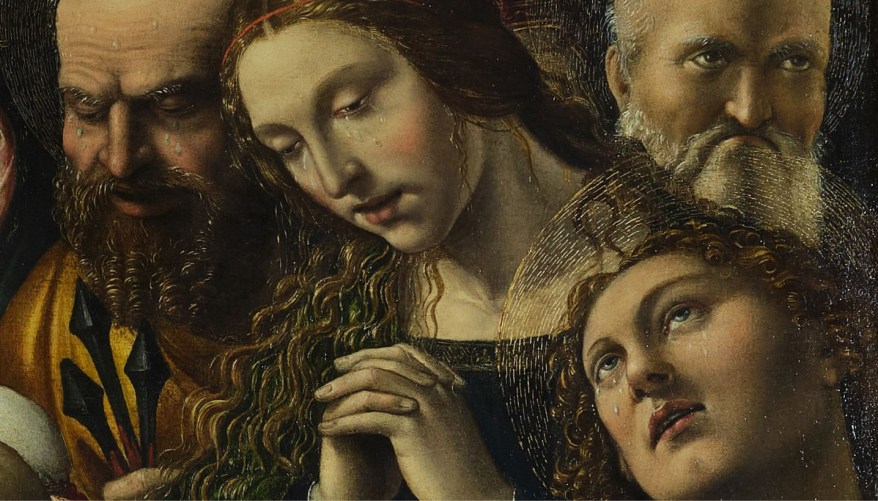
Sodoma in mostra a Torino: il Rinascimento al Museo Accorsi-Ometto
🇮🇹Al Museo di Arti Decorative Accorsi-Ometto arriva una mostra dedicata al Sodoma: oltre 50 opere, alcune mai viste prima, raccontano la formazione dell’artista e il suo dialogo con maestri come Pinturicchio… 🇬🇧An exhibition dedicated to Sodoma arrives at the Accorsi-Ometto Museum of Decorative Arts: over 50 works, some never before seen, recount the artist’s development…
-
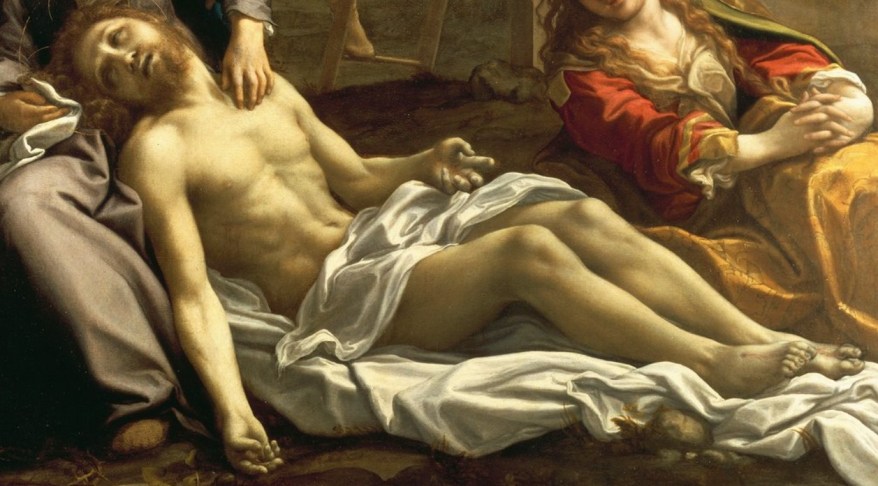
Il Compianto sul Cristo morto di Correggio: pathos e devozione
🇮🇹Con l’inizio della Settimana Santa, vi propongo il Compianto sul Cristo morto di Antonio Allegri, più noto come il Correggio: uno dei vertici assoluti della pittura emiliana del Cinquecento… 🇬🇧With the beginning of Holy Week, I propose the Lamentation over the Dead Christ by Antonio Allegri, better known as Correggio: one of the absolute peaks…
Condividi:


Questo sono io





sostienici

Sostienici – Support Us
Se questo blog ti piace e ti appassiona, puoi aiutarci a farlo crescere sempre più sostenendoci in modo concreto condividendo i post, seguendo le pagine social e con un contributo che ci aiuta ad andare avanti con il nostro lavoro di divulgazione. . ENGLISH: If you like and are passionate about this blog, you can help us make it grow more and more by supporting us in a concrete way by sharing posts, following social pages and with a contribution that helps us to move forward with our dissemination work.
€10,00


1 commento »