
La Scultura del giorno: Giasone con il vello d’oro di Thorvaldsen
La scultura del giorno di cui voglio parlarvi oggi è il Giasone con il vello d’oro, ideata da Thorvaldsen a partire dal 1808 ma ultimata solamente attorno al 1828.
E’ un po’ quella che viene considerata l’opera di esordio dell’artista, realizzata come prova d’esame per l’Accademia d’Arte di Copenaghen.
Dovete sapere che già nel 1801 Thorvaldsen aveva realizzato un primo modello dell’opera in argilla mediante uno studio dal verro ma non aveva soldi per poter far poi il calco più duraturo in gesso e così andò distrutto.

Due anni dopo, nel 1803, realizzò un altro Giasone di proporzioni maggiori che riuscì a formare in gesso grazie all’aiuto economico fornitogli dalla poetessa Friederike Brun.
Successivamente il mecenate anglosassone Thomas Hope volle commissionare a Thorvaldsen la traduzione in marmo di quell’opera in gesso.
La scultura di Giasone, alla morte degli eredi di Hope, finì in un’altra collezione privata e il Museo Thorvaldsen di Copenaghen la acquistò per arricchire le proprie collezioni.
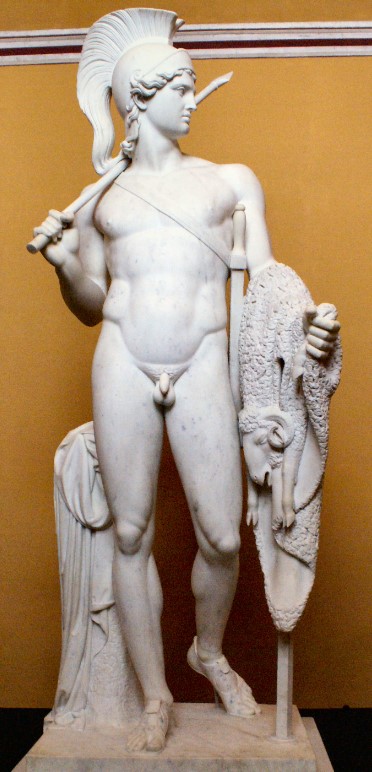
L’opera riprende un precedente disegno di Giasone che era stato tracciato da Carstens anche se l’impostazione della figura stante fu ispirata dal celeberrimo Apollo del Belvedere.
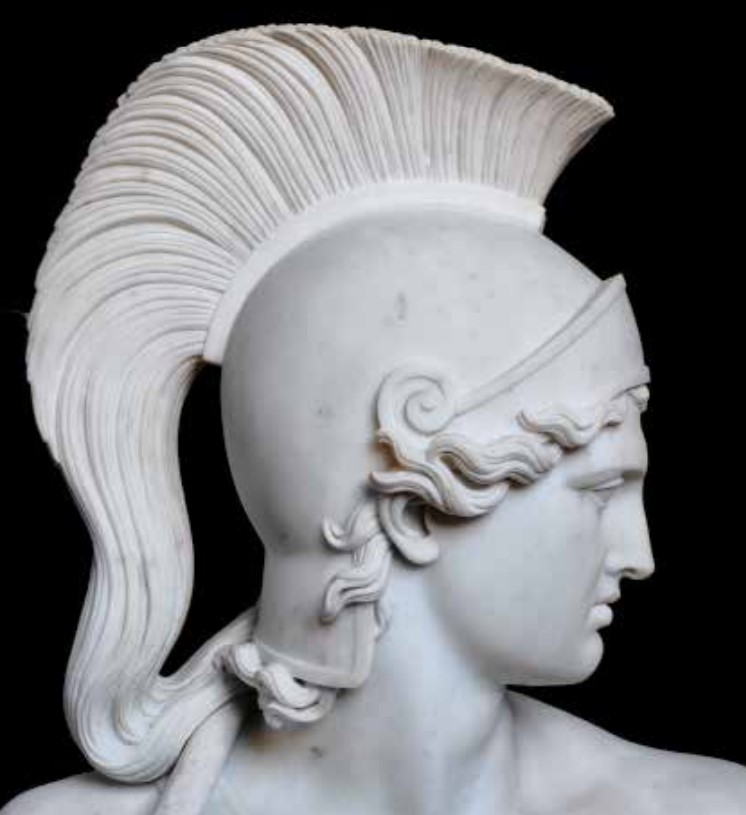
Thorvaldsen scolpì Giasone vittorioso dopo la battaglia, nel momento in cui parte per far rientro verso casa con il vello d’oro sul braccio sinistro. La posa fiera, movimentata da un perfetto chiasmo, rende bene l’idea dell’eroe classico che in questo caso si eleva dal piedistallo per 2metri e 42 centimetri.
Canova stesso, avendo avuto modo di vedere il Giasone di Thorvaldsen affermò che “Quest’opera di quel giovane danese è fatta in uno stilo nuovo e grandioso”.
Per il momento il sempre vostro Michelangelo Buonarroti vi saluta dandovi appuntamento ai prossimi post e sui social.
© Riproduzione riservata
Sculpture of the day: Jason with the Golden Fleece by Thorvaldsen
The sculpture of the day that I want to talk to you about today is Jason with the Golden Fleece, conceived by Thorvaldsen starting in 1808 but completed only around 1828.
It is considered to be the artist’s debut work, created as an exam for the Academy of Art in Copenhagen. You should know that already in 1801 Thorvaldsen had created a first model of the work in clay through a study from the boar but he did not have the money to make the more durable plaster cast and so it was destroyed.
Two years later, in 1803, he created another Jason of larger proportions that he managed to form in plaster thanks to the financial help provided by the poet Friederike Brun.
Later, the Anglo-Saxon patron Thomas Hope commissioned Thorvaldsen to translate that plaster work into marble.
The sculpture of Jason, upon the death of Hope’s heirs, ended up in another private collection and the Thorvaldsen Museum in Copenhagen purchased it to enrich its own collections.
The work is based on a previous drawing of Jason that had been traced by Carstens, although the positioning of the standing figure was inspired by the famous Apollo Belvedere.
Thorvaldsen sculpted Jason victorious after the battle, at the moment in which he leaves to return home with the Golden Fleece on his left arm. The proud pose, animated by a perfect chiasmus, gives a good idea of the classical hero who in this case rises from the pedestal for 2 meters and 42 centimeters.
Canova himself, having had the opportunity to see Thorvaldsen’s Jason, stated that “This work by that young Dane is done in a new and grandiose style”.
For the moment, yours truly Michelangelo Buonarroti bids you farewell, making an appointment to see you in the next posts and on social media.
© Reproduction reserved

Sostienici – Support Us
Se questo blog ti piace e ti appassiona, puoi aiutarci a farlo crescere sempre più sostenendoci in modo concreto condividendo i post, seguendo le pagine social e con un contributo che ci aiuta ad andare avanti con il nostro lavoro di divulgazione. . ENGLISH: If you like and are passionate about this blog, you can help us make it grow more and more by supporting us in a concrete way by sharing posts, following social pages and with a contribution that helps us to move forward with our dissemination work.
10,00 €
-
La Pietà di Tincolini: a Pontedera l’arte torna a fare domande scomode
🇮🇹“Pietà”, la scultura di Filippo Tincolini, insieme alle parole di Federico Quaranta e Andrea Pezzi, non è stato solo uno spettacolo. È stata una domanda lanciata in faccia al pubblico, impossibile da evitare: siamo ancora capaci di provare pietà? 🇬🇧 “Pietà,” Filippo Tincolini’s sculpture, along with the words of Federico Quaranta and Andrea Pezzi, wasn’t…
-
Ai Musei Vaticani i fasti barocchi di Urbano VIII: in mostra gli arazzi della manifattura Barberini
🇮🇹A quattro secoli dalla consacrazione della Basilica di San Pietro, i Musei Vaticani dedicano una mostra all’Arazzeria Barberini, simbolo di una cultura visiva capace di fondere magnificenza estetica e affermazione politica… 🇬🇧Four centuries after the consecration of St. Peter’s Basilica, the Vatican Museums are dedicating an exhibition to the Barberini Tapestry Factory, a symbol of…
-
Le Opere della Pasqua: come la Resurrezione ha ispirato Arte e Cultura
🇮🇹La Pasqua, oltre ad essere una ricorrenza religiosa è un momento in cui la storia, l’arte e la spiritualità si intrecciano per raccontare il fulcro della fede cristiana: la resurrezione di Cristo. .. 🇬🇧Easter, beyond being a religious holiday, is a moment when history, art, and spirituality intertwine to recount the core of the Christian…
Condividi:


Questo sono io





sostienici

Sostienici – Support Us
Se questo blog ti piace e ti appassiona, puoi aiutarci a farlo crescere sempre più sostenendoci in modo concreto condividendo i post, seguendo le pagine social e con un contributo che ci aiuta ad andare avanti con il nostro lavoro di divulgazione. . ENGLISH: If you like and are passionate about this blog, you can help us make it grow more and more by supporting us in a concrete way by sharing posts, following social pages and with a contribution that helps us to move forward with our dissemination work.
€10,00


