

Zefiro di Bienaimé: bellezza neoclassica a Palazzo Pitti
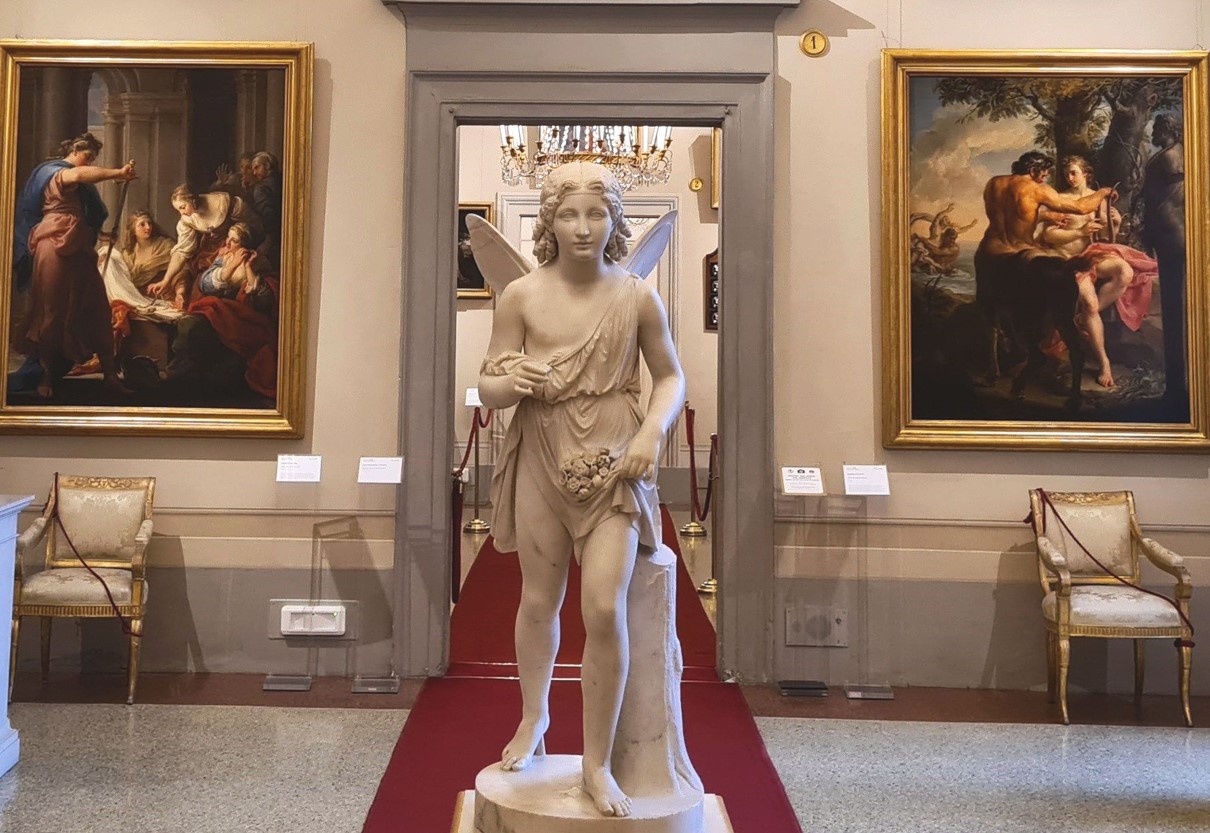
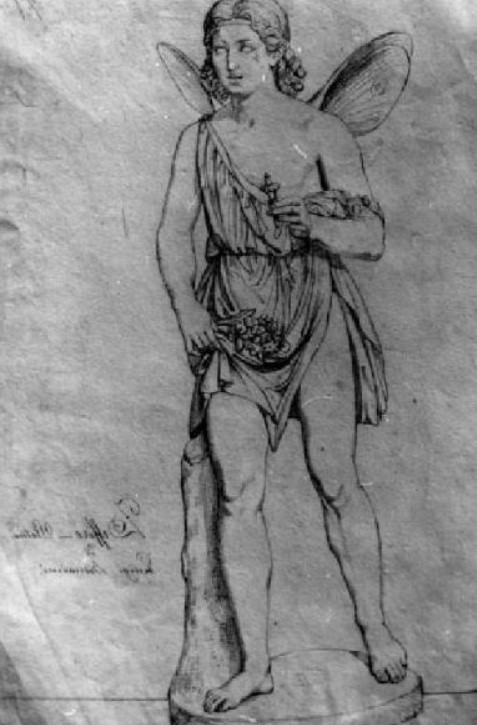
La scultura del giorno che vi propongo oggi è il raffinato Zefiro, scolpito nel 1814 da Luigi Bienaimé.
Collocato all’ingresso della Galleria di Arte Moderna di Palazzo Pitti, avanza con passo deciso portando nella piega fatta di proposito con la veste, dei fiori.
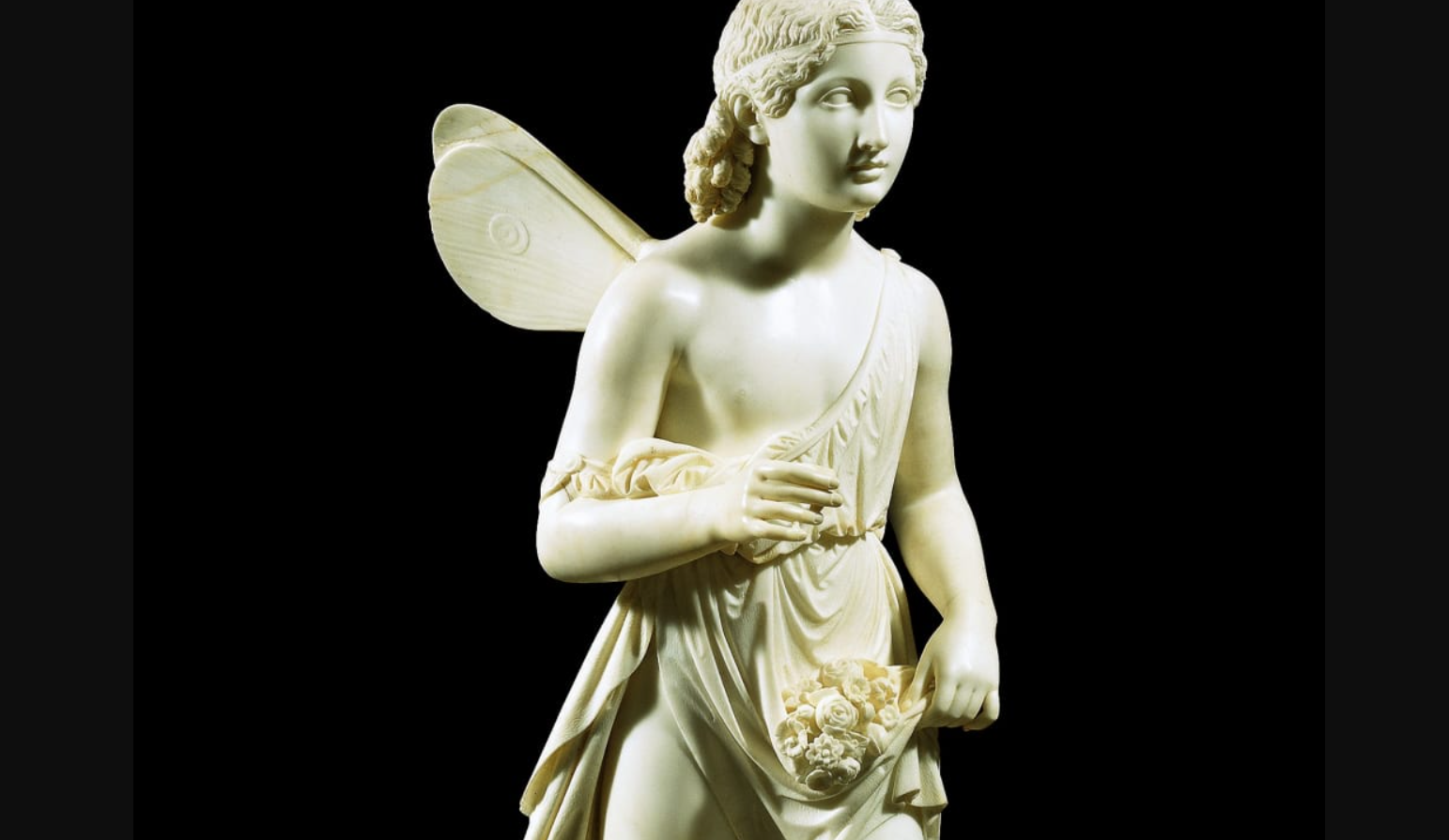
Zefiro è il vento mite di primavera che, leggenda narra, avesse il potere di far sbocciare i fiori e di far crescere i frutti.
Di solito viene raffigurato come un giovane ragazzo che tiene dei fiori fra le mani o in grembo, proprio come lo raffigurò Bienaimé.
Luigi Bienaimé era nato a Carrara il 2 marzo 1795, da padre belga e madre italiana. Fin da giovane aveva mostrato di avere un grande talento per la scultura. Fu ammesso all’Accademia di Belle Arti di Carrara e nel 1818, vinse il premio che gli permise di perfezionare la sua arte a Roma, sotto l’attenta guida del grande Bertel Thorvaldsen, uno dei massimi esponenti del Neoclassicismo.
Nella città eterna Bienaimé si immerse completamente nel fervido ambiente artistico neoclassico. Oltre a studiare con Thorvaldsen ebbe modo di collaborare con altri importanti scultori dell’epoca e di confrontarsi con le opere d’arte antica conservate nei musei e nel resto di Roma.
Quel periodo di formazione fu fondamentale per lo sviluppo del suo stile, caratterizzato da una perfetta padronanza della tecnica scultorea, da un’attenta resa anatomica delle figure e da un’adesione ai principi estetici del Neoclassicismo.
Per il momento il sempre vostro michelangelo Buonarroti vi saluta dandovi appuntamento ai prossimi post e sui social.
Luigi Bienaimé’s Zephyr: A Neoclassical Beauty in Palazzo Pitti
The sculpture of the day that I propose to you today is the refined Zephyr, sculpted in 1814 by Luigi Bienaimé.
Located at the entrance to the Gallery of Modern Art of Palazzo Pitti, it advances with a decisive step carrying flowers in the fold made on purpose with the dress.
Zephyr is the mild spring wind which, legend has it, had the power to make flowers bloom and fruit grow.
He is usually depicted as a young boy holding flowers in his hands or on his lap, just as Bienaimé depicted him.
Luigi Bienaimé was born in Carrara on 2 March 1795, to a Belgian father and an Italian mother. From a young age he had shown a great talent for sculpture. He was admitted to the Academy of Fine Arts in Carrara and in 1818, he won the prize that allowed him to perfect his art in Rome, under the careful guidance of the great Bertel Thorvaldsen, one of the greatest exponents of Neoclassicism.
In the eternal city Bienaimé immersed himself completely in the fervent neoclassical artistic environment. In addition to studying with Thorvaldsen, he had the opportunity to collaborate with other important sculptors of the time and to compare himself with the works of ancient art preserved in museums and in the rest of Rome.
That period of training was fundamental for the development of his style, characterized by a perfect mastery of the sculptural technique, by a careful anatomical rendering of the figures and by an adherence to the aesthetic principles of Neoclassicism.
For the moment, your always Michelangelo Buonarroti greets you and will meet you in the next posts and on social media.

Sostienici – Support Us
Se questo blog ti piace e ti appassiona, puoi aiutarci a farlo crescere sempre più sostenendoci in modo concreto condividendo i post, seguendo le pagine social e con un contributo che ci aiuta ad andare avanti con il nostro lavoro di divulgazione. . ENGLISH: If you like and are passionate about this blog, you can help us make it grow more and more by supporting us in a concrete way by sharing posts, following social pages and with a contribution that helps us to move forward with our dissemination work.
10,00 €
-
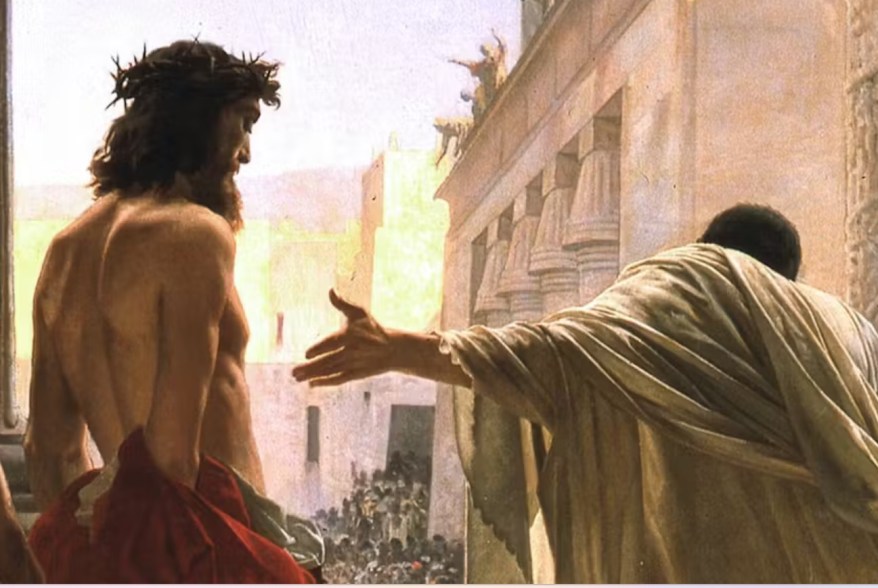
Venerdì Santo: gli “Ecce Homo” più intensi della storia dell’arte
🇮🇹Ecce Homo. Da Antonello da Messina a Tintoretto, fino al sorprendente capolavoro di Antonio Ciseri, questo soggetto ha attraversato i secoli raccontando dolore, umanità e coscienza… 🇬🇧Ecce Homo. From Antonello da Messina to Tintoretto, to Antonio Ciseri’s astonishing masterpiece, this subject has spanned the centuries, recounting pain, humanity, and conscience…
-
Attacco hacker agli Uffizi: rubati dati sensibili, mappe e codici di sicurezza
🇮🇹Attacco hacker alle Gallerie degli Uffizi: rubati dati sensibili, mappe e sistemi di sicurezza. A rischio opere, archivi e cybersicurezza del patrimonio artistico… 🇬🇧Hacker attack on the Uffizi Galleries: sensitive data, maps, and security systems stolen. Works of art, archives, and the cybersecurity of the artistic heritage are at risk…
-
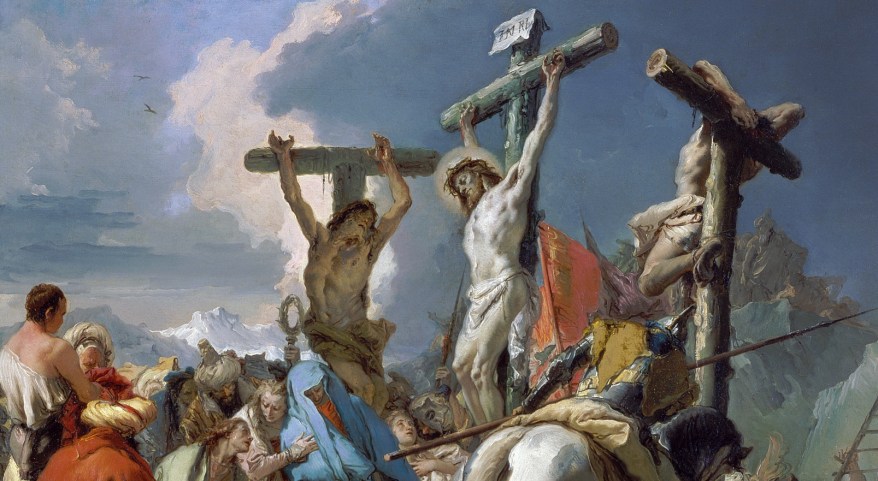
Venerdì Santo: la Crocifissione secondo Tiepolo
🇮🇹Nel giorno del Venerdì Santo, c’è un’opera che riesce ancora a scuotere lo sguardo. La Crocifissione di Giambattista Tiepolo non è come le altre: niente simmetrie perfette, niente distanza. Qui si entra dentro la scena, da un punto di vista obliquo, tra movimento, tensione e umanità… 🇬🇧On Good Friday, there’s a work that still manages…
Condividi:


Questo sono io





sostienici

Sostienici - Support Us
Se questo blog ti piace e ti appassiona, puoi aiutarci a farlo crescere sempre più sostenendoci in modo concreto condividendo i post, seguendo le pagine social e con un contributo che ci aiuta ad andare avanti con il nostro lavoro di divulgazione. . ENGLISH: If you like and are passionate about this blog, you can help us make it grow more and more by supporting us in a concrete way by sharing posts, following social pages and with a contribution that helps us to move forward with our dissemination work.
€10,00


