

Palazzo Pretorio a Prato: apre la nuova sala rinascimentale per celebrare i 10 anni del museo
Il Museo di Palazzo Pretorio compie 10 anni e per celebrare questo importante anniversario, apre una nuova per esporre diciassette dipinti del Quattrocento e del Cinquecento provenienti dai depositi.
Era il 12 aprile del 2014 quando, dopo un lungo intervento di restauro avviato nel 1998, fu inaugurato in via ufficiale il museo, in una veste completamente rinnovata.

Da adesso è possibile visitare la nuova sala “Dai depositi al museo: dipinti del Quattrocento e del Cinquecento” situata al primo piano dell’area appena riqualificata dove un tempo era ospitato il Monte dei Pegni.
Matteo Biffoni, sindaco di Prato, precisa che l’allestimento di nuove sale museali richiede uno sforzo di energie ed economico importante ma che non è possibile sottrarsi da tale onere “Non si può nemmeno avere la tentazione di arretrare. Il museo parla di noi, di quello che siamo e di quello che saremo”.

I depositi del Museo di Palazzo Pretorio, come afferma la direttrice Rita Iacopino, sono ricchi di mirabili opere d’arte. Sebbene non sia possibile esporle tutte all’interno del percorso museale, avere una nuova sala sapientemente allestita con moderni criteri, consente di rendere fruibili opere notevoli sia ai visitatori che agli studiosi.
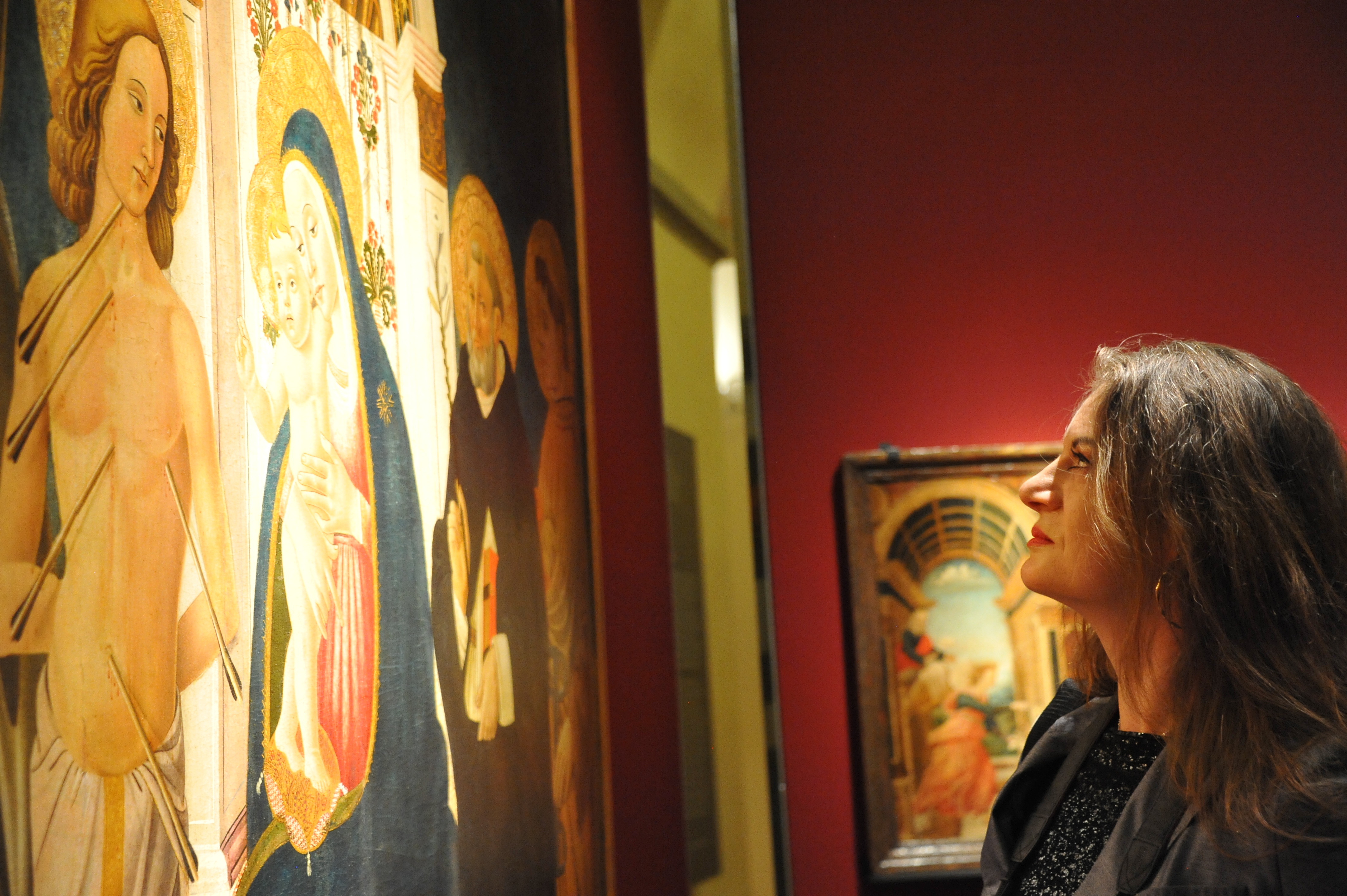
Il nucleo dei dipinti quattrocenteschi è formato da sette opere, realizzate da artisti poco noti ma che hanno gravitato attorno a botteghe importanti, soprattutto fiorentine. La loro produzione ha contribuito a diffondere e ripetere modelli noti che ricalcano lo stile dell’epoca aggiungendo qualche novità.
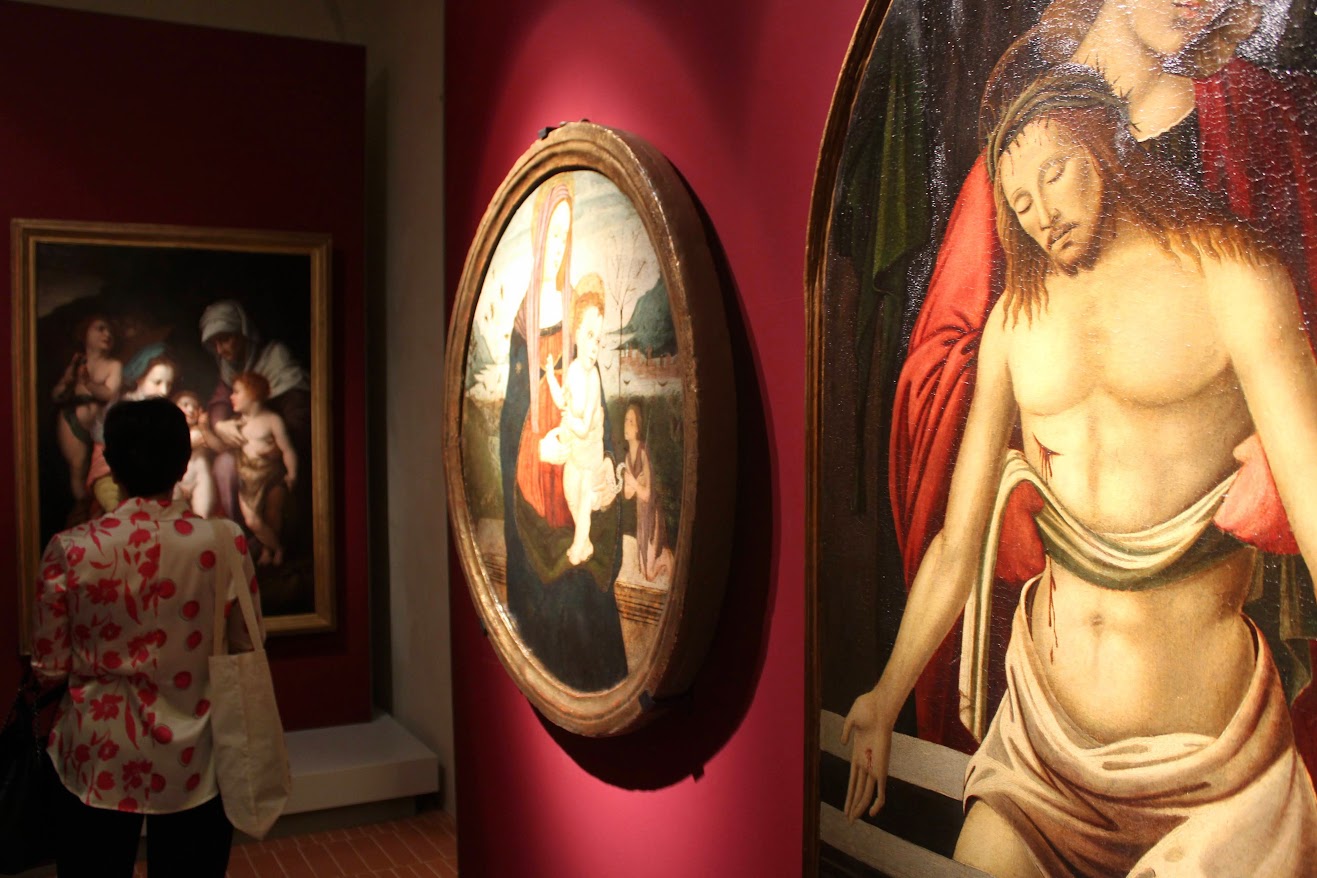
Di questi pittori solo Tommaso di Piero Trombetto sappiamo che fu un artista pratese che con la propria bottega riprese il linguaggio figurato di Filippino Lippi sebbene nelle sue opere avesse l’abitudine di dipingere meno dettagli, semplificando finanche le forme.

Fra le opere esposte è presente il dipinto a tempera su tavola di Trombetto realizzato nel 1500 circa con la Madonna con Bambino tra i Santi Rocco, Giovanino, Sebastiano e Domenico.
Ad attrarre in particolar modo l’attenzione è il volto della Madonna che stringe a sé il Bambino stante, in contrasto netto con le forme più semplici del San Sebastiano trafitto dalle frecce.

Nella medesima nuova sala è presente inoltre una raccolta di dieci dipinti di Sacre Famiglie e di Madonne con Bambino del Cinquecento.
Prato, città all’ombra di Firenze anche in campo artistico, ha accolto artisti meno celebri della città medicea per eccellenza che però hanno seguito modelli rinascimentali, spesso su richiesta del committente, ispirati soprattutto ad Andrea del Sarto e Raffaello.
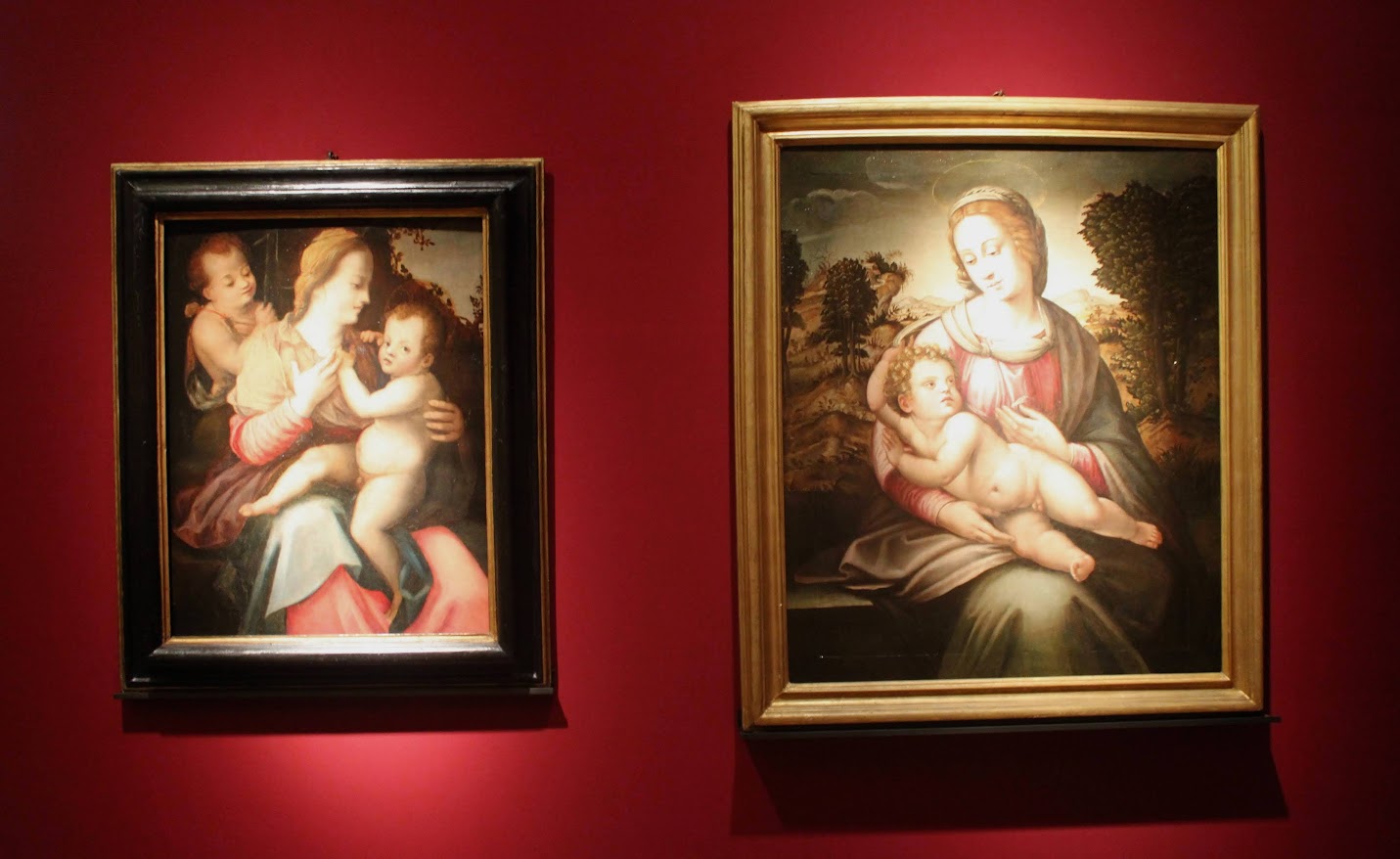
Così le composizioni più note dei due artisti si riflettono come in uno specchio in dipinti minori con differenti reinterpretazioni, degne di studio.
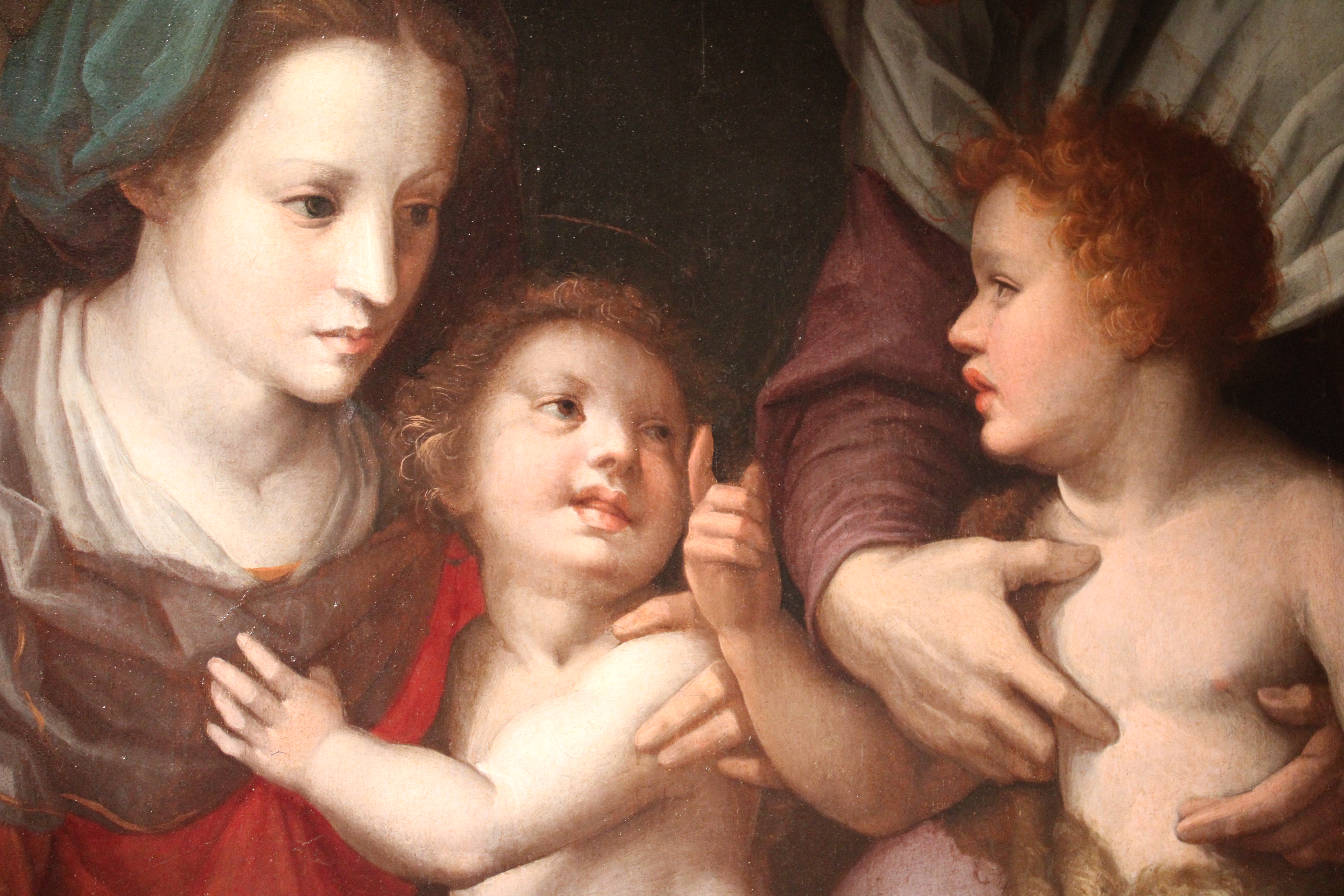
La maggior parte delle diciassette opere esposte nella nuova ala di Palazzo Pretorio sono state sottoposte a un accurato restauro, sostenuto economicamente dal Lions Club Prato Castello dell’Imperatore e della Fondazione Cassa di Risparmio di Prato.
Palazzo Pretorio ha alle spalle 700 anni di storia. Fu edificato infatti in epoca medievale come sede della magistratura e delle prigioni. Fra le sue pareti ospitava il Podestà, il Capitano del Popolo e i magistrati che avevano il compito di amministrare la giustizia.

Si affaccia su Piazza del Comune e nel corso dei secoli ha subito diverse destinazioni d’uso e modifiche. Pensate che fu il Granduca di Toscana Pietro Leopoldo di Lorena a voler far esporre al pubblico un primo nucleo di dipinti provenienti da monasteri e oratori che erano stati soppressi per volontà del vescovo giansenista Scipione de’ Ricci.

Nel corso dei secoli le collezioni sono state notevolmente arricchite e anche recentemente sono stati acquisiti nuovi capolavori. Nel 2010 fu comprato il Crocifisso di Filippino Lippi mentre l’anno successivo fu accolta nel museo la donazione Lipchitz e poi, nel 2012, arrivarono le pale di Santi di Tito e Alessandro Allori donate da Angela Riblet.
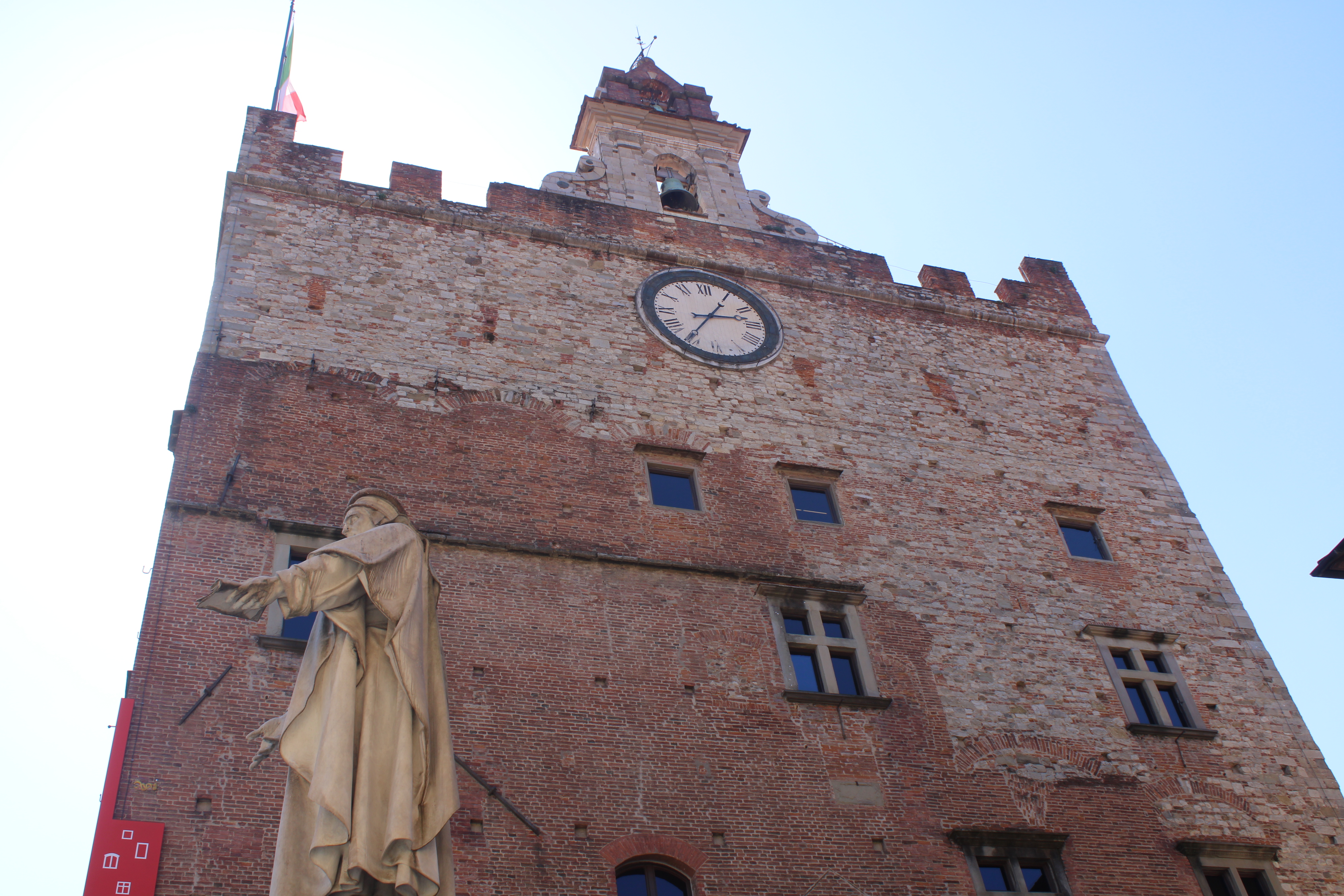
Il percorso museale attuale di Palazzo Pretorio è suddiviso su cinque piani e comprende opere straordinarie come le grandi pale realizzate fra il Cinquecento e il Settecento provenienti soprattutto da chiese e monasteri pratesi, come quelle del Poppi, di Domenico Ferretti ma anche di Giovan Battista Naldini, Battistello Caracciolo, Mattia Preti e Cecco Bravo.
Ampio spazio è dedicato alle mostre temporanee al piano terra mentre, al terzo piano, è ospitata una ricca raccolta di disegni, modelli in gesso e busti in marmo dello scultore Lorenzo Bartolini e cartoni del pittore Alessandro Franchi.
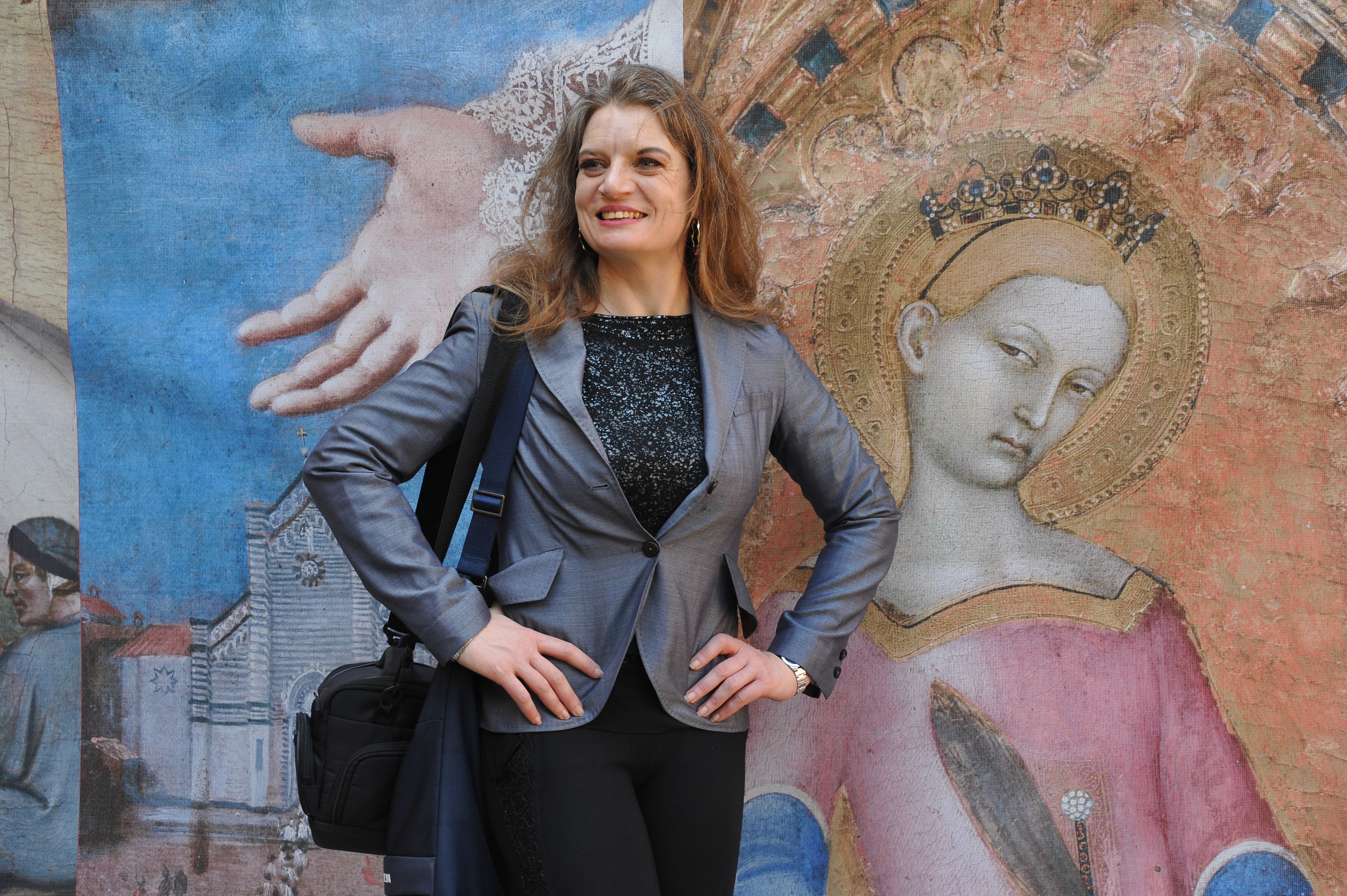
Il Palazzo Pretorio di Prato è un grande museo che val bene più di una visita.
Non vanta gli afflussi di musei più noti fiorentini ma ciò non toglie che sia un luogo straordinario che consente ai visitatori di addentrarsi in sale in cui sono custodite opere straordinarie.

Per il momento il sempre vostro Michelangelo Buonarroti vi saluta dandovi appuntamento ai prossimi post e sui social.

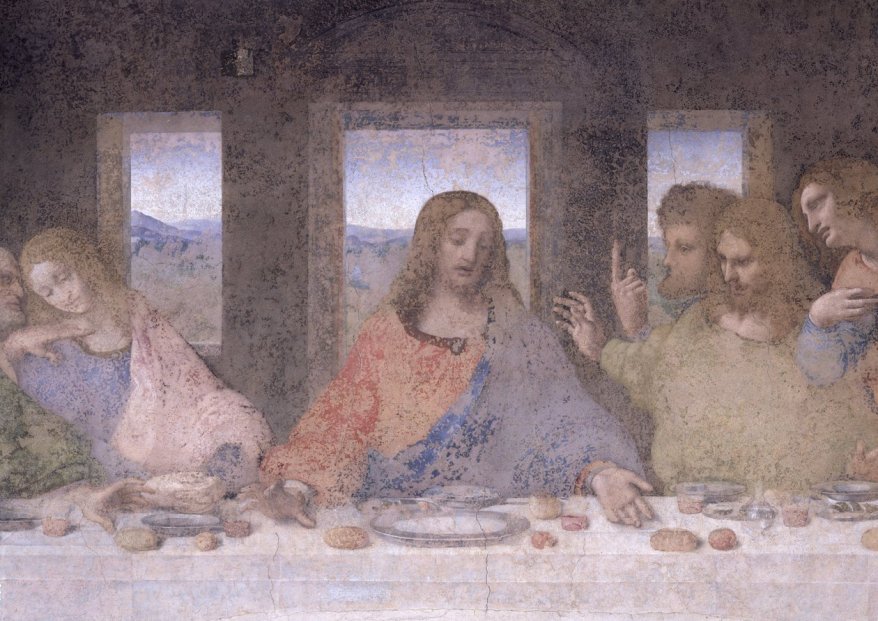
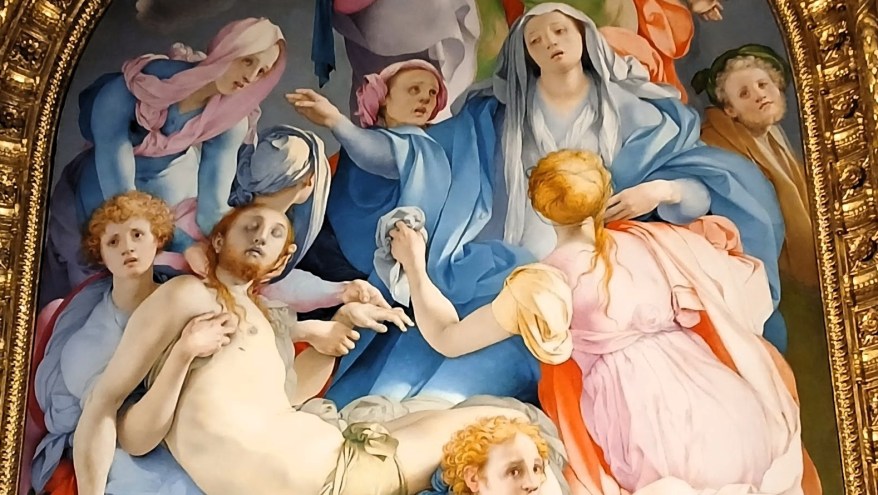
Museum of Palazzo Pretorio in Prato: the new Renaissance room opens to celebrate 10 years
The Palazzo Pretorio Museum turns 10 years old and to celebrate this important anniversary, it opens a new one to exhibit seventeen fifteenth and sixteenth century paintings from the deposits.
It was April 12, 2014 when, after a long restoration project started in 1998, the museum was officially inaugurated, in a completely renewed guise.
From now on it will be possible to visit the new room “From the deposits to the museum: paintings of the fifteenth and sixteenth centuries” located on the first floor of the newly redeveloped area where the Monte dei Pegni was once housed.
Matteo Biffoni, mayor of Prato, specifies that the setting up of new museum rooms requires a significant energy and economic effort but that it is not possible to escape this burden “You cannot even be tempted to retreat. The museum talks about us, about what we are and what we will be.”
The deposits of the Praetorian Palace Museum, as stated by the director Rita Iacopino, are rich in wonderful works of art. Although it is not possible to display them all within the museum itinerary, having a new room expertly set up with modern criteria allows notable works to be made accessible to both visitors and scholars.
The nucleus of fifteenth-century paintings is made up of seven works, created by little-known artists who gravitated around important workshops, especially Florentine ones. their production contributed to spreading and repeating well-known models that follow the style of the time while adding some innovations.
Of these painters, only Tommaso di Piero Trombetto, we know that he was an artist from Prato who with his own workshop took up the figurative language of Filippino Lippi although in his works he had the habit of painting fewer details, even simplifying the forms.
Among the works on display is the tempera painting on wood by Trombetto created around 1500 with the Madonna and Child between Saints Rocco, Giovanino, Sebastiano and Domenico. What particularly attracts attention is the face of the Madonna who holds the standing Child close to her, in stark contrast to the simpler forms of Saint Sebastian pierced by arrows.
In the same new room there is also a collection of ten paintings of Holy Families and Madonnas with Child from the sixteenth century. Prato, a city in the shadow of Florence also in the artistic field, welcomed less famous artists from the Medici city par excellence who, however, followed Renaissance models, often at the request of the client, inspired above all by Andrea del Sarto and Raphael.
Thus the best-known compositions of the two artists are reflected as in a mirror in minor paintings with different reinterpretations, worthy of study.
Most of the seventeen works exhibited in the new wing of Palazzo Pretorio have undergone careful restoration, financially supported by the Prato Castello dell’Imperatore Lions Club and the Cassa di Risparmio di Prato Foundation.
Palazzo Pretorio has 700 years of history behind it. In fact, it was built in medieval times as the seat of the judiciary and prisons. Within its walls it housed the Podestà, the Captain of the People and the magistrates who had the task of administering justice.
It overlooks Piazza del Comune and has undergone various uses and modifications over the centuries. Consider that it was the Grand Duke of Tuscany Pietro Leopoldo di Lorraine who wanted to have a first group of paintings exhibited in the palace that came from monasteries and oratories that had been suppressed by the will of the Jansenist bishop Scipione de’ Ricci. Over the centuries the collections have been significantly enriched and new masterpieces have also recently been acquired. In 2010 the Crucifix by Filippino Lippi was purchased while the following year the Lipchitz donation was accepted into the museum and then, in 2012, the altarpieces by Santi di Tito and Alessandro Allori donated by Angela Riblet arrived.
The current museum itinerary of Palazzo Pretorio is divided over five floors and includes extraordinary works such as the large altarpieces created between the sixteenth and eighteenth centuries coming mainly from churches and monasteries in Prato, such as those by Poppi, by Domenico Ferretti but also by Giovan Battista Naldini, Battistello Caracciolo, Mattia Preti and Cecco Bravo.
Ample space is dedicated to temporary exhibitions on the ground floor while on the third floor there is a rich collection of drawings, plaster models and marble busts by the sculptor Lorenzo Bartolini and cartoons by the painter Alessandro Franchi.
The Praetorian Palace in Prato is a large museum that is worth more than one visit. It does not boast the influx of the most famous Florentine museums but this does not mean that it is not an extraordinary place that allows visitors to enter rooms where extraordinary works are kept.
For the moment, your always Michelangelo Buonarroti greets you and will meet you in the next posts and on social media.

Sostienici – Support Us
Se questo blog ti piace e ti appassiona, puoi aiutarci a farlo crescere sempre più sostenendoci in modo concreto condividendo i post, seguendo le pagine social e con un contributo che ci aiuta ad andare avanti con il nostro lavoro di divulgazione. . ENGLISH: If you like and are passionate about this blog, you can help us make it grow more and more by supporting us in a concrete way by sharing posts, following social pages and with a contribution that helps us to move forward with our dissemination work.
8,00 €
-
Il mio primo soggiorno a Bologna e l’incontro con Giovan Francesco Aldrovandi
🇮🇹Fuggii da Firenze a soli 19 anni. Senza certezze, senza protezioni. Solo con il mio talento. A Bologna trovai rifugio nella casa di Giovan Francesco Aldrovandi… 🇬🇧I fled Florence at just 19. Without certainties, without protection. Only with my talent. In Bologna, I found refuge in the home of Giovan Francesco Aldrovandi…
-
11 aprile 1514: muore Donato Bramante, il genio della scala elicoidale
🇮🇹Era l’11 aprile 1514 quando Donato Bramante morì a Roma. La sua scomparsa non cancellò però le tensioni, le rivalità e i giudizi contrastanti che avevano accompagnato tutta la sua carriera… 🇬🇧It was April 11, 1514, when Donato Bramante died in Rome. His passing, however, did not erase the tensions, rivalries, and conflicting opinions that…
-
Dentro l’hangar 12 del Carnevale di Viareggio: dove la cartapesta prende vita con Marzia Etna
🇮🇹Ho incontrato Marzia Etna, maestra carrista da 40 anni: mentre racconta, le brillano gli occhi. E capisci subito una cosa: questo non è solo un lavoro, è vita tra carta a calco, ferro e sogni… 🇬🇧I met Marzia Etna, a master float builder for 40 years: her eyes sparkle as she talks. And you immediately…
Condividi:


Questo sono io





sostienici

Sostienici - Support Us
Se questo blog ti piace e ti appassiona, puoi aiutarci a farlo crescere sempre più sostenendoci in modo concreto condividendo i post, seguendo le pagine social e con un contributo che ci aiuta ad andare avanti con il nostro lavoro di divulgazione. . ENGLISH: If you like and are passionate about this blog, you can help us make it grow more and more by supporting us in a concrete way by sharing posts, following social pages and with a contribution that helps us to move forward with our dissemination work.
€10,00


