
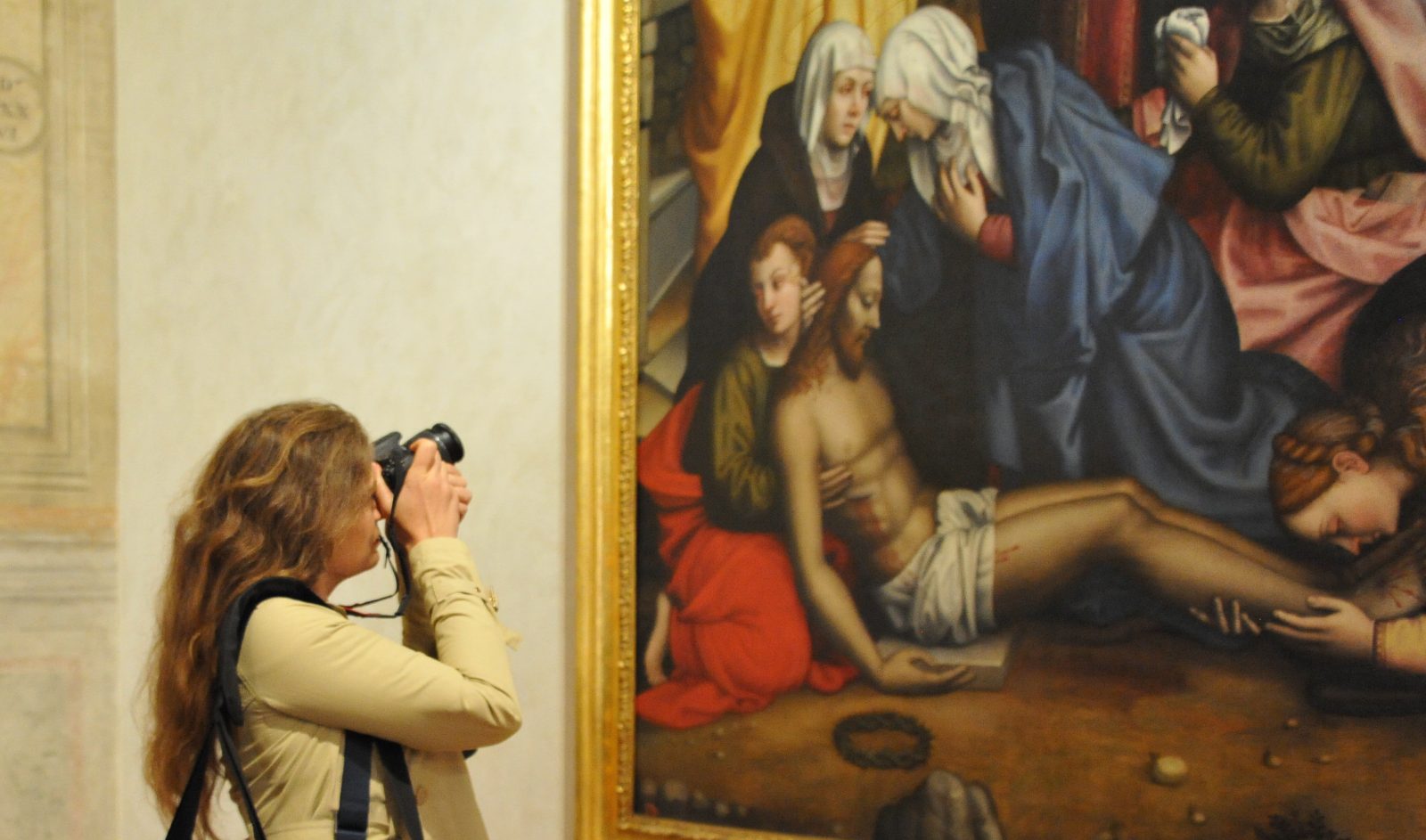
25 marzo: l’Annunciazione nel mondo dell’arte
Il 25 marzo si celebra l’Annunciazione, ricordando il momento in cui la Vergine Maria vide apparire dinanzi a sè l’arcangelo Gabriele comunicandole che avrebbe concepito Gesù, figlio di Dio, per opera dello Spirito Santo.
E’ una festa di precetto e rappresenta un momento assai significativo del ciclo liturgico.

“Lo Spirito Santo scenderà su di te, su te stenderà la sua ombra la potenza dell’Altissimo. Colui che nascerà sarà dunque santo e chiamato Figlio di Dio. Vedi: anche Elisabetta, tua parente, nella sua vecchiaia, ha concepito un figlio e questo è il sesto mese per lei, che tutti dicevano sterile: nulla è impossibile a Dio”. Maria rispose «Eccomi, sono la serva del Signore, avvenga di me quello che hai detto».
dal Vangelo di Luca
E’ proprio questo il momento che molti artisti hanno raffigurato nel corso dei secoli. Si sono cimentati con il tema Leonardo da Vinci, Piero della Francesca, Sandro Botticelli, il Beato Angelico e molti altri ancora.
Vi siete mai chiesti perché in molte rappresentazioni dell’Annunciazione la Madonna ha dinnanzi a sé un libro?
Ebbene, tradizione vuole che la Vergine, al momento in cui apparve l’angelo, stesse leggendo la Bibbia e in particolare il libro di Isaia nel punto in cui sta scritto -Ecco la Vergine concepirà e partorirà un Figlio che chiamerà Emmanuele-.
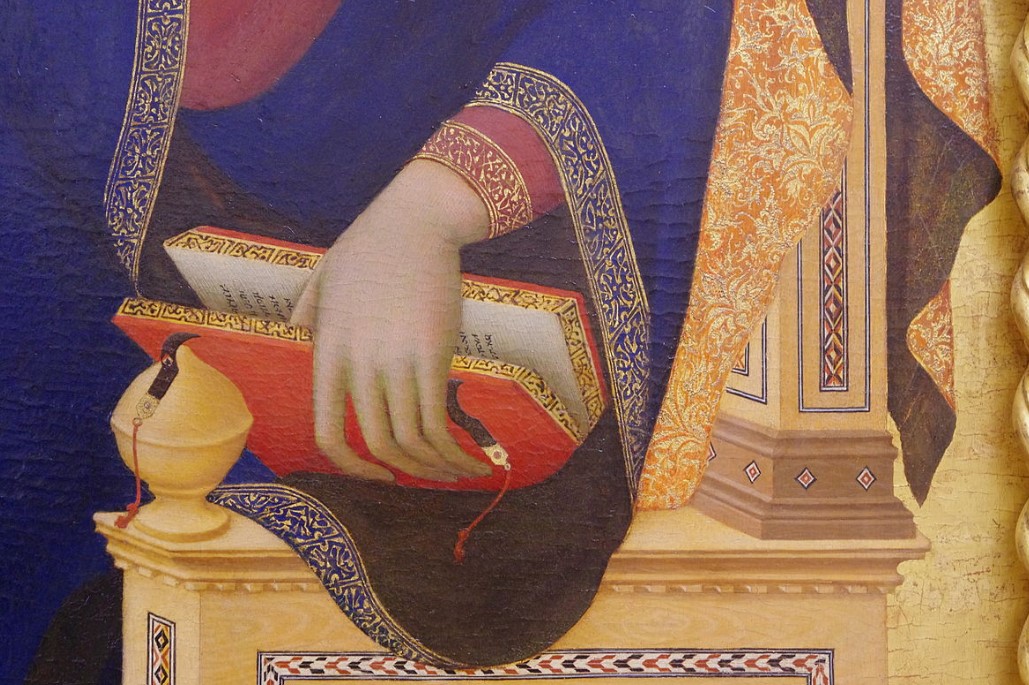
Perché poi spesso compare nella scena una colonna? La colonna è un po’ la raffigurazione della separazione fra il divino e il terreno e divide fisicamente l’Arcangelo dalla Vergine Maria.
Vediamo dunque assieme quali sono alcune delle più belle Annunciazioni che siano mai state dipinte.
L’Annunciazione di Simone Martini
Questa tavola fondo oro fu realizzata nel 1333 per l’altare di Sant’Ansano del Duomo di Siena da Simone Martini con l’aiuto di Lippo Memmi. L’Arcangelo si inginocchia davanti alla Vergine intimorita pronunciando le parole “AVE GRATIA PLENA DOMINUS TECUM”, quasi fosse un fumetto ante litteram.
Lo Spirito Santo in alto al cento del dipinto viene rappresentato nella forma di colomba circondato da angeli. Ai lati della scena centrale Marini dipinse Sant’Ansano con il vessillo di Siena e una Santa Martire che potrebbe essere la mamma di Ansano oppure Margherita.

L’Annunciazione di Sandro Botticelli
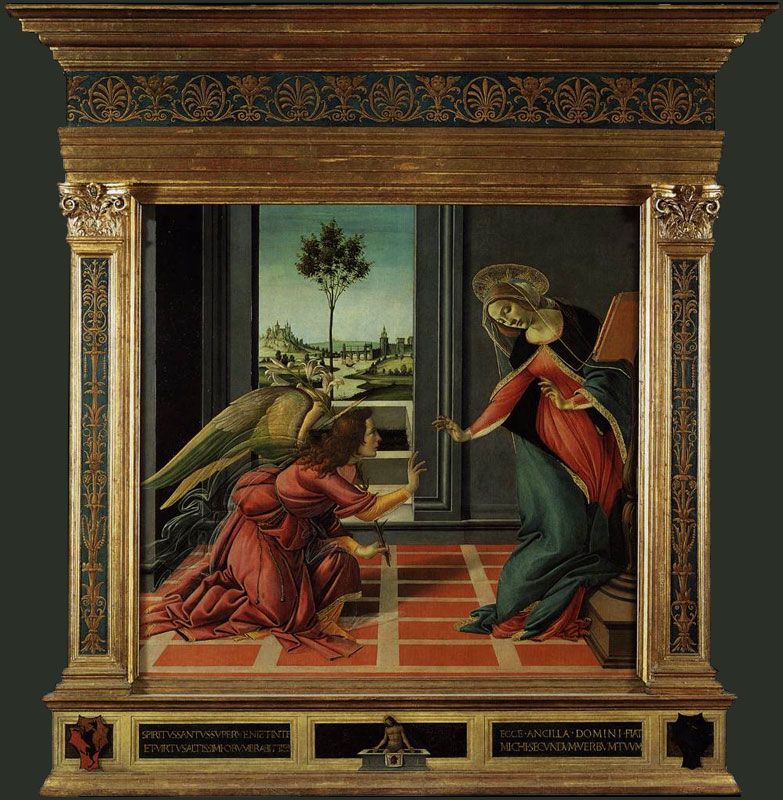
Il dipinto che ancora conserva la sua cornice originale, fu commissionato al Botticelli da Benedetto di ser Francesco Guardi nel 1489 per la cappella di famiglia ubicata nella chiesa di Santa Maria Maddalena a Firenze.
Anche in questo caso l’Arcangelo è inginocchiato e separato dalla Vergine intimorita da quella apparizione dagli elementi architettonici dello sfondo. La porta aperta che lascia intravedere quello che c’è fuori allude alla Madonna come porta per il cielo così come il giardino recintato raffigurato nello sfondo è l’emblema della verginità di Maria.
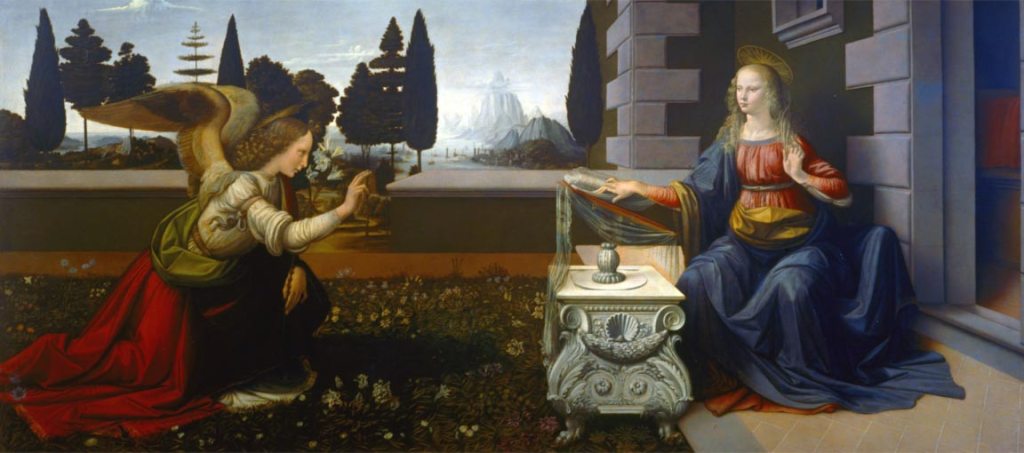
L’Annunciazione di Leonardo da Vinci
La Vergine sfoglia un libro mentre l’Arcangelo Gabriele si inginocchia davanti a Lei, tenendo in mano un giglio bianco, simbolo della purezza. Di questo dipinto giovanile di Leonardo, molto noto, tutt’oggi non si conoscono la collocazione originale né il committente. L’opera è stata datata attorno al 1472.
Guardate il piano su cui posa il leggìo della Vergine. Vi ricorda qualcosa?
Leonardo lo dipinse ispirandosi al sarcofago di Piero il Gottoso del Verrocchio, suo maestro, che si trova tutt’oggi nel duomo di San Lorenzo a Firenze.
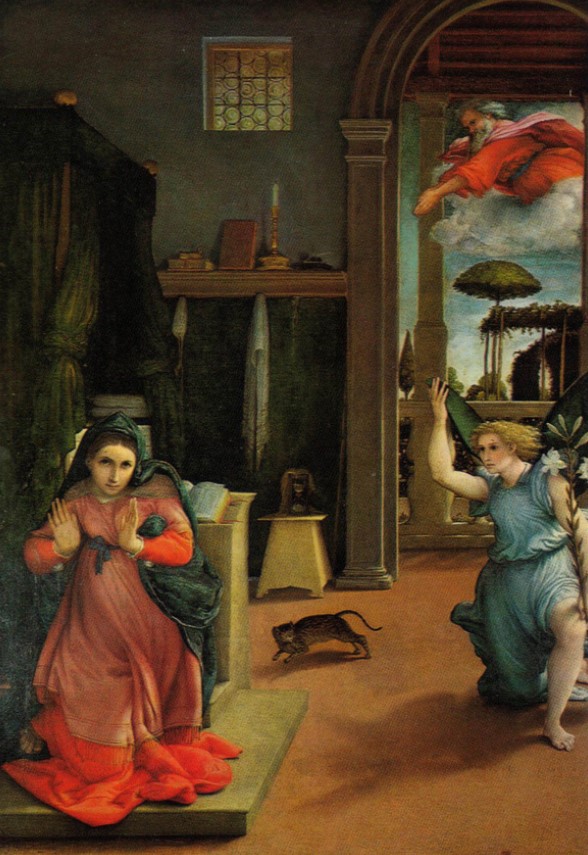
L’Annunciazione di Lorenzo Lotto
Realizzata nel 1527, l‘Annunciazione di Lorenzo Lotto è un’opera affascinante. Mostra l’Arcangelo Gabriele che si avvicina con delicatezza alla Vergine Maria, portando il messaggio divino. La scena è completata da sfondi ornamentali e simbolici che arricchiscono ulteriormente il significato dell’opera.
Lotto, con la sua abilità artistica, è riuscito a trasmettere un senso di sacralità e meraviglia attraverso l’uso sapiente della luce e dei colori. L’opera invita lo spettatore a immergersi nell’importanza di questo momento cruciale nella storia cristiana.
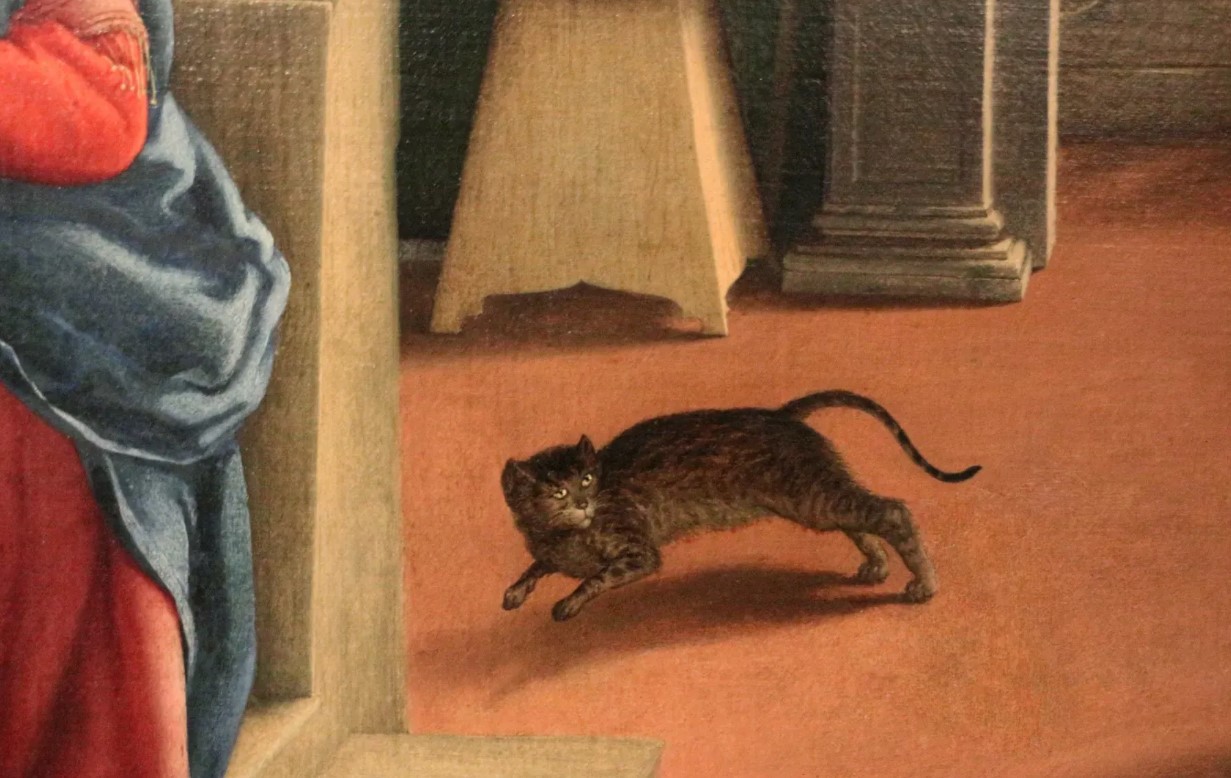
Il gatto che scappa è uno dei dettagli più celebri del dipinto. Il gatto è in primo piano, proprio davanti alla Vergine Maria. È raffigurato nell’atto di scappare, con la schiena inarcata e la coda ritta. Esistono differenti interpretazioni del significato del felino in quel preciso contesto.
Alcuni pensano sia un simbolo del male che fugge all’arrivo dell’angelo Gabriele mentre altri esperti sono propensi a credere sia semplicemente un animale domestico spaventato dal rumore. Altri ancora credono che rappresenti la natura umana incline al peccato ma che può essere redenta dalla grazia di Dio.
L’Annunciazione di Orazio Gentileschi
L’Annunciazione di Orazio Gentileschi è un capolavoro del noto pittore barocco italiano Orazio Gentileschi.
Realizzata nel 1623, questa opera mostra l’Arcangelo Gabriele mentre annuncia a Maria la sua futura maternità divina.
Gentileschi cattura la meraviglia e la sacralità di questo momento con maestria, utilizzando luci e ombre per enfatizzare l’importanza della scena. La rappresentazione dell’Annunciazione è arricchita da dettagli simbolici e stilistici tipici del periodo barocco, offrendo uno sguardo coinvolgente su questo tema iconico della storia artistica e religiosa.

L’Annunciazione di Carlo Crivelli
L’Annunciazione di Carlo Crivelli, nota anche come l’Annunciazione di Ascoli, fu dipinta dall’artista nel 1486 e oggi si trova alla National Gallery di Londra.
La scena si svolge per le strade di una cittadina di Ascoli Piceno. L’Arcangelo Gabriele si inginocchia davanti la porta di casa della Vergine che come di consueto sta leggendo la Bibbia. Un raggio si diparte dal cielo, oltrepassa la parete attraverso un foro, attraversa una colomba in volo e poi arriva alla Madonna.
L’opera è piena di dettagli minuti come il letto rifatto alle spalle della Vergine, simbolo di verginità e purezza, le nature morte sopra la mensola come la bottiglia di vetro e la candela accesa che sta a simboleggiare la fede.

Per il momento il sempre vostro Michelangelo Buonarroti vi saluta dandovi appuntamento ai prossimi post e sui social, lasciandovi alcuni consigli di lettura collegati al tema del giorno.


March 25: the Annunciation seen through the eyes of artists
The Annunciation is celebrated on March 25, remembering the moment in which the Virgin Mary saw the archangel Gabriel appear before her telling her that she would conceive Jesus, son of God, by the work of the Holy Spirit.
It is a feast of obligation and represents a very significant moment in the liturgical cycle.
The Annunciation is celebrated on March 25, remembering the moment in which the Virgin Mary saw the archangel Gabriel appear before her telling her that she would conceive Jesus, son of God, by the work of the Holy Spirit.
It is a feast of obligation and represents a very significant moment in the liturgical cycle.
This is precisely the moment that many artists have depicted over the centuries. Leonardo da Vinci, Piero della Francesca, Sandro Botticelli, Beato Angelico and many others have tried their hand at the theme.
Have you ever wondered why in many representations of the Annunciation the Madonna has a book in front of her?
Well, tradition has it that the Virgin, at the moment the angel appeared, was reading the Bible and in particular the book of Isaiah at the point where it is written -Behold, the Virgin will conceive and give birth to a Son whom she will call Emmanuel-.
Why does a column often appear in the scene? The column is a bit of a representation of the separation between the divine and the earthly and physically divides the Archangel from the Virgin Mary.
So let’s see together what are some of the most beautiful Annunciations that have ever been painted.
The Annunciation by Simone Martini
This panel with a gold background was created in 1333 for the altar of Sant’Ansano in the Siena Cathedral by Simone Martini with the help of Lippo Memmi. The Archangel kneels before the intimidated Virgin pronouncing the words “AVE GRATIA PLENA DOMINUS TECUM”, almost as if it were a comic ante litteram.
The Holy Spirit at the top of the painting is represented in the form of a dove surrounded by angels. On the sides of the central scene Marini painted Saint Ansano with the flag of Siena and a Holy Martyr who could be Ansano’s mother or Margaret.
The Annunciation by Sandro Botticelli
The painting, which still retains its original frame, was commissioned to Botticelli by Benedetto di ser Francesco Guardi in 1489 for the family chapel located in the church of Santa Maria Maddalena in Florence.
Also in this case the Archangel is kneeling and separated from the Virgin, intimidated by that apparition by the architectural elements in the background. The open door that allows a glimpse of what is outside alludes to the Madonna as a door to heaven just as the fenced garden depicted in the background is the emblem of Mary’s virginity.
The Annunciation by Leonardo da Vinci
The Virgin leafs through a book while the Archangel Gabriel kneels in front of Her, holding a white lily, symbol of purity. Of this very well-known early painting by Leonardo, the original location and the person who commissioned it are still unknown today. The work was dated around 1472.
Look at the surface on which the Virgin’s lectern rests. Does it remind you of anything?
Leonardo painted it taking inspiration from the sarcophagus of Piero il Gouto by Verrocchio, his teacher, which is still found today in the cathedral of San Lorenzo in Florence.
The Annunciation by Lorenzo Lotto
Created in 1527, Lorenzo Lotto’s Annunciation is a fascinating work. It shows the Archangel Gabriel gently approaching the Virgin Mary, carrying the divine message. The scene is completed by ornamental and symbolic backgrounds that further enrich the meaning of the work.
Lotto, with his artistic ability, managed to convey a sense of sacredness and wonder through the skilful use of light and colours. The work invites the viewer to immerse themselves in the importance of this crucial moment in Christian history.
The escaping cat is one of the most famous details of the painting. The cat is in the foreground, right in front of the Virgin Mary. He is depicted in the act of running away, with his back arched and his tail erect. There are different interpretations of the meaning of the feline in that precise context.
Some think it is a symbol of the evil that flees at the arrival of the angel Gabriel while other experts are inclined to believe it is simply a pet frightened by the noise. Still others believe it represents human nature prone to sin but which can be redeemed by God’s grace.
The Annunciation by Orazio Gentileschi
The Annunciation by Orazio Gentileschi is a masterpiece by the well-known Italian Baroque painter Orazio Gentileschi.
Created in 1623, this work shows the Archangel Gabriel as he announces to Mary her future divine motherhood.
Gentileschi captures the wonder and sacredness of this moment with mastery, using light and shadow to emphasize the importance of the scene. The representation of the Annunciation is enriched by symbolic and stylistic details typical of the Baroque period, offering an engaging look at this iconic theme of artistic and religious history.
The Annunciation by Carlo Crivelli
The Annunciation by Carlo Crivelli, also known as the Annunciation of Ascoli, was painted by the artist in 1486 and is now in the National Gallery in London.
The scene takes place on the streets of a town in Ascoli Piceno. The Archangel Gabriel kneels in front of the door of the Virgin’s house who, as usual, is reading the Bible. A ray departs from the sky, passes the wall through a hole, crosses a flying dove and then reaches the Madonna.
The work is full of minute details such as the bed made up behind the Virgin, a symbol of virginity and purity, the still lifes above the shelf such as the glass bottle and the lit candle which symbolizes faith.
For the moment, your always Michelangelo Buonarroti greets you and will meet you in the next posts and on social media.

Sostienici – Support Us
Se questo blog ti piace e ti appassiona, puoi aiutarci a farlo crescere sempre più sostenendoci in modo concreto condividendo i post, seguendo le pagine social e con un contributo che ci aiuta ad andare avanti con il nostro lavoro di divulgazione. . ENGLISH: If you like and are passionate about this blog, you can help us make it grow more and more by supporting us in a concrete way by sharing posts, following social pages and with a contribution that helps us to move forward with our dissemination work.
8,00 €
-
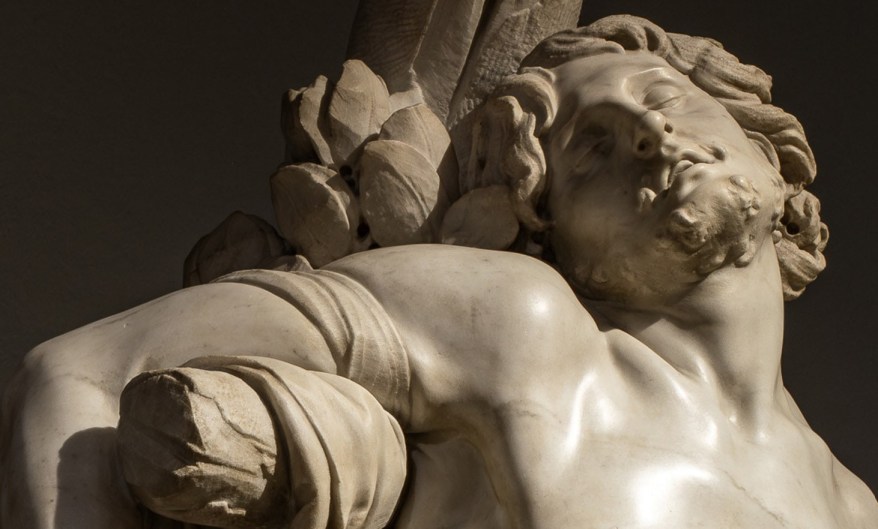
San Sebastiano del Bernini: il marmo che respira tra vita e morte
🇮🇹 Il San Sebastiano di Gian Lorenzo Bernini è un’opera che cattura l’attimo tra vita e morte: meno martirio, più emozione pura. Voluto da Maffeo Barberini, è uno dei capolavori giovanili più intensi del Barocco… 🇬🇧 Gian Lorenzo Bernini’s Saint Sebastian is a work that captures the moment between life and death: less martyrdom, more…
-
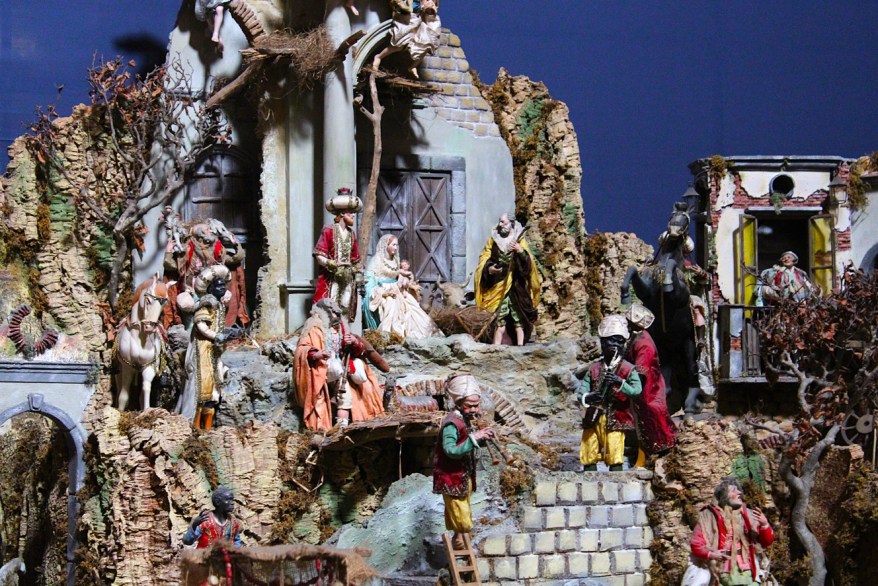
Presepe napoletano verso l’UNESCO: l’arte che racconta l’anima di Napoli
🇮🇹La candidatura del presepe napoletano all’UNESCO celebra una tradizione unica: arte, storia e identità di Napoli pronte a conquistare il riconoscimento mondiale. 🇬🇧The candidacy of the Neapolitan nativity scene for UNESCO recognition celebrates a unique tradition: the art, history, and identity of Naples ready to conquer global recognition.
-
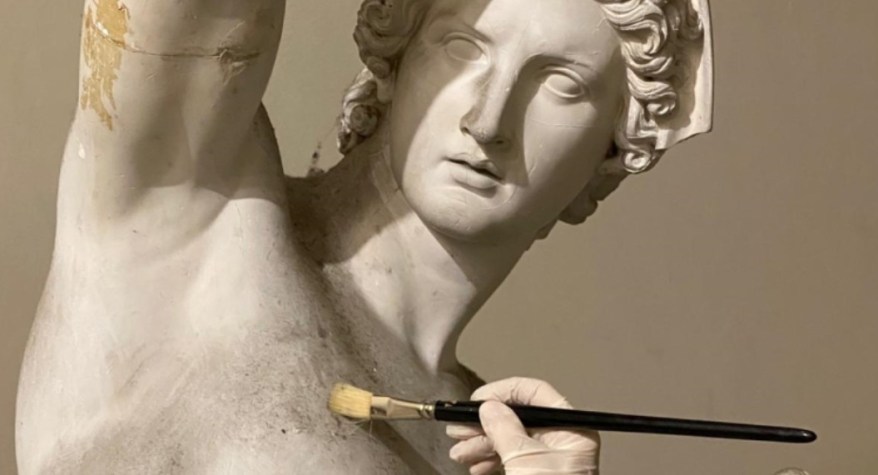
Restauro Telemaco di Bienaimé: visita al cantiere aperto, a Roma
🇮🇹Mercoledì 25 marzo 2026 alle ore 17:00, l’Accademia Nazionale di San Luca apre al pubblico il cantiere di restauro del Telemaco di Luigi Bienaimé.. 🇬🇧Wednesday, March 25, 2026 at 5:00 PM, the Accademia Nazionale di San Luca opens the restoration site of Luigi Bienaimé’s Telemachus to the public…
Condividi:


Questo sono io





sostienici

Sostienici - Support Us
Se questo blog ti piace e ti appassiona, puoi aiutarci a farlo crescere sempre più sostenendoci in modo concreto condividendo i post, seguendo le pagine social e con un contributo che ci aiuta ad andare avanti con il nostro lavoro di divulgazione. . ENGLISH: If you like and are passionate about this blog, you can help us make it grow more and more by supporting us in a concrete way by sharing posts, following social pages and with a contribution that helps us to move forward with our dissemination work.
€10,00


