

La Scultura del giorno: Imago Pietatis di Donatello
La scultura del giorno che vi propongo oggi è la Imago Pietatis di Donatello, un rilievo realizzato dall’artista nel 1435 circa.
La storia documentata di quest’opera non va oltre il 1855, quando è noto appartenesse alle collezioni di Ottavio Gigli, patriota e letterato che possedeva una notevole raccolta di opere del Rinascimento a Firenze.
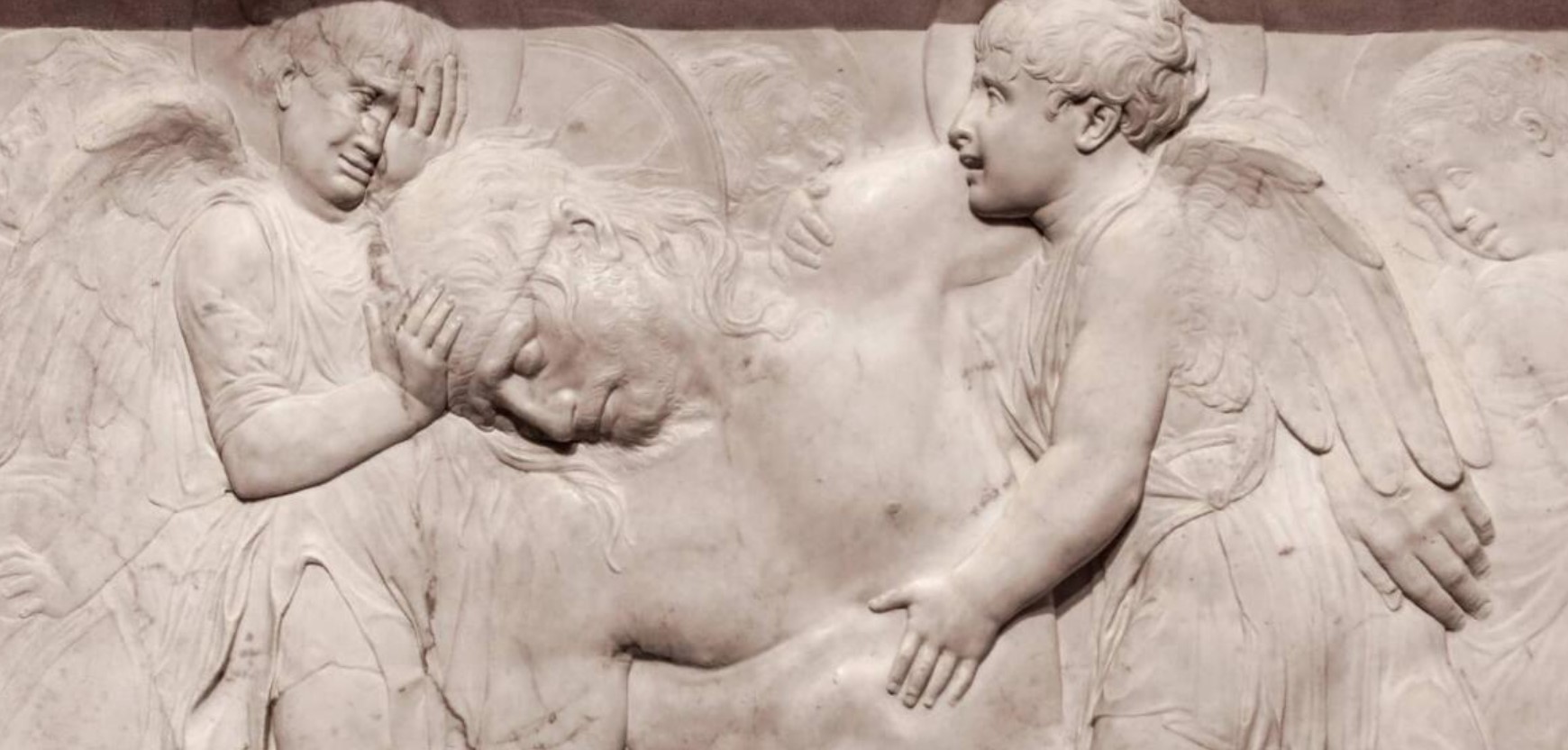
Già allora era attribuito a Donatello, attribuzione indiscussa quando fece ingresso al Victoria & Albert Museum e che mantiene tutt’oggi.
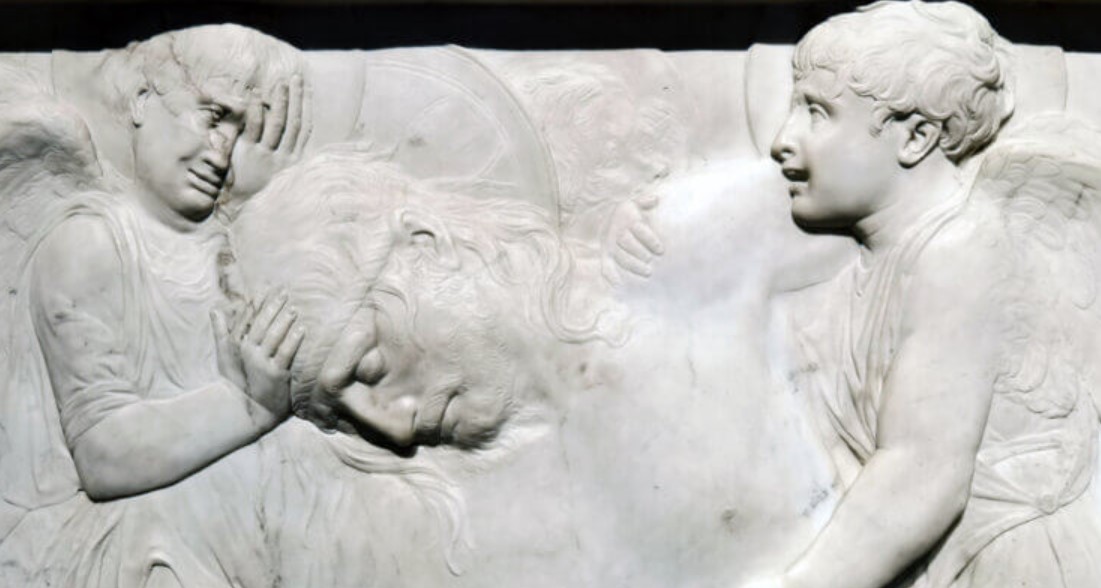
La sensibile gradazione del rilievo così come la cifra di stile e il pathos tangibile dei due angeli che sostengono Il Cristo deposto e portato nel sepolcro, rendono l’attribuzione all’artista certa.
Osservate con attenzione il braccio sinistro del Cristo, sostenuto dalla rispettiva gamba piegata, solcato dalle vene in cui oramai non più scorre il sangue: un incredibile pezzo di bravura di Donatello.
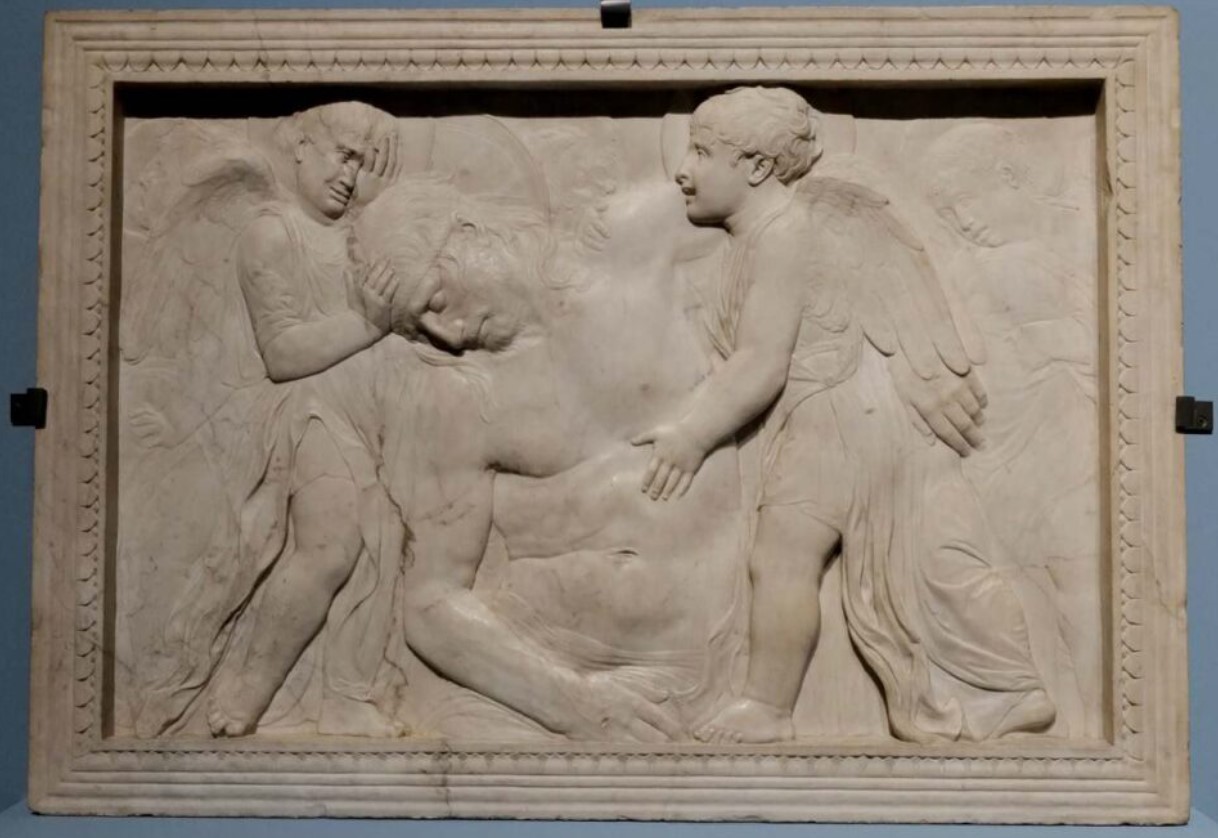
Probabilmente in origine, vista la forma della Imago Pietatis, era destinata a un paliotto d’altare. Qualche esperto di Donatello ipotizza potesse decorare l’altare connesso al tabernacolo eucauristico scolpito sempre dall’artista per la cappella privata di papa Eugenio IV nei Palazzi Vaticani.
Altri invece propendono a pensare possa essere stata quella “tavolla da altare di marmo in che è intagliato di mezzo rilievo la Pietà accompagnata con dua agnolli” che viene citata in un documento di fine Quattrocento a Firenze nella Cappella della cosiddetta Casa Vecchia dove Cosimo de’ Medici detto il Vecchio e la famiglia avevano vissuto prima di traslocare nel palazzo progettato da Michelozzo.
Per il momento il sempre vostro Michelangelo Buonarroti vi saluta dandovi appuntamento ai prossimi post e sui social.

Sostienici – Support Us
Se questo blog ti piace e ti appassiona, puoi aiutarci a farlo crescere sempre più sostenendoci in modo concreto condividendo i post, seguendo le pagine social e con un contributo che ci aiuta ad andare avanti con il nostro lavoro di divulgazione. . ENGLISH: If you like and are passionate about this blog, you can help us make it grow more and more by supporting us in a concrete way by sharing posts, following social pages and with a contribution that helps us to move forward with our dissemination work.
8,00 €
Sculpture of the day: Imago Pietatis by Donatello
The sculpture of the day that I propose to you today is the Imago Pietatis by Donatello, a relief created by the artist in around 1435.
The documented history of this work does not go beyond 1855, when it is known that it belonged to the collections of Ottavio Gigli, a patriot and scholar who owned a notable collection of Renaissance works in Florence.
Already then it was attributed to Donatello, an undisputed attribution when it entered the Victoria & Albert Museum and which it still maintains today.
The sensitive gradation of the relief as well as the style and the tangible pathos of the two angels supporting the Christ deposed and carried to the tomb make the attribution to the artist certain.
Look carefully at Christ’s left arm supported by his bent leg, furrowed by veins in which blood no longer flows: an incredible piece of skill by Donatello.
Probably originally, given the shape of the Imago Pietatis, it was intended for an altar frontal. Some experts on Donatello hypothesize that he could have decorated the altar connected to the eucauristic tabernacle also sculpted by the artist for the private chapel of Pope Eugene IV in the Vatican Palaces.
Others, however, are inclined to think that it may have been that “marble altar table in which the Pietà accompanied by two lambs is carved in half relief” which is cited in a document from the end of the fifteenth century in Florence in the chapel of the so-called Casa Vecchia where Cosimo de’ doctors and family had lived before moving into the building designed by Michelozzo.
For the moment, your always Michelangelo Buonarroti greets you and will meet you in the next posts and on social media.
Sostienici – Support Us
Se questo blog ti piace e ti appassiona, puoi aiutarci a farlo crescere sempre più sostenendoci in modo concreto condividendo i post, seguendo le pagine social e con un contributo che ci aiuta ad andare avanti con il nostro lavoro di divulgazione. . ENGLISH: If you like and are passionate about this blog, you can help us make it grow more and more by supporting us in a concrete way by sharing posts, following social pages and with a contribution that helps us to move forward with our dissemination work.
8,00 €
-
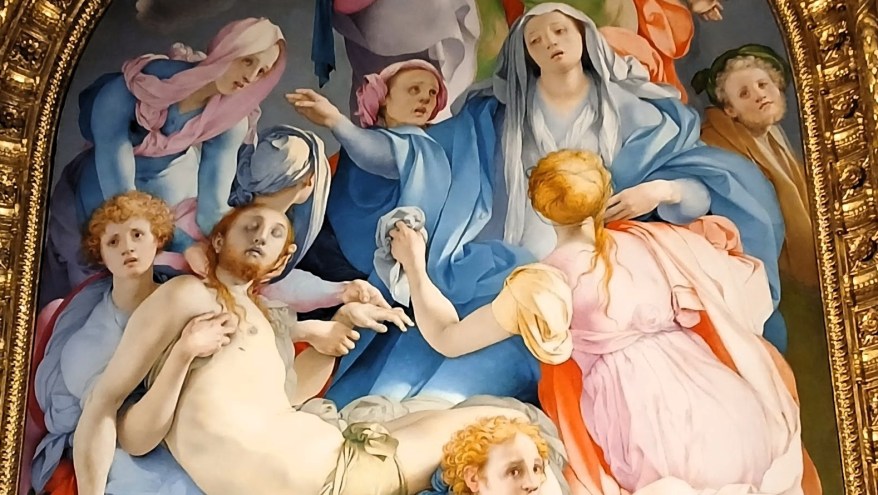
La Deposizione del Pontormo: il capolavoro dell’artista
🇮🇹Ti coinvolge. Ti mette a disagio. Ti costringe a sentire. E’ la Deposizione dalla Croce, dipinta da Jacopo Pontormo tra il 1525 e il 1528 per la Cappella Capponi… 🇬🇧It draws you in. It makes you uncomfortable. It forces you to feel. It’s the Deposition from the Cross, painted by Jacopo Pontormo between 1525 and…
-
Non chiamatelo Braghettone: il 4 aprile del 1566 muore Daniele da Volterra, l’artista che salvò il Giudizio Universale
🇮🇹Braghettone? No, molto di più. Il 4 aprile 1566 moriva Daniele da Volterra, il mio allievo più fedele, l’uomo che mi rimase accanto fino all’ultimo respiro e che salvò il mio Giudizio Universale dalla distruzione… 🇬🇧Braghettone? No, much more. On April 4, 1566, Daniele da Volterra died, my most faithful student, the man who remained…
-
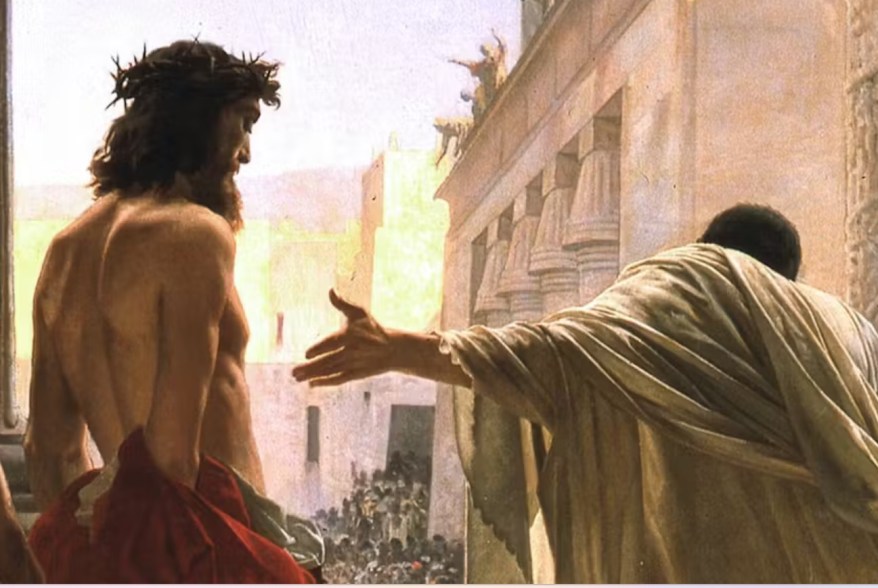
Venerdì Santo: gli “Ecce Homo” più intensi della storia dell’arte
🇮🇹Ecce Homo. Da Antonello da Messina a Tintoretto, fino al sorprendente capolavoro di Antonio Ciseri, questo soggetto ha attraversato i secoli raccontando dolore, umanità e coscienza… 🇬🇧Ecce Homo. From Antonello da Messina to Tintoretto, to Antonio Ciseri’s astonishing masterpiece, this subject has spanned the centuries, recounting pain, humanity, and conscience…
Condividi:


Questo sono io





sostienici

Sostienici - Support Us
Se questo blog ti piace e ti appassiona, puoi aiutarci a farlo crescere sempre più sostenendoci in modo concreto condividendo i post, seguendo le pagine social e con un contributo che ci aiuta ad andare avanti con il nostro lavoro di divulgazione. . ENGLISH: If you like and are passionate about this blog, you can help us make it grow more and more by supporting us in a concrete way by sharing posts, following social pages and with a contribution that helps us to move forward with our dissemination work.
€10,00


