
7 febbraio 1497: Savonarola e il più grande Falò delle Vanità nel quale finirono dipinti del Botticelli
Il 7 febbraio del 1497, a Firenze, nel giorno di martedì grasso, l’influente frate domenicano Girolamo Savonarola aiutato dai suoi proseliti, diede il via al più grande Falò delle Vanità.
Non fu il primo nell’ultimo rogo organizzato ma sicuramente fu quello più importante e doloroso.
Savonarola che con le sue prediche visionarie scuoteva le coscienze. Fin dalla metà degli anni Ottanta del Quattrocento era riuscito a conquistare sempre più potere dopo la cacciata di Piero de’ Medici, figliolo del Magnifico, macchiatosi della colpa di non aver contrastato la scesa in Italia del re francese Carlo VIII.

Savonarola, forte nella sua idea di portare a compimento un’opera di purificazione collettiva, volle spazzare via da Firenze tutto ciò che a suo arbitrario giudizio riteneva fosse dissoluto e impuro.
Mentre le sue prediche riuscivano a fare breccia nella mente e nel cuore di tanti fiorentini, soprattutto dei ceti più umili e meno istruiti, riusciva a convincere i suoi seguaci a seguire l’unica via possibile per la redenzione: la penitenza.

Tutto quello che secondo lui era contrario alla sobrietà era cosa deplorevole da distruggere per sempre. Il lusso fu bandito e l’arte, considerata orpello frutto di vanità, doveva essere annientata.
Fino al 7 febbraio del 1497 di roghi delle vanità nei quali si bruciavano oggetti di ogni tipo considerati solo orpelli che potevano distrarre dalla meditazione, ne furono fatti diversi ma quello fu il più grande di tutti i precedenti e dei successivi e segnò un punto di svolta pure per lo stesso Savonarola.
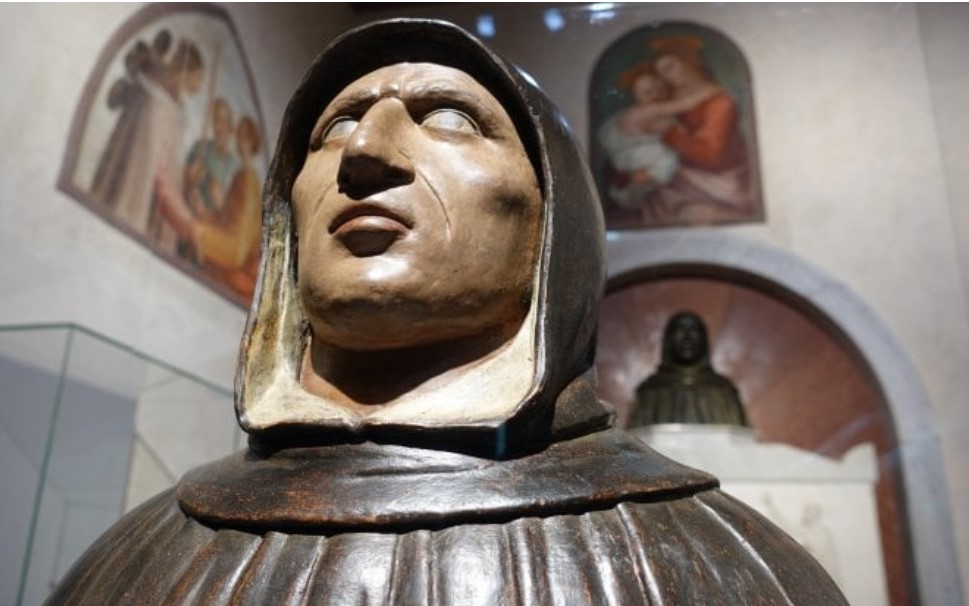
La cerchia dei fedeli del frate domenicano perquisì ogni casa fiorentina sequestrando tutto quello che era considerato peccaminoso.
Vesti lussuose, trucchi, specchi, libri, dipinti, gioielli, tuniche elaborate fino ad arrivare a preziosissimi dipinti, codici miniati, strumenti musicali e altri oggetti poco a poco furono accumulati nel giro di poche ore al centro di Piazza della Signoria.
Addirittura il Botticelli stesso buttò su quel rogo dipinti suoi: di quelle opere d’arte non rimarrà nulla. Stessa cosa fecero Lorenzo di Credi, Baccio e molti altri artisti.
Un mercante veneziano aveva offerto 20mila ducati per portar via le opere più preziose prima che venissero distrutte ma la sua proposta fu rigettata. La pira fu accesa e le fiamme in poco tempo ridussero quelle preziosità in cenere.

Il mio caro amico Giorgio Vasari descrisse il rogo in questo modo: “il carnovale seguente, che era costume della città far sopra le piazze alcuni capannucci di stipa et altre legne, e la sera del martedì per antico costume arderle queste con balli amorosi… si condusse a quel luogo tante pitture e sculture ignude molte di mano di Maestri eccellenti, e parimente libri, liuti e canzonieri che fu danno grandissimo, ma particolare della pittura, dove Baccio portò tutto lo studio de’ disegni che egli aveva fatto degli ignudi, e lo imitò anche Lorenzo di Credi e molti altri, che avevon nome di piagnoni“
Savonarola però non aveva fatto bene i suoi conti. Quell’enorme falò del 7 febbraio costò carissimo al frate. Il dissenso iniziò a serpeggiare anche fra i suoi fedelissimi, chiamati piagnoni e, nel giorno dell’Ascensione, durante il suo sermone, iniziarono i disordini e Savonarola perse sempre di più potere.
Papa Alessandro VI lo scomunicò e da quel momento non ebbe vita facile. All’alba del 23 maggio del 1498, un anno, fu messo sul rogo in Piazza della Signoria, la stessa piazza che anni prima aveva visto andare in fumo tante opere d’arte e oggetti preziosi tutti assieme.
Per il momento i vostro Michelangelo Buonarroti vi saluta dandovi appuntamento ai prossimi post e sui social.


Sostienici – Support Us
Se questo blog ti piace e ti appassiona, puoi aiutarci a farlo crescere sempre più sostenendoci in modo concreto condividendo i post, seguendo le pagine social e con un contributo che ci aiuta ad andare avanti con il nostro lavoro di divulgazione. . ENGLISH: If you like and are passionate about this blog, you can help us make it grow more and more by supporting us in a concrete way by sharing posts, following social pages and with a contribution that helps us to move forward with our dissemination work.
8,00 €
7 February 1497: Savonarola and the largest Bonfire of the Vanities
On 7 February 1497, in Florence, on Shrove Tuesday, the influential Dominican friar Girolamo Savonarola, aided by his proselytes, started the largest Bonfire of the Vanities.
It was not the first in the last organized fire but it was certainly the most important and painful one. Savonarola, who shook consciences with his visionary sermons, had managed to gain more and more power since the mid-1480s after the expulsion of Piero de’ Medici, son of the Magnificent, who was guilty of not having opposed the invasion of Italy of the French king Charles VIII.
Savonarola, strong in his idea of completing a work of collective purification, wanted to sweep away from Florence everything that in his arbitrary judgment he believed to be dissolute and impure.
While his sermons managed to make inroads into the minds and hearts of many Florentines, especially of the humbler and less educated classes, he managed to convince his followers to follow the only possible path to redemption: penance.
Thus everything that in his opinion was contrary to sobriety was a deplorable thing to be destroyed forever. Luxury was banned and art, considered the tinsel of vanity, had to be destroyed.
Until February 7, 1497, there were vanity fires in which objects of all kinds were burned, considered only frills that could distract from meditation, several were carried out but that was the largest of all the previous and subsequent ones and marked a turning point even for Savonarola himself.
The circle of the Dominican friar’s faithful searched every Florentine house, seizing everything that was considered sinful. Luxurious clothes, make-up, mirrors, books, paintings, jewels, elaborate tunics up to precious illuminated manuscripts, musical instruments and other objects were gradually accumulated within a few hours in the center of Piazza della Signoria.
Even Botticelli himself threw his paintings onto that fire: nothing will remain of those works of art.
A Venetian merchant had offered 20 thousand ducats to take away the most precious works before they were destroyed but his proposal was rejected. The pyre was lit and the flames quickly reduced those precious objects to ash.
My dear friend Giorgio Vasari described the fire in this way: “the following Carnival, which was the custom of the city to build some huts made of stipa and other wood above the squares, and on Tuesday evening, according to an ancient custom, to burn these with loving dances… yes he brought to that place so many paintings and naked sculptures, many by the hands of excellent masters, and also books, lutes and songbooks which was a very great, but particular damage to painting, where Baccio brought all the study of the drawings that he had made of the naked, and Lorenzo di Credi and many others also imitated him, who had the name of crybaby
Savonarola, however, had not calculated him well. That enormous bonfire on February 7 cost the friar dearly. Dissent began to spread even among his loyalists, called piagnoni and, on the day of the Ascension, during his sermon, the riots began and Savonarola lost more and more power.
Pope Alexander VI excommunicated him and from that moment on he did not have an easy life. At dawn on May 23, 1498, one year, he was put on the stake in Piazza della Signoria, the same square that years earlier had seen so many works of art and precious objects go up in smoke all together.
For the moment, your Michelangelo Buonarroti greets you and will meet you in the next posts and on social media.
Sostienici – Support Us
Se questo blog ti piace e ti appassiona, puoi aiutarci a farlo crescere sempre più sostenendoci in modo concreto condividendo i post, seguendo le pagine social e con un contributo che ci aiuta ad andare avanti con il nostro lavoro di divulgazione. . ENGLISH: If you like and are passionate about this blog, you can help us make it grow more and more by supporting us in a concrete way by sharing posts, following social pages and with a contribution that helps us to move forward with our dissemination work.
8,00 €
-
Il taglio a scodella nel Cinquecento: la curiosa acconciatura che compare nel Giudizio Universale della Sistina
🇮🇹Prima dei caschetti moderni e delle tendenze lanciate dai parrucchieri, nel Cinquecento esistevano già acconciature che ricordano sorprendentemente quelle di oggi e nel Giudizio Universale si vede bene… 🇬🇧<Long before modern bobs and trends set by hairstylists, 16th-century hairstyles existed that are surprisingly reminiscent of today's styles—as clearly seen in *The Last Judgment*…
-

La Natività mistica di Botticelli: il significato nascosto del dipinto più enigmatico del Natale
🇮🇹Angeli danzanti, demoni in fuga e una profezia apocalittica: scopri che cosa si nasconde nella Natività mistica di Sandro Botticelli, il dipinto che trasforma la nascita di Gesù in un messaggio di speranza per un mondo in crisi… 🇬🇧Dancing angels, fleeing demons, and an apocalyptic prophecy: discover what lies hidden in Sandro Botticelli’s *Mystic Nativity*,…
-
Antonio Canova, 13 ottobre 1822: muore lo scultore che diede vita al marmo
🇮🇹Il 13 ottobre 1822 moriva Antonio Canova. Scopri la vita, i capolavori, il rapporto con Napoleone e la missione per recuperare le opere d’arte italiane… 🇬🇧Antonio Canova died on October 13, 1822. Discover his life, his masterpieces, his relationship with Napoleon, and his mission to recover Italian works of art…
Condividi:


Questo sono io




sostienici

Sostienici – Support Us
Se questo blog ti piace e ti appassiona, puoi aiutarci a farlo crescere sempre più sostenendoci in modo concreto condividendo i post, seguendo le pagine social e con un contributo che ci aiuta ad andare avanti con il nostro lavoro di divulgazione. . ENGLISH: If you like and are passionate about this blog, you can help us make it grow more and more by supporting us in a concrete way by sharing posts, following social pages and with a contribution that helps us to move forward with our dissemination work.
€10,00


Quando il fanatismo religioso promuove iconoclastia e ignoranza e si accomuna a tutte le religioni, e ai governi, per nulla illuminati, nonostante i falò.
"Mi piace"Piace a 1 persona
ha detto bene. Purtroppo la storia non insegna niente perchè purtroppo non ne facciamo tesoro
"Mi piace"Piace a 1 persona