

Il dolore dell’Aurora
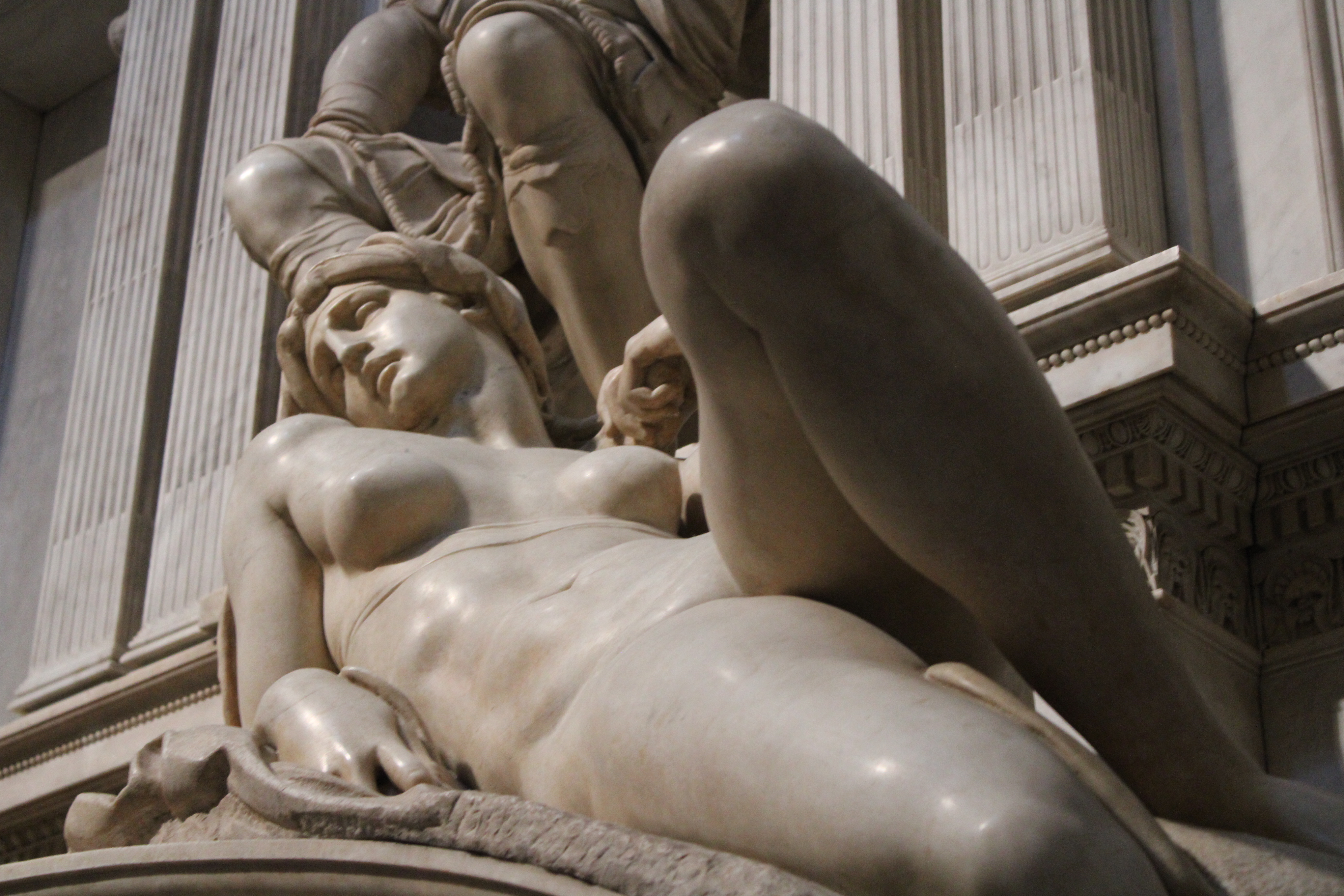
Grande più del naturale, l’Aurora sembra destarsi in quel preciso istante dal sonno. Facendo leva sul gomito destro, solleva il busto e pare avere lo sguardo perso nel vuoto.
Sulla testa ha un turbante trattenuto sulla fonte da un diadema. La stoffa che ha usato per avvolgere il capo è tanto lunga da arrivare fin sotto al piede destro.

Con una elegante posa in contrapposto, porta il braccio sinistro piegato verso il copricapo per distanziare un lembo dal suo bel volto.
La giovane donna è priva di vesti e ha un laccio sotto al seno. I lacci sono una costante in molte delle mie opere: basti pensare ai Prigioni o alla Pietà Bandini.
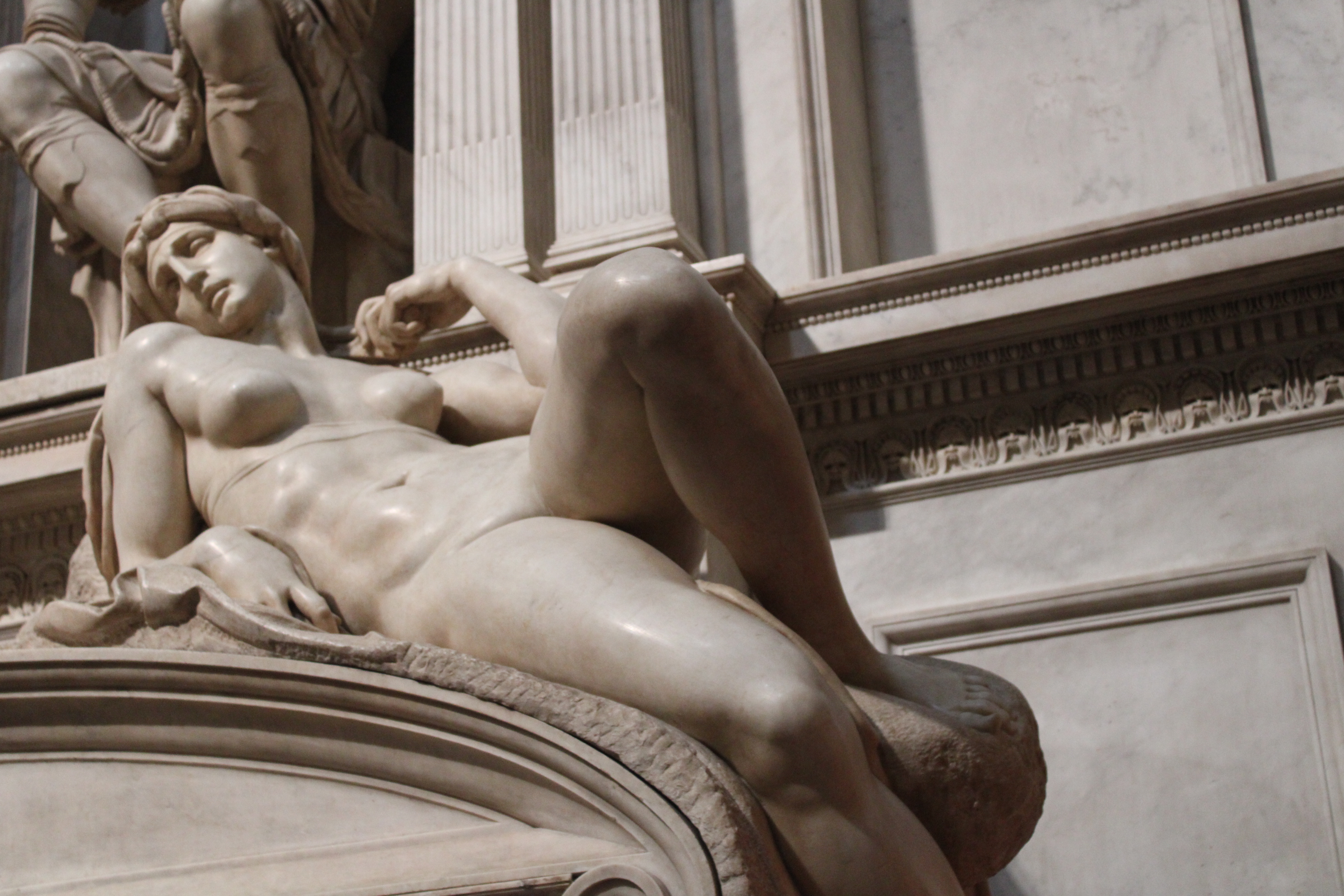
“Ma che dirò io de la Aurora femmina ignuda e da fare uscire il malinconico dell’animo e smarrire lo stile alla scultura? Nella quale attitudine si conosce il suo sollecito levarsi sonnacchiosa, svilupparsi da le piume, perchè par che, nel destarsi, ella abbia trovato serrati gl’occhi a quel gran duca. Onde si storce con amaritudine, dolendosi nella sua continovata bellezza in segno del gran dolore”.
Così volle raccontare il mio caro amico Giorgio Vasari la figura dell’Aurora che giace semi-distesa sul sarcofago di Lorenzo de’ Medici duca d’Urbino assieme al Crepuscolo.
Con queste poche parole descrisse non solo la posa dell’opera ma ne delineò un’interpretazione psicologica secondo il suo sentire.
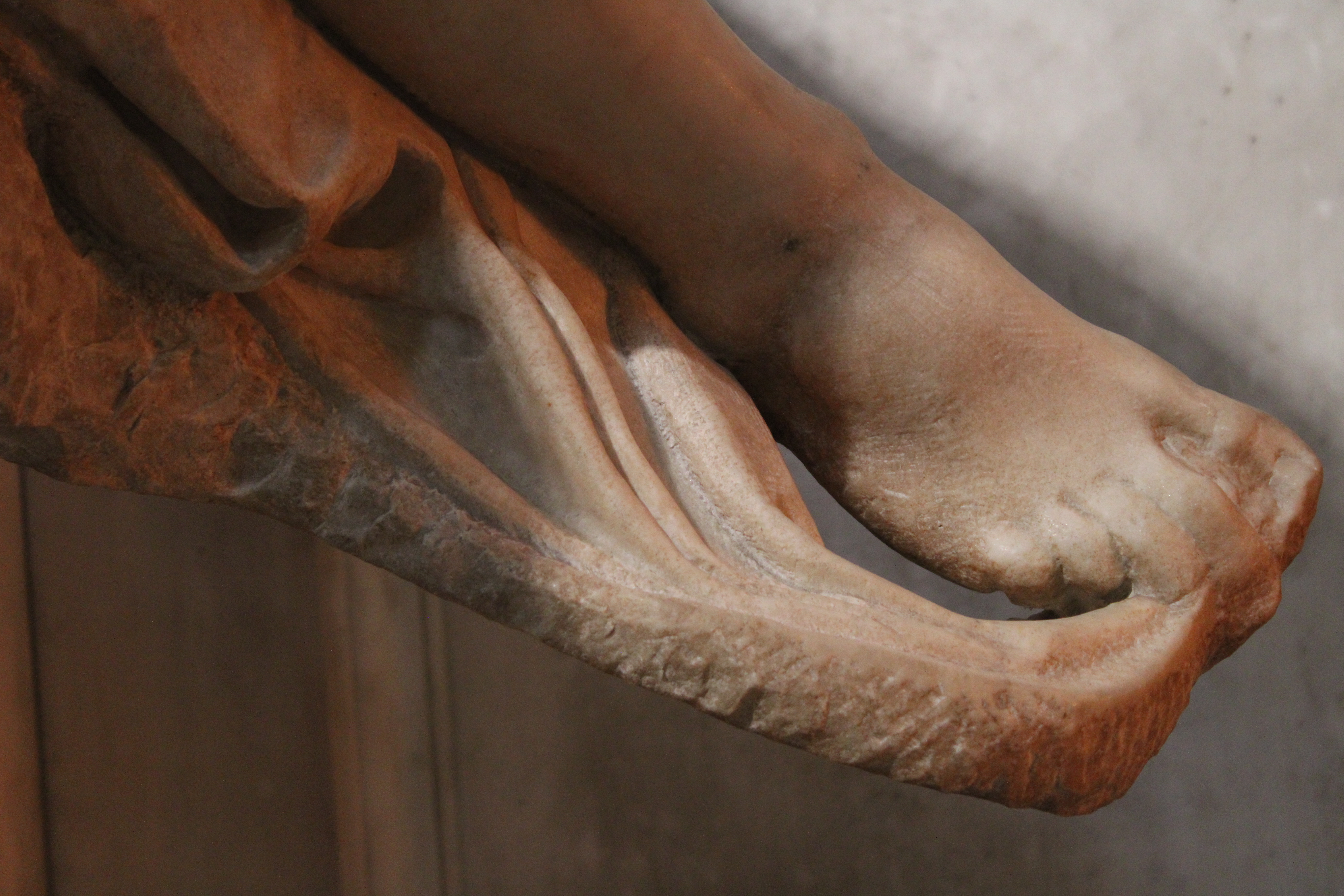
L’Aurora, secondo il Vasari, si sveglia dal sonno e rendendosi conto che il duca Lorenzo è morto si tormenta ne dolore. Osservate il volto dolente con la fronte leggermente corrugata e la bocca semi dischiusa, atteggiamenti posti in netto contrasto con la bellezza prorompente del suo corpo.
Lorenzo de’ Medici era il figliolo di Piero de’ Medici chiamato anche il Fatuo e di Alfonsina Orsini. Nipote di Lorenzo il Magnifico, fu il padre Caterina de’ Medici, futura regina di Francia.
Lorenzo morì proprio poche dopo settimane dalla nascita della figlia di sifilide, il 4 maggio del 1519.
Per il momento il vostro Michelangelo Buonarroti vi saluta dandovi appuntamento ai prossimi post e sui social.
The pain of Aurora
Larger than life, Aurora seems to wake up from sleep at that precise moment. Leveraging her right elbow, she raises her torso and she seems to be staring into space.
On her head she has a turban held at the source by a diadem. The cloth she used to wrap her head is long enough to reach under her right foot.
With an elegant contrapposto pose, she brings her left arm bent towards the headdress to distance a piece of her from her beautiful face.
The young woman has no clothes and has a lace under her breast. Laces are a constant in many of my works: just think of the Prisoners or the Bandini Pietà.
“But what will I say about the naked female Aurora who would bring out the melancholy of the soul and lose the style of sculpture? In which attitude we can see her eagerness to get up drowsily, to unfurl her feathers, because it seems that, when she awoke, she found the eyes of that great duke closed. She is therefore distorted with bitterness, grieving in her continued beauty as a sign of her great pain.”
This is how my dear friend Giorgio Vasari wanted to describe the figure of Aurora lying semi-reclining on the sarcophagus of Lorenzo de’ Medici, Duke of Urbino together with Twilight.
With these few words he described not only the pose of the work but outlined a psychological interpretation according to his feelings about her.
Aurora, according to Vasari, wakes up from sleep and, realizing that Duke Lorenzo is dead, is tormented by pain. Observe her painful face with her slightly furrowed forehead and her half-open mouth, attitudes placed in stark contrast to the bursting beauty of her body.
Lorenzo de’ Medici was the son of Piero de’ Medici also called Fatuo and Alfonsina Orsini. Grandson of Lorenzo the Magnificent, his father was Catherine de’ Medici, future queen of France.
Lorenzo died just a few weeks after the birth of his daughter from syphilis, on 4 May 1519.
For the moment, your Michelangelo Buonarroti greets you and will meet you in future posts and on social media.

Sostienici – Support Us
Se questo blog ti piace e ti appassiona, puoi aiutarci a farlo crescere sempre più sostenendoci in modo concreto condividendo i post, seguendo le pagine social e con un contributo che ci aiuta ad andare avanti con il nostro lavoro di divulgazione. . ENGLISH: If you like and are passionate about this blog, you can help us make it grow more and more by supporting us in a concrete way by sharing posts, following social pages and with a contribution that helps us to move forward with our dissemination work.
8,00 €
-
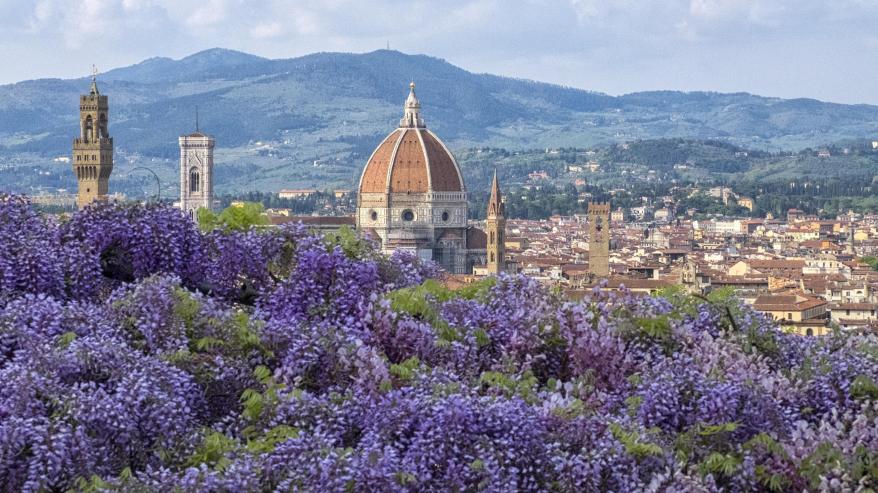
Sotto un cielo di glicine: la magia di Villa Bardini
🇮🇹Per pochi giorni all’anno, il pergolato di Villa Bardini si trasforma in un tunnel lilla lungo 70 metri, dove profumo e bellezza si intrecciano sopra una delle viste più romantiche di Firenze… 🇬🇧For a few days a year, the pergola of Villa Bardini transforms into a 70-meter-long lilac tunnel, where scent and beauty intertwine above…
-
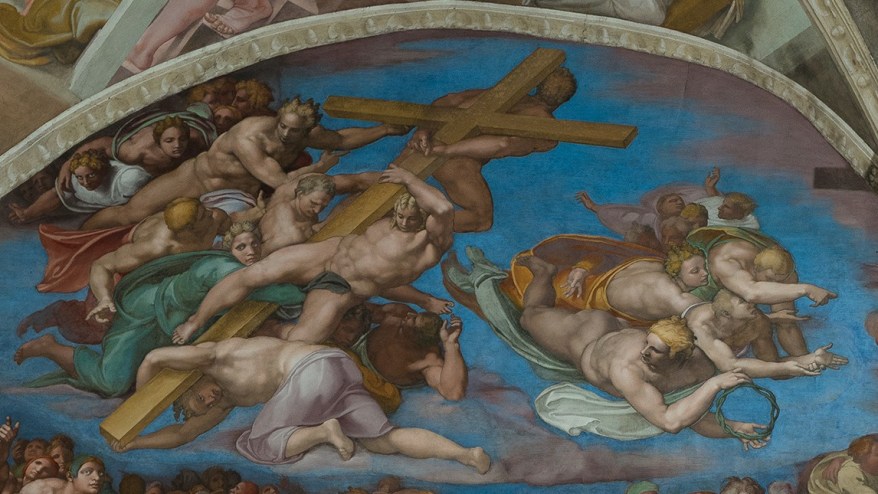
Come se la giustizia negata in vita possa compiersi altrove
🇮🇹Se davvero l’anima, una volta sciolta dal corpo, ritorna sulla terra per vivere ancora, così mi domando, quale sorte attende chi oggi appare tanto bella ai miei occhi, ma così crudele nel cuore? 🇬🇧If the soul, once freed from the body, truly returns to earth to live again, I ask myself, what fate awaits the…
-
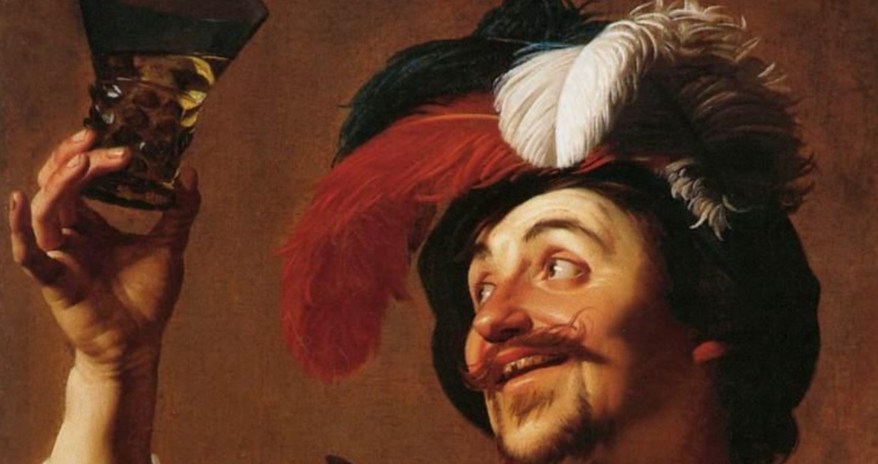
Quel sorriso del violinista felice di Gerrit van Honthorst
🇮🇹Un brindisi, un sorriso, una luce che taglia il buio. Conoscete il dipinto del violinista felice con un bicchiere di vino (1624) di Gerrit van Honthorst?… 🇬🇧A toast, a smile, a light that cuts through the darkness. Are you familiar with the painting of the Happy Violinist with a Glass of Wine (1624) by Gerrit…
Condividi:


Questo sono io





sostienici

Sostienici – Support Us
Se questo blog ti piace e ti appassiona, puoi aiutarci a farlo crescere sempre più sostenendoci in modo concreto condividendo i post, seguendo le pagine social e con un contributo che ci aiuta ad andare avanti con il nostro lavoro di divulgazione. . ENGLISH: If you like and are passionate about this blog, you can help us make it grow more and more by supporting us in a concrete way by sharing posts, following social pages and with a contribution that helps us to move forward with our dissemination work.
€10,00


