

I marmi delle cave del Polvaccio: la mia prima scelta
La prima volta che arrivai sulle cave di Carrara avevo 22 anni. Era l’autunno del 1497 e mi ritrovai fra le cave del Polvaccio da solo, in compagnia del cavallo grigio pezzato che m’ero comprato con i soldi anticipati dal cardinale di San Dionigi Jean Bilhéres de Lagraulas.
Avevo bisogno di cercare un blocco di marmo che fosse adeguato per scolpire quella che il Galli, garante del contratto, volle immaginarsi come “la più bella opera di marmo che sia oge in Roma e che maesto niuno la farìa megliore oge”. Ancora non avevo nemmeno messo su carta un disegno per la Pietà Vaticana ma già sapeva che sarebbe stata un’opera straordinaria, senza nemmeno pensarci troppo su.
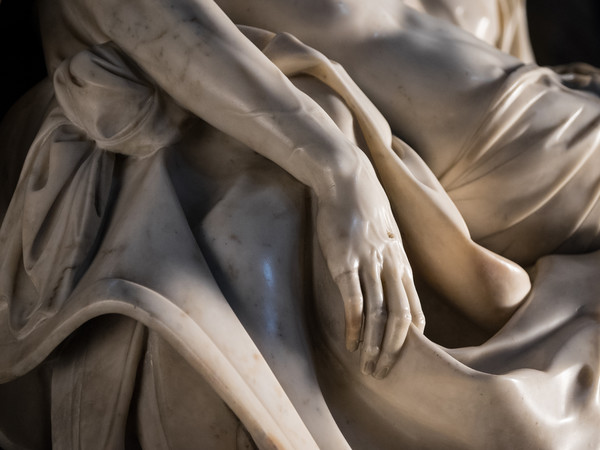
Avevo già cercato in giro per Roma se fosse disponibile un bel blocco, senza peli neri e di buona qualità ma non trovai nulla che potesse fare al caso mio. Non mi rimase altro che partire per Carrara e andarmelo a cercare direttamente in cava.
Per quattro mesi rimasi sul posto e nel marzo del 1498 feci ritorno a Roma. Solo per il periodo del Natale avevo fatto un salto in quel di Firenze, per trascorrere le feste col babbo Lodovico e i miei fratelli.
Passarono gli anni e diverse commissioni, David compreso, fino a quando fu eletto papa Giulio II della Rovere. In quel frangente mi trovavo a Firenze e il pontefice, per convincermi ad andare al suo cospetto a Roma, mi versò sul conto del Salviati una bella somma di danaro. Oh, feci presto a convincermi e in quattro e quattr’otto ero già nella città Eterna a discorrere col papa della sua tomba.

Parlare di sepolture appena dopo l’elezione portava male ma dato che aveva in mente un mausoleo così grande che nemmeno un faraone dell’antico Egitto avrebbe osato farsi realizzare, mise da parte le superstizioni: c’era bisogno di tempo e marmo, tanto marmo.
Tornai fra le cave del Polvaccio nell’estate del 1505 e ci rimasi sei mesi, lasciate perdere il Condivi che scrisse nella biografia otto mesi: aveva palesemente sbagliato i conti.

Mi servivano carrate e carrate di marmo e stipulai due contratti differenti di estrazione. Il primo lo firmai il 12 novembre con Domenico di Pargolo e Giovanni Antonio da Melo per una fornitura di 42 carrate da far arrivare al porto di Ripetta a Roma mentre l’altro risaliva al 10 dicembre. Quello lo stipulai con Matteo di Cuccarello e Guido d’Antonio per altre 60 carrate di marmo.
Per darvi un’idea di quella quantità di marmi, vi posso dire che una carrata corrispondeva al tempo a 2500 libbre fiorentine, circa 850 chili. Una carrata in pratica era il peso che riuscivano a portare in piano una coppia di buoi.
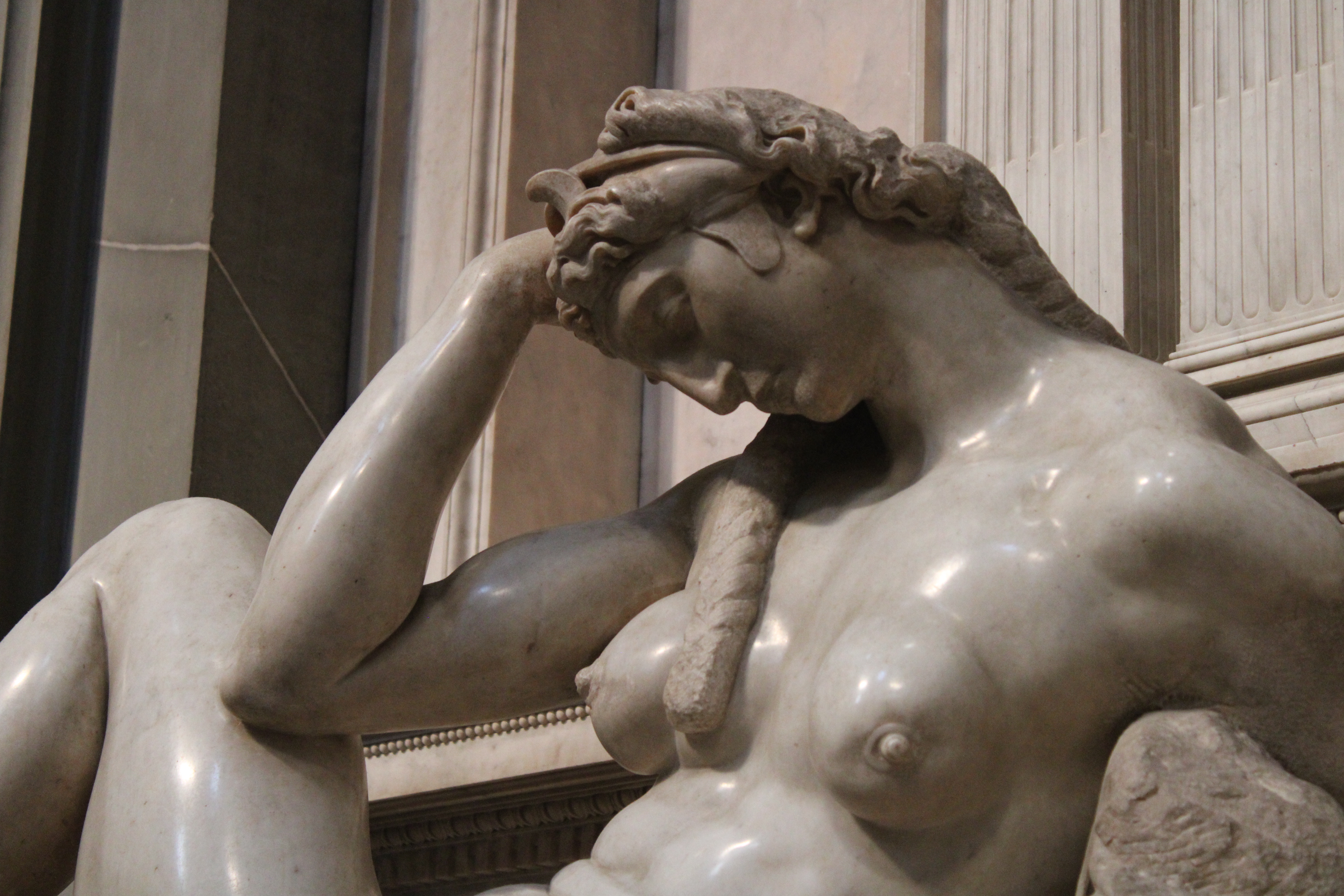
Fu proprio durante quella permanenza di sei mesi che mi venne in mente di scolpire addirittura la vetta di una montagna, un po’ come la scultura di Alessandro Magno che Dinocrate avrebbe voluto scalpellare nel monte Athos.
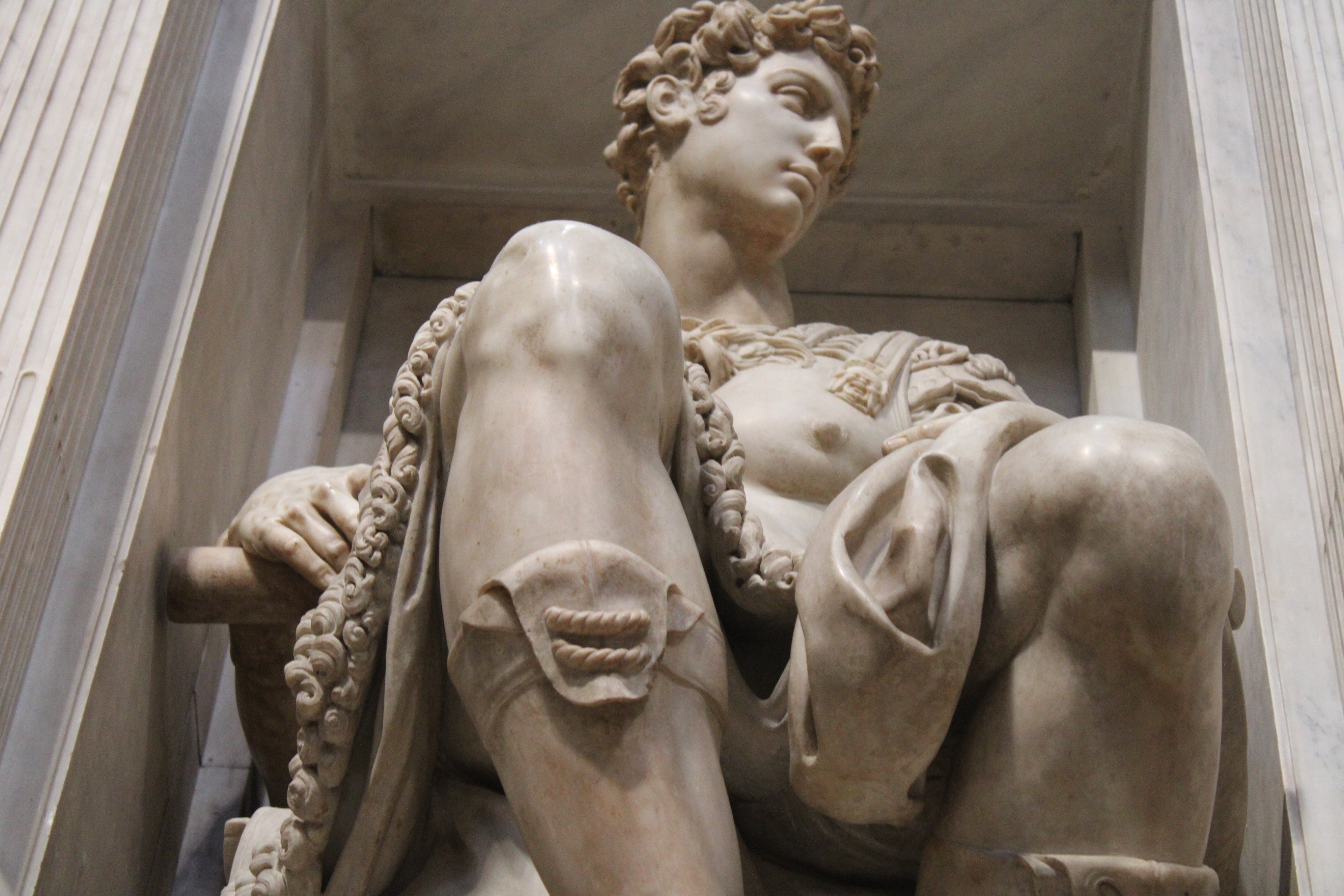
Tornai a scegliere i marmi del Polvaccio anche quando mi fu affidata la realizzazione della Sagrestia Nuova. Pensate un po’, talmente erano belli quei marmi che acquistai che pure il Bandinelli, non certo amico mio, ci tenne a tesserne le lodi: “Io credo che i più bei marmi che fusser mai cavati da Carrara sien quelli che Michel Agnolo mirabilissimo ha lavorato e, principalmente, que dua capitani.”
Per il momento il vostro Michelangelo Buonarroti vi saluta dandovi appuntamento ai prossimi post e sui social.
The marbles from the Polvaccio quarries: my first choice
The first time I arrived at the Carrara quarries I was 22 years old. It was the autumn of 1497 and I found myself among the Polvaccio quarries alone, in the company of the dappled gray horse that I had bought with the money advanced by the Cardinal of San Dionigi Jean Bilhéres de Lagraulas.
I needed to look for a block of marble that was suitable for sculpting what Galli, guarantor of the contract, wanted to imagine as “the most beautiful marble work of any time in Rome and that no one could do better than it”. I hadn’t even put a drawing for the Vatican Pietà on paper yet but I already knew that it would be an extraordinary work, without even thinking about it too much.
I had already looked around Rome to see if there was a nice block available, without black hair and of good quality but I didn’t find anything that could be right for me. There was nothing left for me but to leave for Carrara and go and look for it directly in the quarry.
For four months I remained there and in March 1498 I returned to Rome. Only for the Christmas period I had made a trip to Florence, to spend the holidays with my father Lodovico and my brothers.
Years and various commissions passed, including David, until Pope Julius II della Rovere was elected. At that time I was in Florence and the pontiff, to convince me to go to see him in Rome, paid me a large sum of money into Salviati’s account. Oh, I was quick to convince myself and in no time at all I was already in the Eternal City talking to the Pope about his tomb.
Talking about burials just after the election was a bad thing but since he had in mind a mausoleum so large that not even a pharaoh of ancient Egypt would have dared to have it built, he put superstitions aside: time and marble were needed, lots of marble .
I returned to the Polvaccio quarries in the summer of 1505 and stayed there for six months, forget about Condivi who wrote eight months in his biography: he had clearly made a mistake in the calculations.
I needed cartloads and cartloads of marble and I signed two different extraction contracts. I signed the first on November 12th with Domenico di Pargolo and Giovanni Antonio da Melo for a supply of 42 wagons to be delivered to the port of Ripetta in Rome while the other dated back to December 10th. I stipulated that with Matteo di Cuccarello and Guido d’Antonio for another 60 cartloads of marble.
To give you an idea of that quantity of marbles, I can tell you that one cartload corresponded at the time to 2500 Florentine pounds, approximately 850 kilos. A cartload was basically the weight that a pair of oxen could carry on a flat surface.
It was precisely during that six-month stay that I even had the idea of carving the top of a mountain, a bit like the sculpture of Alexander the Great that Dinocrates wanted to chisel into Mount Athos.
I returned to choosing Polvaccio marble even when I was entrusted with the construction of the New Sacristy. Think about it, those marbles that I purchased were so beautiful that even Bandinelli, certainly not my friend, wanted to sing their praises: “I believe that the most beautiful marbles that have ever been quarried from Carrara are those that the wonderful Michel Agnolo has created. worked and, mainly, those two captains.”
For the moment, your Michelangelo Buonarroti greets you and will meet you in future posts and on social media.

Sostienici – Support Us
Se questo blog ti piace e ti appassiona, puoi aiutarci a farlo crescere sempre più sostenendoci in modo concreto condividendo i post, seguendo le pagine social e con un contributo che ci aiuta ad andare avanti con il nostro lavoro di divulgazione. . ENGLISH: If you like and are passionate about this blog, you can help us make it grow more and more by supporting us in a concrete way by sharing posts, following social pages and with a contribution that helps us to move forward with our dissemination work.
8,00 €
-
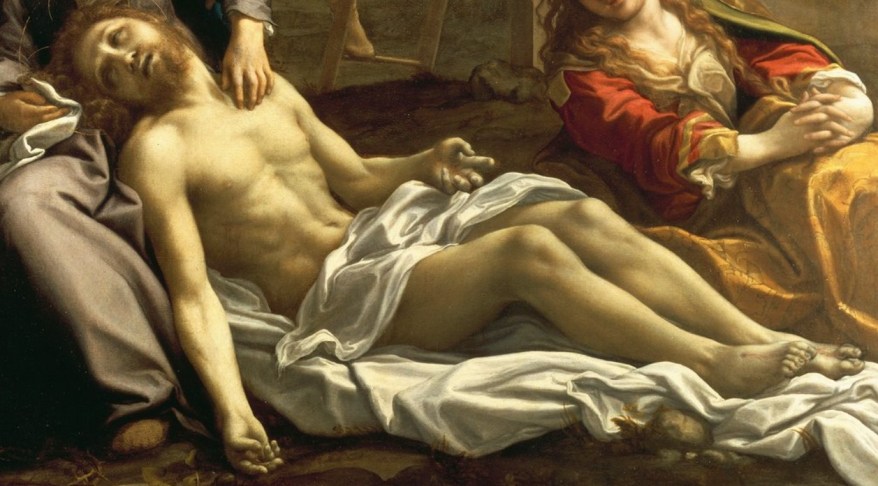
Il Compianto sul Cristo morto di Correggio: pathos e devozione
🇮🇹Con l’inizio della Settimana Santa, vi propongo il Compianto sul Cristo morto di Antonio Allegri, più noto come il Correggio: uno dei vertici assoluti della pittura emiliana del Cinquecento… 🇬🇧With the beginning of Holy Week, I propose the Lamentation over the Dead Christ by Antonio Allegri, better known as Correggio: one of the absolute peaks…
-
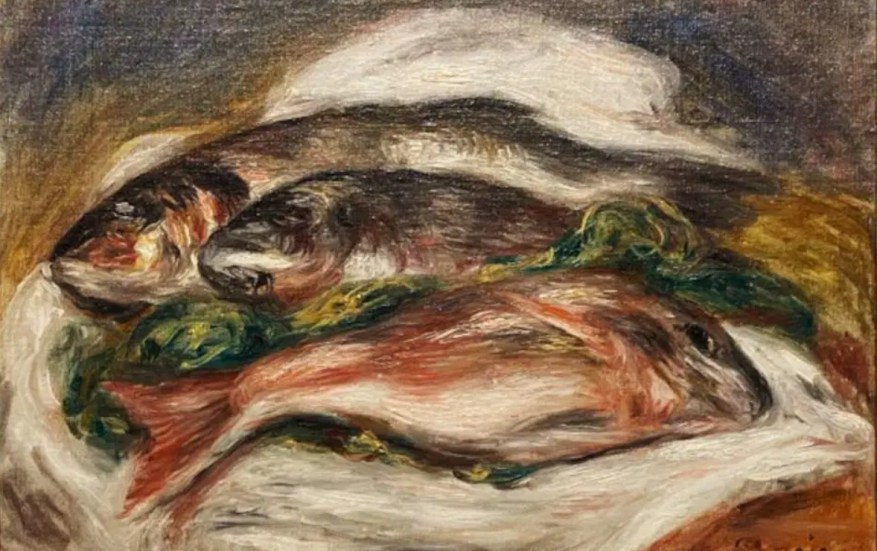
Furto milionario alla Magnani Rocca: rubati Renoir, Cézanne e Matisse
🇮🇹‼Tre capolavori storici spariti in meno di tre minuti: Les Poissons di Renoir, Tasse et plat de cerises di Cézanne e Odalisque sur la terrasse di Matisse sono stati rubati nella dalla Fondazione Magnani Rocca a Mamiano di Traversetolo, nel Parmense… 🇬🇧‼Three historic masterpieces disappeared in less than three minutes: Renoir’s Les Poissons, Cézanne’s Tasse…
-
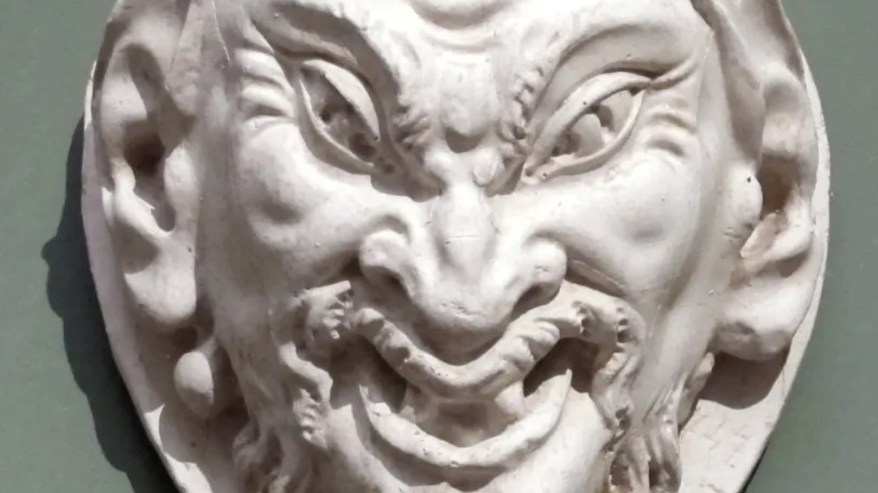
Fauno rubato: 15.000$ per ritrovarlo dopo 80 anni
🇮🇹Ero un ragazzino quando scolpii il Mascherone del Fauno sdentato. Oggi quel volto è perduto, rubato nella notte della guerra e da oltre 80 anni nessuno sa dove sia. Ora una ricompensa di 15.000$ riaccende la ricerca… 🇬🇧I was a boy when I sculpted the Toothless Faun Mask. Today that face is lost, stolen on…
Condividi:


Questo sono io





sostienici

Sostienici – Support Us
Se questo blog ti piace e ti appassiona, puoi aiutarci a farlo crescere sempre più sostenendoci in modo concreto condividendo i post, seguendo le pagine social e con un contributo che ci aiuta ad andare avanti con il nostro lavoro di divulgazione. . ENGLISH: If you like and are passionate about this blog, you can help us make it grow more and more by supporting us in a concrete way by sharing posts, following social pages and with a contribution that helps us to move forward with our dissemination work.
€10,00


