
La Scultura del giorno: Medusa del Bernini
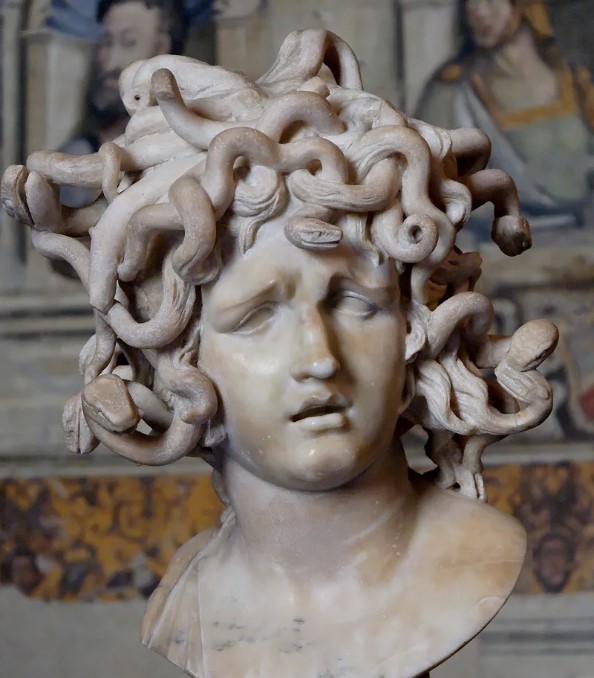
La scultura del giorno che vi propongo oggi è il Busto di Medusa scolpito da Gian Lorenzo Bernini, realizzato dall’artista fra il 1644 e il 1648.
Per dar forma a questo straordinaria opera, Bernini si ispirò al mito di una delle Gorgoni raccontato nelle Metamorfosi di Ovidio. Figlia di una divinità marina, Medusa aveva il potere di pietrificare tutti coloro che incrociassero il suo gelido sguardo.
Solo Perseo riuscì a non morire al suo cospetto e adoperando uno stratagemma ingegnoso riuscì prima a trasformarla in pietra e poi a decapitarla,, segnando così la sua fine. Di questo capolavoro del Bernini non si hanno certezze sulla datazione né su chi realmente fu il committente.
Il mito classico di Medusa viene interpretato da Bernini alla luce di un componimento poetico di Giovan Battista Marino, scritto ne 1630: “…Non so se mi scolpì scarpel mortale, o specchiando me stessa in chiaro vetro la propria vista mia mi fece tale”.
La gorgone viene scolpita dall’artista nel momento esatto in cui vede la sua immagine riflessa nello specchio e si rende conto dell’inganno che le è stato fatto. Guardandosi di lì a qualche secondo si trasformerà in marmo e Perseo potrà così decapitarla.
L’opera può essere letta come una metafora sul potere della scultura dell’artista: chi si troverà a osservare i capolavori usciti dal suo scalpello rimarrà impietrito da tanta perfezione.
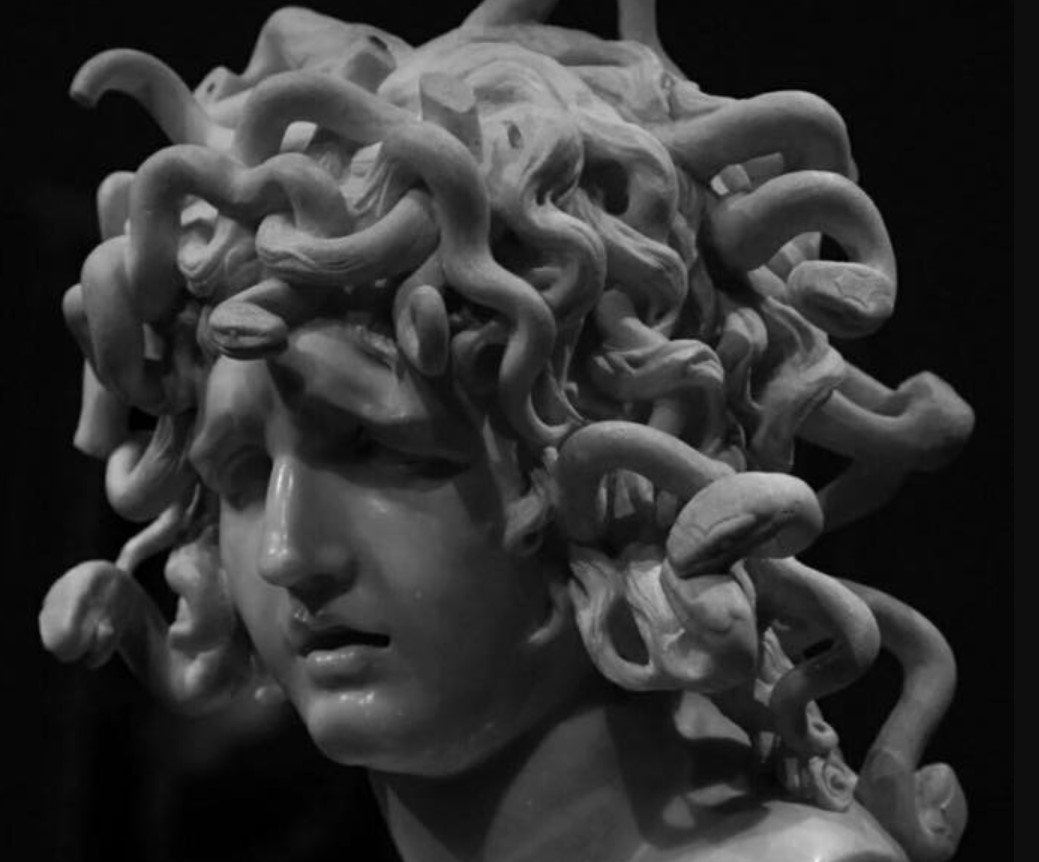
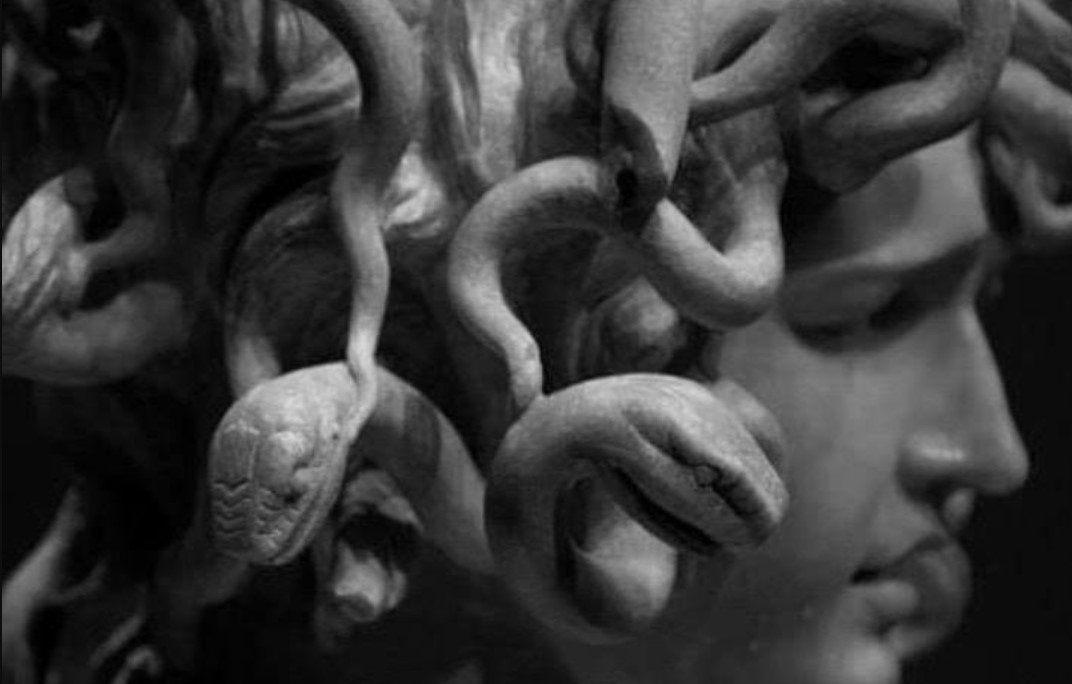
Il busto di Medusa è sostenuto da un basamento che contribuisce ad avere una corretta visione dell’opera. Il capo della gorgone è movimentato dai serpenti in movimento.
Medusa ha il volto leggermente girato verso sinistra e la bocca dischiusa come se stesse per proferire parola. Sono tutti dettagli che contribuiscono a rendere dinamico il marmo scolpito dall’artista e ad aumentarne il pathos.
L’inquietudine di Medusa che ha intuito la sua sconfitta è percettibile e il viso mostra il dolore provato.
Sul piedistallo che sostiene il busto è apposta una dicitura che recita “L’immagine di Medusa, posta sugli scudi dei romani per il terrore dei nemici, ora risplende, gloria di un celeberrimo scultore, in Campidoglio, dono del marchese Francesco Bichi, conservatore nel marzo dell’anno del Signore 1731“.
La Testa di Medusa entrò a far parte delle prestigiose collezioni dei Musei Capitolini nel 1731 e tutt’oggi la potete apprezzare presso il Palazzo dei Conservatori.
Per il momento il vostro Michelangelo Buonarroti vi saluta dandovi appuntamento ai prossimi post e sui social.

Sculpture of the day: Medusa by Bernini
The sculpture of the day that I propose to you today is the Bust of Medusa sculpted by Gian Lorenzo Bernini, created by the artist between 1644 and 1648.
To give shape to this extraordinary work, Bernini was inspired by the myth of one of the Gorgons told in Ovid’s Metamorphoses. daughter of a marine deity, Medusa had the power to petrify all those who met her icy gaze.
Only one of her managed not to die in her presence and it was Perseus of her who with a trick managed to decapitate her and thus mark the end of her. There is no certainty about the dating or who actually commissioned this masterpiece by Bernini.
The classic myth of Medusa is interpreted by Bernini in the light of a poem by Giovan Battista Marino, written in 1630: “… I don’t know if she sculpted me as a mortal shoe, or mirroring myself in clear glass my own sight made me so” .
The gorgon is sculpted by the artist at the exact moment in which he sees her image reflected in the mirror and realizes the deception that has been done to her. Looking at each other in a few seconds she will turn into marble and Perseus will thus be able to decapitate her.
The work can be read as a metaphor on the power of the artist’s sculpture: whoever finds himself observing the masterpieces that come out of his chisel will be petrified by such perfection.
The bust of Medusa is supported by a base which helps to have a correct view of the work. The head of the gorgon is enlivened by the moving snakes.
Medusa’s face is slightly turned to the left and her mouth is open as if she were about to utter a word. These are all details that contribute to making the marble sculpted by the artist dynamic and to increase its pathos.
The restlessness of Medusa who sensed her defeat is perceptible and her face shows the pain she felt.
On the pedestal that supports the bust there is a wording that reads “The image of Medusa, placed on the shields of the Romans for terror of the enemies, now shines, glory of a famous sculptor, in the Campidoglio, a gift from the Marquis Francesco Bichi, curator in the March of the year of our Lord 1731“.
The Head of Medusa became part of the prestigious collections of the Capitoline Museums in 1731 and you can still appreciate it today at the Palazzo dei Conservatori.
For the moment, your Michelangelo Buonarroti greets you by making an appointment for the next posts and on social media.

Sostienici – Support Us
Se questo blog ti piace e ti appassiona, puoi aiutarci a farlo crescere sempre più sostenendoci in modo concreto condividendo i post, seguendo le pagine social e con un contributo che ci aiuta ad andare avanti con il nostro lavoro di divulgazione. . ENGLISH: If you like and are passionate about this blog, you can help us make it grow more and more by supporting us in a concrete way by sharing posts, following social pages and with a contribution that helps us to move forward with our dissemination work.
8,00 €
-
La Pietà di Tincolini: a Pontedera l’arte torna a fare domande scomode
🇮🇹“Pietà”, la scultura di Filippo Tincolini, insieme alle parole di Federico Quaranta e Andrea Pezzi, non è stato solo uno spettacolo. È stata una domanda lanciata in faccia al pubblico, impossibile da evitare: siamo ancora capaci di provare pietà? 🇬🇧 “Pietà,” Filippo Tincolini’s sculpture, along with the words of Federico Quaranta and Andrea Pezzi, wasn’t…
-
Ai Musei Vaticani i fasti barocchi di Urbano VIII: in mostra gli arazzi della manifattura Barberini
🇮🇹A quattro secoli dalla consacrazione della Basilica di San Pietro, i Musei Vaticani dedicano una mostra all’Arazzeria Barberini, simbolo di una cultura visiva capace di fondere magnificenza estetica e affermazione politica… 🇬🇧Four centuries after the consecration of St. Peter’s Basilica, the Vatican Museums are dedicating an exhibition to the Barberini Tapestry Factory, a symbol of…
-
Le Opere della Pasqua: come la Resurrezione ha ispirato Arte e Cultura
🇮🇹La Pasqua, oltre ad essere una ricorrenza religiosa è un momento in cui la storia, l’arte e la spiritualità si intrecciano per raccontare il fulcro della fede cristiana: la resurrezione di Cristo. .. 🇬🇧Easter, beyond being a religious holiday, is a moment when history, art, and spirituality intertwine to recount the core of the Christian…
Condividi:


Questo sono io





sostienici

Sostienici – Support Us
Se questo blog ti piace e ti appassiona, puoi aiutarci a farlo crescere sempre più sostenendoci in modo concreto condividendo i post, seguendo le pagine social e con un contributo che ci aiuta ad andare avanti con il nostro lavoro di divulgazione. . ENGLISH: If you like and are passionate about this blog, you can help us make it grow more and more by supporting us in a concrete way by sharing posts, following social pages and with a contribution that helps us to move forward with our dissemination work.
€10,00


