
Basilica di San Pietro: ecco l’unica pala d’altare dipinta
Nel momento il cui Maderno decise di cambiare la pianta a croce greca della Basilica di San Pietro con la croce latina, progettò sei cappelle lungo le navate laterali delle quali due avevano dimensioni maggiori delle altre.
Quella più grande sulla sinistra fu adibita alla Cappella del Coro mentre quella sulla destra divenne la Sacrestia Nuova.
Nel 1626 l’Arciconfraternita del Santissimo Sacramento insistette per ottenere quella cappella come propria sede. Dopo non pochi tira e molla fu deciso quindi di dedicarla a Tutti i Santi e alla Santissima Trinità.
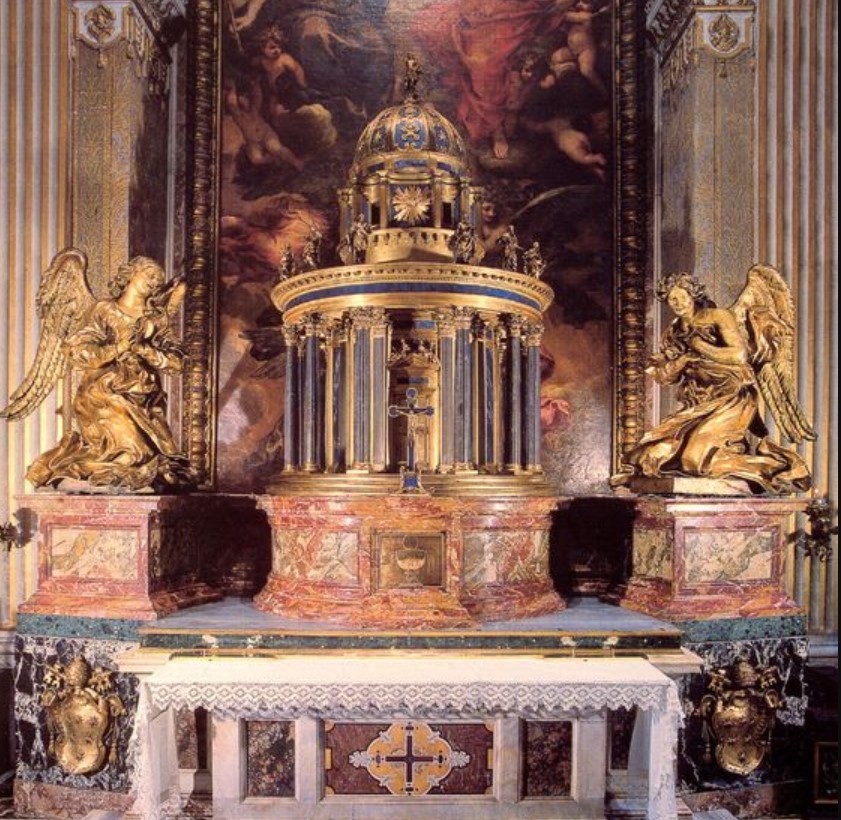
L’impianto architettonico della Cappella del Santissimo Sacramento è di Carlo Maderno mentre le decorazioni in stucco dorato furono realizzate da Giovanni Battista Ricci che, fra il 1623 e il 1627, realizzò i bassorilievi con le scene tratte dal Vecchio Testamento per la volta e quelle con le storie del Nuovo Testamento per decorare le pareti.
Il Borromini mise mano alle scale, all’altare e anche ai cartigli in marmo bianco presenti nella cappella.
Nonostante Simon Vouet e Giovanni Lanfranco tentarono di aggiudicarsi la commissione per la pala d’altare, fu a Guido Reni che la Congregazione affidò quell’opera nel 1627. Opera che mai realizzò per continui disaccordi nonostante i lauti acconti in denaro ricevuti dall’artista.
Il cardinale Francesco Barberini affidò quindi la pala d’altare al suo artista preferito: Pietro da Cortona.
Come vi ho raccontato altre volte, nella basilica di San Pietro non ci sono pale d’altare dipinte ma sono tutte realizzate in mosaico per volere papa Gregorio XIII Boncompagni. Tutte ad eccezion fatta dell’opera di Pietro da Cortona, dipinta direttamente a olio su uno strato di stucco.
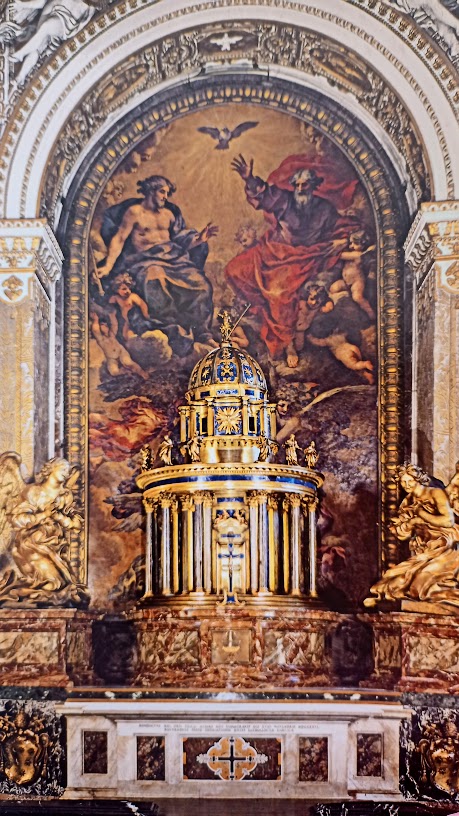
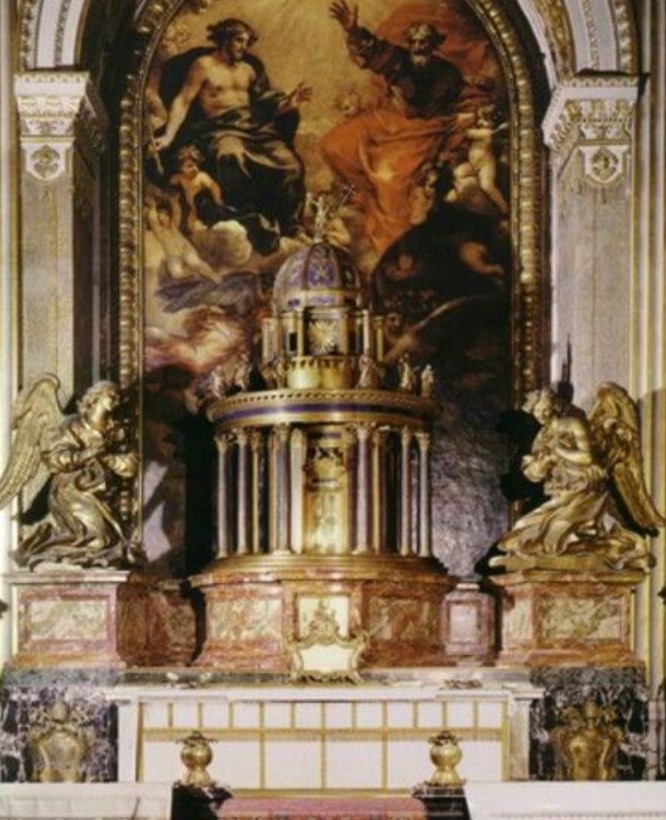
La grande pala di Pietro da Cortona non fu fatta in studio ma in loco alla stregua di un affresco. Il dipinto raffigura la Trinità: Cristo alla sinistra mentre il Padre sulla destra alza il braccio per benedire mentre la colomba dello Spirito Santo illumina la scena.
Purtroppo in un secondo momento venne posizionato sull’altare il tabernacolo progettato dal Bernini ma era ed è tutt’oggi talmente voluminoso da celare parte del dipinto con la sfera terrestre che raffigurava Dio come creatore impedendo così una corretta lettura dell’opera di Pietro da Cortona.
Per il momento il vostro Michelangelo Buonarroti vi saluta dandovi appuntamento ai prossimi post e sui social.

St. Peter’s Basilica: here is the only painted altarpiece
When Maderno decided to change the Greek cross plan of St. Peter’s Basilica with the Latin cross, he designed six chapels along the side naves, two of which were larger than the others.
The larger one on the left was used as the Choir Chapel while the one on the right became the New Sacristy.
In 1626 the Archconfraternity of the Blessed Sacrament insisted on obtaining that chapel as its headquarters. After quite a few pushes and pulls it was therefore decided to dedicate it to All Saints and the Most Holy Trinity.
The architectural layout of the Chapel of the Blessed Sacrament is by Carlo Maderno while the gilded stucco decorations were created by Giovanni Battista Ricci who between 1623 and 1627 created the bas-reliefs with scenes from the Old Testament for the vault and those with the stories of the New Testament to decorate the walls.
Borromini worked on the stairs, the altar and also the white marble cartouches in the chapel.
Although Simon Vouet and Givoanni Lanfranco tried to win the commission for the altarpiece, it was Guido Reni that the Congregation entrusted that work in 1627. A work that he never completed due to constant disagreements despite the large cash advances received from the artist.
Cardinal Francesco Barberini then entrusted the altarpiece to his favorite artist: Pietro da Cortona.
As I have told you on other occasions, in St. Peter’s Basilica there are no painted altarpieces but they are all made in mosaic at the behest of Pope Gregory XIII Boncompagni. All with the exception of the work of Pietro da Cortona, painted directly in oil on a layer of stucco.
The great altarpiece by Pietro da Cortona was not made in the studio but on site like a fresco. The painting depicts the Trinity: Christ on the left while the Father on the right raises his arm to bless while the dove of the Holy Spirit illuminates the scene.
Unfortunately, the tabernacle designed by Bernini was placed on the altar later, but it was and still is so voluminous as to conceal part of the painting with the earthly sphere that depicted God as creator, thus preventing a correct reading of Pietro da Cortona’s work .
For the moment, your Michelangelo Buonarroti greets you by making an appointment for the next posts and on social media.

Sostienici – Support Us
Se questo blog ti piace e ti appassiona, puoi aiutarci a farlo crescere sempre più sostenendoci in modo concreto condividendo i post, seguendo le pagine social e con un contributo che ci aiuta ad andare avanti con il nostro lavoro di divulgazione. . ENGLISH: If you like and are passionate about this blog, you can help us make it grow more and more by supporting us in a concrete way by sharing posts, following social pages and with a contribution that helps us to move forward with our dissemination work.
8,00 €
-
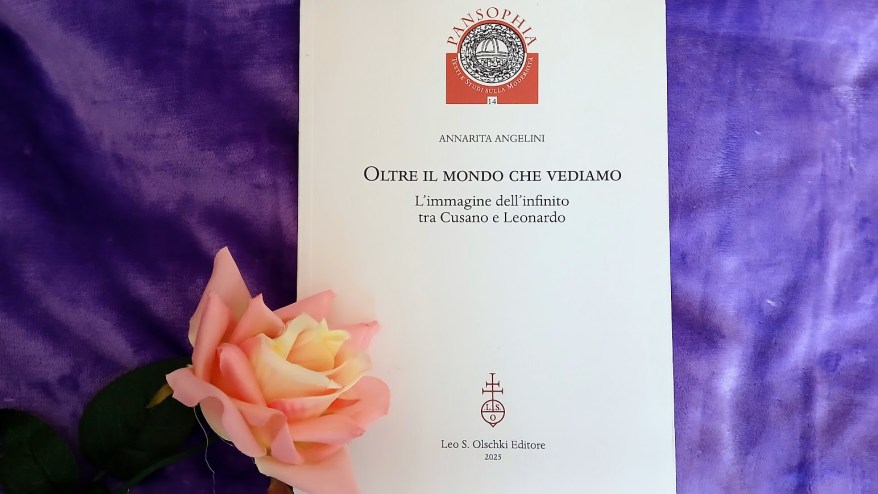
Quando la pittura diventa filosofia: il viaggio nell’infinito di Cusano e Leonardo
Il libro che voglio proporvi oggi è il saggio scritto da Annarita Angelini dal titolo ‘Oltre il mondo che vediamo. L’immagine dell’infinito tra Cusano e Leonardo’, pubblicato da Olschki Editore….
-
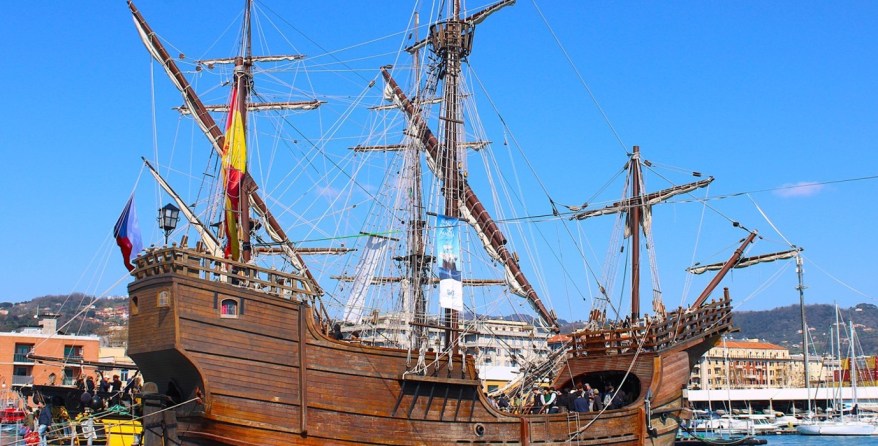
Sembra il Cinquecento ma è La Spezia: il festival Velarìa riporta al Molo Italia i grandi velieri
🇮🇹Sembra di essere finiti in un’altra epoca. A La Spezia il mare si riempie di vele storiche, caravelle e brigantini: è iniziato Velarìa – Scalo alla Spezia, il festival che riporta in vita il fascino della grande navigazione… 🇬🇧It feels like we’ve stepped into another era. In La Spezia, the sea fills with historic sails,…
-
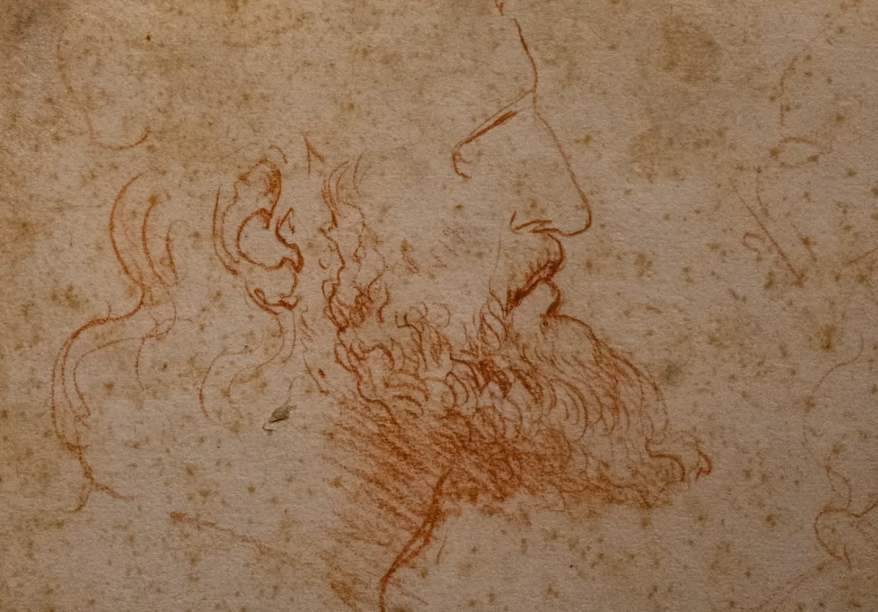
Leonardo da Vinci, a Torino un capolavoro sorprendente: il ritratto “in movimento”
🇮🇹A Torino in mostra un capolavoro di Leonardo: il celebre volto maschile che per anni si credeva Cesare Borgia. Ecco cosa hanno scoperto gli studiosi… 🇬🇧A Leonardo masterpiece is on display in Turin: the famous male face that for years was believed to be Cesare Borgia. Here’s what scholars discovered…
Condividi:


Questo sono io





sostienici

Sostienici – Support Us
Se questo blog ti piace e ti appassiona, puoi aiutarci a farlo crescere sempre più sostenendoci in modo concreto condividendo i post, seguendo le pagine social e con un contributo che ci aiuta ad andare avanti con il nostro lavoro di divulgazione. . ENGLISH: If you like and are passionate about this blog, you can help us make it grow more and more by supporting us in a concrete way by sharing posts, following social pages and with a contribution that helps us to move forward with our dissemination work.
€10,00


L’ha ripubblicato su Pittura1arte2disegno3 Community Artistica Culturalee ha commentato:
INVITO in COMMUNITY ARTISTICA CULTURALE”IL NOSTRO IMMENSO PATRIMONIO ARTISTICO CULTURALE” sempre connessa in ARTE.IT online MAPPARE L’ARTE IN ITALIA e in Blog MICHELANGELO BUONARROTI E’ TORNATO seguite in MEWE QUI COMMUNITY connessa in pagina celebrativa EVENTI I GRANDI DEL RINASCIMENTO ITALIANO MONDIALE Buona navigazione.
pittrice artistica Susan Galbarini CASA-STUDIO Pittura ed Arte “PIZZICO D’ATELIER” in Sito aggiornato *PITTURARTISTICA 41° ANNIVERSARIO*
"Mi piace""Mi piace"