

La Scultura del giorno: il Fauno Barberini
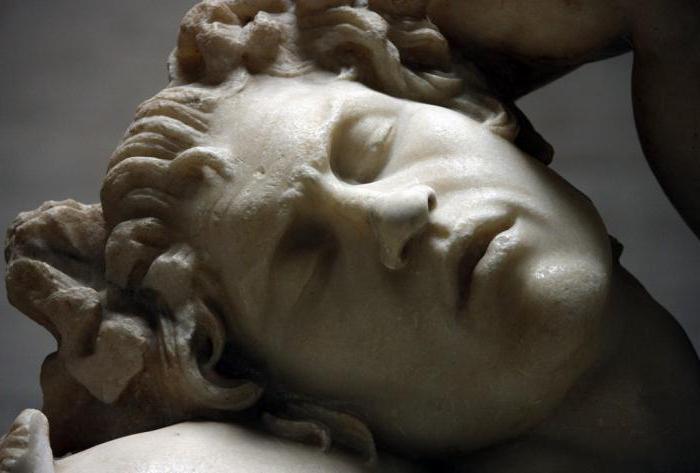
La scultura del giorno che vi propongo oggi è il Fauno Barberini, una sensuale opera in marmo a dimensioni naturali scolpita da un artista ellenistico della scuola di Pergamene fra il Terzo e il Secondo secolo avanti Cristo o, molto probabilmente, una copia romana di un originale greco di mirabile fattura.
Il Fauno fu rinvenuto nel 1624, all’interno del fossato che si trova sotto Castel Sant’Angelo a Roma. Al momento del ritrovamento la scultura era pesantemente danneggiata: mancava la gamba destra, non aveva alcune parti del capo, il piede sinistro e mancavano pezzi a tutte e due le mani.
Procopio narrava che durante l’assedio di Roma del 537 i difensori della città iniziarono a buttare sui Goti le sculture che impreziosivano il Mausoleo di Adriano. Non è da escludere che il Fauno Barberini fosse proprio una di queste opere.
Nel 1648 la mirabile scultura entrò a far parte della preziosa collezione del cardinale Francesco Barberini dalla quale prese il nome. Nel corso degli anni venne sottoposta a diversi interventi di restauro come quello più celebre effettuato dal Bernini.

La carica erotica del Fauno Barberini è innegabile. Non solo ha un volto che sembra segnato fortemente da un momento di puro piacere ma anche la posa del corpo nudo è voluttuosa.
Nel giro di poco tempo quest’opera divenne una delle più apprezzate e ammirate di tutta Roma. Ubicata a Palazzo Barberini, lì rimase per due secoli ma non furono pochi quelli che provarono ad acquistarla. Alla fine riuscì a spuntarla il principe ereditario Ludovico di Baviera che in quel frangente era impegnato nell’allestimento della Gliptoteca di Monaco di Baviera.

Su esplicita richiesta di Antonio Canova, il cardinale Pacca aveva emesso un bando all’esportazione delle opere per poter far rimanere questo capolavoro a Roma. Le pressioni diplomatiche continue però, riuscirono a far revocare il bando e il Fauno Barberini partì per la Germania.
Il 6 gennaio del 1820, giorno dell’Epifania, la preziosa scultura arrivò a Monaco e fu posizionata nella Glyptothek, all’interno di un emiciclo appositamente progettato per esporla.

Il Fauno è semi disteso sopra una roccia. La sua perdita dei sensi è collegata all’abuso di vino e quindi agli effetti dell’ebbrezza. Ha le gambe divaricate e adopera il braccio sinistro come se fosse un cuscino da porre sotto il capo.
Fra i simboli collegati direttamente al fauno si notano le orecchie a punta, la corona sul capo di edera, la pelle di pantera e la coda.
Per il momento il vostro Michelangelo Buonarroti vi saluta dandovi appuntamento ai prossimi post e sui social.

Sculpture of the day: the Barberini Faun
The sculpture of the day that I am proposing to you today is the Barberini Faun, a sensual life-size marble work sculpted by a Hellenistic artist of the school of Pergamene between the third and second centuries BC or, most likely, a Roman copy of an original wonderfully crafted Greek.
The Faun was found in 1624, inside the moat under Castel Sant’Angelo in Rome. At the time of the discovery, the sculpture was heavily damaged: the right leg was missing, some parts of the head and the left foot were missing and both hands were missing.
Procopius narrated that during the siege of Rome in 537 the defenders of the city began to throw the sculptures that embellished the Mausoleum of Hadrian on the Goths. It cannot be excluded that the Barberini Faun was precisely one of these works.
In 1648 the admirable sculpture became part of the precious collection of Cardinal Francesco Barberini from which it took its name. Over the years it underwent various restoration interventions such as the most famous one carried out by Bernini.
The erotic charge of the Barberini Faun is undeniable. He not only has a face that seems marked by a moment of pure pleasure but also the pose of the naked body is voluptuous.
Within a short time this work became one of the most appreciated and admired in all of Rome. Located in Palazzo Barberini, it remained there for two centuries but there were not a few who tried to buy it. In the end, the crown prince Ludwig of Bavaria managed to win, who at that juncture was engaged in setting up the Glyptothek of Munich.
At the explicit request of Antonio Canova, Cardinal Pacca had issued a ban on the export of the works in order to keep this masterpiece in Rome. Continuous diplomatic pressure, however, managed to get the ban revoked and the Barberini Faun left for Germany.
On January 6, 1820, the precious sculpture arrived in Munich and was placed in the Glyptothek, inside a hemicycle specially designed to display it.
The Faun is half-reclining on a rock. His loss of consciousness is connected to the abuse of wine and therefore to the effects of inebriation. His legs are spread apart and he uses his left arm as if it were a pillow to place under his head.
Among the symbols connected directly to the faun are the pointed ears, the crown on the head of ivy, the panther skin and the tail.
For the moment, your Michelangelo Buonarroti greets you by making an appointment for the next posts and on social media.

Sostienici – Support Us
Se questo blog ti piace e ti appassiona, puoi aiutarci a farlo crescere sempre più sostenendoci in modo concreto condividendo i post, seguendo le pagine social e con un contributo che ci aiuta ad andare avanti con il nostro lavoro di divulgazione. . ENGLISH: If you like and are passionate about this blog, you can help us make it grow more and more by supporting us in a concrete way by sharing posts, following social pages and with a contribution that helps us to move forward with our dissemination work.
8,00 €
-
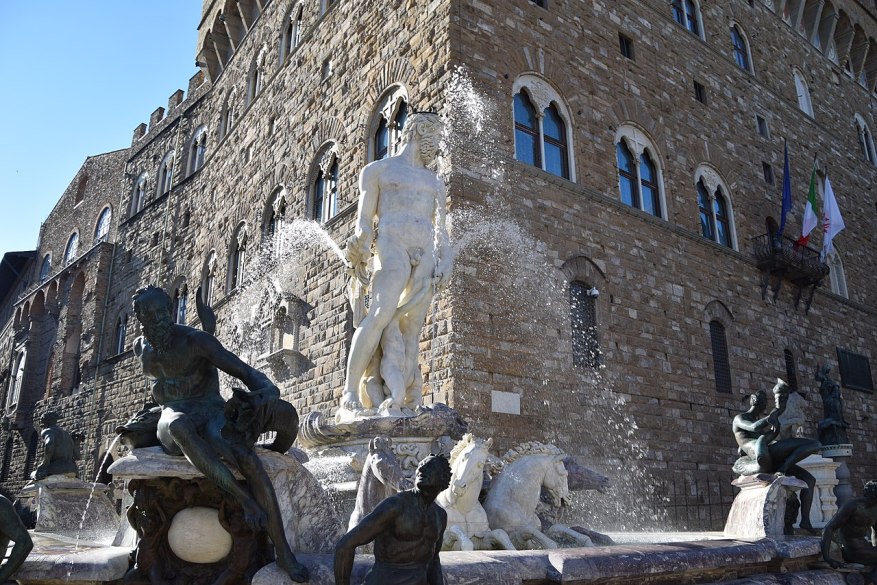
Firenze shock: si arrampica sul Biancone e danneggia la fontana del Nettuno
🇮🇹Firenze, turista si arrampica sul Biancone dell’Ammannati: danneggiamenti alle zampe dei cavalli della fontana e a un fregio… 🇬🇧Florence, a tourist climbs Ammannati’s Biancone fountain: damage to the fountain’s horses’ hooves and a frieze…
-
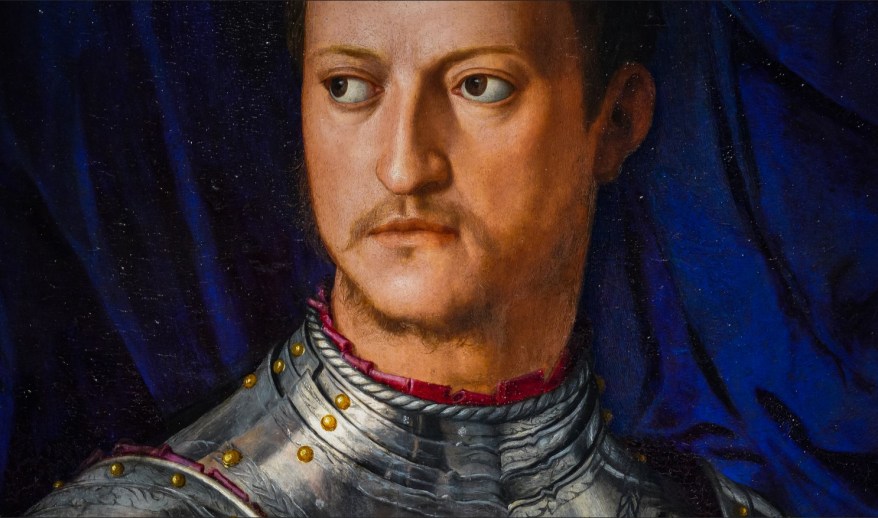
21 aprile 1574: muore Cosimo I de’ Medici, l’uomo che trasformò Firenze in una potenza europea
🇮🇹Il 21 aprile 1574, nella Villa di Castello, moriva a 54 anni Cosimo I de’ Medici, il primo granduca di Toscana, capace di cambiare per sempre il destino politico e culturale di Firenze… 🇬🇧On April 21, 1574, at the Villa di Castello, Cosimo I de’ Medici, the first Grand Duke of Tuscany, died at the…
-
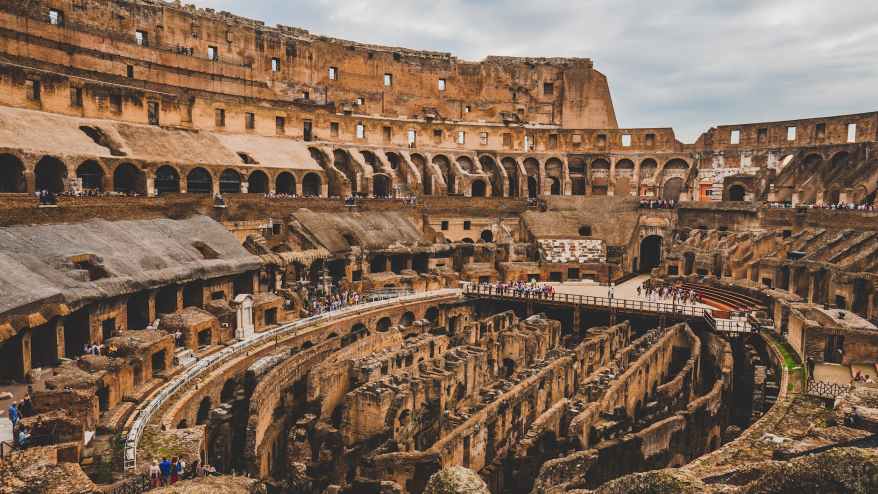
21 aprile, Natale di Roma: il fenomeno del Pantheon che illumina la nascita dell’Impero
🇮🇹Il 21 aprile segna, secondo la tradizione, la fondazione della città eterna: il Natale di Roma. A stabilire questa data fu Marco Terenzio Varrone, che nel I secolo a.C. indicò il 753 a.C. come anno di nascita dell’Urbe… 🇬🇧April 21st marks, according to tradition, the founding of the Eternal City: the Birth of Rome. This…
Condividi:


Questo sono io





sostienici

Sostienici – Support Us
Se questo blog ti piace e ti appassiona, puoi aiutarci a farlo crescere sempre più sostenendoci in modo concreto condividendo i post, seguendo le pagine social e con un contributo che ci aiuta ad andare avanti con il nostro lavoro di divulgazione. . ENGLISH: If you like and are passionate about this blog, you can help us make it grow more and more by supporting us in a concrete way by sharing posts, following social pages and with a contribution that helps us to move forward with our dissemination work.
€10,00


meraviglioso capolavoro, quella fronte leggermente accigliata e corrugata potrebbe essere distintiva di un leggero malore…chissà
Buona giornata e buona arte
"Mi piace""Mi piace"