

Michelangelus Bonarotus Florentinus Faciebat: perché firmai la stola con l’imperfetto?
MICHAEL A[N]GELVS BONAROTVS FLORENT[INVS] FACIEBA[T], ecco come firmai la stola che attraversa il petto della Vergine della Pietà Vaticana.
Alcune lettere compaiono dentro le altre mentre i caratteri diventano sempre più ravvicinati e piccoli verso la fine della frase. L’ultima T addirittura non si vede: è completamente celata dal velo della Madonna.
Vi siete mai chiesti come mai il verbo faciebat è all’imperfetto? Fecit in vece di faciebat sarebbe stato più logico.

Gli studiosi a lungo hanno dibattuto su questo tema. Nel 1974 Juren pare trovare una spiegazione in un testo del Poliziano che riprende uno scritto di Plinio il Vecchio.
Nella prefazione della Naturalis Historia, Plinio il Vecchio racconta che i più grandi artisti greci avevano l’abitudine di firmare le loro opere proprio con l’imperfetto come per esempio Polyclitus faceibat o Appelles faciebat, quasi come se nei loro lavori ci fosse sempre qualcosa di indefinito da portare a termine. Opere mai perfette dunque e sempre migliorabili.
Era una sorta di rispetto verso chi guardava quei lavori, un gesto di umiltà che veniva molto apprezzato dai contemporanei.

Sempre Plinio riporta che quando qualcuno si azzardò a firmare con un fecit, fu considerato troppo presuntuoso e fu redarguito aspramente.
Questo passaggio viene ripreso e largamente commentato dal Poliziano con il quale ebbi molto a che fare alla corte del Magnifico da ragazzo.
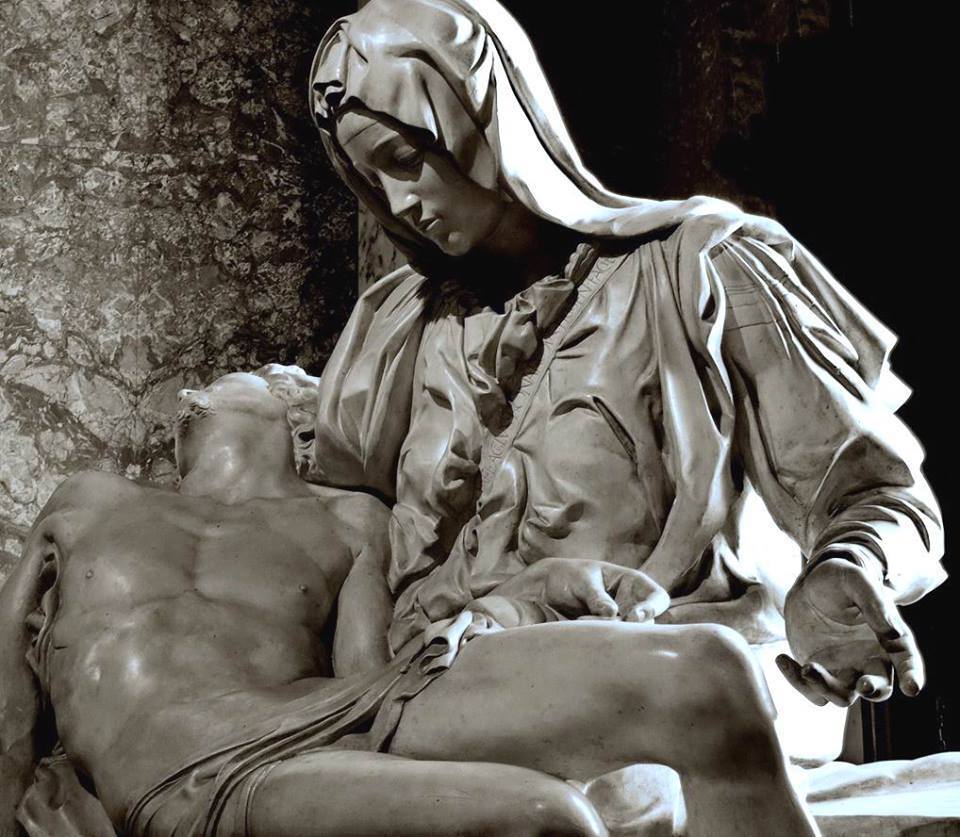
E’ probabile che conoscessi il testo del Poliziano e che di conseguenza lo tenni in considerazione quando mi apprestai a scalpellare la mia firma sulla stola della Pietà Vaticana.
Per il momento il vostro Michelangelo Buonarroti vi saluta dandovi appuntamento ai prossimi post e sui social.

Michelangelus Bonarotus Florentinus Faciebat: why did I sign the stole with the imperfect?
MICHAEL A [N] GELVS BONAROTVS FLORENT [INVS] FACIEBA [T], this is how I signed the stole that crosses the breast of the Virgin of the Vatican Pietà.
Some letters appear inside the others as the characters get closer and smaller towards the end of the sentence. The last T is not even visible: it is completely hidden by the veil of the Madonna.
Have you ever wondered why the verb faciebat is imperfect? Fecit instead of faciebat would have been more logical.
Scholars have long debated on this issue. In 1974 Juren seems to find an explanation in a text by Poliziano which takes up a writing by Pliny the Elder.
In the preface of the Naturalis Historia, Pliny the Elder tells that the greatest Greek artists used to sign their works with the imperfect such as Polyclitus faceibat or Appelles faciebat almost as if there was always something indefinite in their works to be completed. Therefore, never perfect works and always improvable. It was a kind of respect towards those who looked at those works, a gesture of humility that was much appreciated by contemporaries.
Pliny also reports that when someone dared to sign with a fecit he was considered too presumptuous and was harshly scolded. This passage is taken up and widely commented on by Poliziano with whom I had a lot to do at the court of the Magnificent as a boy.
It is likely that I knew Poliziano’s text and consequently took it into consideration when I got ready to chisel my signature on the stole of the Vatican Pietà.
For the moment, your Michelangelo Buonarroti greets you by giving you an appointment at the next posts and on social networks.
-
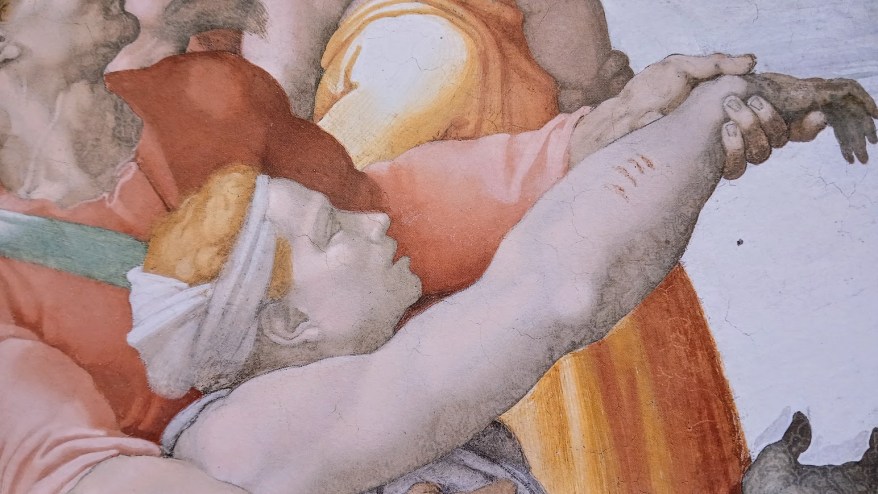
La donna morsa dal serpente nella Cappella Sistina
🇮🇹Quattro segni sul braccio. Nella volta della Cappella Sistina ho dipinto serpenti velenosi, corpi contorti e volti deformati dal terrore. Ma c’è un particolare che potrebbe sfuggirvi… 🇬🇧Four marks on the arm. On the ceiling of the Sistine Chapel, I painted venomous snakes, contorted bodies, and faces twisted by terror. But there is a detail…
-
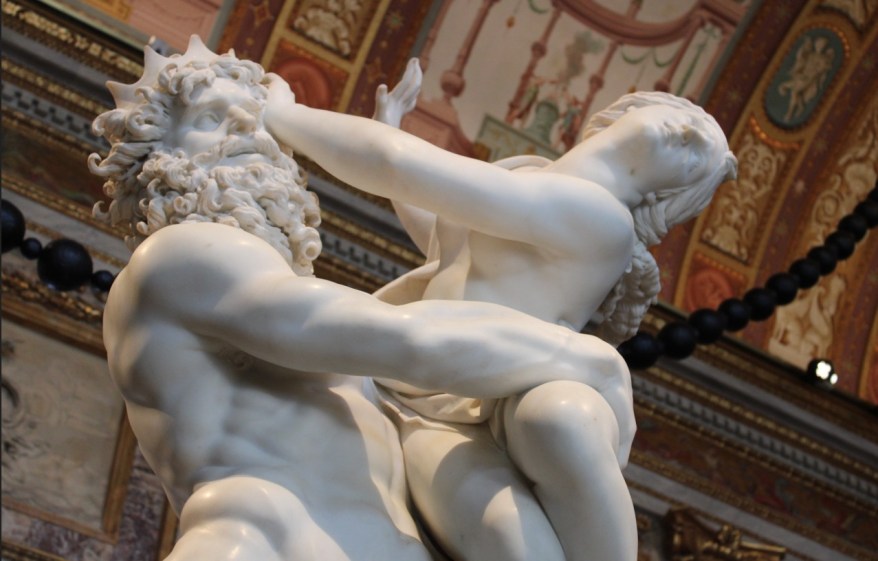
Gian Lorenzo Bernini: l’uomo che fece muovere il marmo
🇮🇹Davanti a una scultura di Gian Lorenzo Bernini, capita di avvicinarsi per osservare un dettaglio e ritrovarsi a seguire con lo sguardo l’intera scena. Una mano stringe una coscia, un volto si volta per sfuggire a uno sguardo, le dita si trasformano in foglie… 🇬🇧When standing before a sculpture by Gian Lorenzo Bernini, you might…
-
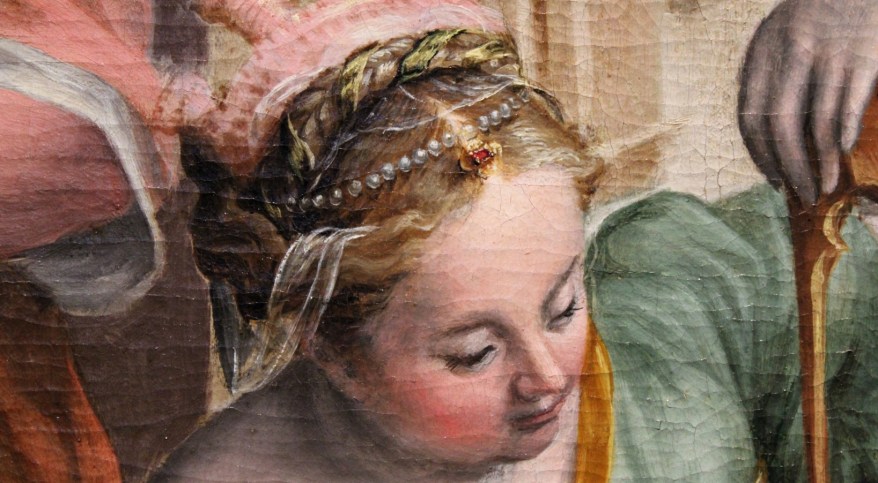
L’Allegoria della Geometria di Prospero Fontana: il dipinto attribuito per errore a Jacopo Coppi
🇮🇹L’Allegoria della Geometria, attribuita un tempo a Jacopo Coppi, è stata restituita a Prospero Fontana: storia, significato e segreti del dipinto… 🇬🇧The Allegory of Geometry, once attributed to Jacopo Coppi, has been reattributed to Prospero Fontana: the history, meaning, and secrets of the painting…
Condividi:


Questo sono io




sostienici

Sostienici – Support Us
Se questo blog ti piace e ti appassiona, puoi aiutarci a farlo crescere sempre più sostenendoci in modo concreto condividendo i post, seguendo le pagine social e con un contributo che ci aiuta ad andare avanti con il nostro lavoro di divulgazione. . ENGLISH: If you like and are passionate about this blog, you can help us make it grow more and more by supporting us in a concrete way by sharing posts, following social pages and with a contribution that helps us to move forward with our dissemination work.
€10,00


