

Davicte cholla frombae io collarcho: ecco il significato
Davicte cholla fromba e io collarcho, così annotai a margine di un foglio in cui sono presenti due studi per il David relativi alla figura intera e al braccio destro.
Vista la postura è ipotizzabile che lo studio per il David in piedi sia quello in bronzo che mi fu commissionato nel 1502 dalla Signoria con l’intenzione di regalarlo al favorito del re di Francia, il maresciallo di Gié Pierre de Rohan.
Quel David era assai diverso rispetto al gigante in marmo che oggi potete ammirare alla Galleria dell’Accademia di Firenze. Era sì nudo ma aveva un turbante che gli copriva il capo. Mentre in una mano stringeva la fionda, nell’altra teneva una sacca con le pietre e con il piede destro schiacciava la testa di Golia oramai vinto.
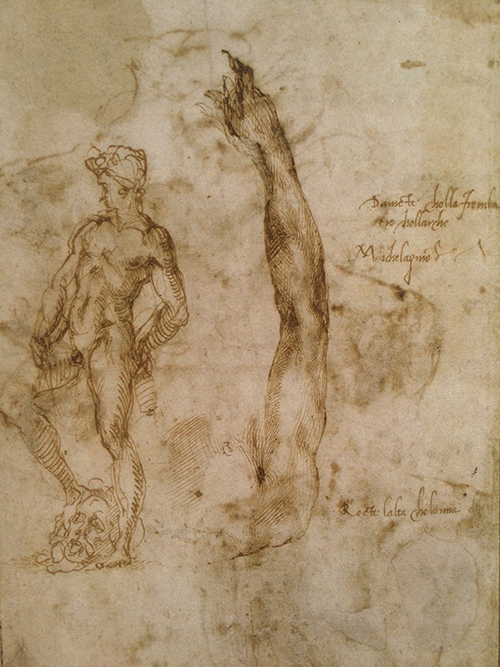
Il disegno del braccio destro invece è relativo al David in marmo di Carrara.
La nota al lato Davicte cholla fromba e io collarcho ha dato adito nel corso dei secoli a differenti interpretazioni sebbene al momento, a mio avviso, la più plausibile rimanga solamente una.
C’è chi sostiene come Clements che siano un primo abbozzo dei versi che poi sarebbero stati incisi sul piedistallo del David in bronzo, oggi perduto
Pecchiai sostiene invece che quell’arco nominato potrebbe essere quello di Amore quasi come se lo stesso dio pronunciasse quelle parole.
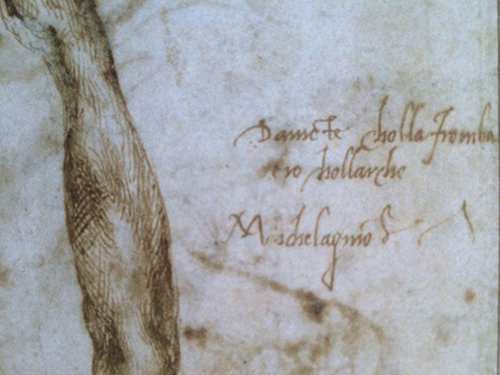
L’ipotesi interpretativa più accreditata è però quella che ha a che fare con un confronto diretto fra l’arma con cui i giovane David sconfisse Golia, ovvero la fromba e quella che adoperai io per per vincere la materia, alias l’arco.
L’arco non dovete intenderlo come quello che serve per tirare le frecce ma bensì è il trapano ad arco per “straforare il marmo tanto con arte“ come scrisse il Vasari facendo riferimento alla Pietà Vaticana. Era lo strumento che noi scultori s’adoperava per forare il marmo e penetrare in profondità. Avete presente i riccioli del David o i suoi occhi? Ecco, per riuscire a entrare così a fondo nella materia dovetti usare giocoforza il trapano ad arco.
Per il momento il vostro Michelangelo Buonarroti vi saluta dandovi appuntamento ai prossimi post e sui social.
Davicte cholla frombae io collarcho: here is the meaning
“David with a sling and I with a bow”, so I noted in the margin of a sheet in which there are two studies for David relating to the whole figure and the right arm.
Given the posture, it is conceivable that the study for the standing David is the one in bronze that was commissioned from me in 1502 by the Signoria with the intention of giving it to the favorite of the king of France, Marshal of Gié Pierre de Rohan.
That David was very different from the marble giant that you can admire today in the Galleria dell’Accademia in Florence. He was naked but he had a turban covering his head. While in one hand he held the slingshot, in the other he held a bag with stones and with his right foot he crushed the head of the now defeated Goliath.
The design of the right arm, on the other hand, is related to the Carrara marble David.
The side note Davicte cholla fromba e io collarcho has given rise to different interpretations over the centuries although at the moment, in my opinion, the most plausible remains only one.
There are those who, like Clements, argue that they are a first draft of the verses that would later be engraved on the pedestal of the bronze David, now lost
Pecchiai argues instead that that named arch could be that of Cupid almost as if the god himself were pronouncing those words.
However, the most accredited interpretative hypothesis is the one that has to do with a direct comparison between the weapon with which the young David defeated Goliath, i.e. the sling, and the one I used to defeat matter, alias the bow.
You don’t have to understand the bow as what is needed to shoot arrows but rather it is the bow drill to “extraforate the marble so artfully” as Vasari wrote referring to the Vatican Pietà. It was the tool that we sculptors used to drill the marble and penetrate deeply. Do you know David’s curls or his eyes? Here, to be able to get so deeply into the matter I had to use the bow drill.
For the moment, your Michelangelo Buonarroti greets you by making an appointment for the next posts and on social media.

Sostienici – Support Us
Se questo blog ti piace e ti appassiona, puoi aiutarci a farlo crescere sempre più sostenendoci in modo concreto condividendo i post, seguendo le pagine social e con un contributo che ci aiuta ad andare avanti con il nostro lavoro di divulgazione. . ENGLISH: If you like and are passionate about this blog, you can help us make it grow more and more by supporting us in a concrete way by sharing posts, following social pages and with a contribution that helps us to move forward with our dissemination work.
5,00 €
ULTIMI ARTICOLI
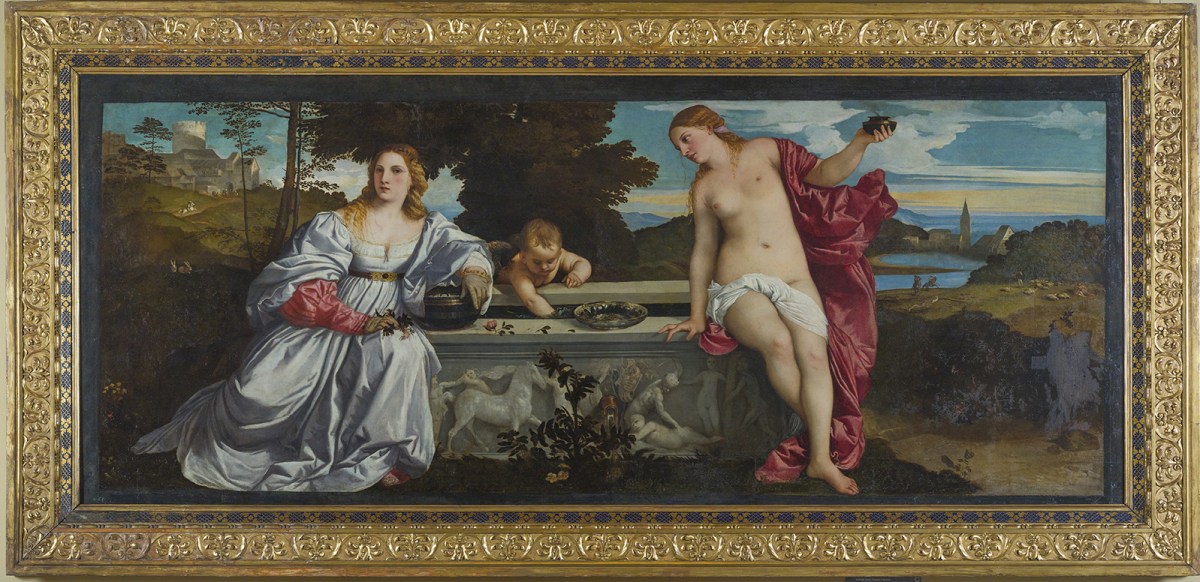
Tiziano moriva il 27 agosto 1576: 450 anni fa scompariva il maestro del colore
🇮🇹 450 anni fa moriva Tiziano Vecellio. Era il 27 agosto del 1576 quando si spense uno dei giganti assoluti del Rinascimento italiano… 🇬🇧 450 years ago, Titian died. It was August 27, 1576, when one of the absolute giants of the Italian Renaissance passed away…

Yayoi Kusama è morta a 97 anni: la regina dei pois lascia un’arte infinita
🇮🇹È morta il 14 agosto in un ospedale di Tokyo, ma la notizia è stata resa pubblica soltanto oggi, 27 agosto. Yayoi Kusama aveva 97 anni. E quasi come in un ultimo paradosso della sua lunga carriera, proprio nei prossimi mesi una delle sue opere più celebri arriverà in Italia, alle OGR Torino… 🇬🇧She died…
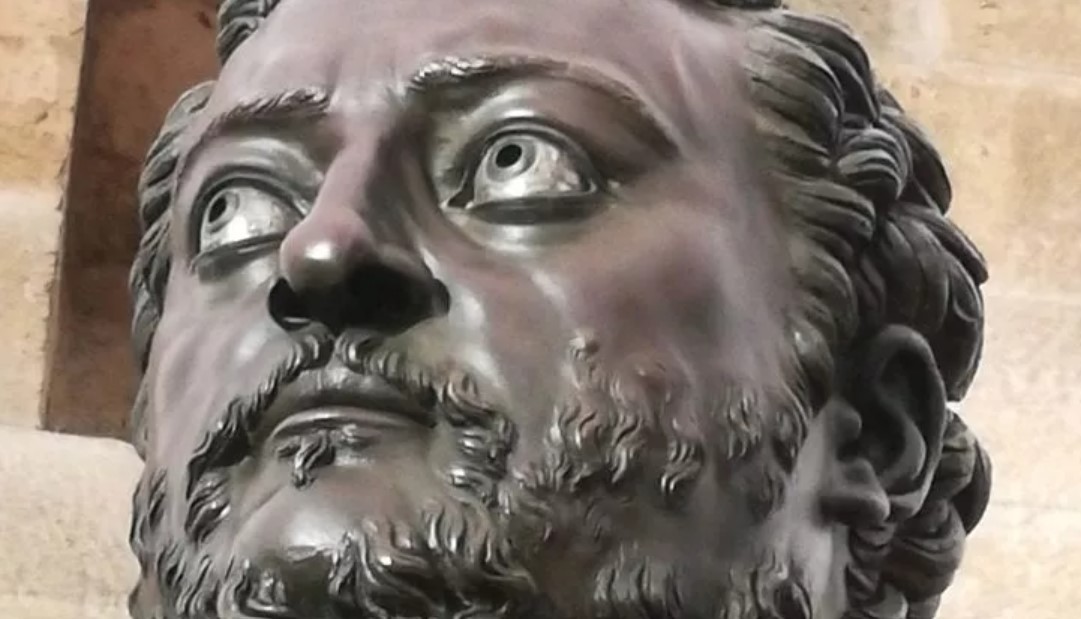
27 agosto 1569: Cosimo I ottenne il titolo di Granduca, ma dietro la corona c’era un patto
🇮🇹Il 27 agosto 1569 Pio V concesse a Cosimo I de’ Medici il titolo di Granduca di Toscana. Dietro quella corona c’erano ambizioni politiche, diplomazia e il caso Carnesecchi… 🇬🇧On August 27, 1569, Pius V granted Cosimo I de’ Medici the title of Grand Duke of Tuscany. Behind that crown lay political ambition, diplomacy, and…
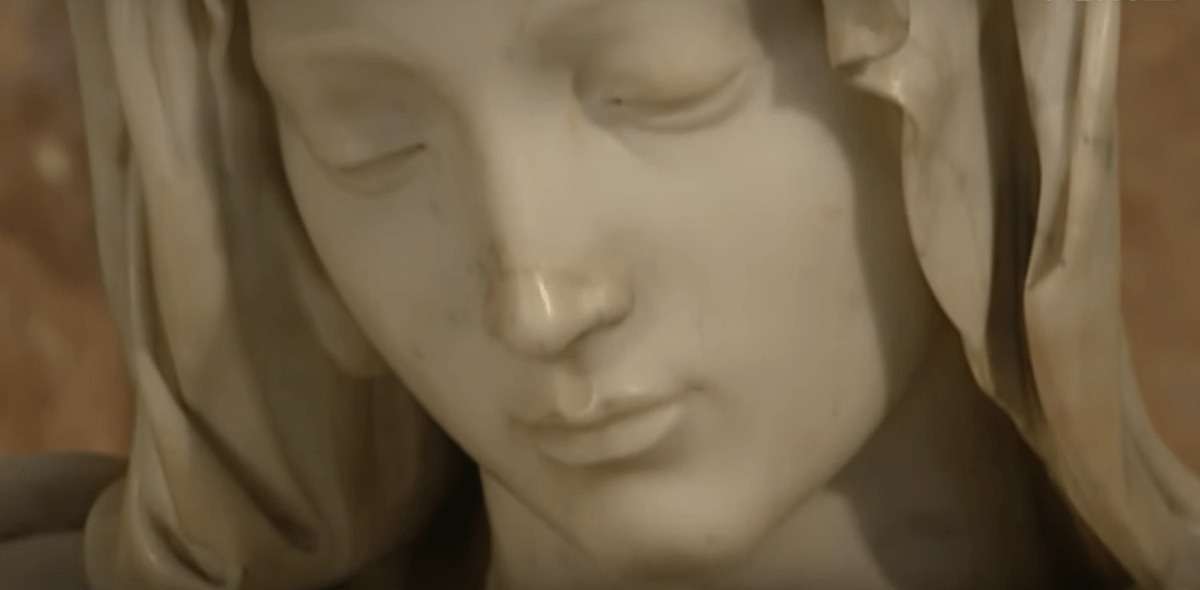
450 ducati e un anno di tempo: il 27 agosto 1498 firmai il contratto per la Pietà Vaticana
🇮🇹450 ducati e un anno di tempo. Il 27 agosto 1498 firmai il contratto per realizzare quella che “Sarà la più bella opera di marmo che sia oggi in Roma.”… 🇬🇧450 ducats and one year’s time. On August 27, 1498, I signed the contract to create what “will be the most beautiful marble work in…
Si è verificato un problema. Aggiorna la pagina e/o riprova in seguito.
Condividi:


Questo sono io




sostienici

Sostienici – Support Us
Se questo blog ti piace e ti appassiona, puoi aiutarci a farlo crescere sempre più sostenendoci in modo concreto condividendo i post, seguendo le pagine social e con un contributo che ci aiuta ad andare avanti con il nostro lavoro di divulgazione. . ENGLISH: If you like and are passionate about this blog, you can help us make it grow more and more by supporting us in a concrete way by sharing posts, following social pages and with a contribution that helps us to move forward with our dissemination work.
€10,00


Aprezzo moltissimo il vostro lavoro… e voglio ringraziarvi di cuore ! 😊❤
"Mi piace"Piace a 1 persona
Grazie per l’apprezzamento. Un abbraccio
"Mi piace""Mi piace"
Grazie….
"Mi piace""Mi piace"