

Per capire davvero le Tre Età della Donna di Klimt basta osservare un solo dettaglio
C’è un dettaglio che quasi tutti ignorano quando osservano Le tre età della donna di Gustav Klimt. Lo sguardo si posa naturalmente sulla dolcezza della madre e della bambina, sull’armonia delle figure e sulle celebri decorazioni dorate che hanno reso immortale l’artista austriaco.
Eppure il cuore del dipinto è nascosto in un altro punto della tela, dove Klimt affida un messaggio potente sul tempo, sulla bellezza e sul destino di ogni essere umano. È proprio questa lettura, tanto semplice quanto profonda, a rendere l’opera emozionante.
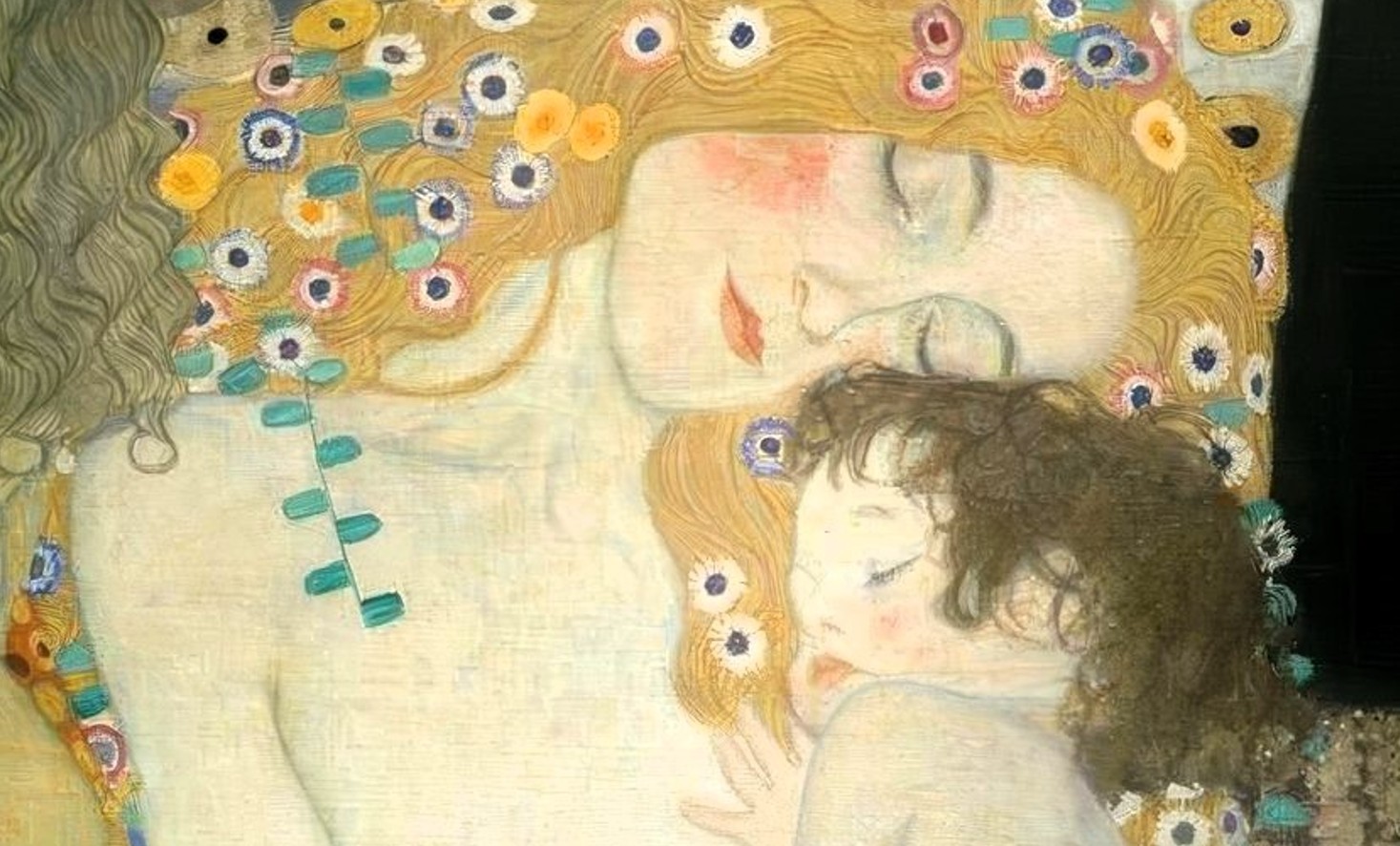
Realizzato nel 1905, questo capolavoro rappresenta una delle riflessioni più profonde sul ciclo dell’esistenza mai dipinte nella storia dell’arte.
Il significato de Le tre età della donna di Klimt va oltre la semplice rappresentazione della femminilità
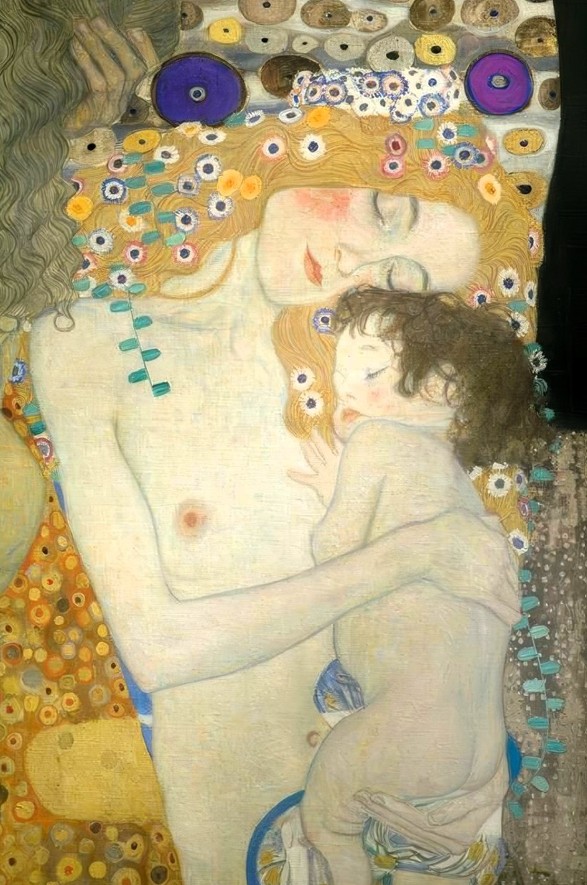
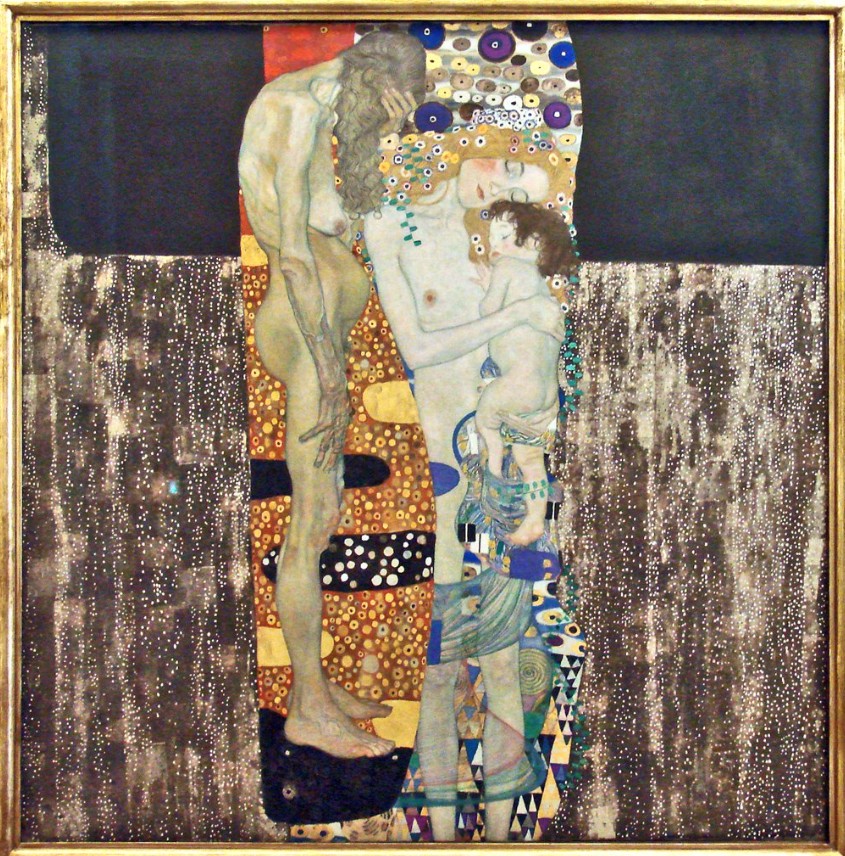
A un primo sguardo il dipinto mostra tre figure femminili appartenenti a diverse fasi della vita. Una giovane madre stringe teneramente la propria bambina addormentata, simbolo della nascita, della protezione e dell’amore incondizionato. Poco distante compare una donna anziana, sola e raccolta in sé stessa, con il volto nascosto in un gesto di pudore e malinconia.
La separazione tra questi personaggi non è casuale. Klimt costruisce un dialogo silenzioso tra il principio e la fine dell’esistenza, lasciando allo spettatore il compito di immaginare tutto ciò che accade nel tempo che le divide.
L’opera invita a riflettere sulla trasformazione del corpo, sulla fragilità della bellezza e sulla forza dei legami affettivi che accompagnano ogni essere umano durante il proprio percorso.
Le tre età della donna è uno dei manifesti del Simbolismo europeo
Dietro l’apparente semplicità della composizione si nasconde una delle riflessioni più profonde del Simbolismo europeo. Klimt non vuole raccontare la storia di tre persone, ma trasformare tre figure in un’allegoria della condizione umana. La nascita, la maturità e la vecchiaia diventano così simboli universali di un destino condiviso, dove il tempo scorre inesorabile e accompagna ogni essere umano dalla vita alla morte.
Questa visione non nasce all’improvviso. L’artista aveva già affrontato il tema della fragilità dell’esistenza nei celebri pannelli realizzati per l’Università di Vienna, in particolare nella Filosofia e nella Medicina. In Le tre età della donna quella riflessione diventa ancora più essenziale e potente: la “corrente della vita” si cristallizza in tre sole figure, capaci di rappresentare l’intera umanità.
La lettura del critico Ludwig Hevesi: il destino dell’uomo racchiuso in un’immagine
Tra i primi a cogliere la straordinaria forza dell’opera fu il critico Ludwig Hevesi, che nel 1907 descrisse il dipinto con parole rimaste celebri. Secondo lui, Klimt era riuscito a sintetizzare in una sola immagine “gioventù e vecchiaia, fiorire e appassire”, racchiudendo “l’intera sventura del desiderio e del dolore che porta il nome di vita umana”.
Hevesi rimase colpito anche dal dialogo tra il significato dell’opera e il suo linguaggio decorativo, osservando come il gruppo simbolico fosse “intimamente avvolto e pervaso dalla più raffinata fantasia nel suo boccio di mosaico”. Non si tratta quindi di semplici ornamenti: i motivi geometrici, le superfici dorate e il celebre mosaico klimtiano partecipano alla narrazione, trasformando il dipinto in una meditazione visiva sul tempo e sull’esistenza.
L’arte di Klimt nasce dall’incontro di culture diverse
Uno degli aspetti più affascinanti dell’opera è la straordinaria ricchezza delle sue influenze artistiche. Nell’elogio funebre dedicato a Gustav Klimt nel 1918 si ricordava come, a un primo sguardo, l’osservatore percepisse il dialogo dell’artista con il Giappone, la Cina, Bisanzio, l’Oriente antico e moderno, con i Preraffaelliti italiani e inglesi, oltre che con artisti come Gustave Moreau e Fernand Khnopff.
Eppure Klimt non fu mai un semplice collezionista di stili. Quelle suggestioni diventavano materia viva, rielaborata attraverso una sensibilità assolutamente personale.
Come ricordava l’autore dell’elogio funebre, l’artista “traeva nutrimento da tutto ciò, per poi trasformarlo in Gustav Klimt”. È proprio questa capacità di assimilare influenze lontane e restituirle in una forma completamente nuova a rendere il suo linguaggio ancora oggi immediatamente riconoscibile.
Un’opera che conquistò l’Europa già all’inizio del Novecento
Presentato per la prima volta a Berlino nel 1905 e successivamente esposto alla Kunstschau di Vienna del 1908, Le tre età della donna suscitò un forte interesse anche fuori dall’Austria. La critica internazionale riconobbe la forza emotiva del dipinto, sottolineando come la sua profondità non fosse immediatamente accessibile a tutti.
Un corrispondente francese scrisse che l’opera “procura grandi emozioni a chi la comprende”, aggiungendo che in quelle tre figure era raccontata “l’intera storia della vita”. A oltre un secolo di distanza, quel giudizio continua a conservare tutta la sua attualità.
L’attualità dell’opera
Uno degli aspetti che rende immortale quest’opera è la sua straordinaria attualità. Sebbene sia stata dipinta all’inizio del Novecento, affronta temi universali che riguardano ogni persona, indipendentemente dall’età o dalla cultura.
La maternità viene rappresentata come il momento di massima armonia tra due esseri umani. L’infanzia appare come il simbolo della speranza e delle infinite possibilità. La vecchiaia, invece, non viene mostrata con intento crudele, ma come una fase inevitabile dell’esperienza umana, caratterizzata da memoria, vulnerabilità e consapevolezza.
Questa capacità di trasformare il tempo in emozione è uno dei motivi per cui il dipinto continua a essere considerato uno dei massimi capolavori della pittura simbolista.
I dettagli dorati e lo stile di Klimt rendono il quadro immediatamente riconoscibile
Come in molte delle sue opere più celebri, Gustav Klimt utilizza decorazioni preziose, motivi geometrici e superfici ricche di richiami ornamentali. L’oro, elemento distintivo del suo periodo aureo, non serve soltanto a impreziosire il dipinto, ma contribuisce a creare una dimensione sospesa tra realtà e spiritualità.
Le figure sembrano emergere da uno spazio senza tempo, dove il valore simbolico prevale sulla rappresentazione realistica. Ogni dettaglio decorativo dialoga con il significato dell’opera, trasformando il quadro in una riflessione visiva sull’esistenza umana.
Anche il contrasto tra la pelle delicata della madre e della bambina e il corpo segnato della donna anziana accentua il messaggio sul trascorrere degli anni, senza mai rinunciare alla sensibilità artistica che caratterizza tutta la produzione di Klimt.
Dove si trova oggi Le tre età della donna
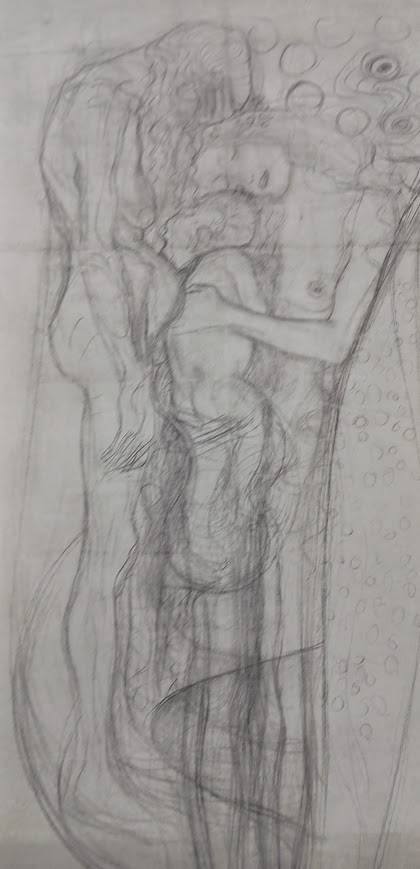
Il celebre dipinto è conservato presso la Galleria Nazionale d’Arte Moderna e Contemporanea di Roma, dove continua ad attirare visitatori provenienti da ogni parte del mondo. La sua presenza in Italia rappresenta un’opportunità straordinaria per osservare da vicino uno dei lavori più significativi dell’artista viennese.
Dal vivo è possibile cogliere particolari che nelle fotografie spesso sfuggono: la ricchezza delle decorazioni, la luminosità delle superfici e la delicatezza delle sfumature cromatiche che rendono l’opera ancora più coinvolgente.
È un invito a riflettere sul tempo che passa, sull’amore che lega le generazioni e sulla bellezza racchiusa in ogni stagione dell’esistenza. La vita cambia continuamente, ma le emozioni che ci accompagnano restano universali.
Per il momento il sempre vostro Michelangelo Buonarroti vi saluta dandovi appuntamento ai prossimi post e sui social.
To truly understand Klimt’s The Three Ages of Woman, you only need to look at one detail.
There’s a detail that almost everyone overlooks when looking at Gustav Klimt’s The Three Ages of Woman. The gaze naturally falls on the sweetness of the mother and child, the harmony of the figures, and the famous golden decorations that made the Austrian artist immortal.
Yet the heart of the painting lies elsewhere on the canvas, where Klimt delivers a powerful message about time, beauty, and the destiny of every human being. It is precisely this reading, as simple as it is profound, that makes the work so moving.
Created in 1905, this masterpiece represents one of the most profound reflections on the cycle of existence ever painted in the history of art.
The meaning of Klimt’s The Three Ages of Woman goes beyond the simple representation of femininity
At first glance, the painting shows three female figures belonging to different stages of life. A young mother tenderly holds her sleeping daughter, a symbol of birth, protection, and unconditional love. Not far away, an elderly woman appears, alone and absorbed, her face hidden in a gesture of modesty and melancholy.
The separation between these figures is not accidental. Klimt constructs a silent dialogue between the beginning and the end of existence, leaving the viewer to imagine everything that happens in the time between them.
The work invites reflection on the transformation of the body, the fragility of beauty, and the strength of the emotional bonds that accompany every human being throughout their journey.
The Three Ages of Woman is one of the manifestos of European Symbolism
Behind the apparent simplicity of the composition lies one of the most profound reflections of European Symbolism. Klimt does not intend to tell the story of three people, but to transform three figures into an allegory of the human condition. Birth, maturity, and old age thus become universal symbols of a shared destiny, where time flows inexorably and accompanies every human being from life to death.
This vision does not arise suddenly. The artist had already addressed the theme of the fragility of existence in the famous panels created for the University of Vienna, particularly in Philosophy and Medicine. In The Three Ages of Woman, that reflection becomes even more essential and powerful: the “current of life” crystallizes in just three figures, capable of representing all of humanity.
Critic Ludwig Hevesi’s Reading: Man’s Destiny Encapsulated in an Image
Among the first to grasp the extraordinary power of the work was critic Ludwig Hevesi, who in 1907 described the painting in words that have remained famous. According to him, Klimt had succeeded in synthesizing in a single image “youth and old age, blossoming and fading,” encapsulating “the entire misfortune of desire and pain that bears the name of human life.”
Hevesi was also struck by the dialogue between the work’s meaning and its decorative language, observing how the symbolic group was “intimately enveloped and pervaded by the most refined fantasy within its mosaic bud.” These are therefore not mere ornaments: the geometric motifs, the gilded surfaces, and Klimt’s famous mosaic participate in the narrative, transforming the painting into a visual meditation on time and existence.
Klimt’s art is born from the encounter of different cultures.
One of the most fascinating aspects of his work is the extraordinary richness of his artistic influences. The 1918 eulogy dedicated to Gustav Klimt noted how, at first glance, the viewer perceived the artist’s dialogue with Japan, China, Byzantium, the ancient and modern Orient, with the Italian and English Pre-Raphaelites, as well as with artists such as Gustave Moreau and Fernand Khnopff.
Yet Klimt was never a simple collector of styles. Those influences became living matter, reworked through an entirely personal sensibility.
As the author of the eulogy recalled, the artist “drew nourishment from all this, and then transformed it into Gustav Klimt.” It is precisely this ability to assimilate distant influences and render them in a completely new form that makes his artistic language still immediately recognizable today.
A work that captivated Europe at the beginning of the 20th century
Presented for the first time in Berlin in 1905 and subsequently exhibited at the Vienna Kunstschau in 1908, The Three Ages of Woman aroused strong interest even outside of Austria. International critics recognized the painting’s emotional power, noting that its depth was not immediately accessible to everyone.
A French correspondent wrote that the work “provokes great emotions in those who understand it,” adding that those three figures told “the entire story of life.” Over a century later, that assessment remains as timely as ever.
The Work’s Relevance
One of the aspects that makes this work immortal is its extraordinary relevance. Although painted at the beginning of the 20th century, it addresses universal themes that concern everyone, regardless of age or culture.
Motherhood is depicted as the moment of greatest harmony between two human beings. Childhood appears as a symbol of hope and infinite possibilities. Old age, however, is not depicted with cruel intent, but as an inevitable phase of the human experience, characterized by memory, vulnerability, and awareness.
This ability to transform time into emotion is one of the reasons the painting continues to be considered one of the greatest masterpieces of Symbolist painting.
The gilded details and Klimt’s signature style make the painting instantly recognizable
As in many of his most famous works, Gustav Klimt uses precious decorations, geometric motifs, and surfaces rich in ornamental references. Gold, a distinctive element of his golden period, not only embellishes the painting but also helps create a dimension suspended between reality and spirituality.
The figures seem to emerge from a timeless space, where symbolism prevails over realistic representation. Every decorative detail interacts with the meaning of the work, transforming the painting into a visual reflection on human existence.
The contrast between the delicate skin of the mother and child and the elderly woman’s worn body also accentuates the message of the passing of the years, without ever sacrificing the artistic sensitivity that characterizes all of Klimt’s work.
Where The Three Ages of Woman is located today
The famous painting is housed at the Galleria Nazionale d’Arte Moderna e Contemporanea in Rome, where it continues to attract visitors from all over the world. Its presence in Italy represents an extraordinary opportunity to observe one of the Viennese artist’s most significant works up close.
In person, it’s possible to capture details that are often missed in photographs: the richness of the decorations, the luminosity of the surfaces, and the delicate nuances of the colors that make the work even more captivating.
It’s an invitation to reflect on the passing of time, on the love that binds generations, and on the beauty contained in every season of existence. Life changes constantly, but the emotions that accompany us remain universal.
For now, yours truly, Michelangelo Buonarroti bids you farewell and looks forward to seeing you in future posts and on social media.

Sostienici – Support Us
Se questo blog ti piace e ti appassiona, puoi aiutarci a farlo crescere sempre più sostenendoci in modo concreto condividendo i post, seguendo le pagine social e con un contributo che ci aiuta ad andare avanti con il nostro lavoro di divulgazione. . ENGLISH: If you like and are passionate about this blog, you can help us make it grow more and more by supporting us in a concrete way by sharing posts, following social pages and with a contribution that helps us to move forward with our dissemination work.
10,00 €
Condividi:


Questo sono io




sostienici

Sostienici – Support Us
Se questo blog ti piace e ti appassiona, puoi aiutarci a farlo crescere sempre più sostenendoci in modo concreto condividendo i post, seguendo le pagine social e con un contributo che ci aiuta ad andare avanti con il nostro lavoro di divulgazione. . ENGLISH: If you like and are passionate about this blog, you can help us make it grow more and more by supporting us in a concrete way by sharing posts, following social pages and with a contribution that helps us to move forward with our dissemination work.
€10,00


