
Ritratto dei coniugi Arnolfini: il capolavoro enigmatico di Jan van Eyck
Il Ritratto dei coniugi Arnolfini di Jan van Eyck è uno dei dipinti più enigmatici e affascinanti della storia dell’arte. Realizzato nel 1434 e oggi custodito presso la National Gallery, questo straordinario capolavoro continua ad alimentare dubbi, interpretazioni e misteri a quasi sei secoli dalla sua creazione.
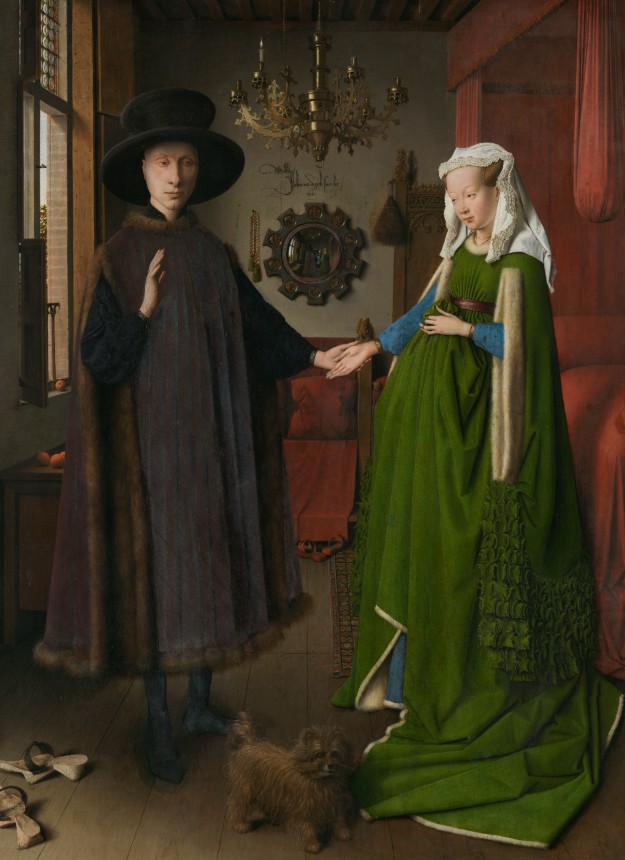
L’opera colpisce immediatamente per il suo realismo sorprendente. Van Eyck rappresenta una coppia elegante all’interno di una stanza da letto ricca di dettagli minuziosi, trasformando una semplice scena domestica in una composizione simbolica e profonda. Ogni gesto appare studiato per raccontare qualcosa che va oltre il semplice ritratto.
Chi erano davvero i coniugi Arnolfini?
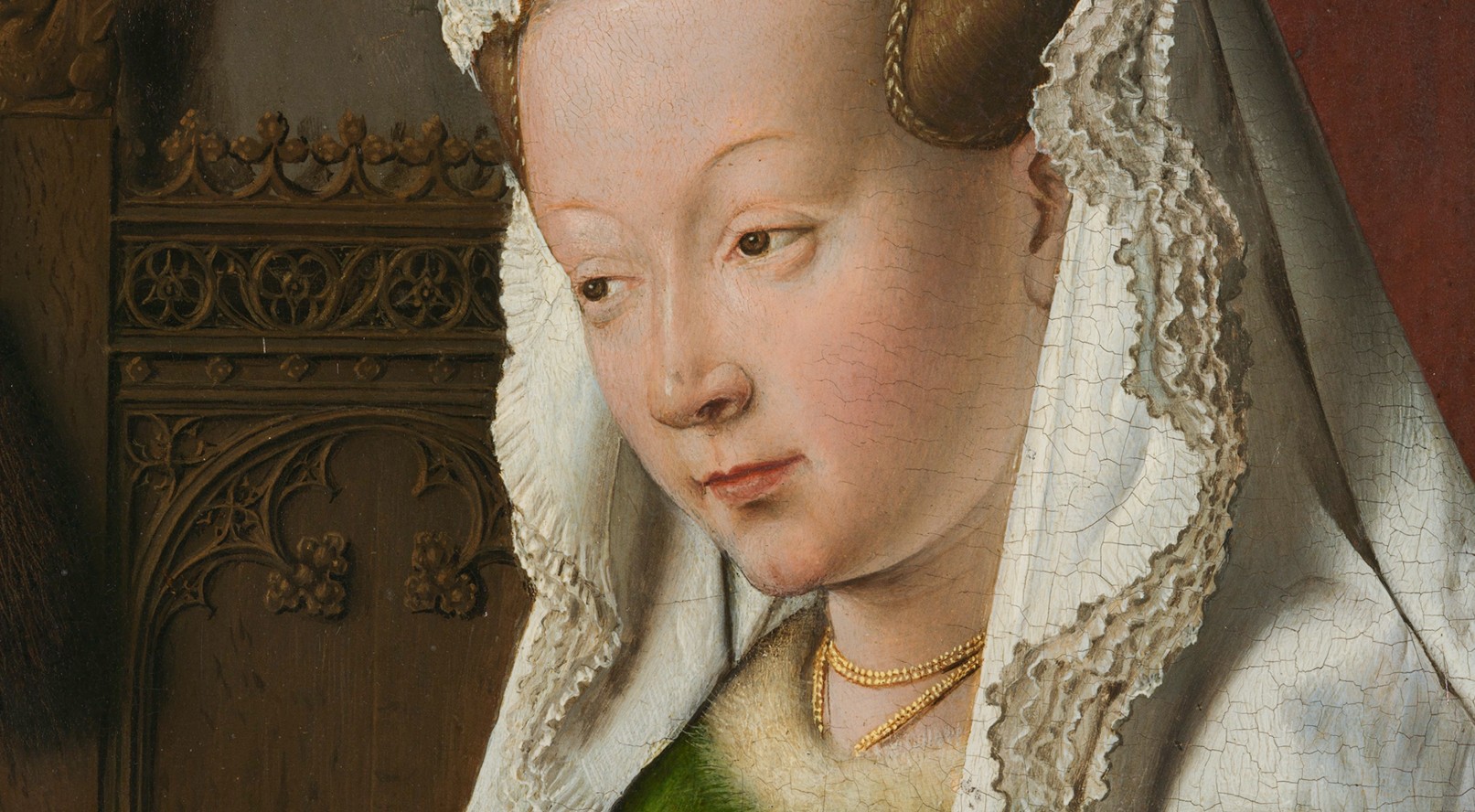
L’identità dei protagonisti è ancora oggi oggetto di discussione tra gli storici dell’arte. L’uomo viene generalmente identificato con Giovanni Arnolfini, mercante italiano appartenente a una ricca famiglia di commercianti lucchesi trasferitasi a Bruges.
Più incerta resta invece l’identità della donna, che potrebbe essere Giovanna Cenami oppure Costanza Trenta, moglie morta poco prima della realizzazione del dipinto.
Alcuni studiosi sostengono che si tratti della celebrazione di un matrimonio, altri pensano invece a una commemorazione funebre. La solennità della scena e l’atteggiamento quasi ieratico dei due personaggi sembrano infatti evocare qualcosa di profondamente spirituale.
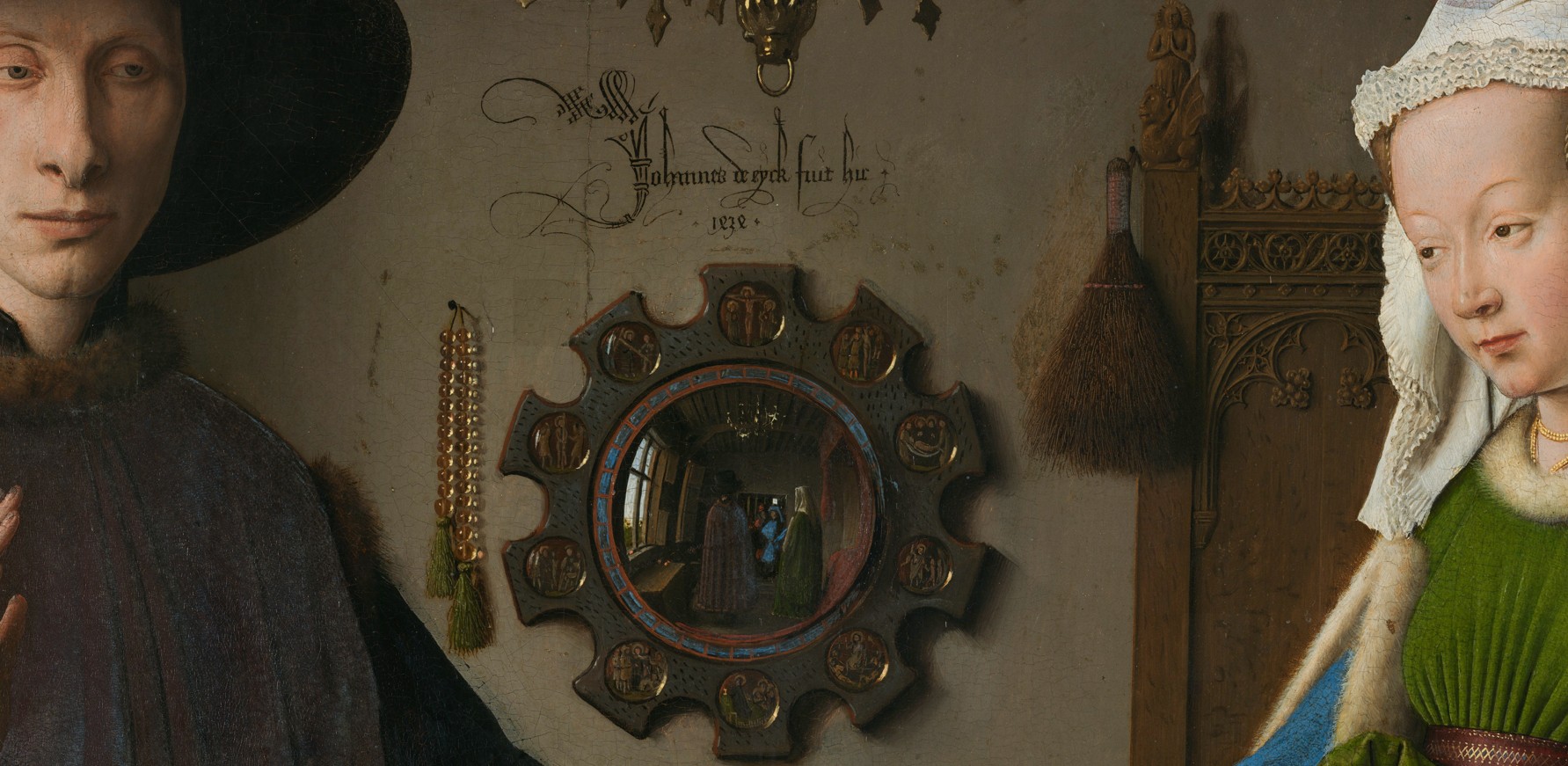
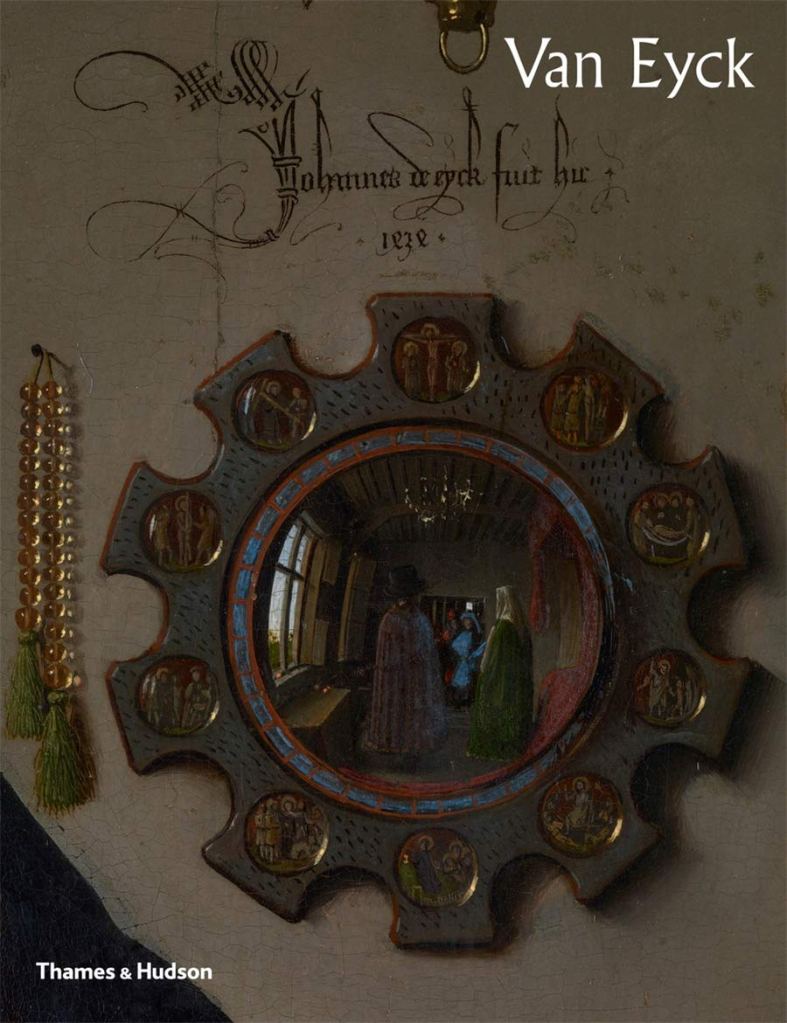
A rendere ancora più affascinante l’opera è la firma dipinta sulla parete: “Johannes de Eyck fuit hic”, ovvero “Jan van Eyck è stato qui”. Non una semplice firma artistica, ma quasi la testimonianza diretta di un evento realmente accaduto.
Lo specchio convesso che ha rivoluzionato la pittura
Il dettaglio più celebre del dipinto è senza dubbio il piccolo specchio convesso collocato al centro della parete. In pochi centimetri Van Eyck riesce a rappresentare il riflesso completo della stanza, mostrando i due coniugi di spalle e altre due figure misteriose poste all’ingresso della camera.
Secondo molti storici, una di queste figure sarebbe proprio il pittore. Grazie a questo incredibile espediente tecnico, Van Eyck introduce un punto di vista multiplo che anticipa soluzioni artistiche adottate secoli dopo da grandi maestri come Velázquez.
La cornice dello specchio contiene inoltre minuscole scene della Passione di Cristo, dipinte con una precisione quasi microscopica. Questo elemento trasforma il dipinto in una riflessione sulla fede, sul matrimonio e sul significato spirituale dell’unione tra i due protagonisti.
I simboli nascosti nella stanza
Nel Ritratto dei coniugi Arnolfini nulla è casuale. Ogni oggetto presente nella stanza sembra alludere a un significato preciso.
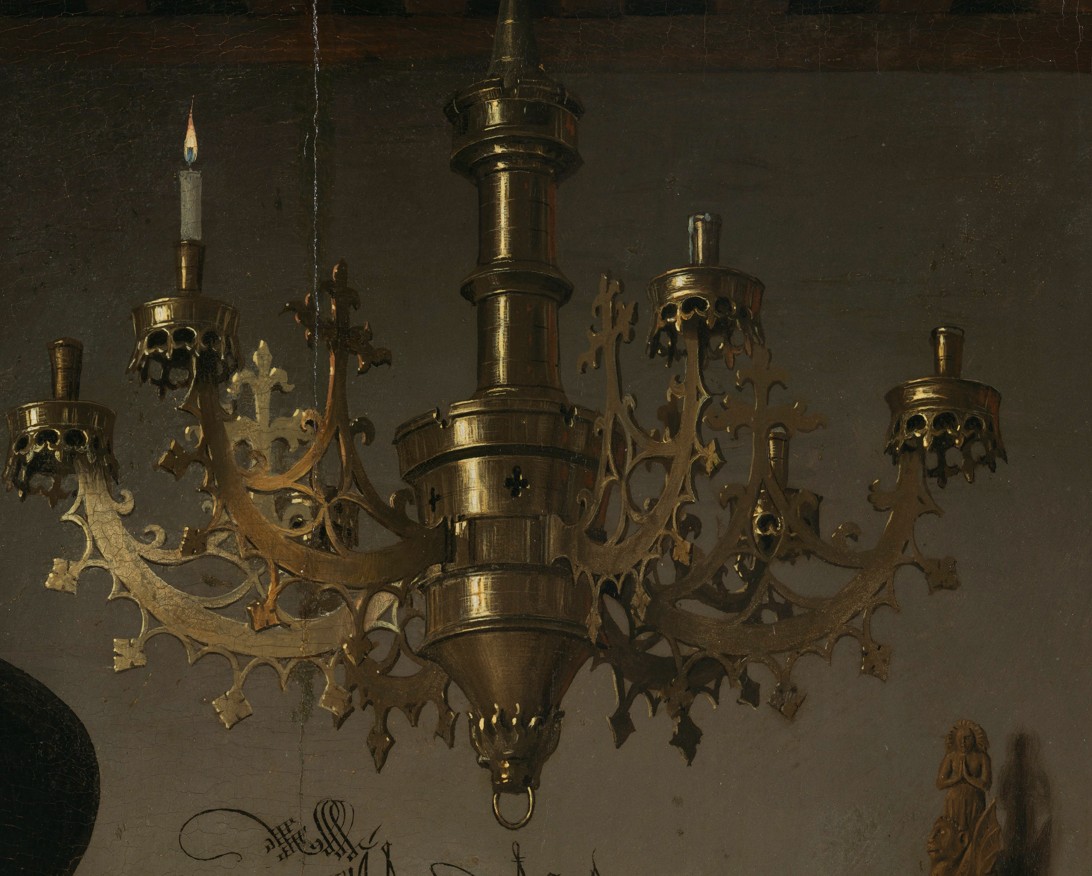
Il cagnolino ai piedi della coppia simboleggia la fedeltà coniugale, mentre la candela accesa nel lampadario rappresenterebbe la presenza divina all’interno della scena.
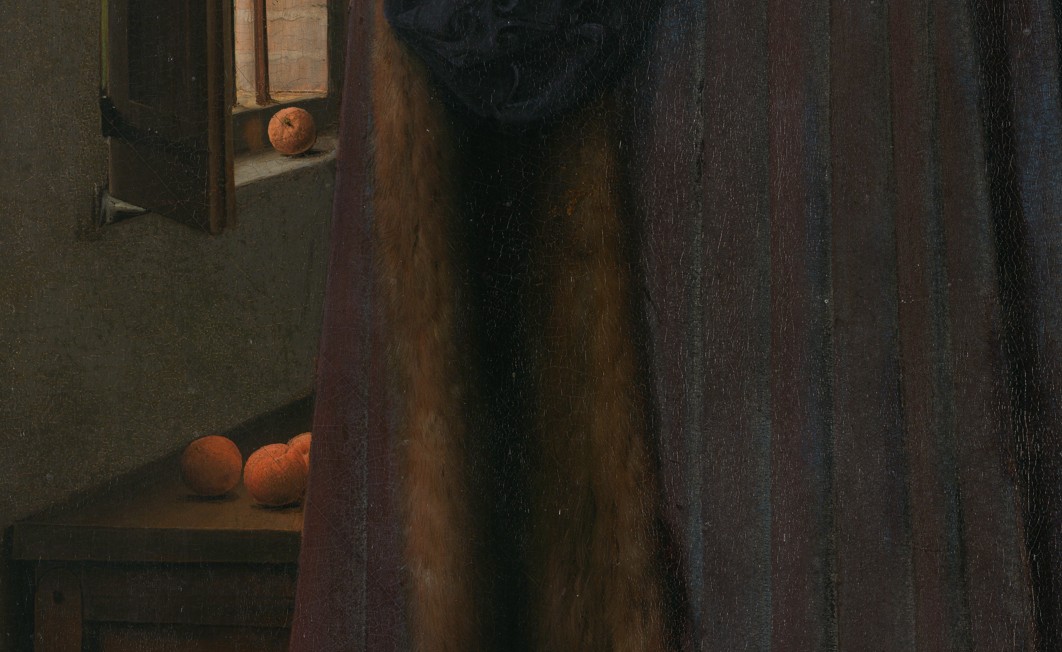
Anche le arance adagiate vicino alla finestra assumono un valore simbolico: nel Nord Europa del Quattrocento erano frutti rari e preziosi, associati alla ricchezza, alla fertilità e al Paradiso terrestre.
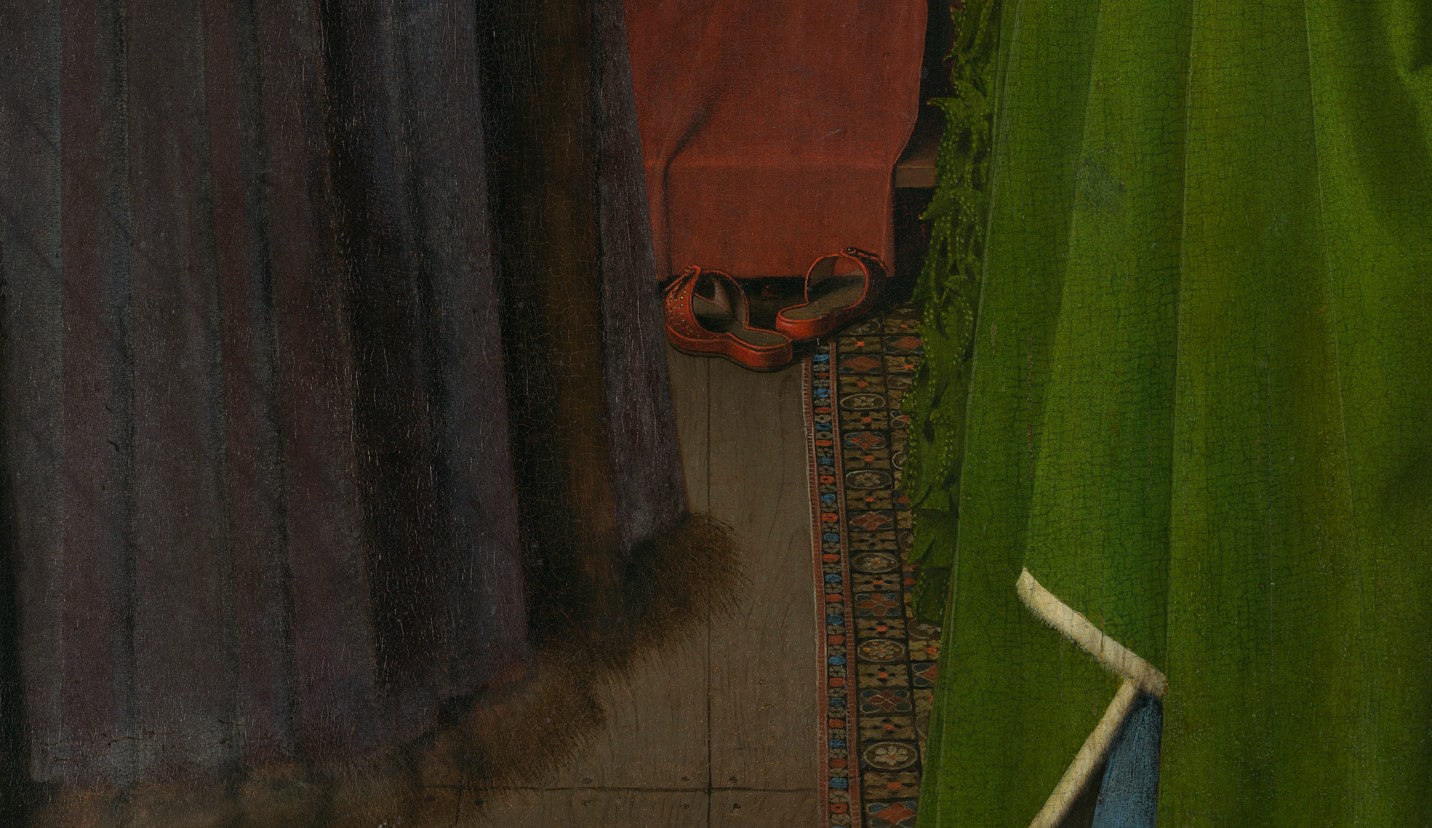
Gli zoccoli abbandonati sul pavimento richiamano invece la sacralità del luogo. I due protagonisti sono raffigurati scalzi come segno di rispetto verso l’unione matrimoniale, considerata un atto sacro.
Persino il colore verde dell’abito femminile non è stato scelto casualmente. Nel simbolismo medievale era infatti legato alla fertilità, alla speranza e alla maternità.
La donna è incinta? Il dettaglio che ha confuso il mondo
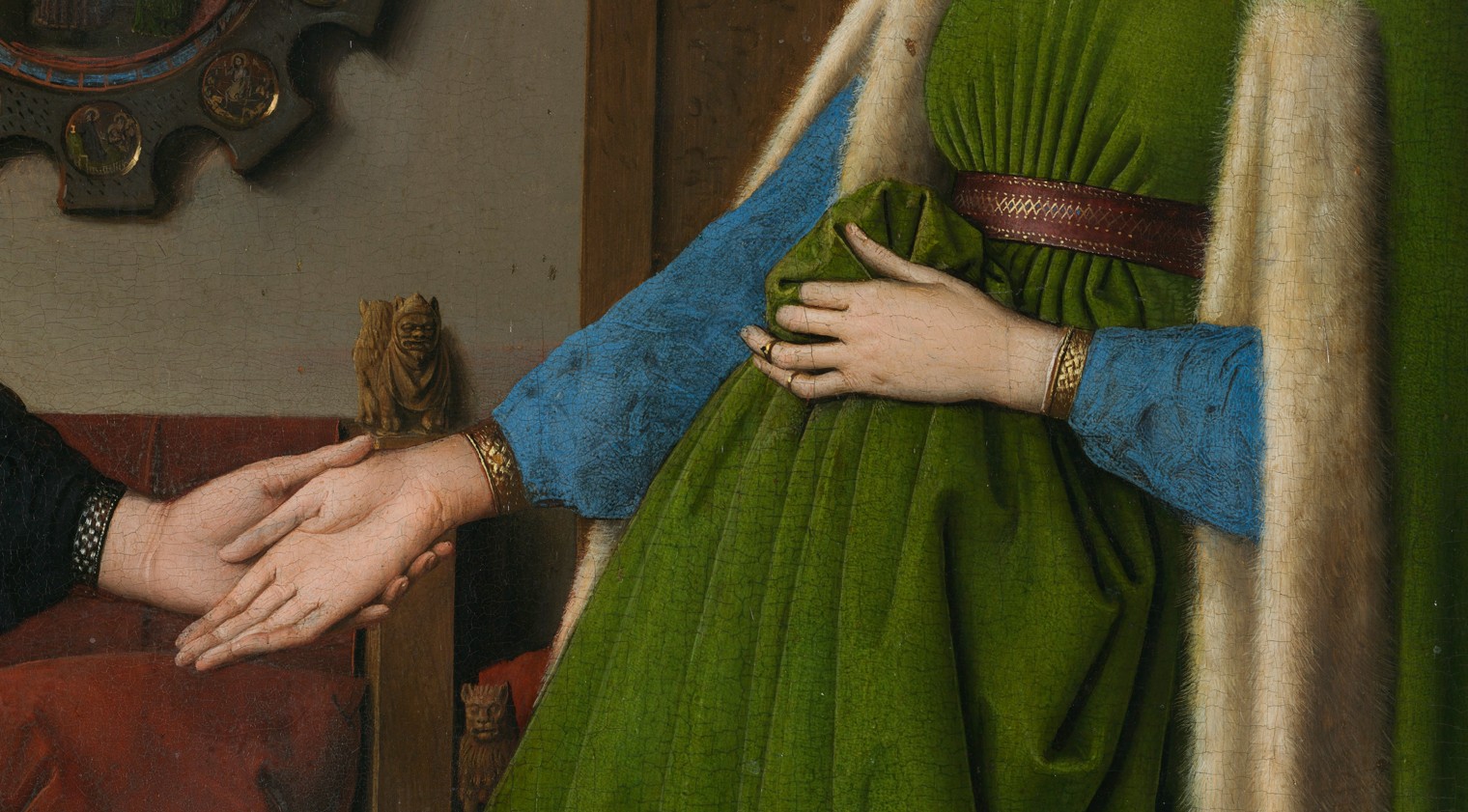
Uno degli aspetti più discussi del dipinto riguarda il ventre prominente della donna. Per molto tempo si è creduto che fosse incinta, ma oggi la maggior parte degli studiosi ritiene che non sia così.
Nel Quattrocento fiammingo gli abiti femminili seguivano una moda caratterizzata da tessuti abbondanti, pieghe voluminose e silhouette arrotondate. La posa della donna, con la mano appoggiata sul ventre, sarebbe quindi un gesto simbolico legato alla fertilità e al desiderio di continuità familiare.
La tecnica rivoluzionaria di Jan van Eyck
Il Ritratto dei coniugi Arnolfini è anche una straordinaria dimostrazione della perfezione tecnica raggiunta dalla pittura fiamminga del Quattrocento. Jan van Eyck perfezionò infatti la tecnica dell’olio, ottenendo effetti di luce e trasparenza rivoluzionari per l’epoca.
Le superfici riflettono la luce in modo realistico e ogni materiale appare riconoscibile al primo sguardo. Le pellicce sembrano morbide, il vetro della finestra appare luminoso, i metalli riflettono l’ambiente circostante e i tessuti mostrano pieghe incredibilmente naturali.
La luce fredda che attraversa la stanza contribuisce a creare un’atmosfera sospesa, silenziosa.
Per il momento il sempre vostro Michelangelo Buonarroti vi saluta dandovi appuntamento ai prossimi post e sui social.
The Arnolfini Portrait: Jan van Eyck’s Enigmatic Masterpiece
The Arnolfini Portrait by Jan van Eyck is one of the most enigmatic and fascinating paintings in the history of art. Painted in 1434 and now housed in the National Gallery, this extraordinary masterpiece continues to fuel doubts, interpretations, and mysteries nearly six centuries after its creation.
The work is immediately striking for its astonishing realism. Van Eyck depicts an elegant couple in a bedroom rich in minute detail, transforming a simple domestic scene into a profound and symbolic composition. Every gesture seems designed to convey something beyond the simple portrait.
Who were the Arnolfini couple, really?
The identity of the subjects is still a matter of debate among art historians. The man is generally identified as Giovanni Arnolfini, an Italian merchant from a wealthy family of merchants from Lucca who moved to Bruges. The identity of the woman, however, remains more uncertain. She could be Giovanna Cenami or Costanza Trenta, his wife who died shortly before the painting was created.
Some scholars maintain that it is a wedding celebration, while others believe it to be a funeral commemoration. The solemnity of the scene and the almost hieratic attitude of the two figures seem to evoke something profoundly spiritual.
What makes the work even more fascinating is the signature painted on the wall: “Johannes de Eyck fuit hic,” or “Jan van Eyck was here.” Not just a simple artistic signature, but almost a direct testimony of a real event.
The convex mirror that revolutionized painting
The most famous detail of the painting is undoubtedly the small convex mirror placed in the center of the wall. In just a few centimeters, Van Eyck manages to depict the entire reflection of the room, showing the couple from behind and two other mysterious figures positioned at the entrance to the room.
According to many historians, one of these figures is the painter himself. Thanks to this incredible technical device, Van Eyck introduces a multiple point of view that anticipates artistic solutions adopted centuries later by great masters such as Velázquez.
The mirror frame also contains tiny scenes from the Passion of Christ, painted with almost microscopic precision. This element transforms the painting into a reflection on faith, marriage, and the spiritual significance of the union between the two protagonists.
The Hidden Symbols in the Room
Nothing in the Arnolfini Portrait is accidental. Every object in the room seems to allude to a specific meaning.
The small dog at the couple’s feet symbolizes marital fidelity, while the lit candle in the chandelier represents the divine presence within the scene.
Even the oranges placed near the window have a symbolic meaning: in fifteenth-century Northern Europe, they were rare and precious fruits, associated with wealth, fertility, and the earthly paradise.
The clogs abandoned on the floor, meanwhile, recall the sacredness of the place. The two protagonists are depicted barefoot as a sign of respect for the marital union, considered a sacred act.
Even the green color of the woman’s dress was not chosen randomly. In medieval symbolism, it was associated with fertility, hope, and motherhood.
Is the woman pregnant? The detail that confused the world
One of the most controversial aspects of the painting concerns the woman’s prominent belly. For a long time, it was believed she was pregnant, but today most scholars believe this is not the case.
In fifteenth-century Flemish art, women’s clothing followed a fashion characterized by loose fabrics, voluminous pleats, and rounded silhouettes. The woman’s pose, with her hand resting on her belly, would therefore be a symbolic gesture linked to fertility and the desire for family continuity.
Jan van Eyck’s revolutionary technique
The Arnolfini Portrait is also an extraordinary demonstration of the technical perfection achieved in fifteenth-century Flemish painting. Jan van Eyck perfected the oil technique, achieving effects of light and transparency that were revolutionary for the time.
The surfaces reflect light realistically, and every material appears recognizable at first glance. Furs appear soft, window glass appears luminous, metals reflect the surrounding environment, and fabrics display incredibly natural folds.
The cold light that fills the room contributes to a suspended, silent atmosphere.
For now, yours truly, Michelangelo Buonarroti, bids farewell and invites you to join him in future posts and on social media.

Sostienici – Support Us
Se questo blog ti piace e ti appassiona, puoi aiutarci a farlo crescere sempre più sostenendoci in modo concreto condividendo i post, seguendo le pagine social e con un contributo che ci aiuta ad andare avanti con il nostro lavoro di divulgazione. . ENGLISH: If you like and are passionate about this blog, you can help us make it grow more and more by supporting us in a concrete way by sharing posts, following social pages and with a contribution that helps us to move forward with our dissemination work.
10,00 €
Articoli
Condividi:


Questo sono io




sostienici

Sostienici – Support Us
Se questo blog ti piace e ti appassiona, puoi aiutarci a farlo crescere sempre più sostenendoci in modo concreto condividendo i post, seguendo le pagine social e con un contributo che ci aiuta ad andare avanti con il nostro lavoro di divulgazione. . ENGLISH: If you like and are passionate about this blog, you can help us make it grow more and more by supporting us in a concrete way by sharing posts, following social pages and with a contribution that helps us to move forward with our dissemination work.
€10,00


Un meraviglioso insieme di simbologie del suo tempo, ove i dettagli ben nascosti fanno differenza e valore aggiunto
"Mi piace"Piace a 1 persona
un’opera straordinaria, mi affascina per tutto quello che racconta
"Mi piace"Piace a 1 persona