
Cappella Sistina: la drammatica Punizione di Aman
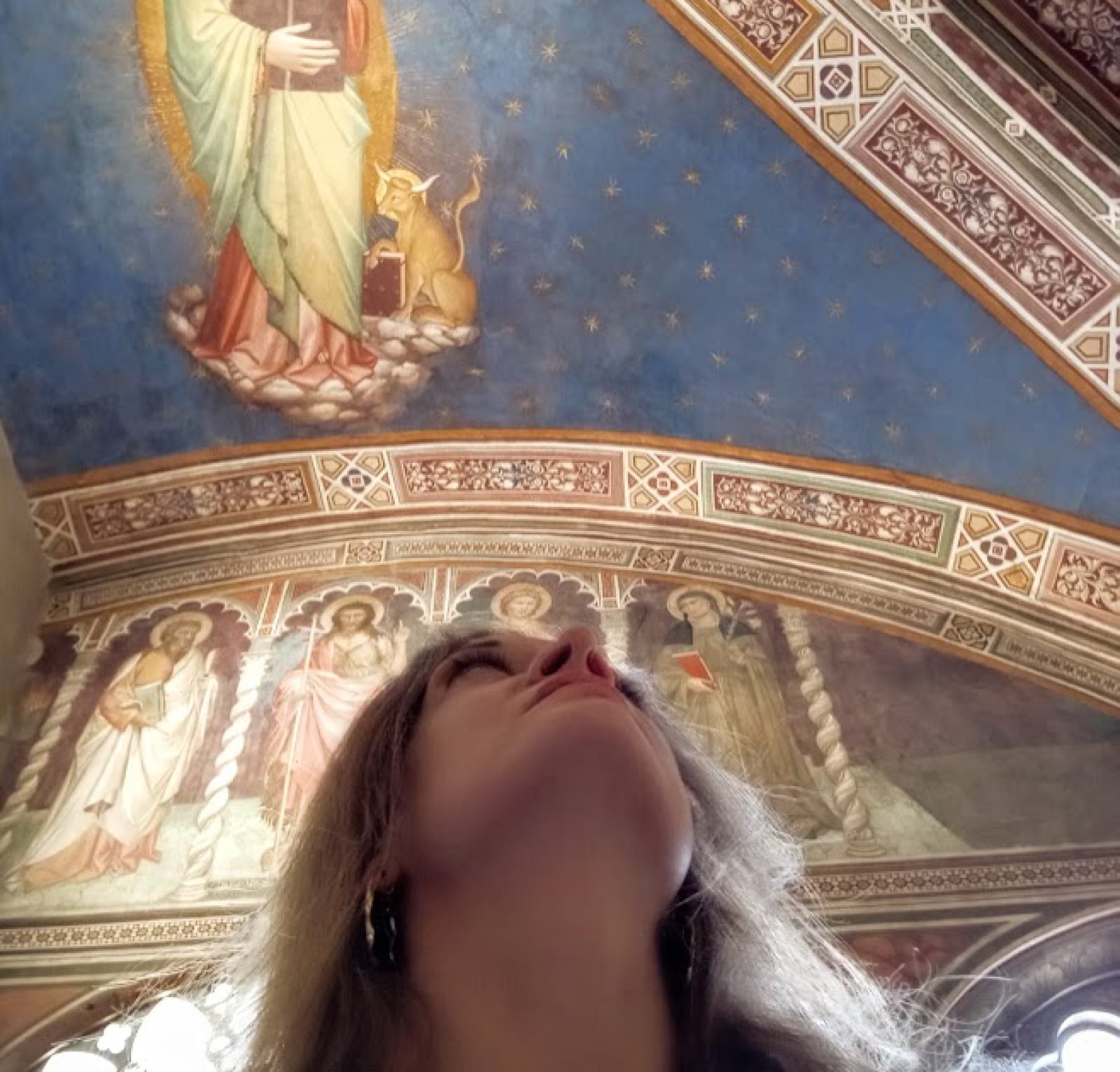
Quando entrate nella Cappella Sistina, quasi tutti prima guardano il Giudizio Universale e poi levano lo sguardo alla ricerca delle mani più famose del mondo. In troppo pochi però si soffermano a guardare, concedendosi il tempo necessario, in direzione dei quattro angoli della volta.
verso il maestoso Giudizio Universale. Ma pochi si accorgono di ciò che si trova poco più in alto, negli angoli della volta.
Proprio lì, tra il profeta Giona e il profeta Geremia, affrescai uno dei pennacchi che più mi impegnarono: la Punizione di Aman.

La storia biblica
L’episodio proviene dal Libro di Ester. In quella storia compare Aman, potente visir del re persiano Assuero. L’uomo, accecato dall’orgoglio e dal potere, arrivò a progettare lo sterminio dell’intero popolo ebraico.
Il suo piano però fallì. Il re, venuto a conoscenza del complotto, decise di punirlo senza pietà. Aman pagò con la vita la crudeltà che aveva dimostrato.
Quando dipinsi il pennacchio della volta, volli raccontare la questa vicenda in un unico momento pittorico, concentrando la tensione della storia nella figura del visir condannato.

Perché lo raffigurai crocifisso
Nella Bibbia Aman non muore crocifisso. Il racconto del Libro di Ester parla di impiccagione.
Io però scelsi di rappresentarlo su una croce a forma di ipsilon. Non fu un errore né una distrazione. Fu una scelta precisa.
Desideravo creare un chiaro parallelismo con la crocifissione di Gesù Cristo. In questo modo la scena diventava qualcosa di più di un semplice episodio dell’Antico Testamento: diventava una prefigurazione, un rimando simbolico alla futura redenzione.
Lo straordinario scorcio che affascinò gli artisti
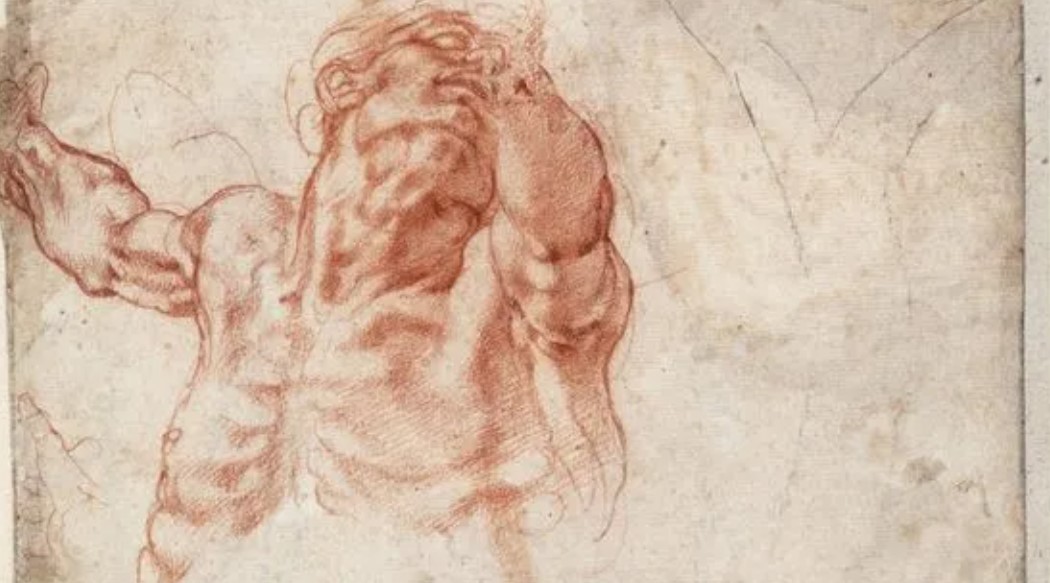
La figura che cattura immediatamente lo sguardo è il corpo di Aman. Lo dipinsi in uno scorcio prospettico estremamente audace, quasi vertiginoso, pensato per dare forza e drammaticità alla scena.
Studiai a lungo quella posizione prima di affrescarla. Volevo che il corpo sembrasse sospeso nello spazio e che lo spettatore ne percepisse tutta la tensione del momento.
Per completare la figura impiegai tre giornate di lavoro, mentre l’intero pennacchio richiese ventuno giornate di affresco. Lo scorcio di Aman divenne presto celebre tra gli artisti. Secoli dopo, persino Caravaggio ricordò quella soluzione nella tensione del braccio della sua Cena in Emmaus conservata oggi alla National Gallery.
Il disegno conservato in uno dei musei più antichi d’Europa
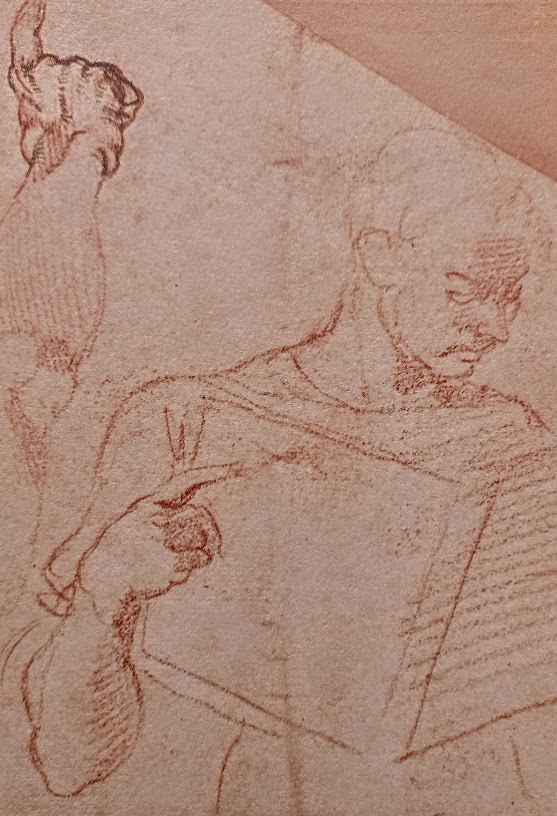
Prima di dipingere la scena realizzai numerosi studi preparatori. Uno dei più importanti è oggi conservato nel Teylers Museum di Haarlem, nei Paesi Bassi.
Quel museo, inaugurato nel 1784 grazie alla collezione del mecenate Pieter Teyler van der Hulst, è il più antico museo dei Paesi Bassi e custodisce dipinti, disegni e perfino strumenti scientifici.
Nel foglio conservato ad Haarlem studiai con attenzione le braccia di Aman viste di scorcio e la composizione delle figure che circondano la scena. Anche il re Assuero e i personaggi sullo sfondo furono oggetto di lunghi studi. Per me nessuna figura, nemmeno la più piccola, poteva essere lasciata al caso.

Il pennacchio della Sistina che studiai più a lungo
Tra tutte le scene della volta della Cappella Sistina, la Punizione di Aman è quella a cui sono collegati il maggior numero di miei disegni sopravvissuti.
Molti altri studi andarono perduti perché fui io stesso a distruggerli nei miei roghi. Non desideravo che il mondo vedesse i miei tentativi e le mie fatiche prima dell’opera compiuta.
Eppure proprio quei fogli rimasti raccontano quanto lavoro e quanta riflessione si nascondano dietro un singolo angolo della volta.
Quando tornerete nella Cappella Sistina, provate a non fermarvi soltanto davanti alle scene più famose. Sollevate lo sguardo verso gli angoli della volta per ammirare anche la Punizione di Aman, uno dei miei esperimenti prospettici più arditi e una delle storie più drammatiche che abbia mai dipinto.
E forse vi accorgerete che anche nei dettagli meno noti della Sistina si nasconde una parte essenziale del mio lavoro.
Per il momento il sempre vostro Michelangelo Buonarroti vi saluta dandovi appuntamento ai prossimi post e sui social.

Sistine Chapel: The Dramatic Punishment of Haman
When you enter the Sistine Chapel, almost everyone first looks at the Last Judgment and then raises their gaze in search of the most famous hands in the world. Too few, however, stop to gaze, taking the time necessary, toward the four corners of the vault.
Toward the majestic Last Judgment. But few notice what lies a little higher, in the corners of the vault.
Right there, between the prophets Jonah and Jeremiah, I frescoed one of the pendentives that challenged me the most: the Punishment of Haman.
The Biblical Story
The episode comes from the Book of Esther. That story features Haman, the powerful vizier of the Persian king Ahasuerus. Blinded by pride and power, the man plotted the extermination of the entire Jewish people.
His plan, however, failed. The king, learning of the plot, decided to punish him mercilessly. Haman paid with his life for his cruelty.
When I painted the spandrel of the vault, I wanted to tell this story in a single pictorial moment, concentrating the tension of the story in the figure of the condemned vizier.
Why I depicted him crucified
In the Bible, Haman does not die crucified. The story in the Book of Esther speaks of hanging.
But I chose to depict him on a Y-shaped cross. It was neither a mistake nor a distraction. It was a deliberate choice.
I wanted to create a clear parallel with the crucifixion of Jesus Christ. In this way, the scene became something more than a simple episode from the Old Testament: it became a prefiguration, a symbolic reference to future redemption.
The extraordinary glimpse that fascinated artists
The figure that immediately captures the eye is the body of Haman. I painted him in an extremely bold, almost dizzying perspective, designed to give strength and drama to the scene.
I studied that position extensively before frescoing it. I wanted the body to appear suspended in space and for the viewer to sense all the tension of the moment.
It took me three days to complete the figure, while the entire spandrel required twenty-one days of frescoing. The foreshortening of Haman quickly became famous among artists. Centuries later, even Caravaggio recalled that solution in the tension of the arm in his Supper at Emmaus, now housed in the National Gallery.
The drawing is preserved in one of the oldest museums in Europe
Before painting the scene, I made numerous preparatory studies. One of the most important is now housed in the Teylers Museum in Haarlem, the Netherlands.
That museum, inaugurated in 1784 thanks to the collection of the patron Pieter Teyler van der Hulst, is the oldest museum in the Netherlands and houses paintings, drawings, and even scientific instruments.
In the sheet preserved in Haarlem, I carefully studied Haman’s arms, seen from a foreshortened angle, and the composition of the figures surrounding the scene. King Ahasuerus and the figures in the background were also the subject of extensive study. For me, no figure, not even the smallest, could be left to chance.
The Sistine Chapel pendentive I studied the longest
Of all the scenes on the Sistine Chapel ceiling, the Punishment of Haman is the one to which the greatest number of my surviving drawings are linked.
Many other studies were lost because I myself destroyed them in my bonfires. I did not want the world to see my efforts and labors before the work was completed.
Yet those very sheets that remain reveal how much work and thought lies behind a single corner of the ceiling.
When you return to the Sistine Chapel, try not to stop at just the most famous scenes. Raise your gaze to the corners of the vault to admire the Punishment of Haman, one of my most daring experiments with perspective and one of the most dramatic stories I’ve ever painted.
And perhaps you’ll realize that even the lesser-known details of the Sistine Chapel hide an essential part of my work.
For now, yours truly, Michelangelo Buonarroti bids you farewell and invites you to join me in future posts and on social media.

Sostienici – Support Us
Se questo blog ti piace e ti appassiona, puoi aiutarci a farlo crescere sempre più sostenendoci in modo concreto condividendo i post, seguendo le pagine social e con un contributo che ci aiuta ad andare avanti con il nostro lavoro di divulgazione. . ENGLISH: If you like and are passionate about this blog, you can help us make it grow more and more by supporting us in a concrete way by sharing posts, following social pages and with a contribution that helps us to move forward with our dissemination work.
10,00 €
Condividi:


Questo sono io





sostienici

Sostienici – Support Us
Se questo blog ti piace e ti appassiona, puoi aiutarci a farlo crescere sempre più sostenendoci in modo concreto condividendo i post, seguendo le pagine social e con un contributo che ci aiuta ad andare avanti con il nostro lavoro di divulgazione. . ENGLISH: If you like and are passionate about this blog, you can help us make it grow more and more by supporting us in a concrete way by sharing posts, following social pages and with a contribution that helps us to move forward with our dissemination work.
€10,00


Visitare la cappella Sistina é un’esperienza da fare almeno una volta nella vita, trovarsi a pochi metri dalla magnificenza che sovrasta noi comuni mortali. Però è fuori dubbio che per conoscerne ogni dettaglio occorrono I testi, I video ravvicinati, per sgranare ancor più meraviglia. Come questo post. Grazie come sempre per il tuo prezioso lavoro
"Mi piace"Piace a 1 persona
Grazie di cuore Daniela, un abbraccio
"Mi piace"Piace a 1 persona