

Ezechiele: il profeta più dinamico che affrescai nella volta della Cappella Sistina
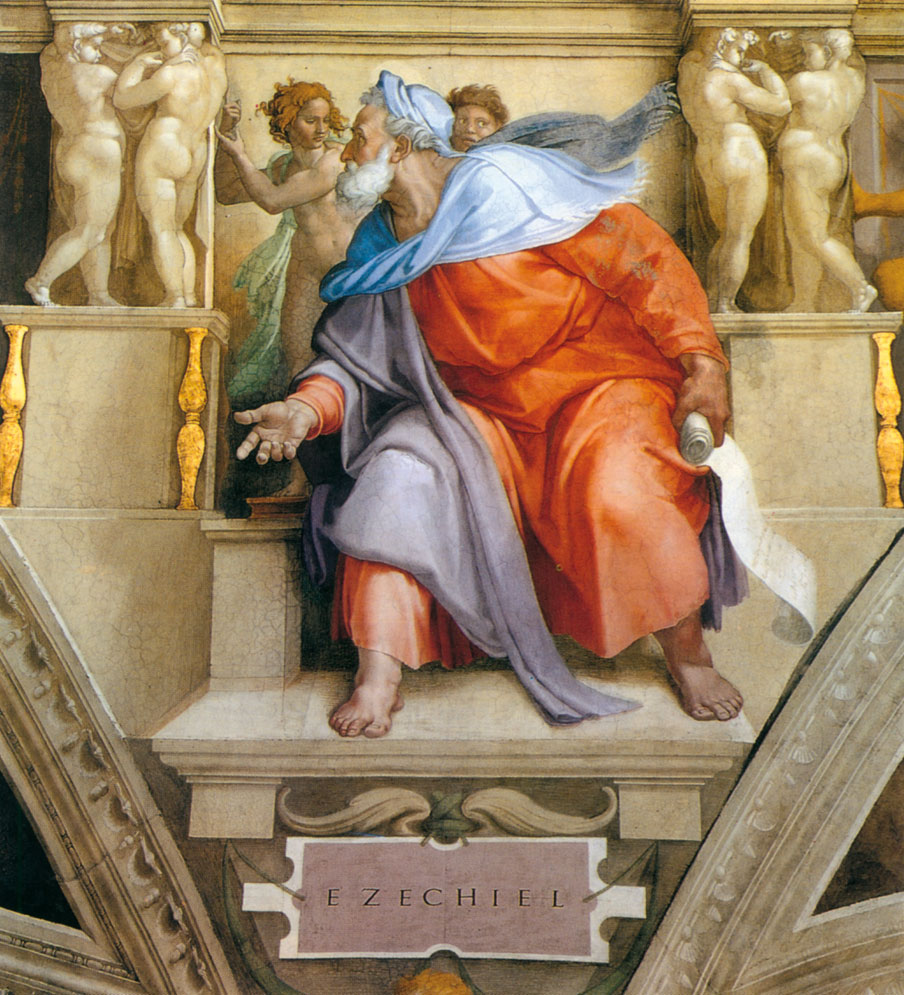
Tra profeti e sibille, nella volta della Cappella Sistina, affrescai una figura in movimento. È Ezechiele, il veggente dell’intelligenza: il più dinamico, il più inquieto, il più teatrale.
Ezechiele: il profeta dell’intelligenza
Nato intorno al 620 a.C., alla fine del Regno di Giuda, Ezechiele proveniva da una famiglia di sacerdoti. Ma la sua vita fu segnata dalle visioni: profezie complesse, immagini potenti, rivelazioni capaci di superare ogni distanza. La tradizione racconta che riuscì a vedere ciò che accadeva a Gerusalemme pur trovandosi a migliaia di chilometri di distanza.
Volli tradurre la sua forza spirituale in movimento puro.
Un affresco pieno di energia e vento
A differenza di altri veggenti della volta, Ezechiele non è immobile. È ancora seduto sul trono, ma il busto ruota verso destra, la testa segue lo stesso slancio, come se stesse reagendo a una voce improvvisa.
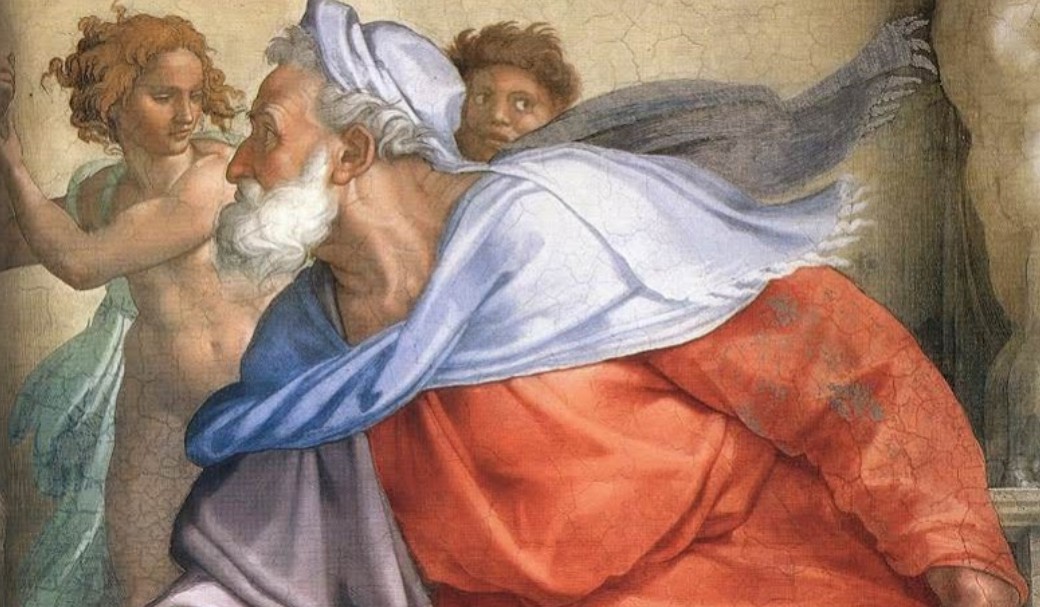
Il vento gli scompiglia i capelli che sfuggono dal copricapo e agita le vesti. Indossa una tunica rossa intensa e un mantello che sfuma dal celeste dello smaltino al morellone, creando un effetto cromatico vibrante.
L’impatto scenico è dominante: la figura quasi dialoga con l’immagine di Dio nei riquadri centrali della volta.
Il dettaglio che pochi notano: la mano che interroga
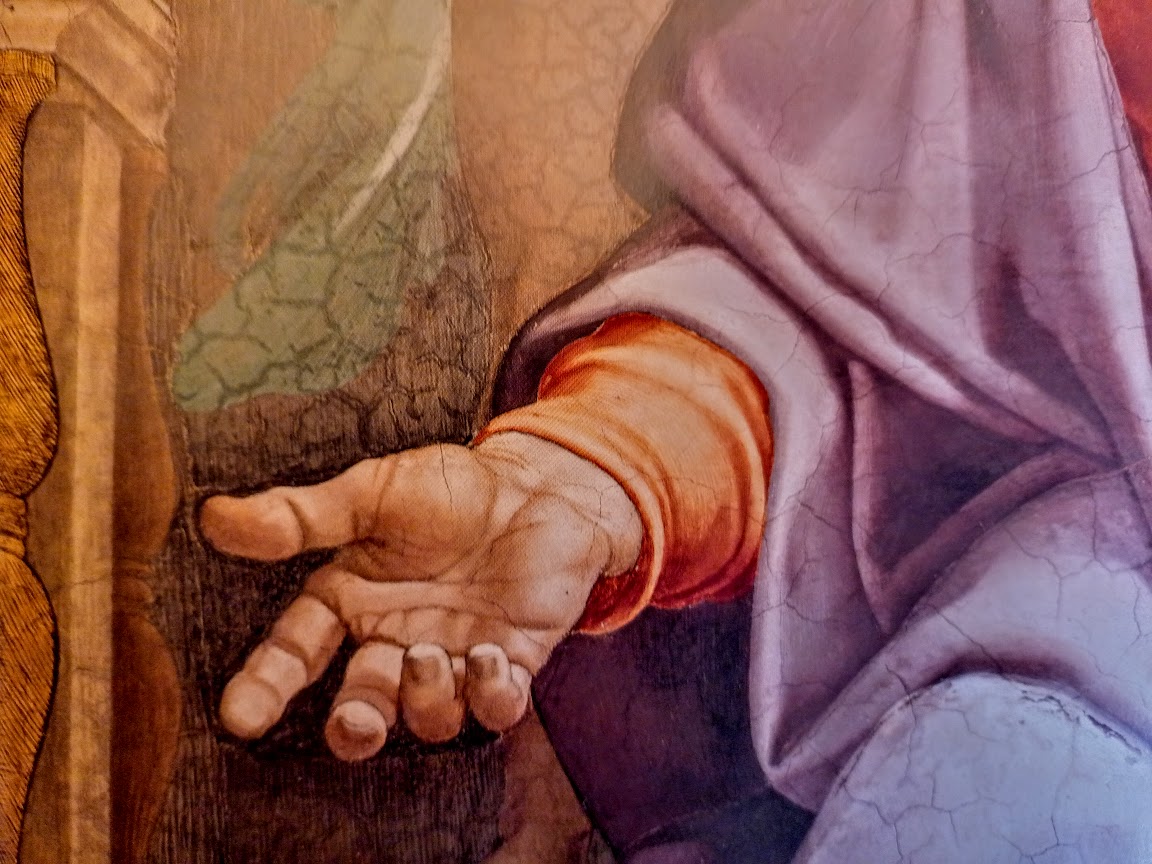
C’è un particolare che colpisce più di tutti: la mano destra.
È aperta, con il palmo rivolto verso l’alto. Un gesto teatrale, quasi drammatico, che esprime perplessità, domanda, richiesta di spiegazione. Ezechiele non subisce la visione: la interroga.
Quella posa non è casuale. Non vi riporta alla mente qualche opera mia? Ricorda infatti la mano della Vergine nella Pietà Vaticana che scolpii anni prima. Stesso gesto e una tensione emotiva dirompente. Un filo invisibile collega marmo e affresco.
Dove si trova Ezechiele nella volta
Ezechiele è collocato sotto la scena della Creazione di Eva e dalla parte opposta rispetto alla Sibilla Eritrea.
La posizione mica la scelsi a caso: entrambi predissero il giorno del Giudizio di Cristo. C’è un equilibrio perfetto che volli tessere tra Antico Testamento e mondo pagano.
Alle spalle del profeta si intravede uno dei giovani geni che accompagna il veggente: volto concentrato, capelli mossi dal vento, partecipazione silenziosa alla scena.
Ezechiele: uno dei personaggi più potenti della Cappella Sistina
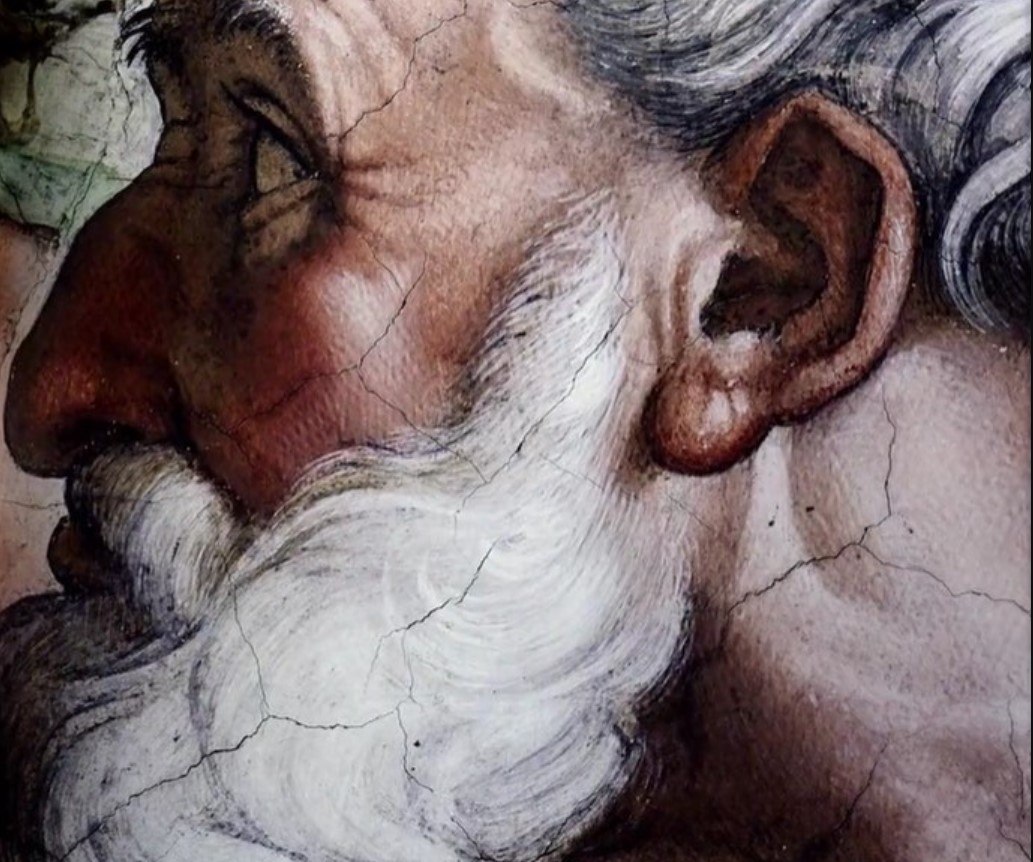
Barba poco curata, sguardo intenso, postura instabile: Ezechiele non è un profeta statico. È energia trattenuta, è intelligenza che cerca di comprendere il mistero.
Mentre lo osservate dal basso, all’ombra della volta della Cappella Sistina, vi renderete conto che la sua forza riporta alla mente quella di Dio Padre presente nelle scene centrali. Stesso slancio, stessa potenza, stessa tensione verso l’invisibile.
Raccontandovi uno a uno tutti questi dettagli, spero che la prossima volta che varcherete le soglie della Cappella Sistina, non vi limiterete a cercare con lo sguardo solo la Creazione di Adamo. Fermatevi sotto ciascuna di quelle figure. Fermatevi sotto Ezechiele. Guarda la sua mano e perdetevi nel movimento delle sue vesti.
Ho dipinto e scolpito figure vive, capaci di raccontare a chi ha ancora voglia e tempo di fermarsi ad ascoltarle.
Per il momento il sempre vostro Michelangelo Buonarroti vi saluta dandovi appuntamento ai prossimi post e sui social.
Ezekiel: the most dynamic prophet I frescoed in the Sistine Chapel vault
Among prophets and sibyls, in the Sistine Chapel vault, I frescoed a figure in motion. It is Ezekiel, the seer of intelligence: the most dynamic, the most restless, the most theatrical.
Ezekiel: the prophet of intelligence
Born around 620 BC, at the end of the Kingdom of Judah, Ezekiel came from a family of priests. But his life was marked by visions: complex prophecies, powerful images, revelations capable of transcending any distance. Tradition says he was able to see what was happening in Jerusalem even though he was thousands of kilometers away.
I wanted to translate his spiritual strength into pure movement.
A fresco full of energy and wind
Unlike other seers in the vault, Ezekiel is not immobile. He is still seated on the throne, but his torso rotates to the right, his head following the same momentum, as if reacting to a sudden voice.
The wind ruffles his hair, which escapes from his headdress, and swirls his robes. He wears a deep red tunic and a cloak that fades from enamel blue to morellone, creating a vibrant chromatic effect.
The scenic impact is dominant: the figure almost engages in dialogue with the image of God in the central panels of the vault.
The detail that few notice: the questioning hand
There is one detail that is most striking: the right hand.
It is open, with the palm facing upward. A theatrical, almost dramatic gesture, expressing perplexity, a question, a request for explanation. Ezekiel does not suffer the vision: he questions it.
That pose is not accidental. Doesn’t it remind you of some of my works? In fact, it recalls the hand of the Virgin in the Vatican Pietà, which I sculpted years earlier. The same gesture and a disruptive emotional tension. An invisible thread connects marble and fresco.
Where is Ezekiel in the vault?
Ezekiel is placed beneath the scene of the Creation of Eve and opposite the Erythraean Sibyl.
I didn’t choose his position by chance: both predicted Christ’s Day of Judgment. I wanted to weave a perfect balance between the Old Testament and the pagan world.
Behind the prophet, one of the young geniuses accompanying the seer can be glimpsed: his face focused, his hair blowing in the wind, his silent participation in the scene.
Ezekiel: one of the most powerful figures in the Sistine Chapel
Unkempt beard, intense gaze, unsteady posture: Ezekiel is not a static prophet. He is restrained energy, he is intelligence seeking to understand the mystery.
As you observe him from below, in the shadow of the Sistine Chapel vault, you will realize that his strength recalls that of God the Father present in the central scenes. Same momentum, same power, same striving toward the invisible.
By telling you all these details one by one, I hope that the next time you cross the threshold of the Sistine Chapel, you won’t limit your gaze to seeking only the Creation of Adam. Pause beneath each of those figures. Pause beneath Ezekiel. Look at his hand and lose yourself in the movement of his robes.
I have painted and sculpted living figures, capable of speaking to those who still have the desire and time to stop and listen.
For now, yours truly, Michelangelo Buonarroti bids you farewell and invites you to see him in future posts and on social media.

Sostienici – Support Us
Se questo blog ti piace e ti appassiona, puoi aiutarci a farlo crescere sempre più sostenendoci in modo concreto condividendo i post, seguendo le pagine social e con un contributo che ci aiuta ad andare avanti con il nostro lavoro di divulgazione. . ENGLISH: If you like and are passionate about this blog, you can help us make it grow more and more by supporting us in a concrete way by sharing posts, following social pages and with a contribution that helps us to move forward with our dissemination work.
10,00 €

Condividi:


Questo sono io





sostienici

Sostienici – Support Us
Se questo blog ti piace e ti appassiona, puoi aiutarci a farlo crescere sempre più sostenendoci in modo concreto condividendo i post, seguendo le pagine social e con un contributo che ci aiuta ad andare avanti con il nostro lavoro di divulgazione. . ENGLISH: If you like and are passionate about this blog, you can help us make it grow more and more by supporting us in a concrete way by sharing posts, following social pages and with a contribution that helps us to move forward with our dissemination work.
€10,00


