
L’atteso ritorno. Raffaello per Monteluce dai Musei Vaticani
In occasione del Giubileo 2025, Perugia ospita una delle mostre più attese degli ultimi anni: “L’atteso ritorno. Raffaello per Monteluce dai Musei Vaticani”, un evento che riporta eccezionalmente in città la celebre Pala di Monteluce di Raffaello Sanzio, assente da Perugia dal 1797.
La mostra, visitabile fino al 7 gennaio 2026, nasce dalla collaborazione tra l’Arcidiocesi di Perugia-Città della Pieve e i Musei Vaticani, e invita il pubblico a riscoprire un capolavoro del Rinascimento nel suo contesto storico e spirituale originario.
Il ritorno della Pala di Monteluce di Raffaello
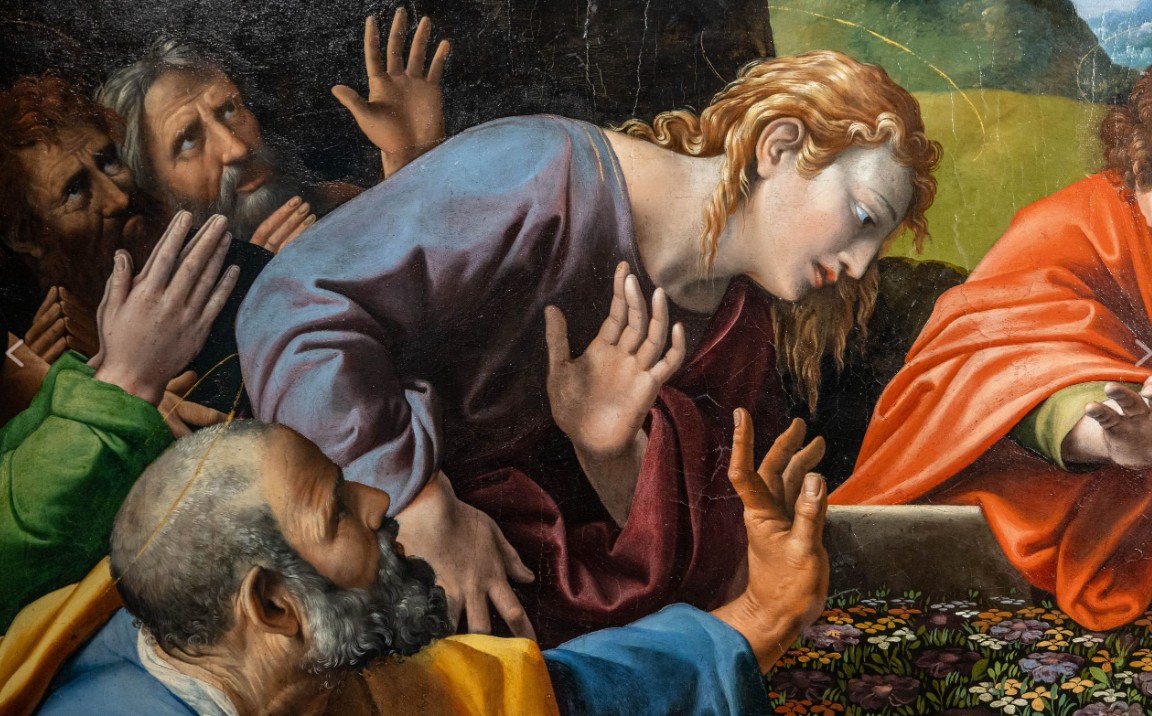
Cuore dell’esposizione è l’Incoronazione della Vergine, nota come Pala di Monteluce, commissionata nel 1505 a Raffaello per il monastero di Santa Maria Assunta in Monteluce.
L’opera non fece mai ritorno a Perugia dopo il trafugamento napoleonico del 1797, entrando nelle collezioni dei Musei Vaticani. Oggi, a oltre due secoli di distanza, il suo rientro assume un valore fortemente simbolico, diventando metafora di attesa, speranza e rinascita, temi centrali anche del Giubileo.
Una mostra costruita attorno a tre opere
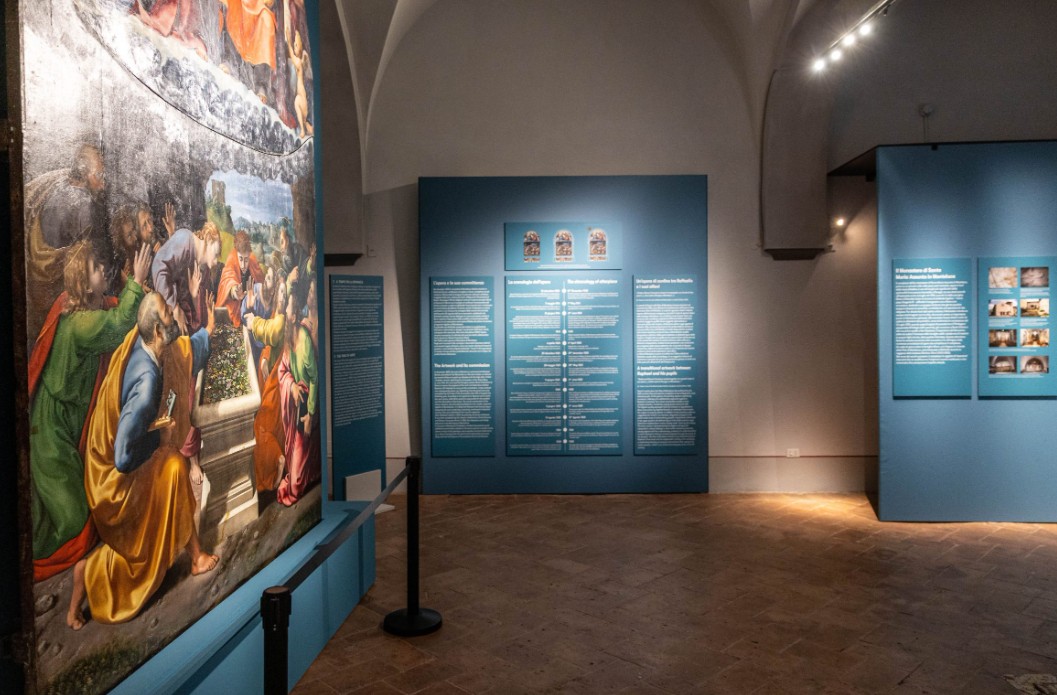
Il percorso espositivo è scandito da tre opere, per la prima volta riunite insieme, tutte legate al monastero delle Clarisse di Monteluce, uno dei luoghi più significativi della spiritualità francescana femminile a Perugia.
Il Crocifisso ligneo di Giovanni Teutonico
La prima opera è un intenso Crocifisso in legno intagliato e dipinto, attribuito a Giovanni di Enrico da Salisburgo, detto Giovanni Teutonico, e databile tra il 1460 e il 1470.
Il corpo esile di Cristo, segnato da vene in rilievo, ferite sanguinanti e spine conficcate nella carne, è reso con un realismo drammatico tipico della scultura nordica del Quattrocento. Un’opera pensata per la meditazione profonda, capace ancora oggi di coinvolgere emotivamente lo spettatore.
La predella della Pala di Monteluce
La seconda sezione presenta la predella della Pala di Monteluce, realizzata nel 1525 da Berto di Giovanni. I quattro pannelli narrano episodi della vita della Vergine:
- Natività di Maria
- Presentazione al Tempio
- Sposalizio della Vergine
- Transito della Vergine

Le scene, dai colori intensi e luminosi, restituiscono una dimensione intima e quotidiana. Sul retro delle tavolette sono visibili incavi per cerniere, indizio di un uso liturgico legato al momento della consacrazione eucaristica.
La Pala di Monteluce di Raffaello e bottega
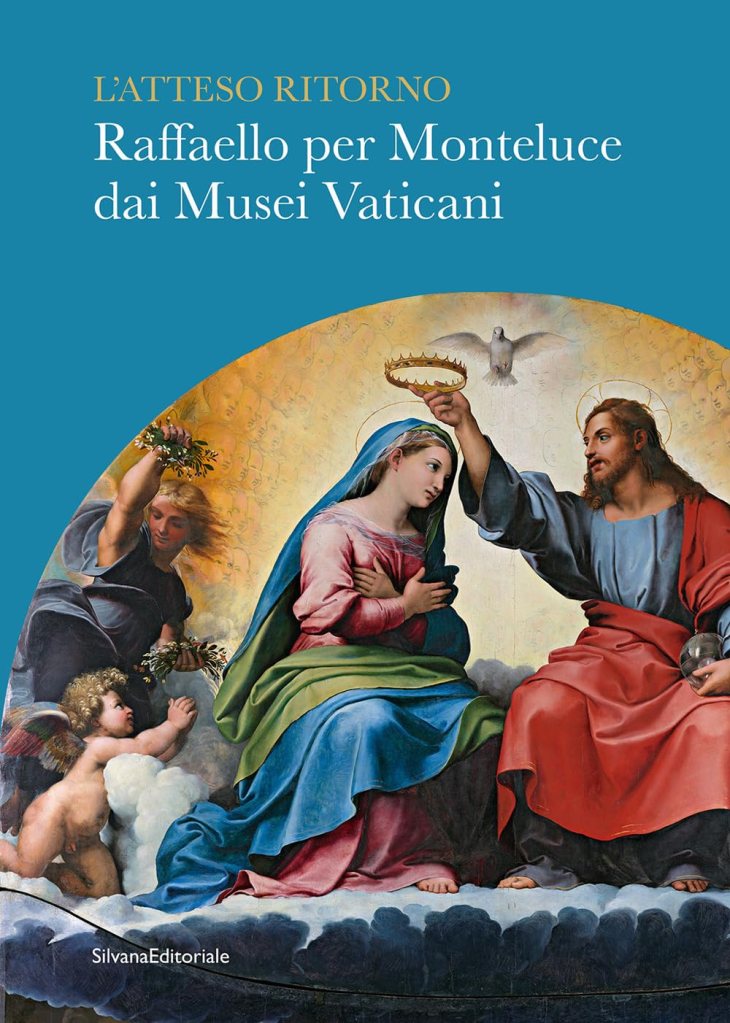
Il fulcro della mostra è l’Incoronazione della Vergine, realizzata da Raffaello Sanzio con la collaborazione di Giulio Romano e Giovan Francesco Penni.
L’opera si sviluppa su due registri: in alto, Maria incoronata dal Figlio tra schiere angeliche e in basso, gli apostoli attorno al sepolcro fiorito
La monumentalità delle figure, la raffinatezza del disegno e la ricchezza cromatica testimoniano l’eccellenza della bottega raffaellesca. Il sepolcro vuoto, da cui nasce una fioritura miracolosa, diventa simbolo di vita nuova e speranza.

Il monastero di Monteluce: storia e committenze
Fondato ufficialmente nel 1218, il monastero di Santa Maria Assunta in Monteluce fu fin dalle origini un importante punto di riferimento spirituale per la città di Perugia.
Protetto dai pontefici – nel 1229 papa Gregorio IX concesse alle monache il Privilegium paupertatis – il complesso attirò l’interesse delle famiglie nobili perugine. Tra queste spicca la famiglia Alfani, legata alla commissione della pala durante la reggenza della badessa Battista Alfani.
Una mostra tra arte, fede e ricerca
“L’atteso ritorno. Raffaello per Monteluce dai Musei Vaticani” è il risultato di un ampio progetto di studio e ricerca, documentato nel catalogo ufficiale (Silvana Editoriale, 2025), realizzato con il contributo di Musei Vaticani, Galleria Nazionale dell’Umbria e Università degli Studi di Perugia.
La mostra è sostenuta da Fondazione Perugia, con il patrocinio della Regione Umbria, del Comune di Perugia, del Dicastero per la Cultura e l’Educazione e della Conferenza Episcopale Italiana.
Per il momento il sempre vostro Michelangelo Buonarroti vi saluta dandovi appuntamento ai prossimi post e sui social.
The Long-Awaited Return. Raphael for Monteluce from the Vatican Museums
On the occasion of the 2025 Jubilee, Perugia hosts one of the most anticipated exhibitions of recent years: “The Long-Awaited Return. Raphael for Monteluce from the Vatican Museums,” an event that exceptionally brings back to the city the famous Monteluce Altarpiece by Raphael Sanzio, absent from Perugia since 1797.
The exhibition, open until January 7, 2026, is the result of a collaboration between the Archdiocese of Perugia-Città della Pieve and the Vatican Museums, and invites the public to rediscover a Renaissance masterpiece in its original historical and spiritual context.
The Return of Raphael’s Monteluce Altarpiece
The centerpiece of the exhibition is the Coronation of the Virgin, known as the Monteluce Altarpiece, commissioned from Raphael in 1505 for the monastery of Santa Maria Assunta in Monteluce.
The work never returned to Perugia after its theft by Napoleon in 1797, becoming part of the Vatican Museums’ collections. Today, more than two centuries later, its return takes on a powerfully symbolic meaning, becoming a metaphor for expectation, hope, and rebirth—also central themes of the Jubilee.
An exhibition built around three works
The exhibition features three works, brought together for the first time, all linked to the Poor Clares’ monastery of Monteluce, one of the most significant centers of female Franciscan spirituality in Perugia.
The Wooden Crucifix by Giovanni Teutonico
The first work is an intense, carved and painted wooden crucifix attributed to Giovanni di Enrico da Salzburg, known as Giovanni Teutonico, and dated between 1460 and 1470.
The slender body of Christ, marked by raised veins, bleeding wounds, and thorns embedded in the flesh, is rendered with a dramatic realism typical of 15th-century Nordic sculpture. A work intended for profound meditation, it still emotionally engages the viewer today.
The predella of the Monteluce Altarpiece
The second section presents the predella of the Monteluce Altarpiece, created in 1525 by Berto di Giovanni. The four panels narrate episodes from the life of the Virgin:
Nativity of Mary
Presentation in the Temple
Marriage of the Virgin
Transit of the Virgin
The scenes, with their intense and luminous colors, convey an intimate, everyday dimension. Hinge recesses are visible on the back of the panels, indicating a liturgical use linked to the moment of Eucharistic consecration.
The Monteluce Altarpiece by Raphael and his workshop
The centerpiece of the exhibition is the Coronation of the Virgin, painted by Raphael Sanzio with the collaboration of Giulio Romano and Giovan Francesco Penni.
The work unfolds on two levels: at the top, Mary crowned by her Son amidst angelic hosts, and at the bottom, the apostles surrounding the flowering tomb.
The monumentality of the figures, the refinement of the drawing, and the richness of the colors testify to the excellence of Raphael’s workshop. The empty tomb, from which a miraculous flowering springs, becomes a symbol of new life and hope.
The Monteluce Monastery: History and Patrons
Officially founded in 1218, the monastery of Santa Maria Assunta in Monteluce has been an important spiritual reference point for the city of Perugia since its inception.
Protected by the pontiffs—in 1229, Pope Gregory IX granted the nuns the Privilegium paupertatis—the complex attracted the interest of Perugia’s noble families. Among these, the Alfani family stands out, having been linked to the commissioning of the altarpiece during the regency of Abbess Battista Alfani.
An exhibition of art, faith, and research
“The Awaited Return. Raphael to Monteluce from the Vatican Museums” is the result of a comprehensive study and research project, documented in the official catalog (Silvana Editoriale, 2025), produced with the contribution of the Vatican Museums, the National Gallery of Umbria, and the University of Perugia.
The exhibition is supported by the Perugia Foundation, with the patronage of the Umbria Region, the Municipality of Perugia, the Dicastery for Culture and Education, and the Italian Episcopal Conference.
For now, yours truly, Michelangelo Buonarroti bids farewell and invites you to join him in future posts and on social media.

Sostienici – Support Us
Se questo blog ti piace e ti appassiona, puoi aiutarci a farlo crescere sempre più sostenendoci in modo concreto condividendo i post, seguendo le pagine social e con un contributo che ci aiuta ad andare avanti con il nostro lavoro di divulgazione. . ENGLISH: If you like and are passionate about this blog, you can help us make it grow more and more by supporting us in a concrete way by sharing posts, following social pages and with a contribution that helps us to move forward with our dissemination work.
10,00 €
Condividi:


Questo sono io





sostienici

Sostienici – Support Us
Se questo blog ti piace e ti appassiona, puoi aiutarci a farlo crescere sempre più sostenendoci in modo concreto condividendo i post, seguendo le pagine social e con un contributo che ci aiuta ad andare avanti con il nostro lavoro di divulgazione. . ENGLISH: If you like and are passionate about this blog, you can help us make it grow more and more by supporting us in a concrete way by sharing posts, following social pages and with a contribution that helps us to move forward with our dissemination work.
€10,00


