
L’affresco di Venere e le Tre Grazie del Botticelli al Louvre
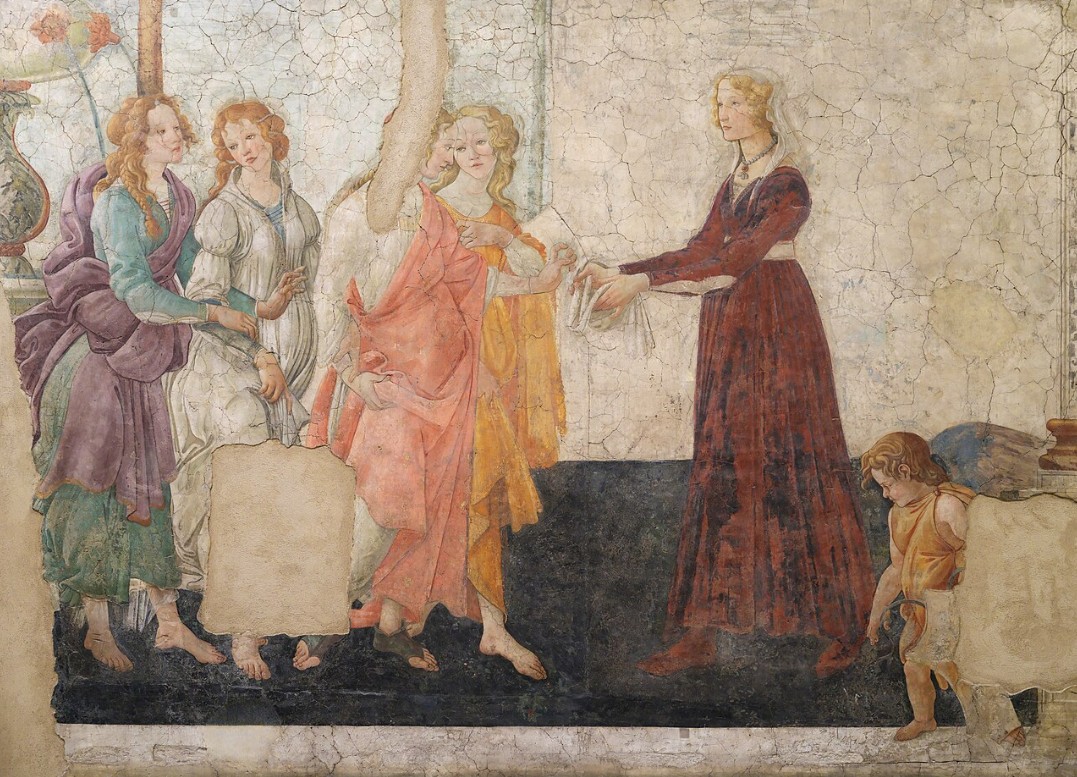
L’opera del giorno che vi propongo oggi è l’affresco di Venere e le Tre Grazie che offrono doni a una giovane donna, realizzato dal Botticelli tra il 1483 e il 1485.
Si tratta di un affresco staccato, acquistato sul mercato antiquario dal Museo del Louvre nel 1882.
L’opera proviene da Villa Lemmi, residenza situata che si trova non lontano da Firenze, un tempo appartenuta alla famiglia Tornabuoni, legata politicamente e culturalmente ai Medici.
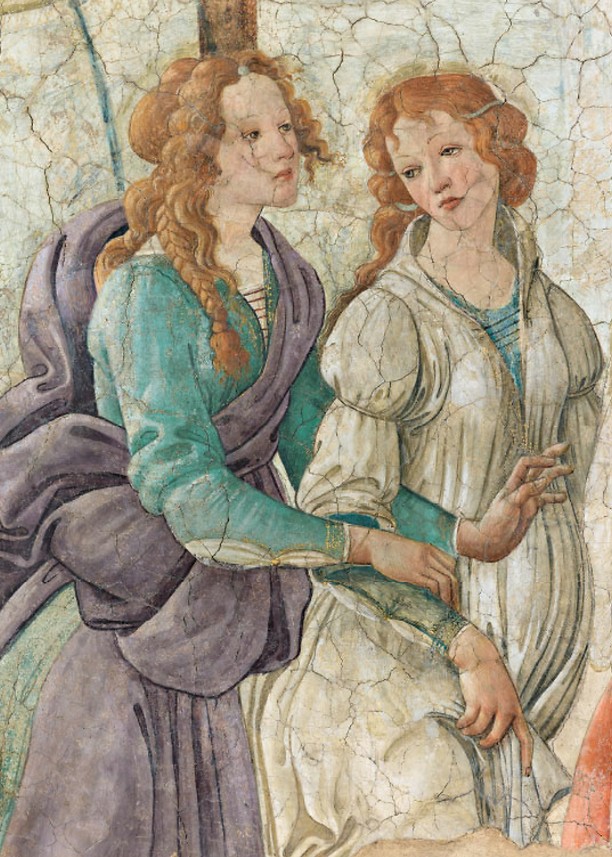

Si pensa che Sandro Botticelli avesse ricevuto questa commissione in occasione delle nozze di un membro della famiglia Tornabuoni. La giovane donna raffigurata potrebbe essere Nanna di Niccolò Tornabuoni, probabile destinataria dell’omaggio figurativo. E’ un’ipotesi che, seppur assai attendibile, sempre ipotesi rimane.
Nell’affresco si vede Venere, simbolo di armonia, perfezione e bellezza fisica, accompagnata dalle Tre Grazie: Glaia che simboleggia lo splendore, Eufrosine la gioia e Talia la prosperità.
Venere sta mettendo un regalo nel telo di lino che la giovane sposa le porge. Un geto che può essere letto come augurio matrimoniale e auspicio di fecondità.
Le figure femminili con quei volti che molto raccontano dell’artista che li realizzò, sono avvolte panneggi che sembrano fluttuare sostenuti da una leggera brezza.
L’affresco del Botticelli fu rinvenuto in stato frammentario durante l’Ottocento e, come vi accennavo in precedenza, venne poi comprato sul mercato antiquario dal Louvre.
Per il momento il sempre vostro Michelangelo Buonarroti vi saluta dandovi appuntamento ai prossimi post e sui social.
Botticelli’s Fresco of Venus and the Three Graces at the Louvre
Today’s featured work is the fresco of Venus and the Three Graces Offering Gifts to a Young Woman, painted by Botticelli between 1483 and 1485.
It is a detached fresco, purchased on the antiques market by the Louvre Museum in 1882.
The work comes from Villa Lemmi, a residence not far from Florence that once belonged to the Tornabuoni family, politically and culturally connected to the Medici.
It is thought that Sandro Botticelli received this commission for the wedding of a member of the Tornabuoni family. The young woman depicted could be Nanna di Niccolò Tornabuoni, the likely recipient of the figurative tribute. This hypothesis, while highly plausible, remains a hypothesis.
The fresco depicts Venus, a symbol of harmony, perfection, and physical beauty, accompanied by the Three Graces: Glaia, symbolizing splendor, Euphrosyne, joy, and Thalia, prosperity.
Venus is placing a gift in the linen cloth the young bride is offering her. This gesture can be interpreted as a wedding wish and a promise of fertility.
The female figures, with faces that reveal so much about the artist who created them, are wrapped in draperies that seem to float, supported by a light breeze.
Botticelli’s fresco was discovered in fragments during the 19th century and, as I mentioned previously, was later purchased on the antiques market by the Louvre.
For now, yours truly, Michelangelo Buonarroti bids you farewell and says hello to future posts and social media.

Sostienici – Support Us
Se questo blog ti piace e ti appassiona, puoi aiutarci a farlo crescere sempre più sostenendoci in modo concreto condividendo i post, seguendo le pagine social e con un contributo che ci aiuta ad andare avanti con il nostro lavoro di divulgazione. . ENGLISH: If you like and are passionate about this blog, you can help us make it grow more and more by supporting us in a concrete way by sharing posts, following social pages and with a contribution that helps us to move forward with our dissemination work.
10,00 €
Condividi:


Questo sono io





sostienici

Sostienici – Support Us
Se questo blog ti piace e ti appassiona, puoi aiutarci a farlo crescere sempre più sostenendoci in modo concreto condividendo i post, seguendo le pagine social e con un contributo che ci aiuta ad andare avanti con il nostro lavoro di divulgazione. . ENGLISH: If you like and are passionate about this blog, you can help us make it grow more and more by supporting us in a concrete way by sharing posts, following social pages and with a contribution that helps us to move forward with our dissemination work.
€10,00


