

Mosè salvato dalle Acque: tessuti, gioielli e gestualità di Orazio Gentileschi
Orazio Gentileschi, padre di Artemisia, dipinse due versioni del Mosè salvato dalle acque del Nilo attorno al 1630.
La prima versione appartiene alla National Gallery di Londra, mentre la seconda è ubicata al Museo del Prado di Madrid ma dal 22 novembre 2025 fino 3 maggio 2026 sarà possibile ammirarla nel percorso espositivo ‘Orazio Gentileschi. Un pittore in viaggio’ allestito nelle Sale Chiablese a Torino.
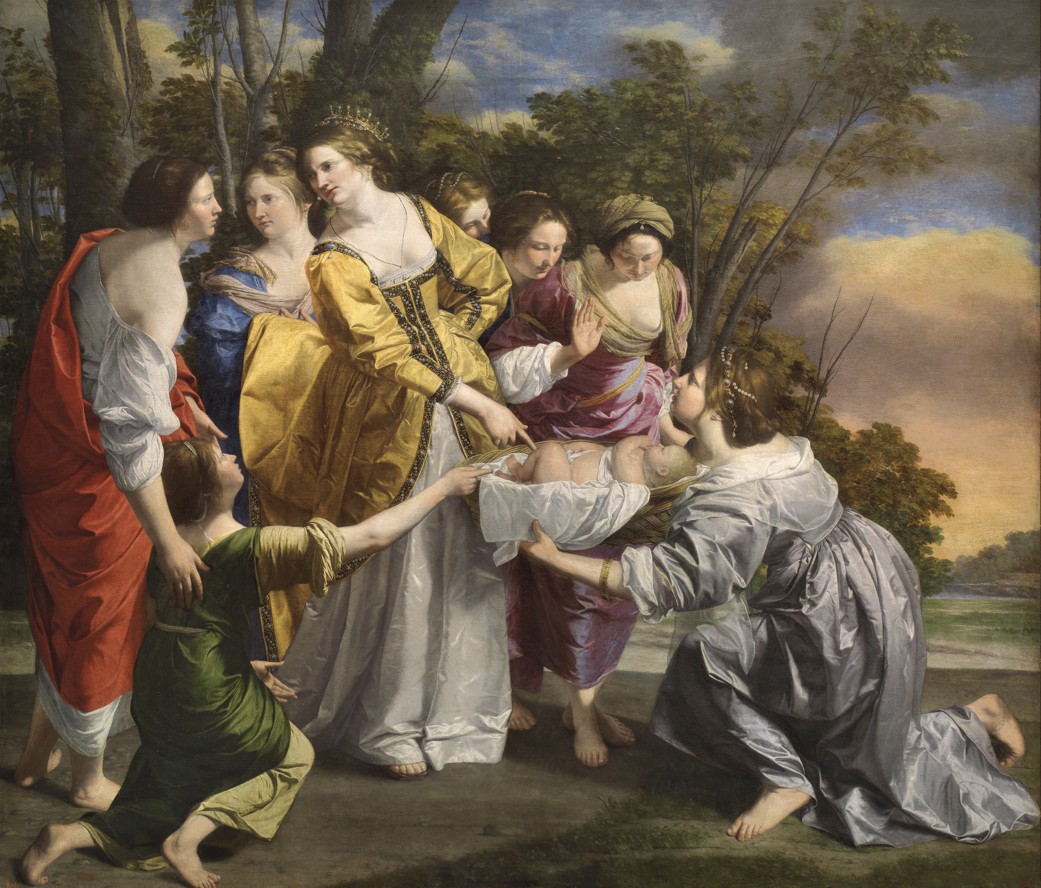
La versione londinese venne commissionata da Carlo I d’Inghilterra, appassionato e grande collezionista d’arte. Avrebbe poi regalato quel capolavoro alla moglie Enrichetta Maria per la Queen’s House di Greenwich.
La versione spagnola, invece, venne dipinta da Orazio Gentileschi nel 1633 per Filippo IV di Spagna e fu consegnata al destinatario da Francesco Gentileschi, figliolo di Orazio, nello stesso anno. L’opera fu pagata dal re 900 ducati.
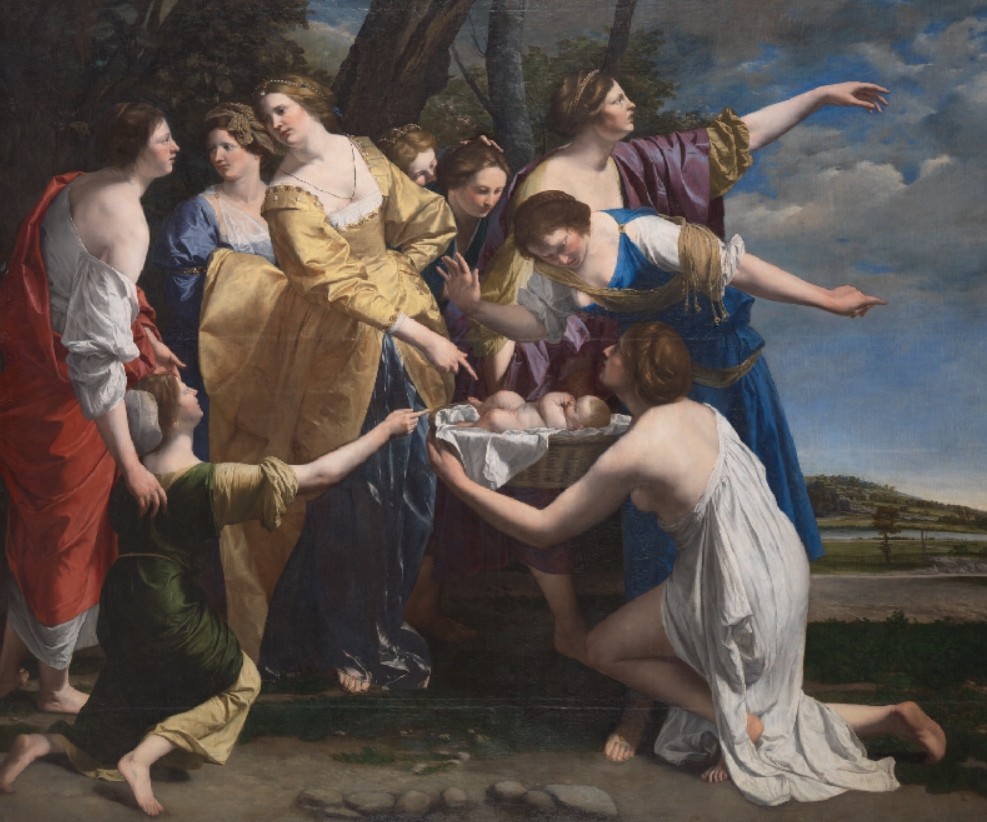
Il dipinto dimensioni leggermente inferiori rispetto al capolavoro londinese e differisce per alcuni dettagli.
A me piace più la seconda versione, con quei colori brillanti e luminosi ma anche per le forme più morbide e naturali dei panneggi presenti. E’ più ricca e articolata, con le dame vestite con maggiore sontuosità.
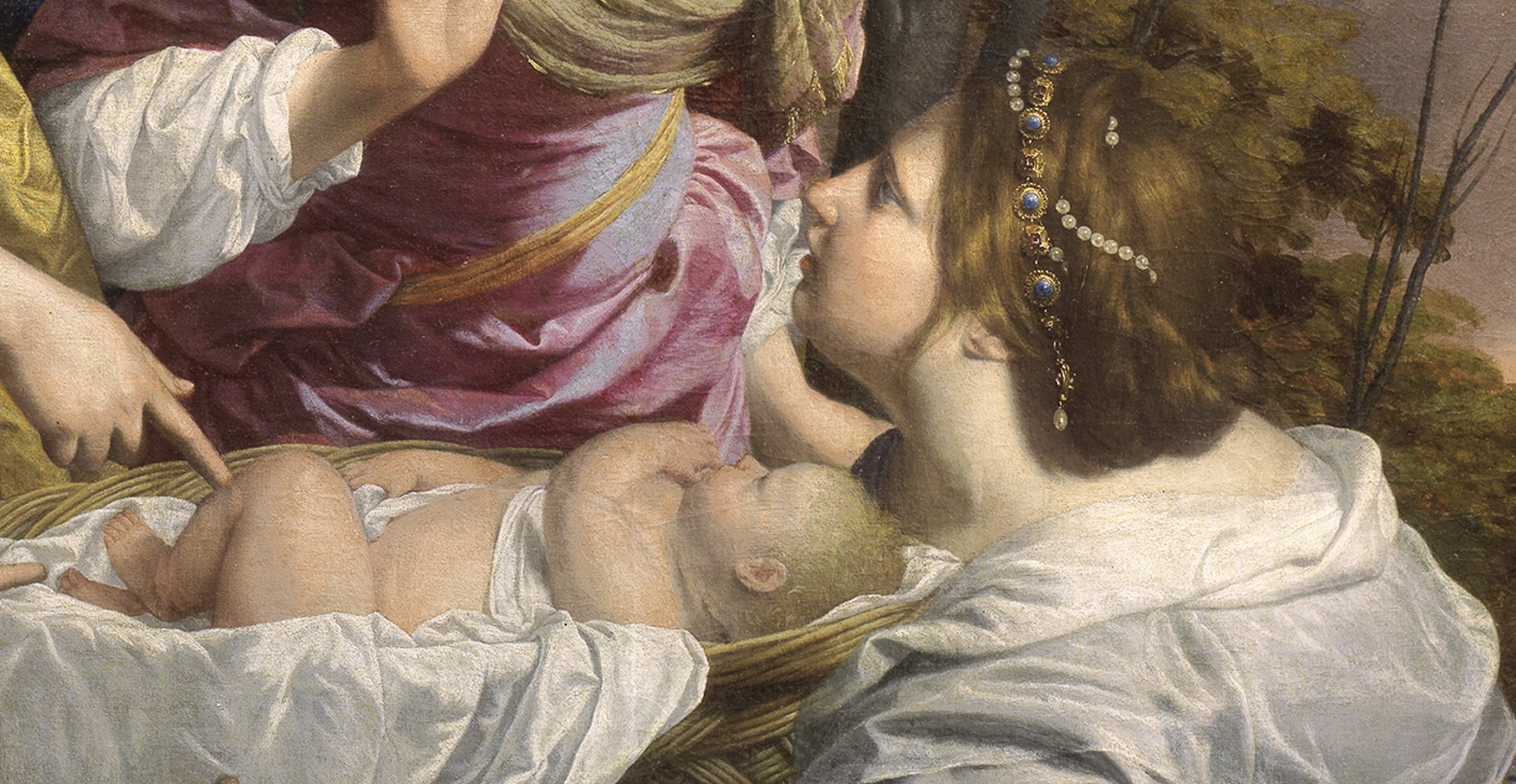
Osservate per esempio il tessuto su cui è adagiato Mosè con quel contrasti di tonalità, ripresi dal velo che ha sulle spalle la donna a destra e dalla gonna della figlia del faraone, riconoscibile per la ricca corona che porta sul capo.
Sorprende la ricchezza degli abiti delle donne che si muovono sulla scena attorno a Mosè e dei dettagli dei gioielli che sfoggiano. Elaborate pettinature arricchite di perle e pietre rendono questo dipinto uno straordinario capolavoro.
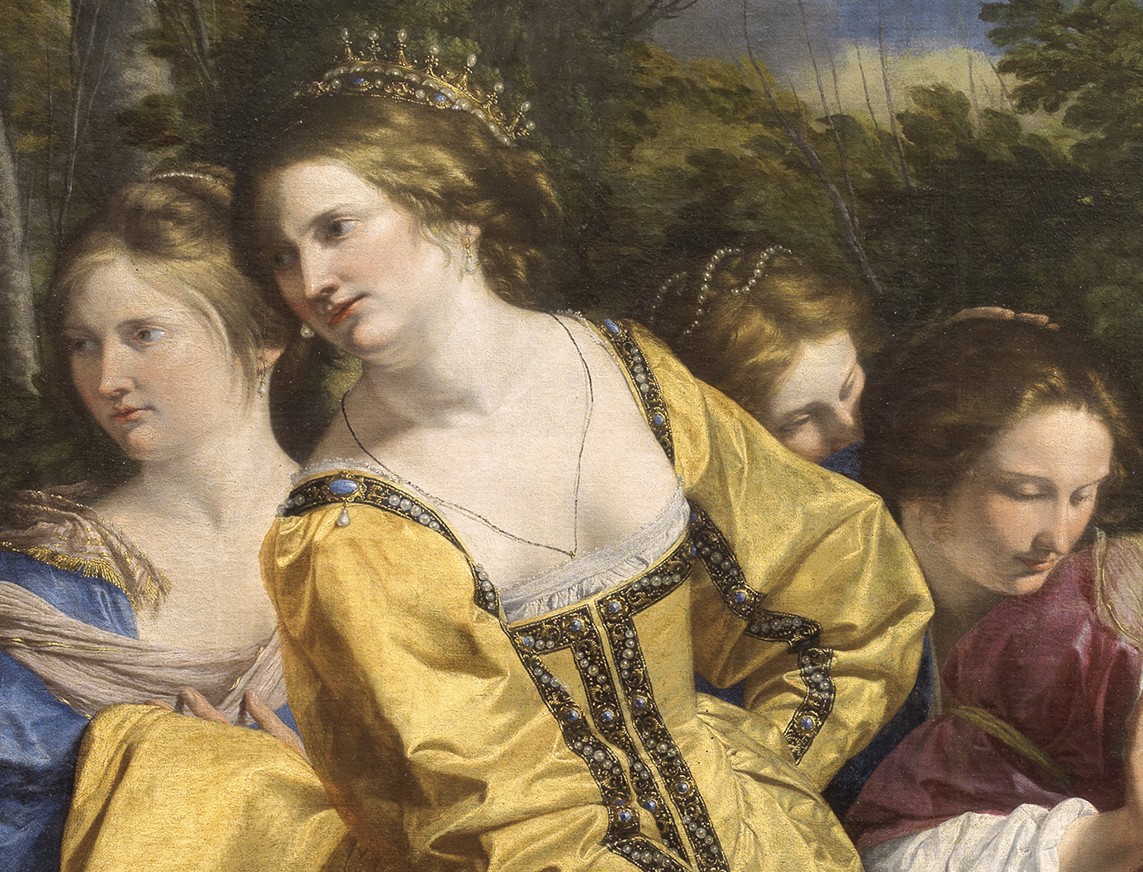
Ci si perde a guardare con attenzione ogni particolare. Vi faccio notare un’altra cosa che per me è straordinaria. Guardate come si riflette la luce a seconda della tipologia del tessuto con il quale sono stati confezionati i vari abiti.
Sono una finestra aperta sui costumi dell’epoca non certo di Mosè ma bensì di quella seicentesca del Gentileschi. Tanto sono dettagliati i capi che sospetto li abbia visti dal vero sfoggiati da qualche nobile dama. Eh si, perché vesti simili erano appannaggio solo della più alta nobiltà.

Per il momento il sempre vostro Michelangelo Buonarroti vi saluta dandovi appuntamento ai prossimi post e sui social.
Moses Saved from the Waters: Textiles, Jewelry, and Gestures by Orazio Gentileschi
Orazio Gentileschi, Artemisia’s father, painted two versions of Moses Saved from the Waters of the Nile around 1630.
The first version belongs to the National Gallery in London, while the second is located at the Prado Museum in Madrid. From November 22, 2025, until May 3, 2026, it will be on display in the exhibition “Orazio Gentileschi. A Traveling Painter,” held in the Chiablese Rooms in Turin.
The London version was commissioned by Charles I of England, a passionate and avid art collector. He later gave this masterpiece to his wife, Henrietta Maria, for the Queen’s House in Greenwich.
The Spanish version, however, was painted by Orazio Gentileschi in 1633 for Philip IV of Spain and was delivered to the recipient by Francesco Gentileschi, Orazio’s son, that same year. The king paid 900 ducats for the work.
The painting is slightly smaller than the London masterpiece and differs in some details.
I prefer the second version, with its bright, luminous colors and the softer, more natural forms of the draperies. It is richer and more complex, with the ladies more sumptuously dressed.
For example, observe the fabric on which Moses is laid, with its contrasting shades, echoed in the veil draped over the woman on the right’s shoulders and in the skirt of the Pharaoh’s daughter, recognizable by the rich crown on her head.
The richness of the women’s clothing as they move across the scene and the details of the jewelry they display are astonishing. Elaborate hairstyles adorned with pearls make this painting an extraordinary masterpiece.
You’ll get lost in carefully examining every detail. I’ll point out something else that I find extraordinary: look at how the light reflects depending on the type of fabric used to make the various garments.
They are a window into the costumes of the era, certainly not of Moses, but rather of the 17th-century Gentileschi. The garments are so detailed that I suspect he saw them in person, sported by some noble lady. Yes, because such garments were the prerogative of only the highest nobility.
For now, yours truly, Michelangelo Buonarroti bids you farewell and says he’ll see you in future posts and on social media.

Sostienici – Support Us
Se questo blog ti piace e ti appassiona, puoi aiutarci a farlo crescere sempre più sostenendoci in modo concreto condividendo i post, seguendo le pagine social e con un contributo che ci aiuta ad andare avanti con il nostro lavoro di divulgazione. . ENGLISH: If you like and are passionate about this blog, you can help us make it grow more and more by supporting us in a concrete way by sharing posts, following social pages and with a contribution that helps us to move forward with our dissemination work.
10,00 €
Condividi:


Questo sono io





sostienici

Sostienici – Support Us
Se questo blog ti piace e ti appassiona, puoi aiutarci a farlo crescere sempre più sostenendoci in modo concreto condividendo i post, seguendo le pagine social e con un contributo che ci aiuta ad andare avanti con il nostro lavoro di divulgazione. . ENGLISH: If you like and are passionate about this blog, you can help us make it grow more and more by supporting us in a concrete way by sharing posts, following social pages and with a contribution that helps us to move forward with our dissemination work.
€10,00


