

7 ottobre: la Madonna del Rosario di Caravaggio
Il 7 ottobre la Chiesa Cattolica ricorda la Madonna del Rosario. Questa festa venne istituita per commemorare la vittoria della Lega Santa contro l’Impero Ottomano nella battaglia di Lepanto, avvenuta il 7 ottobre 1571, una vittoria attribuita all’intercessione della Vergine Maria invocata tramite la preghiera del Santo Rosario.
Tra le opere più celebri dedicati alla Madonna del Rosario, sicuramente vale la pena menzionare quella dipinta da Caravaggio tra il 1606 e il 1607, durante il suo periodo napoletano.
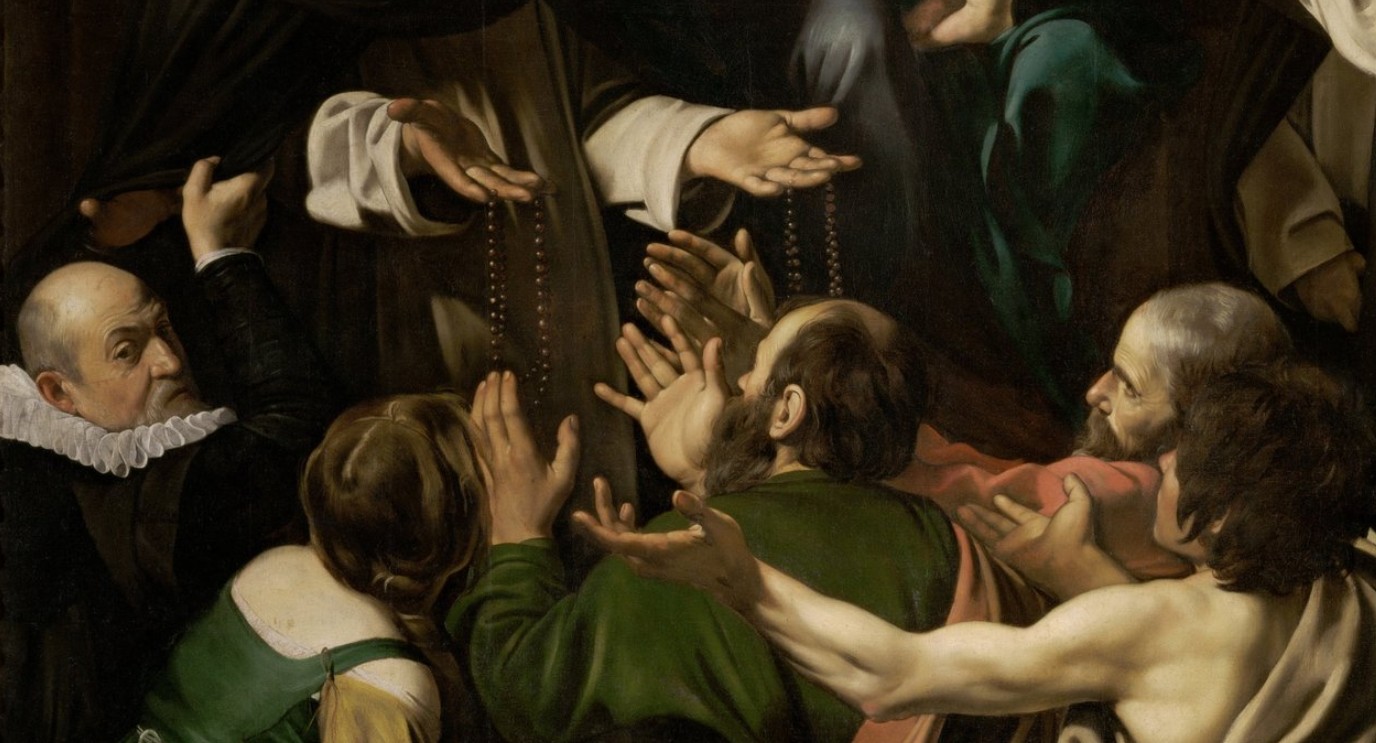
Il dipinto a olio su tela occupa una superficie notevole: 3,64 metri d’altezza per 2,49 metri di larghezza. Venne realizzato per un committente a noi sconosciuto e commissionato probabilmente per decorare l’altare dei Domenicani nella Chiesa di San Domenico Maggiore.
L’opera venne rifiutata dopo il suo completamento da chi l’aveva richiesta e fu messa subito in vendita fino q quando, nel 1607, alcuni mercanti fiamminghi la acquistarono e la portarono fino ad Anversa, nelle Fiandre, dove venne esposta sull’altare di una cappella.

Nel 1781, l’imperatore d’Austria Giuseppe II d’Asburgo ordinò che il dipinto di Caravaggio fosse trasferito a Vienna, dove si trova ancora oggi, nel Kunsthistorisches Museum.
La Madonna del Rosario è un esempio emblematico dello stile di Caravaggio, caratterizzato dal suo inconfondibile chiaroscuro e dal realismo drammatico.
La composizione è imponente e costruita su una struttura piramidale, divisa idealmente in tre sezioni: il vertice formato dalla Vergine col Bambino incoronata, che offre i rosari; la sezione intermedia con San Domenico con l’abito del suo ordine e San Pietro Martire a destra; infine la base con la folla di fedeli inginocchiati che protendono le mani per ricevere i rosari e le preghiere.
La straordinaria opera di Caravaggio celebra la devozione mariana e la pratica del Rosario, che Maria e il Bambino sembrano elargire.

Vi faccio notare un dettaglio rilevante. In basso a sinistra è raffigurato un uomo in gorgiera che guarda verso l’osservatore e stringe la veste di San Domenico. Alcuni identificano quell’uomo come il committente o come un possibile Marcantonio Colonna, antenato del committente.
Sul lato sinistro del dipinto si nota la presenza di un pesante drappo rosso annodato a una colonna: un particolare che potrebbe alludere al nome della famiglia Colonna.
Per il momento il sempre vostro Michelangelo Buonarroti vi saluta dandovi appuntamento ai prossimi post e sui social.
October 7: Caravaggio’s Madonna of the Rosary
On October 7, the Catholic Church commemorates Our Lady of the Rosary. This feast was established to commemorate the victory of the Holy League against the Ottoman Empire in the Battle of Lepanto, which took place on October 7, 1571, a victory attributed to the intercession of the Virgin Mary, invoked through the prayer of the Holy Rosary.
Among the most famous works dedicated to Our Lady of the Rosary, the one painted by Caravaggio between 1606 and 1607, during his Neapolitan period, is certainly worth mentioning.
The oil on canvas painting occupies a considerable surface: 3.64 meters high by 2.49 meters wide. It was painted for an unknown client and was likely commissioned to decorate the altar of the Dominicans in the church of San Domenico Maggiore.
The work was rejected after its completion by its buyer and immediately put up for sale until 1607, when Flemish merchants purchased it and took it to Antwerp, Flanders, where it was displayed on the altar of a chapel.
In 1781, the Austrian Emperor Joseph II ordered Caravaggio’s painting to be transferred to Vienna, where it remains today in the Kunsthistorisches Museum.
The Madonna of the Rosary is an emblematic example of Caravaggio’s style, characterized by his unmistakable chiaroscuro and dramatic realism.
The composition is imposing and built on a pyramidal structure, ideally divided into three sections: the apex formed by the crowned Virgin and Child offering rosaries; the middle section with Saint Dominic in the habit of his order and Saint Peter Martyr on the right; Finally, the base with the crowd of kneeling faithful extending their hands to receive rosaries and prayers.
Caravaggio’s extraordinary work celebrates Marian devotion and the practice of the Rosary, which Mary and the Child appear to bestow.
Let me point out a significant detail. In the lower left, a man in a ruff is depicted looking toward the viewer and clutching the robe of Saint Dominic. Some identify this man as the patron or as a possible Marcantonio Colonna, the patron’s ancestor.
On the left side of the painting, a heavy red cloth is knotted around a column: a detail that could allude to the Colonna family name.
For now, yours truly, Michelangelo Buonarroti bids you farewell and invites you to join him in future posts and on social media.

Sostienici – Support Us
Se questo blog ti piace e ti appassiona, puoi aiutarci a farlo crescere sempre più sostenendoci in modo concreto condividendo i post, seguendo le pagine social e con un contributo che ci aiuta ad andare avanti con il nostro lavoro di divulgazione. . ENGLISH: If you like and are passionate about this blog, you can help us make it grow more and more by supporting us in a concrete way by sharing posts, following social pages and with a contribution that helps us to move forward with our dissemination work.
10,00 €
Condividi:


Questo sono io





sostienici

Sostienici – Support Us
Se questo blog ti piace e ti appassiona, puoi aiutarci a farlo crescere sempre più sostenendoci in modo concreto condividendo i post, seguendo le pagine social e con un contributo che ci aiuta ad andare avanti con il nostro lavoro di divulgazione. . ENGLISH: If you like and are passionate about this blog, you can help us make it grow more and more by supporting us in a concrete way by sharing posts, following social pages and with a contribution that helps us to move forward with our dissemination work.
€10,00


