
La Scultura del giorno: l’Apollo del Belvedere
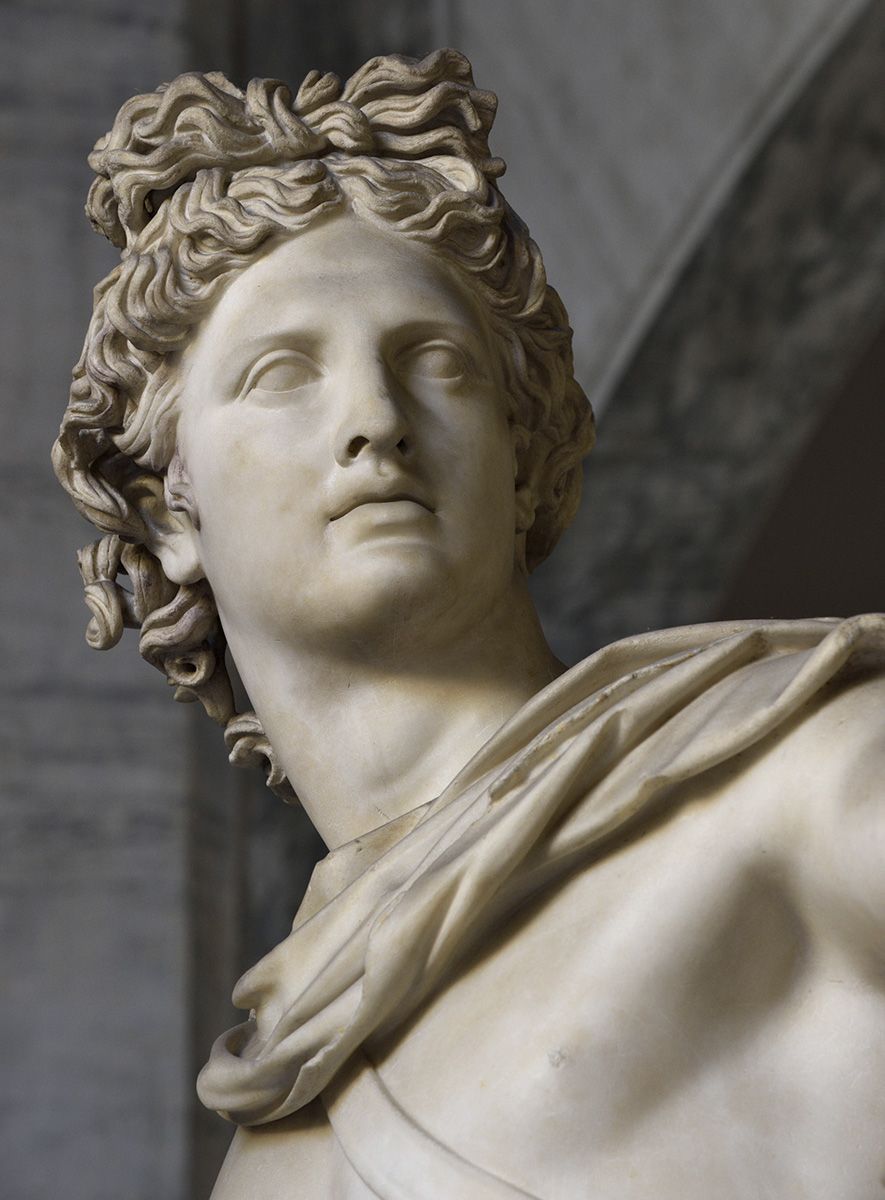
La scultura di cui voglio parlarvi oggi è il celeberrimo Apollo del Belvedere che, come diceva Winckelmann, “di tutte le opere dell’antichità scampate alla distruzione, la statua di Apollo rappresenta il più alto ideale dell’arte“.
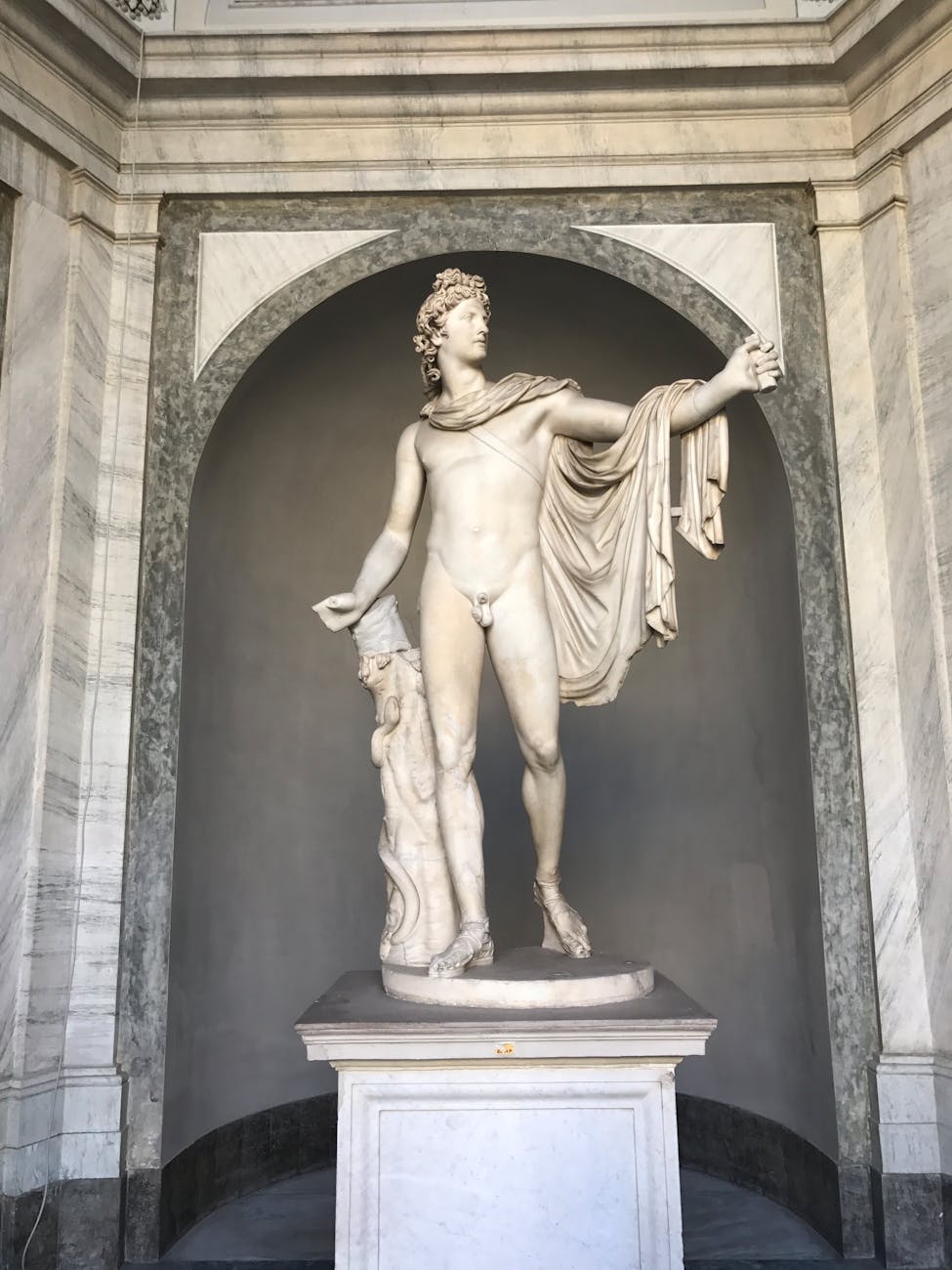
L’opera è uno dei capolavori che per primi confluirono in quella raccolta che poi divenne il nucleo fondante dei Musei Vaticani. Il dio Apollo, in questa antica raffigurazione, ha appena scoccato una freccia con l’arco che in origine impugnava con la mano sinistra.
L’artista che realizzò l’Apollo
L’opera venne realizzata da una bottega romana attiva nei primi decenni del II secolo d.C, bottega che si dedicava alla copia delle opere in bronzo.
L’originale era stato fuso in bronzo attorno al 330 a.C. in Grecia, forse da Leochares, uno degli artisti più celebri, noto anche per aver messo mano al sepolcro di Caria Mausolo, considerato una delle sette meraviglie dell’antichità.
Il ritrovamento dell’Apollo del Belvedere
La scultura fu rinvenuta a Roma nel 1489 tra i ruderi di una domus ubicata sul Viminale. Il cardinale Giuliano della Rovere, successivamente divenuto Papa Giulio II nel 1503, ,non perse tempo e la acquistò immediatamente. Fece portare quel capolavoro in Vaticano dove, a partire dal 1508, viene già documentato nel Belvedere.
A quel tempo la scultura era integra, ad eccezion fatta dalla mano sinistra e delle dita della destra. Qualche decennio dopo, tra il 1532 e il 1533, fu commissionato il restauro integrativo al Montorsoli che completò il braccio sinistro poi sostituì il destro e apportò un’integrazione al broncone per farci appoggiare sopra il nuovo braccio.

Cosa scrisse Goethe in merito all’Apollo del Belvedere
“Ora che comincio a rivedere le cose più belle per la seconda volta, alla meraviglia iniziale subentra in senso di materiale vicinanza, un più chiaro apprezzamento del valore di ogni singolo oggetto. Per accogliere in sé l’idea più alta di ciò che gli uomini hanno prodotto, deve aver prima raggiunto la completa libertà.
Il marmo è uno straordinario materiale e per questo motivo la vista dell’Apollo del Belvedere nell’originale ci riempie di gioia infinita, mentre i miglior calco in gesso non riesce a comunicare il soffio sublime di quella figura di adolescente palpitante di vita, di libertà, di giovinezza eterna“.
In questo modo Johann Wolfgang Goethe il giorno di Natale del 1786 esprimeva le sue sensazioni ragionando attorno all’Apollo del Belvedere, al marmo e alla libertà di pensiero durante il suo secondo soggiorno romano.

L’Apollo del Belvedere rubato dalle truppe napoleoniche
L’Apollo fu una di quelle opere che lasciò i Musei Vaticani per volere di Napoleone e finì in Francia, confluendo nel grande gruppo di capolavori che avrebbero permesso di realizzare il Museo del Louvre.
Fu grazie all’azione diplomatica importantissima che svolse Antonio Canova su incarico di papa Pio VII, che l’Apollo così come altri capolavori fecero ritorno in Italia e in Vaticano.
Per il momento il sempre vostro Michelangelo Buonarroti vi saluta dandovi appuntamento ai prossimi post e sui social.

Sculpture of the Day: The Apollo Belvedere
The sculpture I want to talk about today is the celebrated Apollo Belvedere. As Winckelmann said, “Of all the works of antiquity that escaped destruction, the statue of Apollo represents the highest ideal of art.”
The work is one of the first masterpieces to be included in the collection that later became the foundation of the Vatican Museums. The god Apollo, in this ancient depiction, has just shot an arrow with the bow he originally held in his left hand.
The Artist Who Created the Apollo
The work was created by a Roman workshop active in the early decades of the 2nd century AD, a workshop that specialized in copying bronze works.
The original was cast in bronze around 330 BC. In Greece, perhaps by Leochares, one of the most celebrated artists, also known for his work on the tomb of Carian Mausolus, considered one of the Seven Wonders of Antiquity.
The Discovery of the Apollo Belvedere
The sculpture was discovered in Rome in 1489 among the ruins of a domus located on the Viminal Hill. Cardinal Giuliano della Rovere, who later became Pope Julius II in 1503, wasted no time in purchasing it immediately. He had the masterpiece brought to the Vatican, where, by 1508, it was documented in the Belvedere.
At that time, the sculpture was intact, except for the left hand and the fingers of the right. A few decades later, between 1532 and 1533, Montorsoli was commissioned to carry out a further restoration, completing the left arm, then replacing the right, and adding a supplement to the prong to support the new arm.
What Goethe wrote about the Apollo Belvedere
“Now that I begin to see the most beautiful things for the second time, the initial wonder is replaced by a sense of material closeness, a clearer appreciation of the value of each individual object. To embrace the highest idea of what man has created, he must first have achieved complete freedom.
Marble is an extraordinary material, and for this reason the sight of the original Apollo Belvedere fills us with infinite joy, while the best plaster cast fails to convey the sublime breath of that adolescent figure pulsating with life, freedom, and eternal youth.”
This is how Johann Wolfgang Goethe expressed his feelings on Christmas Day 1786, reflecting on the Apollo Belvedere, marble, and freedom of thought during his second stay in Rome.
The Apollo Belvedere Stolen by Napoleon’s Troops
The Apollo was one of the works that left the Vatican Museums at Napoleon’s behest and ended up in France, joining the great group of masterpieces that would later form the basis of the Louvre Museum.
It was thanks to the crucial diplomatic efforts of Antonio Canova, commissioned by Pope Pius VII, that the Apollo, along with other masterpieces, returned to Italy and the Vatican.
Of the 506 recorded stolen works (there are likely more), 248 unfortunately remain in France today, while 9 are believed to be missing.
For now, yours truly, Michelangelo Buonarroti bids you farewell and invites you to join him in future posts and on social media.

Sostienici – Support Us
Se questo blog ti piace e ti appassiona, puoi aiutarci a farlo crescere sempre più sostenendoci in modo concreto condividendo i post, seguendo le pagine social e con un contributo che ci aiuta ad andare avanti con il nostro lavoro di divulgazione. . ENGLISH: If you like and are passionate about this blog, you can help us make it grow more and more by supporting us in a concrete way by sharing posts, following social pages and with a contribution that helps us to move forward with our dissemination work.
10,00 €
Condividi:


Questo sono io





sostienici

Sostienici – Support Us
Se questo blog ti piace e ti appassiona, puoi aiutarci a farlo crescere sempre più sostenendoci in modo concreto condividendo i post, seguendo le pagine social e con un contributo che ci aiuta ad andare avanti con il nostro lavoro di divulgazione. . ENGLISH: If you like and are passionate about this blog, you can help us make it grow more and more by supporting us in a concrete way by sharing posts, following social pages and with a contribution that helps us to move forward with our dissemination work.
€10,00


1 commento »