

L’Allegoria del Colle della Sapienza di Pinturicchio: tappeto in pietra di Virtù e Conoscenza nel Duomo di Siena
Il pavimento del duomo di Siena è un capolavoro straordinario che affascina e stupisce per la sua raffinatezza ma anche per il ricco programma iconografico che propone, non di facilissima lettura.
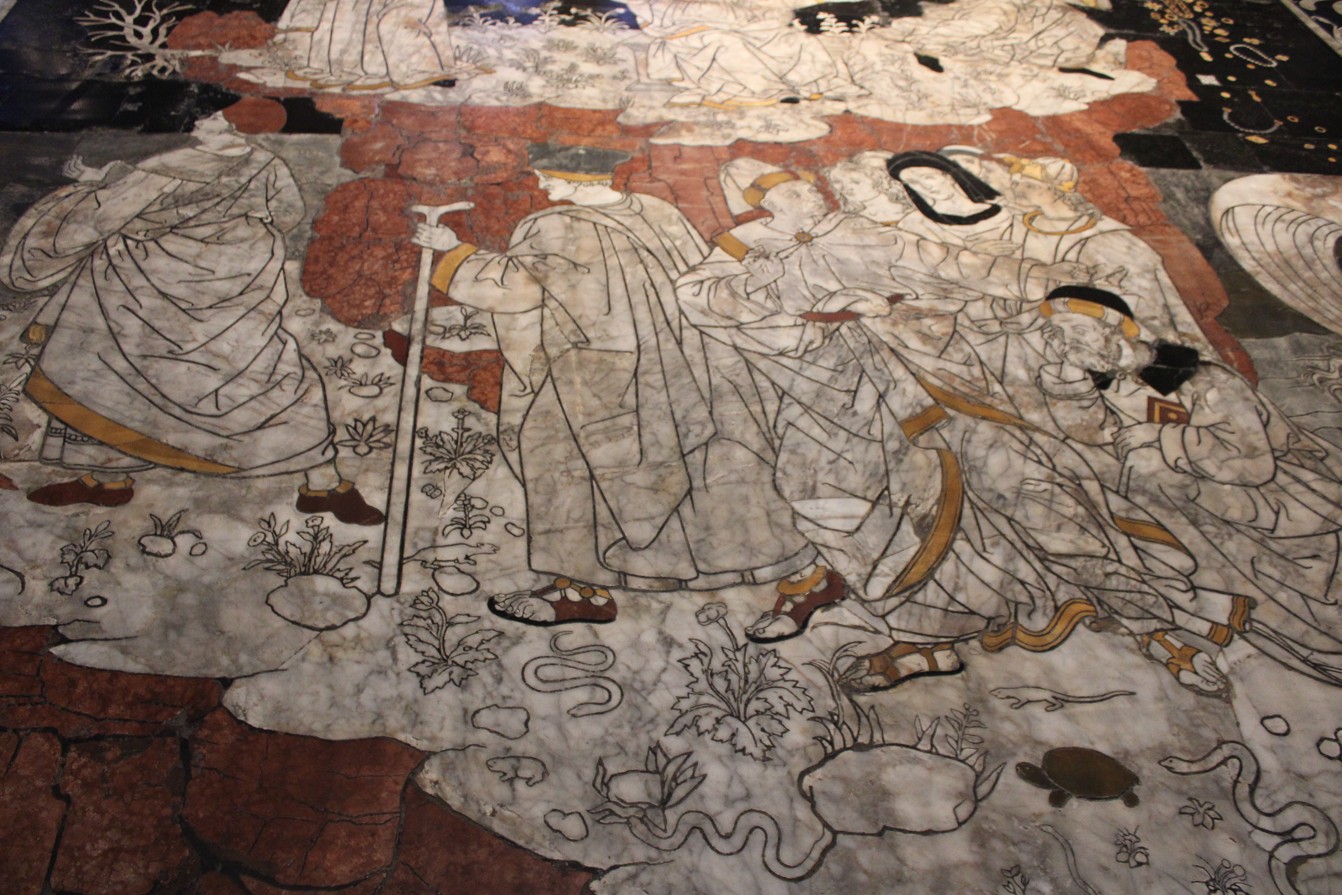
Tra le tarsie marmoree più affascinanti, vale la pena soffermarsi a osservare l’Allegoria del colle della Sapienza ideato da Pinturicchio e realizzato sul suo cartone dall’artista Paolo Mannocci attorno al 1505.
La realizzazione del pavimento del Duomo di Siena venne avviata nell’ultimo ventennio del Quattrocento grazie al cavaliere di Rodi Alberto Aringhieri, operai dell’Opera del Duomo.
Fu proprio lui a commissionare il cartone della grande tarsia al Pinturicchio, all’epoca impegnato su diversi fronti nel Duomo.
La realizzazione in commesso venne poi eseguita da Paolo Mannucci ma dovete sapere che ciò che vedete oggi è perlomeno in parte frutto di rifacimenti eseguiti nel 1859 sotto la direzione di Luigi Mussini.

Il riquadro della Fortuna propone due temi fortemente simbolici ovvero quello del naufragio fortunato accompagnato dalla personificazione della fortuna capricciosa e instabile e quello dell’ascesa al Monte della Sapienza che viene rappresentato come una sorta di rilievo roccioso nella parte alta della tarsia.
Guardando la figura della Fortuna vi renderete conto che è accompagnata con tutti gli attributi tipici come il suo poggiare i piedi sopra una sfera. La vela gonfia di vento indica la casualità mentre l’albero spezzato della barca è sinonimo della mala gestione di ciò che la dea bendata regala.

Dieci sono i sapienti che si trovano ad affrontare un terreno accidentato in ascesa. Dovranno infatti fronteggiare vizi e peccati.
Pinturicchio volle aggiungere infatti i serpenti dell’invidia, la donnola della frode, la tartaruga della lentezza e dell’accidia.
Nella parte in alto invece si vede la personificazione della Quiete tra i filosofi Socrate e Cratere che disprezza la ricchezza gettando nel vuoto i gioielli fino al momento contenuti nel cesto.
L’opera di intarsio del pavimento è stata realizzata con marmi colorati e sgraffiti riempiti successivamente di pece creando così una eccellente ricchezza di figure e dettagli.
Per il momento il sempre vostro Michelangelo Buonarroti vi saluta dandovi appuntamento ai prossimi post e sui social.
Pinturicchio’s Allegory of the Hill of Wisdom: Stone Carpet of Virtue and Knowledge in Siena Cathedral
The floor of Siena Cathedral is an extraordinary masterpiece, fascinating and astonishing for its refinement but also for its rich iconographic program, which is not the easiest to interpret.
Among the most fascinating marble inlays, it is worth pausing to observe the Allegory of the Hill of Wisdom, conceived by Pinturicchio and executed based on his cartoon by the artist Paolo Mannocci around 1505.
The construction of the floor of Siena Cathedral began in the last two decades of the 15th century thanks to Alberto Aringhieri, a Knight of Rhodes, a worker at the Opera del Duomo.
It was he who commissioned the cartoon for the large inlay from Pinturicchio, who was then busy with various projects at the Cathedral.
The inlay work was later executed by Paolo Mannucci, but you should know that what you see today is at least partially the result of reworkings carried out in 1859 under the direction of Luigi Mussini.
The panel of Fortune presents two highly symbolic themes: that of a fortunate shipwreck accompanied by the personification of capricious and unstable fortune, and that of the ascent to the Mount of Wisdom, which is depicted as a sort of rocky relief in the upper part of the inlay.
Looking at the figure of Fortune, you’ll realize she is accompanied by all the typical attributes, such as her feet resting on a sphere. The sail swollen by the wind signifies chance, while the broken mast of the boat symbolizes the mismanagement of what Lady Luck bestows.
Ten wise men find themselves tackling a difficult ascent. They will have to confront vices and sins.
Pinturicchio chose to add the snakes of envy, the weasel of fraud, and the tortoise of slowness and sloth.
In the upper section, however, we see the personification of Quietude between the philosophers Socrates and Crater, who scorns wealth by throwing the jewels he had previously contained in the basket into the void.
The inlay work on the floor was created with colored marble and sgraffito, then filled with pitch, creating an exquisite richness of figures and details.
For now, yours truly, Michelangelo Buonarroti bids you farewell and invites you to join him in future posts and on social media.

Sostienici – Support Us
Se questo blog ti piace e ti appassiona, puoi aiutarci a farlo crescere sempre più sostenendoci in modo concreto condividendo i post, seguendo le pagine social e con un contributo che ci aiuta ad andare avanti con il nostro lavoro di divulgazione. . ENGLISH: If you like and are passionate about this blog, you can help us make it grow more and more by supporting us in a concrete way by sharing posts, following social pages and with a contribution that helps us to move forward with our dissemination work.
10,00 €
Condividi:


Questo sono io





sostienici

Sostienici - Support Us
Se questo blog ti piace e ti appassiona, puoi aiutarci a farlo crescere sempre più sostenendoci in modo concreto condividendo i post, seguendo le pagine social e con un contributo che ci aiuta ad andare avanti con il nostro lavoro di divulgazione. . ENGLISH: If you like and are passionate about this blog, you can help us make it grow more and more by supporting us in a concrete way by sharing posts, following social pages and with a contribution that helps us to move forward with our dissemination work.
€10,00


