

Michelangelo 550: un mio pensieroso ritratto
In occasione dei 550 anni dalla mia nascita, vi propongo questa cromolitografia della fine dell’Ottocento che mi ritrae in un atteggiamento a metà tra il pensieroso e il malinconico.
Come ebbi modo di scrivere in uno dei miei sonetti più lunghi e articolati ‘La mia allegrezza è la malinconia’. La malinconia infatti non m’abbandonò mai per tutto il corso della vita. Era il mio modo di sentire e vivere le cose del mondo a darmi quel senso costante di nostalgica tristezza nel quale mi trovavo a mio agio.
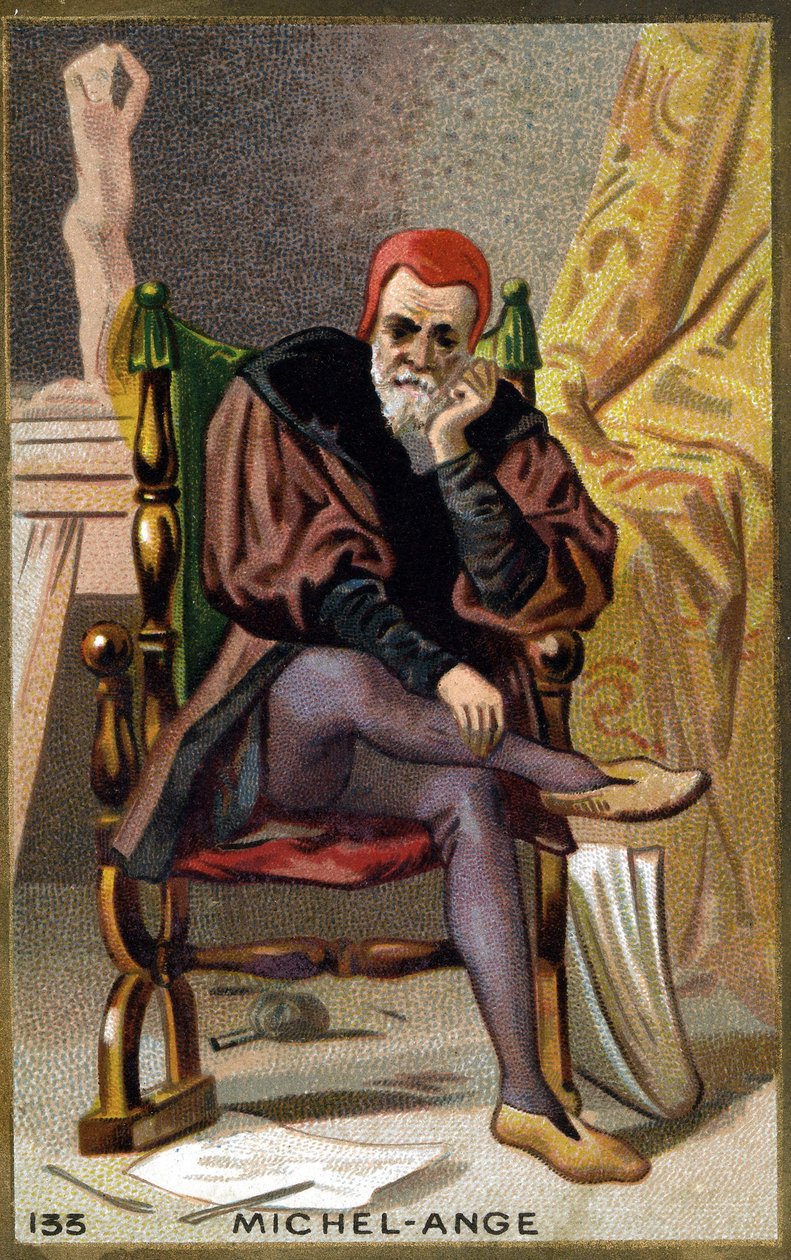
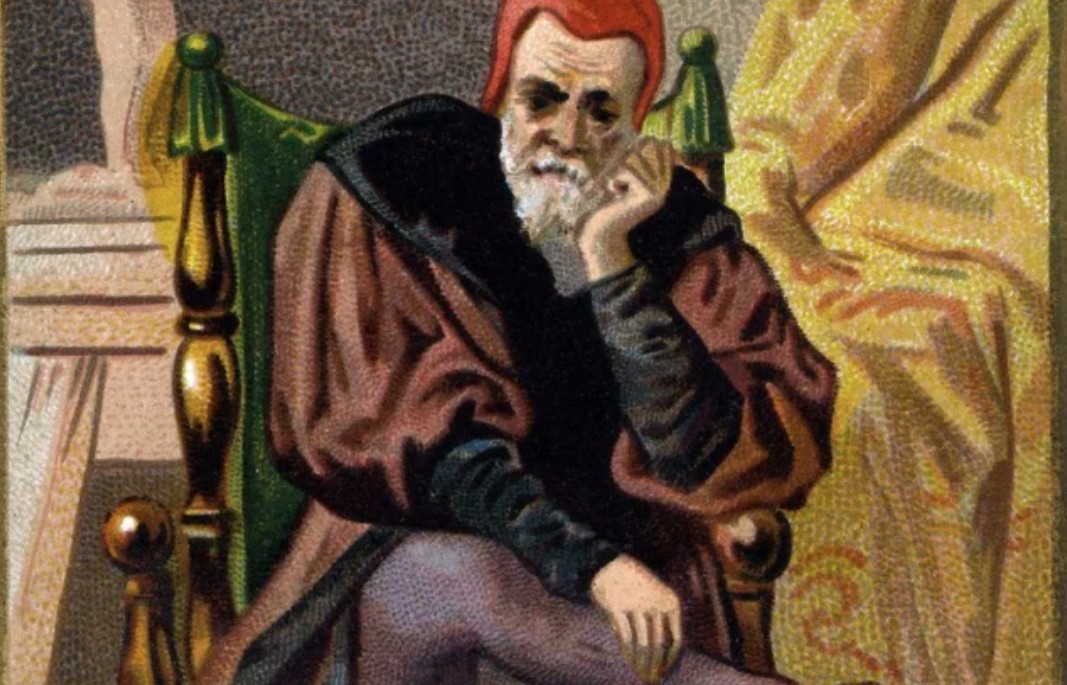
Abbigliato con un mantello pesante rosso mattone che mi copre spalle e braccia, me ne sto seduto su una sedia abbastanza lussuosa, con la spalliera coperta di velluto verde e la seduta protetta da un cuscino. Porto sul capo una cuffia rossa e con la mano sinistra mi sostengo il capo.
Non è dato sapere chi realizzò quest’immagine che mi ritrae ma sicuramente non aveva ben chiaro quali opere avessi realizzato nel corso della vita. Quella che appare alle mie spalle poco ha a che fare con la mia produzione artistica.
A terra si vede un foglio sul quale avevo annotato chissà che cosa e quelle che di primo acchito potevano sembrare delle lime.
Per aggiungere un tocco di colore e al contempo riempire lo sfondo, l’artista volle mettere un tendaggio giallo.
Cos’è la cromolitografia
La cromolitografia è un’evoluzione della litografia. Si tratta di una tecnica di stampa basata sul principio di repulsione tra acqua e sostanze grasse.
Per ottenere un’immagine a colori è necessario preparare una matrice diversa per ogni colore che si vuole imprimere. Su ogni matrice viene riportato il disegno con matite o inchiostri grassi. Successivamente le matrici vengono inchiostrate con i colori desiderati. Le parti disegnate trattengono l’inchiostro grasso, mentre le parti non disegnate, precedentemente inumidite, lo respingono.
La cromolitografia fu inventata nel 1837 e raggiunse il suo apice di popolarità nella seconda metà dell’Ottocento. Permise di produrre immagini a colori in grandi quantità e a costi relativamente bassi, rivoluzionando il mondo della stampa e della pubblicità.
Per il momento il sempre vostro Michelangelo Buonarroti vi saluta dandovi appuntamento ai prossimi post e sui social.
Michelangelo 550: a thoughtful portrait of me
On the occasion of the 550th anniversary of my birth, I propose this chromolithograph from the end of the 19th century that portrays me in an attitude halfway between thoughtful and melancholic.
As I had the opportunity to write in one of my longest and most articulated sonnets, ‘My joy is melancholy’. In fact, melancholy never abandoned me throughout my life. It was my way of feeling and experiencing the things of the world that gave me that constant sense of nostalgic sadness in which I felt at ease.
Dressed in a heavy brick-red cloak that covers my shoulders and arms, I am sitting on a rather luxurious chair, with the back covered in green velvet and the seat protected by a cushion. I wear a red cap on my head and with my left hand I support my head.
It is not known who created this image that portrays me but he certainly did not have a clear idea of what works I had created during my life. What appears behind me has little to do with my artistic production.
On the ground you can see a sheet of paper on which I had written who knows what and what at first glance could seem like files.
To add a touch of color and at the same time fill the background, the artist wanted to put a yellow curtain.
What is chromolithography
Chromolithography is an evolution of lithography. It is a printing technique based on the principle of repulsion between water and fatty substances.
To obtain a color image it is necessary to prepare a different matrix for each color that you want to print. The drawing is transferred onto each matrix with pencils or greasy inks. The matrices are then inked with the desired colors. The drawn parts retain the greasy ink, while the non-drawn parts, previously moistened, repel it.
Chromolithography was invented in 1837 and reached its peak of popularity in the second half of the nineteenth century. It allowed the production of color images in large quantities and at relatively low costs, revolutionizing the world of printing and advertising.
For the moment, yours ever Michelangelo Buonarroti bids you farewell, making an appointment with you in the next posts and on social media.

Sostienici – Support Us
Se questo blog ti piace e ti appassiona, puoi aiutarci a farlo crescere sempre più sostenendoci in modo concreto condividendo i post, seguendo le pagine social e con un contributo che ci aiuta ad andare avanti con il nostro lavoro di divulgazione. . ENGLISH: If you like and are passionate about this blog, you can help us make it grow more and more by supporting us in a concrete way by sharing posts, following social pages and with a contribution that helps us to move forward with our dissemination work.
10,00 €
Articoli
Condividi:


Questo sono io





sostienici

Sostienici – Support Us
Se questo blog ti piace e ti appassiona, puoi aiutarci a farlo crescere sempre più sostenendoci in modo concreto condividendo i post, seguendo le pagine social e con un contributo che ci aiuta ad andare avanti con il nostro lavoro di divulgazione. . ENGLISH: If you like and are passionate about this blog, you can help us make it grow more and more by supporting us in a concrete way by sharing posts, following social pages and with a contribution that helps us to move forward with our dissemination work.
€10,00


