

Gallerie Nazionali di Arte Antica: esposti nel Salone di Pietro da Cortona i cartoni con la Vita di Urbano VIII
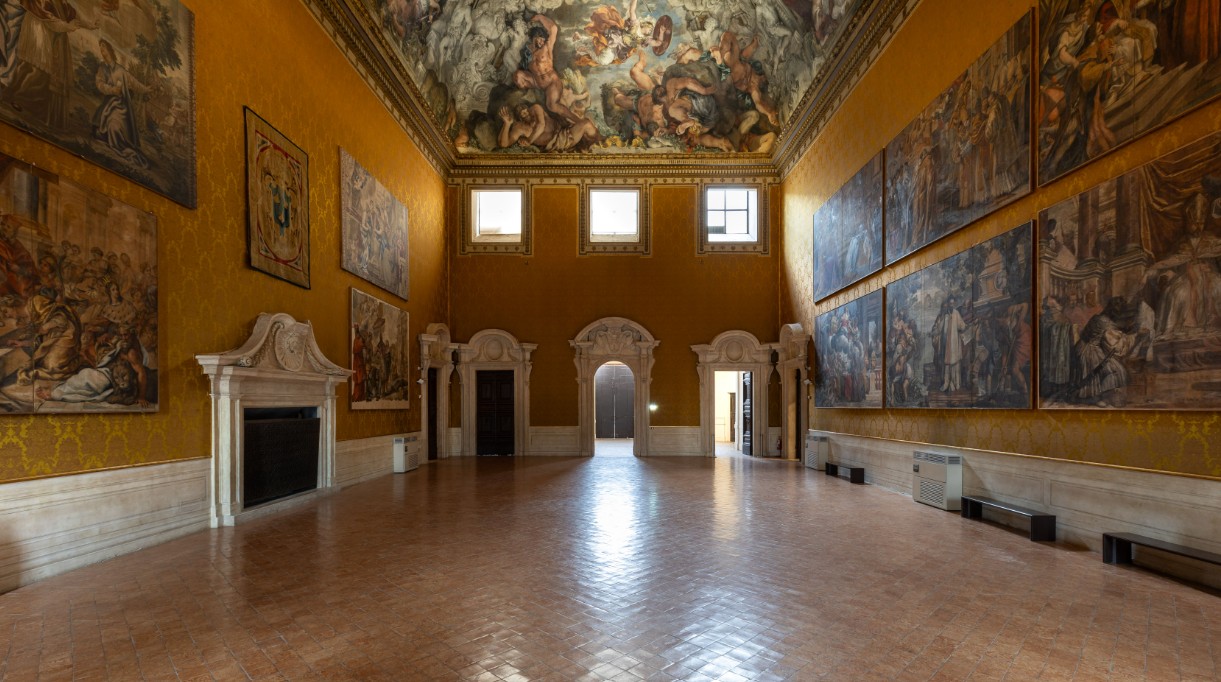
Le Gallerie Nazionali di Arte Antica di Roma propongono il completo riallestimento del Salone Pietro da Cortona di Palazzo Barberini, luogo simbolo del barocco romano.
Nuova veste dunque per il celebre salone grazie alla ricollocazione dei cartoni preparatori del ciclo de La Vita di Urbano VIII, capolavori assoluti della pittura seicentesca.
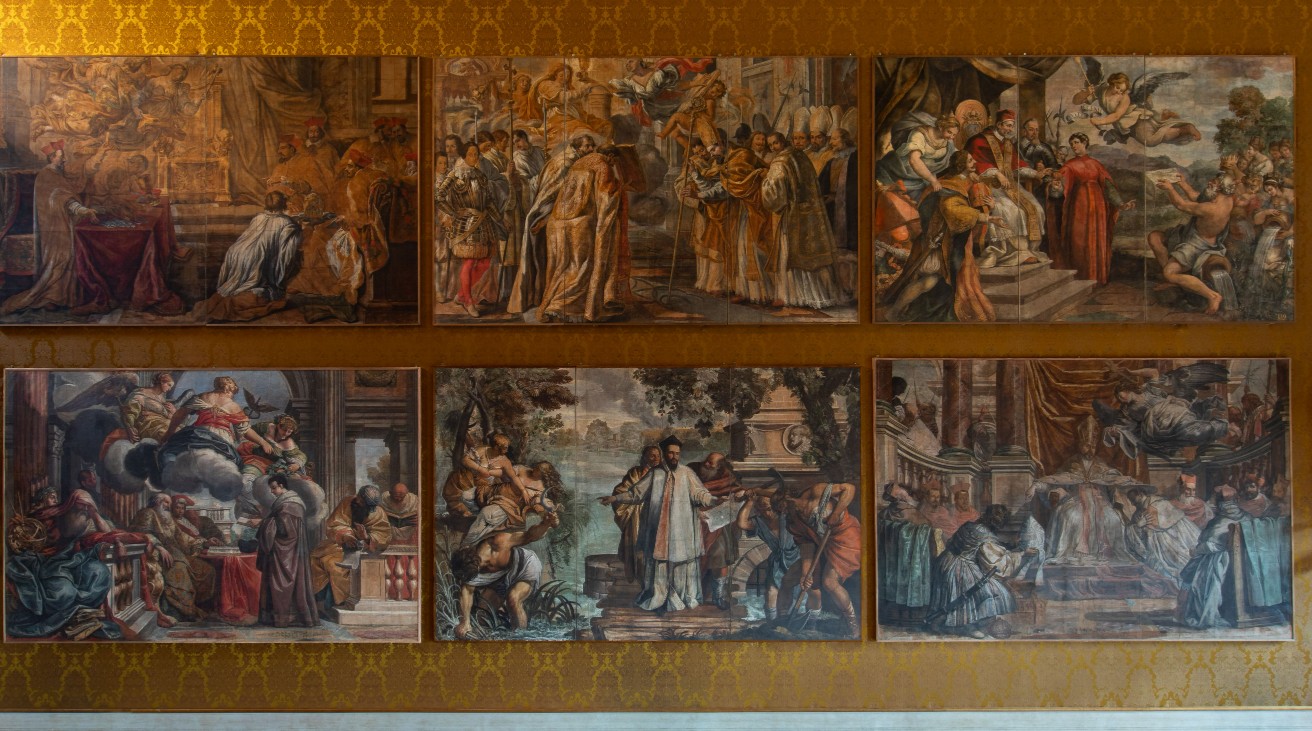
E’ un riallestimento storico. Dopo decenni, per la prima volta, in seguito a un attento intervento di restauro eseguito dal Laboratorio delle Gallerie Nazionali, i cartoni preparatori sono riproposti nel contesto per cui verosimilmente furono concepiti gli arazzi raffiguranti La Vita di Urbano VIII.
I visitatori avranno così l’opportunità di vederli in diretto dialogo con il celebre affresco del soffitto, il Trionfo della Divina Provvidenza di Pietro da Cortona (1632–1639). Una restituzione filologica che ricostruisce la funzione originaria del salone come luogo di rappresentanza e di celebrazione della dinastia Barberini.
Nel Seicento le famiglie di potere volevano avere un’arazzeria per sfoggiare il proprio status sociale. Il Cardinal Francesco Barberini (1597–1679), nipote di papa Urbano VIII, fondò nel 1627 la Manifattura Barberini, uno dei più ambiziosi progetti artistici del tempo.
Il pretesto fu il dono diplomatico formato da sette arazzi realizzati su disegni di Rubens, ricevuti dal re di Francia Luigi XIII. Da lì nacque l’idea di completare la serie con nuovi arazzi celebrativi, commissionati direttamente agli artisti di corte e tessuti nella neonata fabbrica romana.
Il ciclo de La Vita di Urbano VIII rappresenta il vertice della produzione dell’arazzeria Barberini. Era un progetto monumentale in cui biografia e allegoria si intrecciano nella glorificazione del pontefice e della sua famiglia.

I cartoni preparatori, affidati alla cerchia di Pietro da Cortona, erano vere e proprie opere d’arte a grandezza naturale, concepite per essere trasformate in tessuto con la tecnica del basso liccio.
Contrariamente a quanto accadeva abitualmente, i Barberini scelsero di conservare questi modelli, consapevoli del loro valore artistico, esponendoli nelle sale del proprio palazzo per oltre tre secoli.
Con questo riallestimento, le Gallerie Nazionali offrono una nuova chiave di lettura del Salone e del suo programma decorativo.
Per i momento il sempre vostro Michelangelo Buonarroti vi saluta dandovi appuntamento ai prossimi post e sui social.
National Galleries of Ancient Art: the cartoons with the Life of Urban VIII are exhibited in the Pietro da Cortona Hall
The National Galleries of Ancient Art in Rome are proposing the complete reorganization of the Pietro da Cortona Hall of Palazzo Barberini, a symbolic place of Roman Baroque.
A new look for the famous hall thanks to the relocation of the preparatory cartoons of the cycle of The Life of Urban VIII, absolute masterpieces of seventeenth-century painting.
It is a historic reorganization. After decades, for the first time, following a careful restoration intervention carried out by the National Galleries Laboratory, the preparatory cartoons are re-proposed in the context for which the tapestries depicting The Life of Urban VIII were most likely conceived.
Visitors will thus have the opportunity to see them in direct dialogue with the famous fresco on the ceiling, the Triumph of Divine Providence by Pietro da Cortona (1632–1639). A philological restitution that reconstructs the original function of the hall as a place of representation and celebration of the Barberini dynasty.
In the seventeenth century, powerful families wanted to have a tapestry factory to show off their social status. Cardinal Francesco Barberini (1597–1679), nephew of Pope Urban VIII, founded the Barberini Factory in 1627, one of the most ambitious artistic projects of the time.
The pretext was the diplomatic gift of seven tapestries made to designs by Rubens, received from the King of France Louis XIII. From there came the idea of completing the series with new celebratory tapestries, commissioned directly from the court artists and woven in the newly founded Roman factory.
The cycle of The Life of Urban VIII represents the pinnacle of the Barberini tapestry factory’s production. It was a monumental project in which biography and allegory intertwine in the glorification of the pontiff and his family.
The preparatory cartoons, entrusted to the circle of Pietro da Cortona, were true life-size works of art, conceived to be transformed into fabric with the bass heddle technique.
Contrary to what usually happened, the Barberini family chose to preserve these models, aware of their artistic value, displaying them in the rooms of their palace for over three centuries.
With this re-arrangement, the National Galleries offer a new key to reading the Hall and its decorative program.
For the moment, yours truly Michelangelo Buonarroti bids you farewell, making an appointment to see you in the next posts and on social media.

Sostienici – Support Us
Se questo blog ti piace e ti appassiona, puoi aiutarci a farlo crescere sempre più sostenendoci in modo concreto condividendo i post, seguendo le pagine social e con un contributo che ci aiuta ad andare avanti con il nostro lavoro di divulgazione. . ENGLISH: If you like and are passionate about this blog, you can help us make it grow more and more by supporting us in a concrete way by sharing posts, following social pages and with a contribution that helps us to move forward with our dissemination work.
10,00 €
Condividi:


Questo sono io





sostienici

Sostienici – Support Us
Se questo blog ti piace e ti appassiona, puoi aiutarci a farlo crescere sempre più sostenendoci in modo concreto condividendo i post, seguendo le pagine social e con un contributo che ci aiuta ad andare avanti con il nostro lavoro di divulgazione. . ENGLISH: If you like and are passionate about this blog, you can help us make it grow more and more by supporting us in a concrete way by sharing posts, following social pages and with a contribution that helps us to move forward with our dissemination work.
€10,00


