
Le Opere della Pasqua: l’Ultima Cena di Leandro Bassano
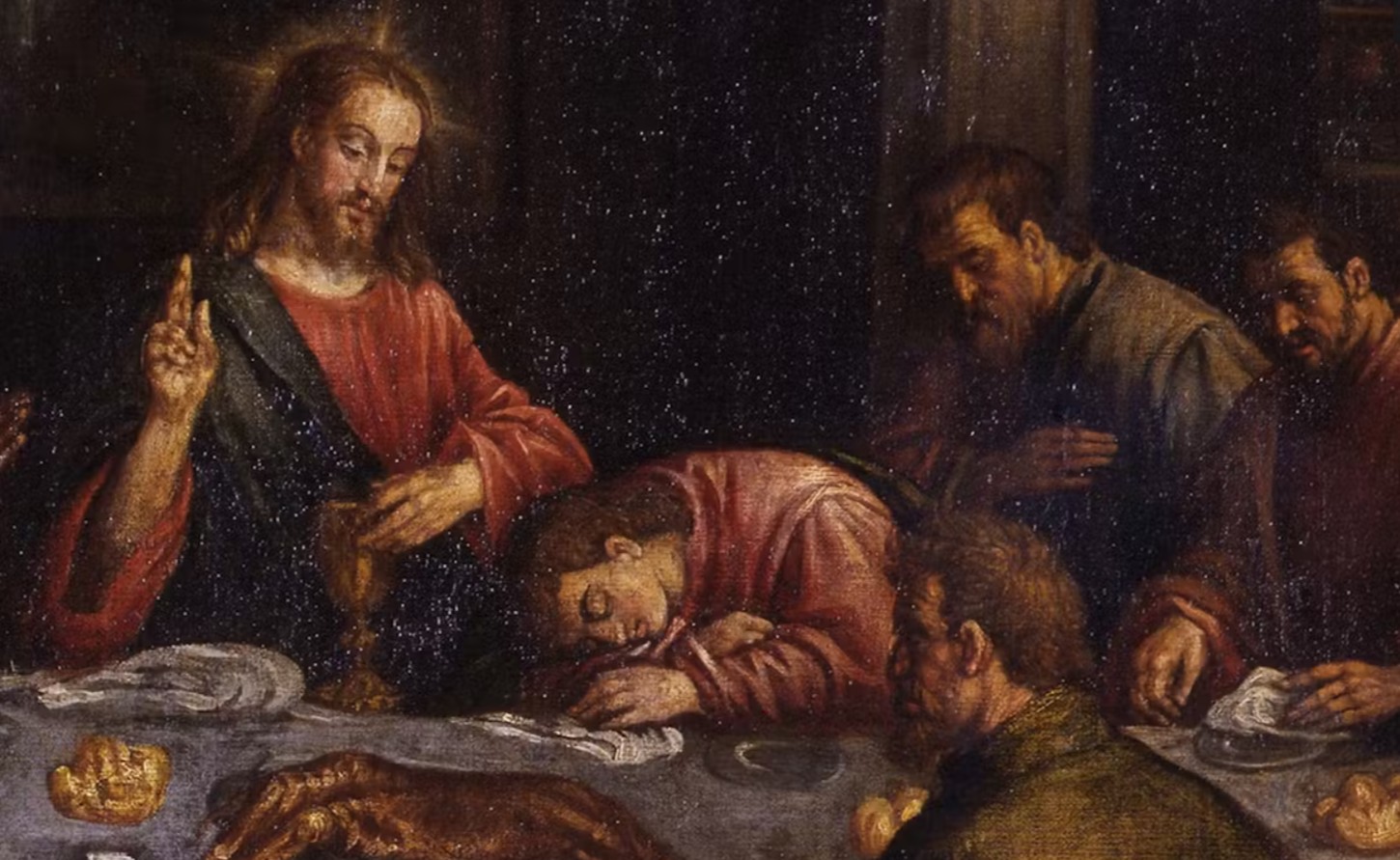
Oggi è Giovedì Santo, il giorno dedicato al ricordo dell’Ultima Cena e per l’occasione vi propongo quella che dipinse a olio su tela Leandro Bassano attorno al 1590, oggi custodita nella Galeria Palatina di Palazzo Pitti, a Firenze.
L’opera arrivò a Firenze da Urbino con la dote di Vittoria della Rovere del 1631 che sposò Ferdinando II.
Il Bassano dipinse l’Ultima Cena scegliendo il momento in cui Cristo consacra il pane come il Suo corpo e il vino come Sangue, preannunciando ciò che gli accadrà di lì a poco ovvero l’estremo sacrifico sulla Croce per espiare i peccati dell’intera umanità e diffondere lo Spirito Santo su tutti.

Ora, mentre essi mangiavano, Gesù prese il pane e, pronunziata la benedizione, lo spezzò e lo diede ai discepoli dicendo: «Prendete e mangiate; questo è il mio corpo». Poi prese il calice e, dopo aver reso grazie, lo diede loro, dicendo: «Bevetene tutti, perché questo è il mio sangue dell’alleanza, versato per molti, in remissione dei peccati. lo vi dico che da ora non berrò più di questo frutto della vite fino al giorno in cui lo berrò nuovo con voi nel regno del Padre mio» (Matteo 26, 26-29).
Attorno al grande tavolo siedono i discepoli. L’artista diede a ciascuno caratteristiche ben precise attraverso la loro gestualità e i tratti del volto particolarmente espressivi.
E’ percettibile la tensione che si respira in quel momento, provocata dal drammatico annuncio di Cristo del tradimento da parte di uno degli apostoli che siede alla mensa: Giuda.
La scena dell’Ultima Cena si svolge dentro una stanza che ha tutto l’aspetto di un ambiente tardo-rinascimentale. Aguzzando la vista, riuscirete a vedere in secondo piano sulla destra, la cucina con tanto di pentole e cuoca alle prese con il fuoco.
Dietro la tavola apparecchiata si apre una finestra che lascia intravedere un paesaggio montano. Sebbene siano molti gli elementi di vita quotidiana che il Bassano dipinge, vengono alternati a elementi di forte simbolismo sacro.
Sul tavolo, accanto a ogni apostolo, c’è una pagnotta: simbolo dell’Eucarestia e del momento della sua istituzione.

Il gatto in primo piano che spesso nell’Ultima Cena viene posto dietro Giuda come simbolo del tradimento, in questo caso è dipinto dietro un altro apostolo.
E’ il cane bianco e nero poco distante, invece, abitualmente simbolo di fedeltà, che viene collocato vicino a Giuda,in attesa che possa dargli qualche osso o resto della cena.
L’apostolo che tradirà Cristo sta per toccare l’agnello sacrificale, simbolo di Cristo sulla Croce. Con la mano opposta stringe invece la borsa contenente i 30 denari ricevuta dalle autorità del Sinedrio per consegnare Cristo.
Per il momento il sempre vostro Michelangelo Buonarroti vi saluta dandovi appuntamento ai prossimi post e sui social.
Easter Works: The Last Supper by Leandro Bassano
Today is Holy Thursday, the day dedicated to the memory of the Last Supper and for the occasion I propose the one that Leandro Bassano painted in oil on canvas around 1590, today kept in the Palatina Gallery of Palazzo Pitti, in Florence.
The work arrived in Florence from Urbino with the dowry of Vittoria della Rovere in 1631 who married Ferdinand II. Bassano painted the Last Supper choosing the moment in which Christ consecrates the bread as His body and the wine as Blood, foretelling what will happen to him shortly thereafter, namely the extreme sacrifice on the Cross to atone for the sins of all humanity and spread the Holy Spirit on all.
Now, while they were eating, Jesus took bread, and when he had said the blessing, he broke it and gave it to the disciples, saying, “Take and eat; this is my body.” Then he took the cup, and when he had given thanks, he gave it to them, saying, “Drink from it, all of you; for this is my blood of the covenant, which is poured out for many for the forgiveness of sins. But I tell you, I will not drink of this fruit of the vine from now on until that day when I drink it new with you in my Father’s kingdom” (Matthew 26:26-29).
The disciples sit around the large table. The artist gave each one very specific characteristics through their gestures and particularly expressive facial features. The tension that reigns at that moment is perceptible, caused by Christ’s dramatic announcement of the betrayal by one of the apostles sitting at the table: Judas.
The scene of the Last Supper takes place in a room that has all the appearance of a late-Renaissance setting. If you look closely, you will be able to see in the background on the right, the kitchen with all the pots and pans and a cook struggling with the fire.
Behind the set table there is a window that allows a glimpse of a mountain landscape.
Although Bassano paints many elements of daily life, they are alternated with elements of strong sacred symbolism.
On the table, next to each apostle, there is a loaf of bread: a symbol of the Eucharist and the moment of its institution.
It is the black and white dog nearby, usually a symbol of fidelity, that is placed near Judas, waiting for him to give him some bones or the remains of the dinner.
The cat in the foreground, which in the Last Supper is often placed behind Judas as a symbol of betrayal, in this case is painted behind another apostle.
The apostle who will betray Christ is about to touch the sacrificial lamb, a symbol of Christ on the Cross. With the opposite hand he instead holds the bag containing the 30 denarii received from the authorities of the Sanhedrin to hand over Christ.
For now, yours ever Michelangelo Buonarroti bids you farewell, making an appointment to see you in the next posts and on social media.

Sostienici – Support Us
Se questo blog ti piace e ti appassiona, puoi aiutarci a farlo crescere sempre più sostenendoci in modo concreto condividendo i post, seguendo le pagine social e con un contributo che ci aiuta ad andare avanti con il nostro lavoro di divulgazione. . ENGLISH: If you like and are passionate about this blog, you can help us make it grow more and more by supporting us in a concrete way by sharing posts, following social pages and with a contribution that helps us to move forward with our dissemination work.
10,00 €
Condividi:


Questo sono io





sostienici

Sostienici – Support Us
Se questo blog ti piace e ti appassiona, puoi aiutarci a farlo crescere sempre più sostenendoci in modo concreto condividendo i post, seguendo le pagine social e con un contributo che ci aiuta ad andare avanti con il nostro lavoro di divulgazione. . ENGLISH: If you like and are passionate about this blog, you can help us make it grow more and more by supporting us in a concrete way by sharing posts, following social pages and with a contribution that helps us to move forward with our dissemination work.
€10,00


