
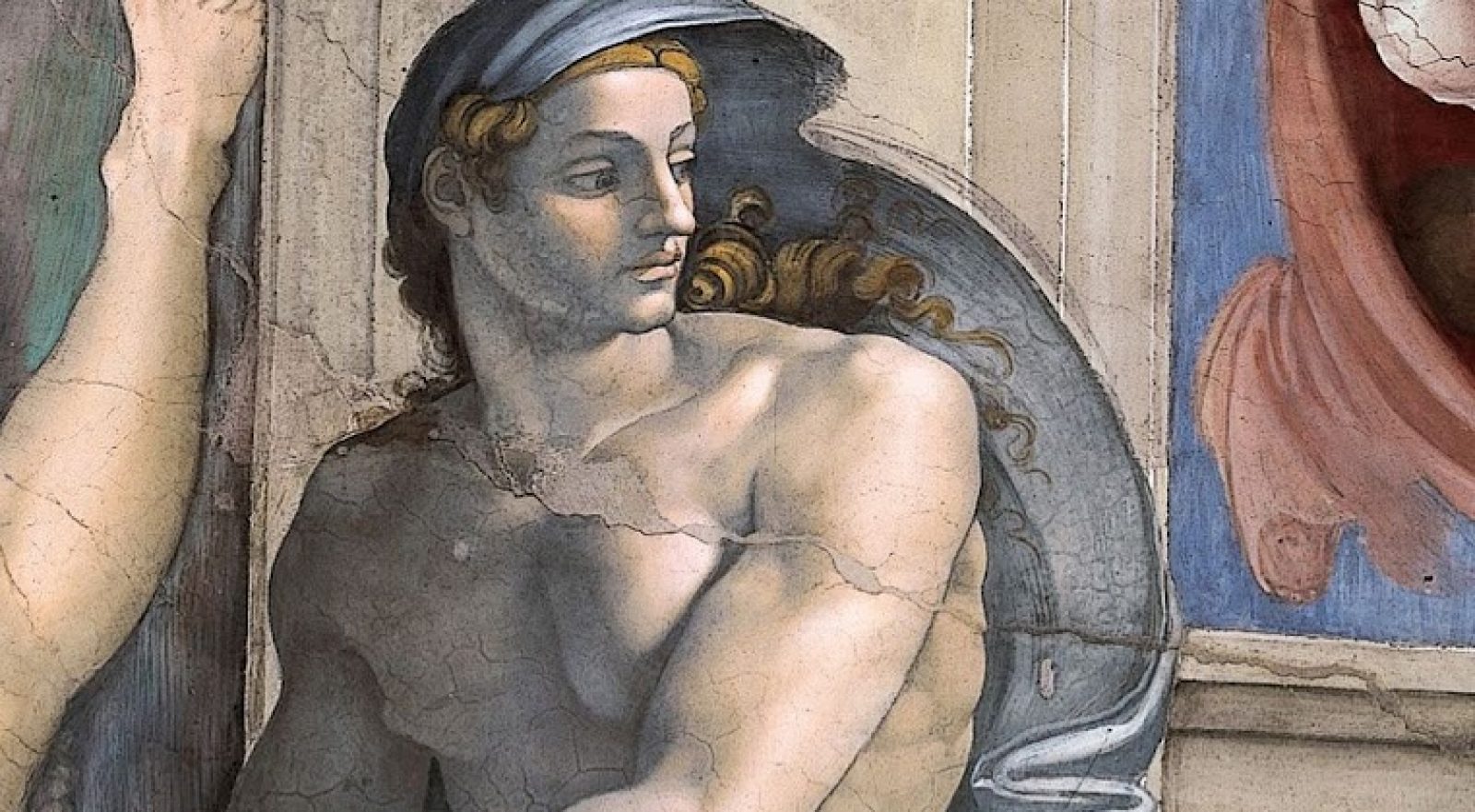
Michelangelo 550: Io che svelo il David nel dipinto di Pollastrini
In occasione dei 550 anni dalla mia nascita, vi propongo un dipinto poco noto ma che a me piace molto.
Il titolo originale del dipinto è “Michelangelo scopre al pubblico la statua del David” ed è custodito a Viareggio, nell’Istituto Matteucci.
Si tratta di un dipinto a olio su tela realizzato da Enrico Pollastrini nel 1863 e raffigura me sopra i ponteggi mentre sto togliendo il drappo che fino al momento celava il David al pubblico.
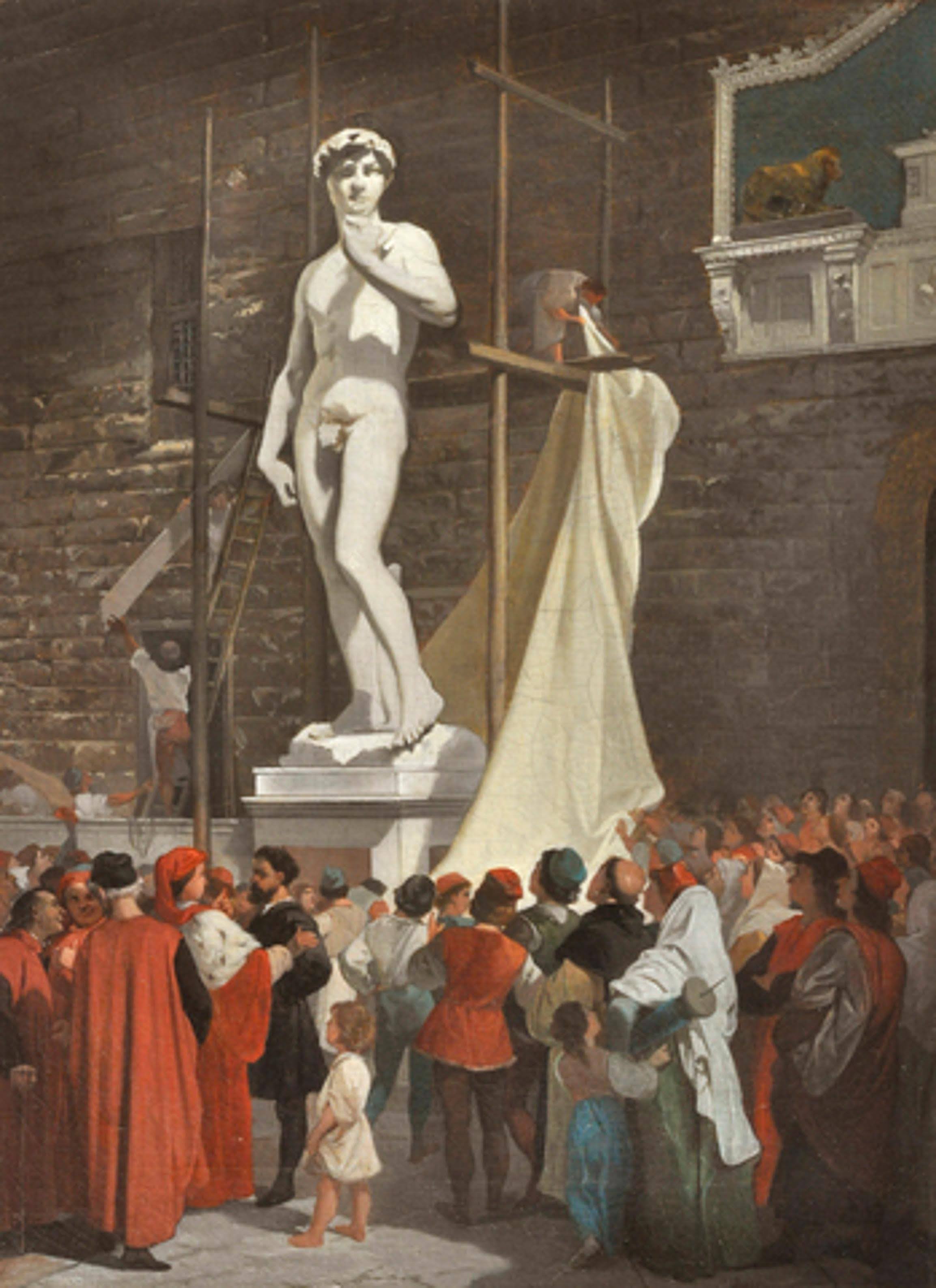
Il giorno raffigurato da Pollastrini è l’8 settembre del 1504. probabilmente il Pollastrini disconosceva il fatto avessi provveduto a dorare la cinghia della fionda e il broncone, ovvero il pezzo di tronco che aumenta la superficie d’appoggio del David che si trova immediatamente dietro il polpaccio destro.
Avevo fatto realizzare anche una ghirlanda in filo d’ottone con ventotto foglie in rame ma ancora gli storici si stanno scervellando per capire se realmente fu messa in testa al David o meno.
La scelta della data dell’8 settembre non è casuale ma è il giorno in cui si celebra la nascita della Madonna e Firenze è una città particolarmente devota alla Madonna. Inaugurando l’opera in una data così importante, si pensava potesse essere di buon auspicio.
Vi faccio notare una particolarità.
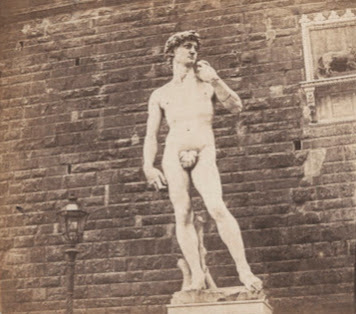
Osservando bene il David vi renderete conto che le sue nudità sono coperte dalla foglia di fico. Pollastrini dipinse il David così come lo conosceva all’epoca.
Non aveva certo la foglia quando lo rivelai al mondo ma nell’Ottocento sì.
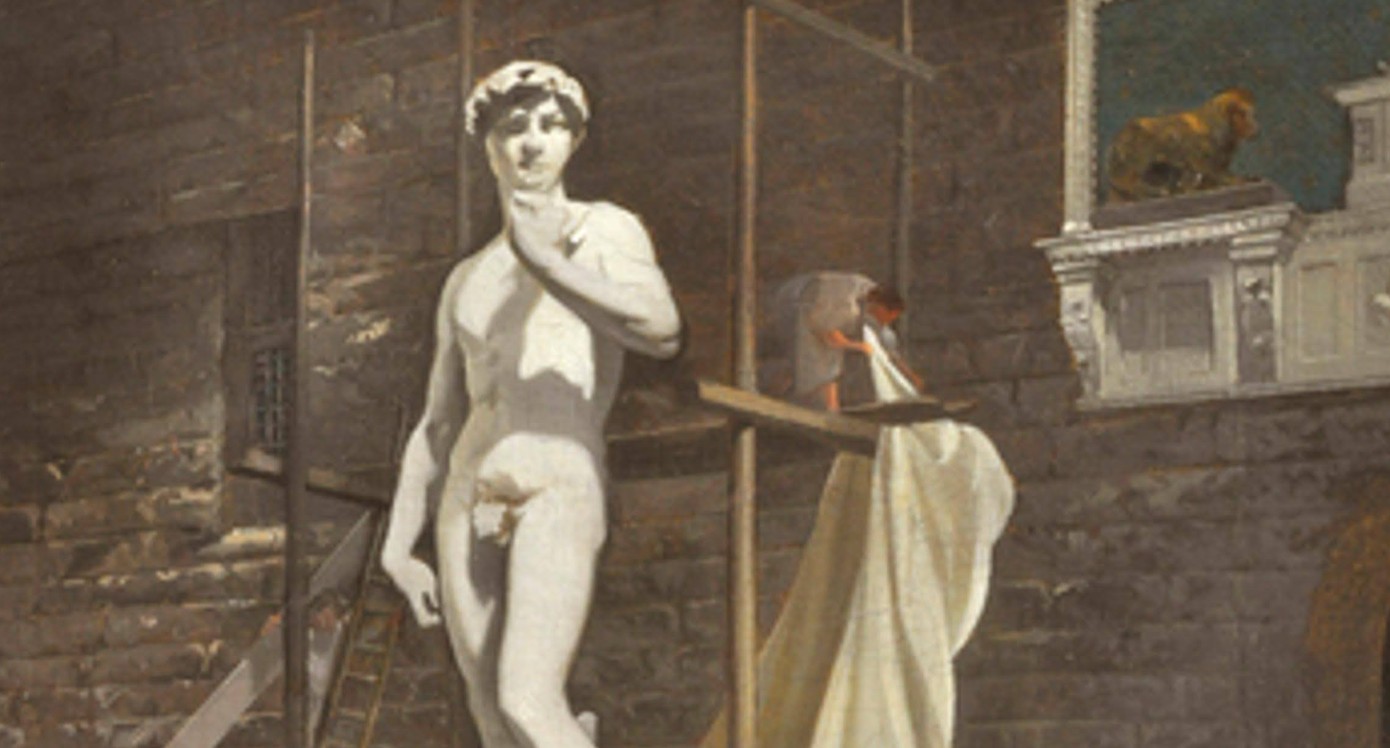
Anzi, una foglia censoria fu messa al David non molto tempo la mia partenza definitiva da Firenze e se ne trova traccia in una lettera che mi scrisse Pietro Aretino nella quale, citando i nudi del Giudizio Universale, fa riferimento proprio alla censura che era stata fatta sul mio David che però non ebbi mai modo di vedere con i miei occhi. A Firenze ritornai solo da morto.
Fatto sta che il David originale mantenne la foglia di fico anche dopo la sua entrata trionfale nella Galleria dell’Accademia e fu rimossa tempo dopo, prima dello scoppio della Seconda Guerra Mondiale.
Per il momento il sempre vostro Michelangelo Buonarroti vi saluta dandovi appuntamento ai prossimi post e sui social.
Michelangelo 550: Me revealing David in Pollastrini’s painting
On the occasion of the 550th anniversary of my birth, I propose a little-known painting that I like very much.
This oil on canvas work was painted by Enrico Pollastrini in 1863 and depicts me on the scaffolding while I am removing the drape that until then had hidden David from the public.
The original title of the painting is “Michelangelo discovers the statue of David to the public” and is kept in Viareggio, in the Matteucci Institute.
The day depicted by Pollastrini is September 8, 1504. Pollastrini probably did not recognize the fact that I had gilded the strap of the sling and the broncone, or the piece of trunk that increases the support surface of the David that is located immediately behind the right calf.
I also had a brass wire garland made with twenty-eight copper leaves but historians are still racking their brains to understand if it was actually placed on David’s head or not.
The choice of the date of September 8 is not accidental but it is the day on which the birth of the Madonna is celebrated and Florence is a city particularly devoted to the Madonna. Inaugurating the work on such an important date, it was thought to be a good omen.
I would like to point out a peculiarity. If you look closely at David you will realize that his nudity is covered by the fig leaf. Pollastrini painted David as he knew him at the time. He certainly did not have the leaf when I revealed him to the world but in the nineteenth century he did.
Indeed, a censorship leaf was placed on the David not long after my final departure from Florence and traces of it can be found in a letter that Pietro Aretino wrote to me in which, citing the nudes of the Last Judgement, he refers precisely to the censorship that had been placed on my David which however I never had the chance to see with my own eyes. I returned to Florence only after death.
The fact is that the original David kept the fig leaf even after its triumphal entry into the Galleria dell’Accademia and it was removed some time later, before the outbreak of the Second World War.
For the moment, yours truly Michelangelo Buonarroti bids you farewell and gives you an appointment for the next posts and on social media.

Sostienici – Support Us
Se questo blog ti piace e ti appassiona, puoi aiutarci a farlo crescere sempre più sostenendoci in modo concreto condividendo i post, seguendo le pagine social e con un contributo che ci aiuta ad andare avanti con il nostro lavoro di divulgazione. . ENGLISH: If you like and are passionate about this blog, you can help us make it grow more and more by supporting us in a concrete way by sharing posts, following social pages and with a contribution that helps us to move forward with our dissemination work.
10,00 €
Condividi:


Questo sono io





sostienici

Sostienici – Support Us
Se questo blog ti piace e ti appassiona, puoi aiutarci a farlo crescere sempre più sostenendoci in modo concreto condividendo i post, seguendo le pagine social e con un contributo che ci aiuta ad andare avanti con il nostro lavoro di divulgazione. . ENGLISH: If you like and are passionate about this blog, you can help us make it grow more and more by supporting us in a concrete way by sharing posts, following social pages and with a contribution that helps us to move forward with our dissemination work.
€10,00


