
Michelangelo 550: il restauro della lapide mia in Santa Croce
In occasione dei 550 anni dalla mia nascita che festeggio proprio oggi 6 marzo, è stata restaurata la grande lapide tombale della mia famiglia, i Buonarroti.
Proprio sotto quella lastra tombale son sepolto anch’io e non nella tomba a parete progettata dal Vasari come molti credono.
L’intervento di restauro è stato promosso dall’Opera di Santa Croce e condotto dall’Opificio delle Pietre Dure. Verrà presentato in via ufficiale proprio questa mattina, nel giorno in cui si ricordano i 550 anni dalla mia nascita.
Alle ore 10 verrà collocata una triplice corona di alloro davanti alla mia tomba e sarà presente Cristina Acidini, attualmente presidente dell’Opera di Santa Croce e dell’Accademia delle Arti del Disegno, con l’assessore alla Cultura Giovanni Bettarini.
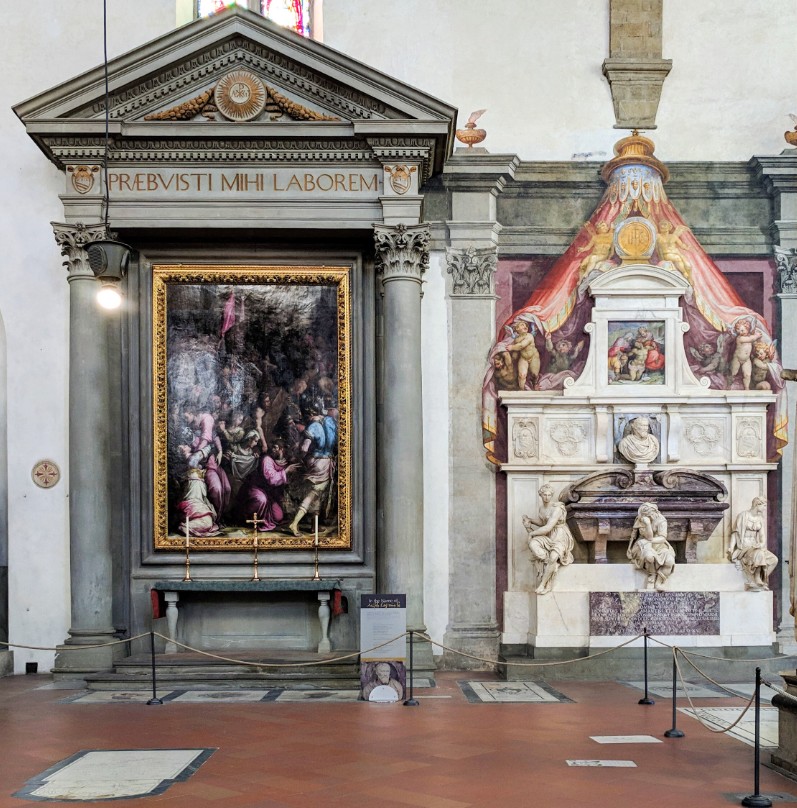
Il legame che la mia famiglia ebbe con la basilica di Santa Croce e il lquartiere è molto stretto. Proprio a lato del monumento funebre mio, c’è l’altare di famiglia che sta lì dal 1570 e davanti, a terra, è presente la lapide appena restaurata.
Le caratteristiche della mia lastra tombale
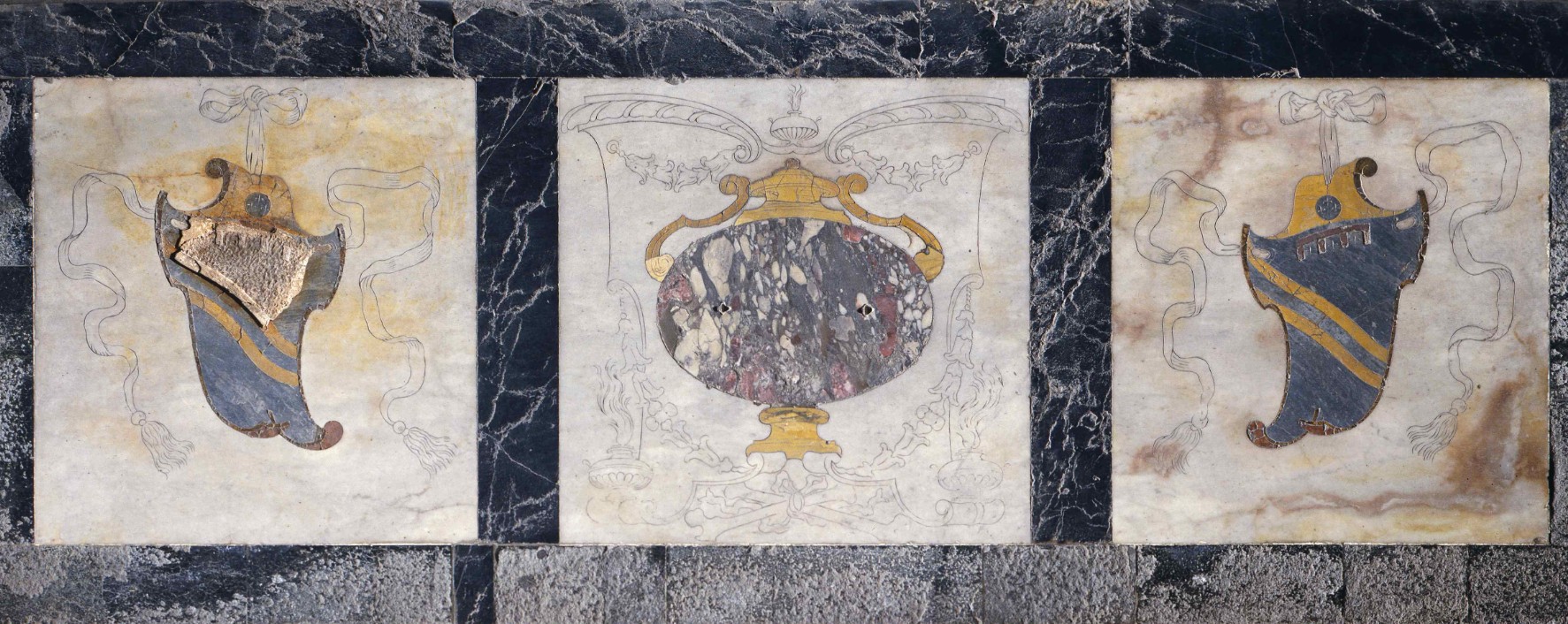
la lastra che chiude il mio sepolcro venne realizzata a intarsio. È suddivisa in tre riquadri di marmo bianco di Carrara, delimitati da una fascia di serpentino verde di Prato.
Nei riquadri laterali sono presenti due stemmi dei famiglia a forma di scudo accartocciato inclinato con due le due bande gialle su campo azzurro.

In alto si vede il lambello araldico, ovvero la striscia rossa simbolo dei d’Angiò, distintivo della parte guelfa, poi le lettere L e X, posizionate lì su concessione di Leone X per i meriti dello stesso Michelangelo.
Al centro, proprio in corrispondenza della botola, è raffigurato un vaso decorativo. Sono tante le piere di origine toscana usate per la lastra tombale di famiglia. Oltre infatti al marmo bianco di Carrara, il bardiglio, il giallo di Siena, la pietra alberese, il rosso Maremma, la breccia medicea.
Il restauro
La tarsia marmorea nel corso del tempo è stata danneggiata dall’usura e l’alluvione del 1966 ha contribuito ad aumentare il danneggiamento in modo significativo.
Il restauro è iniziato con la pulitura a cui è seguito il consolidamento delle sezioni lapidee interessate da disgregazione e fratturazione.
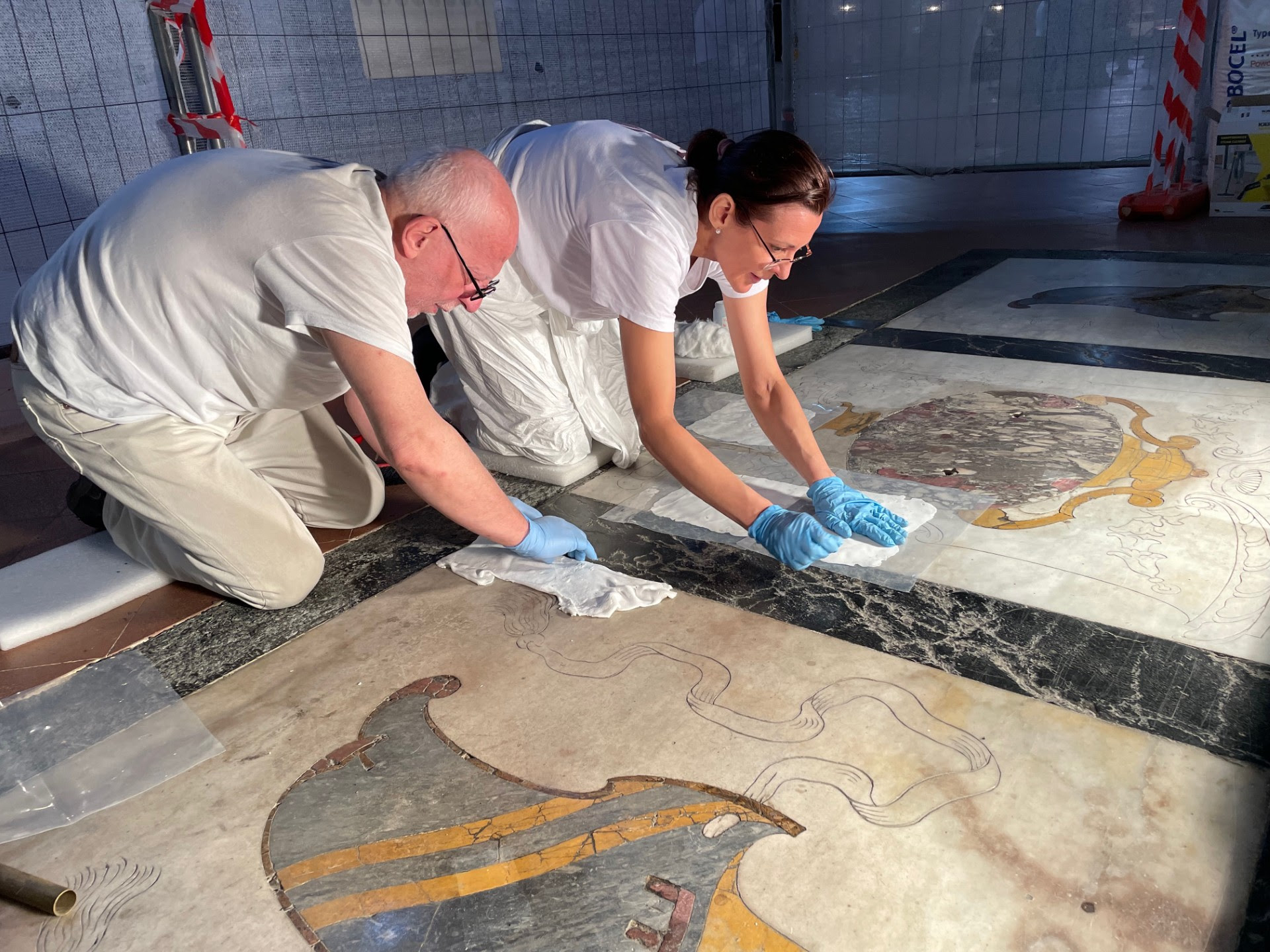
Si è proceduto poi con la stuccatura delle lacune di minima entità e un intervento integrativo per una grande lacuna del riquadro sinistro.
Il cantiere è stato diretto da Lorenza Alcaro, funzionario dell’Opificio delle Pietre Dure.
Sono stati coinvolti i settori di Restauro mosaico e commesso diretto da Anna Patera e Materiali lapidei diretto da Riccardo Gennaioli, oltre al Laboratorio scientifico che si è occupato della diagnostica di supporto al restauro.
Per il momento il sempre vostro Michelangelo Buonarroti vi saluta dandovi appuntamento ai prossimi post e sui social.
Michelangelo 550: the restoration of my tombstone in Santa Croce
On the occasion of the 550th anniversary of my birth, which I celebrate today, March 6, the large tombstone of my family, the Buonarrotis, has been restored.
I am buried right under that tombstone, and not in the wall tomb designed by Vasari as many believe.
The restoration work was promoted by the Opera di Santa Croce and conducted by the Opificio delle Pietre Dure and will be officially presented this morning, on the day in which we commemorate the 550th anniversary of my birth.
At 10 a.m. a triple laurel wreath will be placed in front of my tomb and Cristina Acidini, currently president of the Opera di Santa Croce and the Accademia delle Arti del Disegno, will be present, with the councilor for Culture Giovanni Bettarini.
The bond that my family had with the Basilica of Santa Croce and the neighborhood is very close. Right next to my funerary monument, there is the family altar that has been there since 1570 and in front, on the ground, there is the recently restored tombstone.
The characteristics of my tombstone
the slab that closes my tomb was made with inlay. It is divided into three squares of white Carrara marble, delimited by a band of green serpentine from Prato.
In the side squares there are two family coats of arms in the shape of a slanted crumpled shield with two yellow bands on a blue field.
At the top you can see the heraldic lambrequin, or rather the red stripe symbol of the d’Angiò, distinctive of the Guelph party, then the letters L and X, placed there by concession of Leo X for the merits of Michelangelo himself.
In the center, right next to the trapdoor, there is a decorative vase. There are many stones of Tuscan origin used for the family tombstone. In addition to the white Carrara marble, the Bardiglio, the Siena yellow, the Alberese stone, the Maremma red, the Medici breccia.
The restoration
The marble inlay has been damaged over time by wear and tear and the flood of 1966 contributed to significantly increasing the damage.
The restoration began with cleaning, followed by the consolidation of the stone sections affected by disintegration and fracturing.
We then proceeded with the filling of the small gaps and an integrative intervention for a large gap in the left panel.
The construction site was directed by Lorenza Alcaro, an official of the Opificio delle Pietre Dure.
The Mosaic and Mortar Restoration sectors directed by Anna Patera and Stone Materials directed by Riccardo Gennaioli were involved, in addition to the Scientific Laboratory which took care of the diagnostics to support the restoration.
For now, yours ever Michelangelo Buonarroti bids you farewell, making an appointment to see you in the next posts and on social media.

Sostienici – Support Us
Se questo blog ti piace e ti appassiona, puoi aiutarci a farlo crescere sempre più sostenendoci in modo concreto condividendo i post, seguendo le pagine social e con un contributo che ci aiuta ad andare avanti con il nostro lavoro di divulgazione. . ENGLISH: If you like and are passionate about this blog, you can help us make it grow more and more by supporting us in a concrete way by sharing posts, following social pages and with a contribution that helps us to move forward with our dissemination work.
10,00 €
Condividi:


Questo sono io





sostienici

Sostienici – Support Us
Se questo blog ti piace e ti appassiona, puoi aiutarci a farlo crescere sempre più sostenendoci in modo concreto condividendo i post, seguendo le pagine social e con un contributo che ci aiuta ad andare avanti con il nostro lavoro di divulgazione. . ENGLISH: If you like and are passionate about this blog, you can help us make it grow more and more by supporting us in a concrete way by sharing posts, following social pages and with a contribution that helps us to move forward with our dissemination work.
€10,00


1 commento »