
Bernini e la Cattedra di San Pietro: un Capolavoro
La Cattedra di San Pietro, capolavoro di Gian Lorenzo Bernini, è uno dei simboli più iconici del cuore pulsante della cristianità, in Vaticano.
Fu progettata come un reliquiario, per custodire l’antico seggio che leggenda voleva appartenesse proprio a San Pietro. Studi successivi poi hanno ampliamente dimostrato che in realtà si tratta di un antico seggio di epoca carolingia, IX secolo, che poco ha a che fare con l’apostolo. Pensate un po’, il seggio ha origine pagana tanto che venne decorato con placchette in avorio che rappresentano le Fatiche di Ercole.
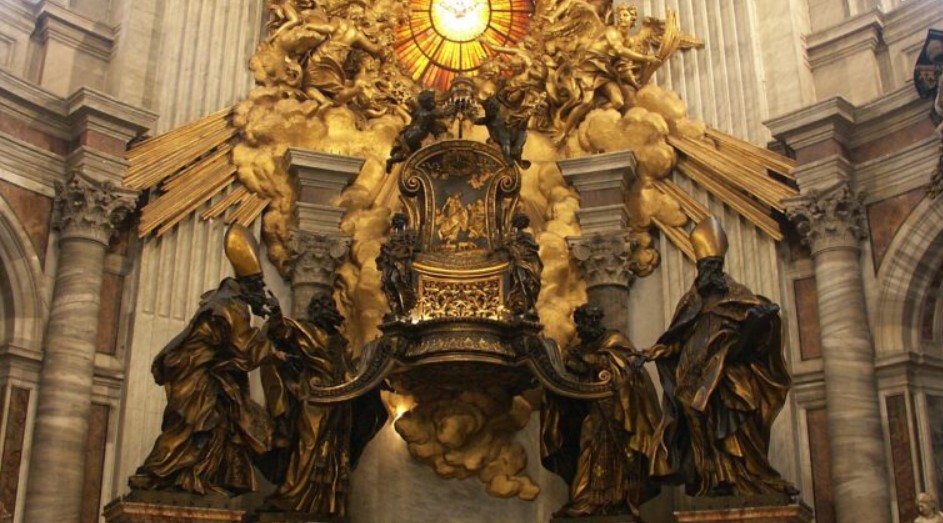
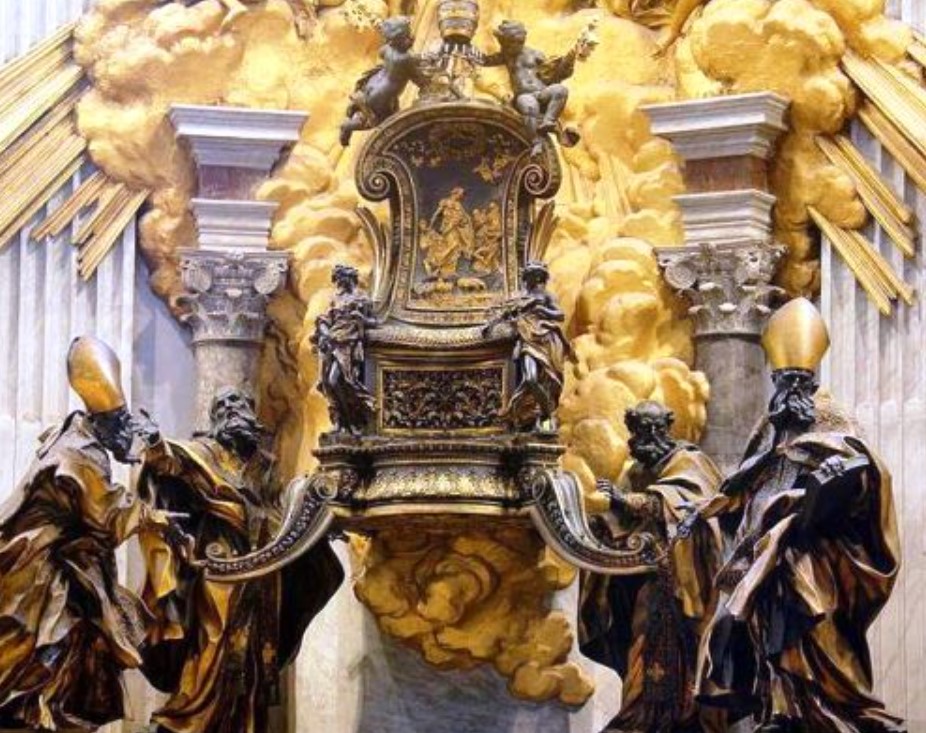
Il trono che custodisce l’antico manufatto, è fiancheggiato da due angeli che sorreggono le chiavi e la tiara papale.
La storia della Cattedra di San Pietro
Ma chi fu a commissionare quell’enorme capolavoro in bronzo?
Fu papa Alessandro VII ad affidare il compito di riempire la parte terminale dell’abside con qualcosa di grandioso. Correva l’anno 1656 e il Bernini, senza perdere tempo, si mise subito al lavoro ideando differenti progetti.
Volle far realizzare un modello in scala 1:1 di un progetto ritenuto il migliore di quelli fino al momento pensati. Sia il Bernini che papa Alessandro VII si resero conto immediatamente che una struttura di quelle dimensioni sarebbe stata troppo piccola da collocare in un ambiente così grande.
Fu in quel momento preciso che di comune accordo, decisero di raddoppiare le dimensioni del progetto. Le dimensioni attuali del complesso monumentale raggiungono i 14,74 metri d’altezza
Come sapete io ero molto meticoloso nel realizzare le opere ma devo ammettere che il Bernini per questo aspetto mi batteva. Durante la realizzazione della Cattedra e della Gloria retrostante, non c’era giorno in cui non si arrampicasse sui ponteggi per aggiustare, ritoccare e cesellare personalmente ciò che meno gli aggradava.
A volte la vita fa giri inaspettati e non sempre per colpa o meriti propri. Infatti, nel 1665 il pontefice obbligò Bernini obbligò ad andare in Francia. Lì avrebbe dovuto farsi carico di un altro importante progetto. Gian Lorenzo non ne voleva sapere di lasciare alla mercè dei suoi aiutanti la Cattedra e la Gloria.
Provò a desistere ma alla fine gli toccò obbedire al papa ma non mollò il punto. Infatti, qualche mese più tardi, riuscì a far ritorno a Roma per seguire da vicino il cantiere.
Finalmente nel 1666, vennero inaugurate la Cattedra e la Gloria di San Pietro. Il papa cadde in ginocchio stupefatto e iniziò a pregare: un po’ come fece papa Paolo III vedendo il Giudizio Universale terminato.
Le opere che caratterizzano la Cattedra di San Pietro
In basso sono collocate le quattro grandi sculture in bronzo dei padri fondatori della chiesa che sorreggono la cattedra di San Pietro.
A vederle così non sembra ma hanno dimensioni colossale: sono alte infatti più di 5 metri.
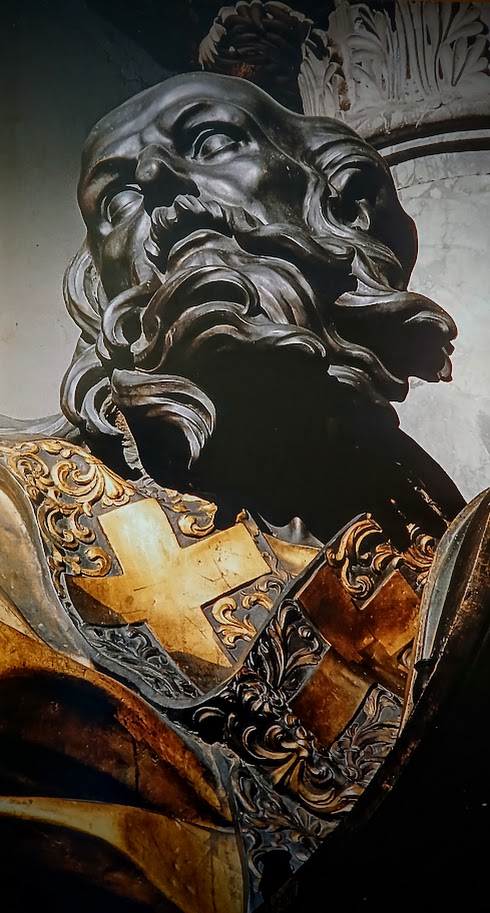
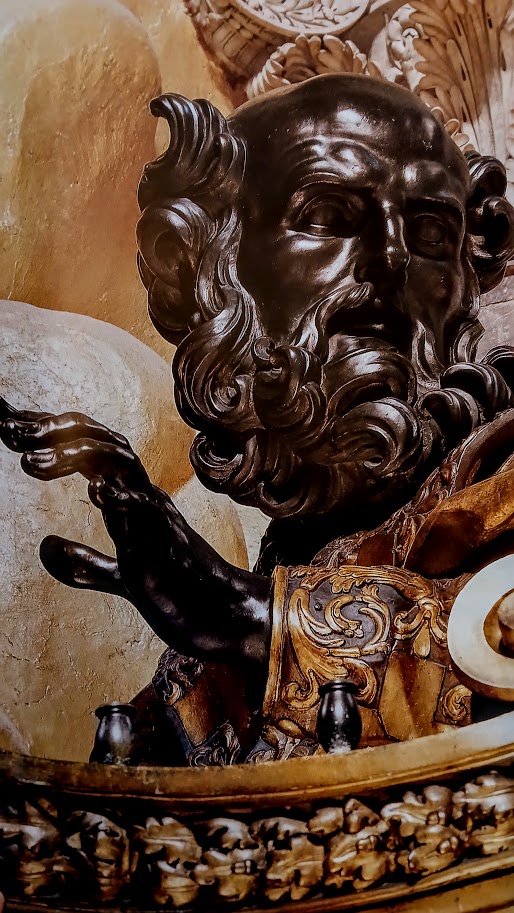
Un po’ le loro dimensioni si perdono nella vastità della basilica ma in realtà sono tutte e quattro alte più di 5 metri. Le sculture davanti rappresentano Sant’Agostino e Sant’Ambrogio, padri fondatori della chiesa occidentale, mentre alle loro spalle ci sono i padri di quella orientale: Sant’Anastasio e San Giovanni Cristomo.
Il trono in bronzo è alto più di sette metri e contiene quella che era considerata una preziosissima reliquia: la cattedra in legno e avorio sulla quale si sedeva San Pietro per predicare. In realtà poi studi molto più recenti hanno svelato si trattasse di un’opera Carolingia realizzata probabilmente poco prima dell’875.
Cosa c’è raffigurato sullo schienale della Cattedra di San Pietro
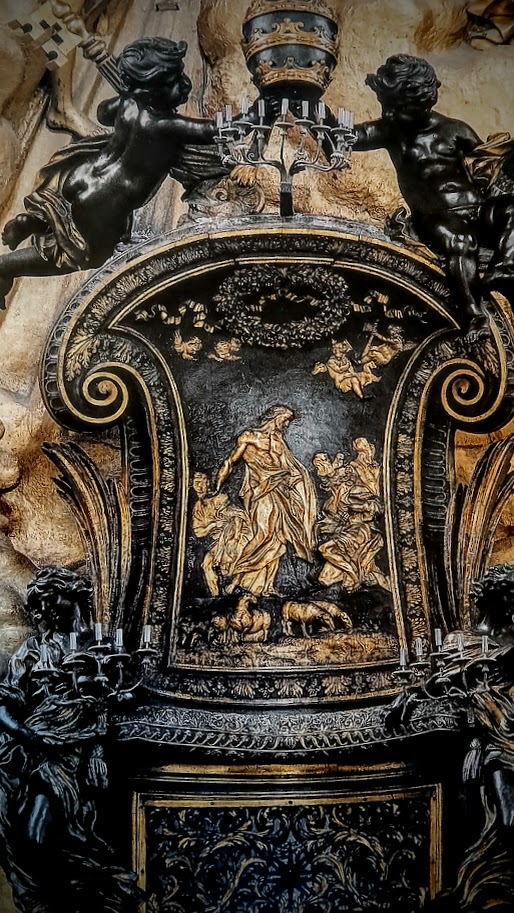
Lo schienale in bronzo della Cattedra è istoriato. Si vede Cristo che affida a Pietro la guida della Chiesa mentre sui lati si vedono due altri bassorilievi: a destra la ‘Consegna delle chiavi’ mentre a sinistra la ‘Lavanda dei piedi’.
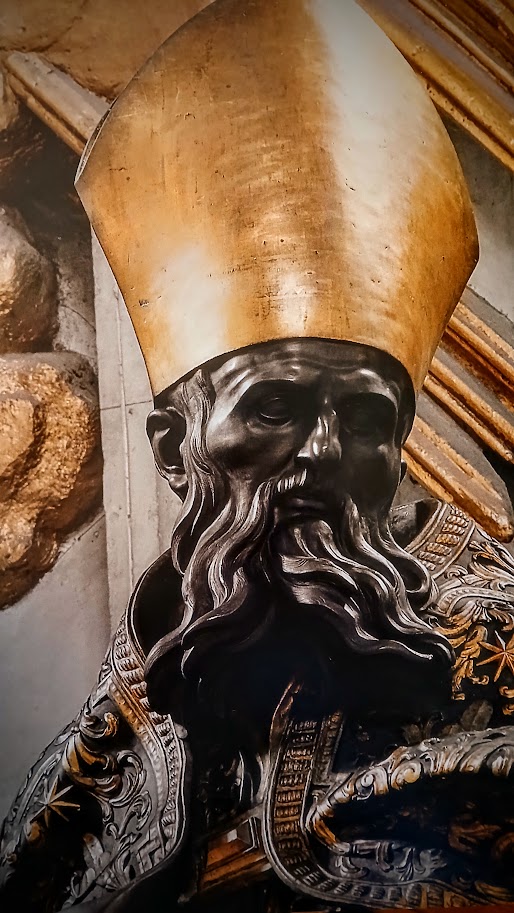
I quattro Santi
A reggere il trono sono le enormi sculture dei quattro Dottori della Chiesa greca e latina.
In primo piano si vedono Sant’Ambrogio a Sinistra e Sant’Agostino a destra mentre dietro c’è Sant’Atanasio a sinistra e San Giovanni Cristomo dalla parte opposta.
Vi faccio notare un altro dettaglio. Sul basamento in marmo nero proveniente dall’Aquitania vennero inseriti gli emblemi papali di Alessandro VII, il pontefice committente.
Per il momento il sempre vostro Michelangelo Buonarroti vi saluta dandovi appuntamento ai prossimi post e sui social.
Jubilee 2025: Bernini’s Chair of St. Peter
The Chair of St. Peter, a masterpiece by Gian Lorenzo Bernini, is one of the most iconic symbols of the beating heart of Christianity, in the Vatican.
It was designed as a reliquary, to house the ancient seat that legend had it belonged to St. Peter. Subsequent studies have amply demonstrated that it is actually an ancient seat from the Carolingian era, 9th century, which has little to do with the apostle. Just think, the seat has pagan origins, so much so that it was decorated with ivory plaques representing the Labors of Hercules.
The throne that houses the ancient artifact is flanked by two angels holding the keys and the papal tiara.
The history of the Chair of St. Peter
But who commissioned that enormous bronze masterpiece?
It was Pope Alexander VII who entrusted the task of filling the terminal part of the apse with something grandiose. It was the year 1656 and Bernini, without wasting time, immediately got to work devising different projects.
He wanted to make a 1:1 scale model of a project considered the best of those thought up to that point. Both Bernini and Pope Alexander VII immediately realized that a structure of those dimensions would be too small to place in such a large environment.
It was at that precise moment that by mutual agreement, they decided to double the size of the project. The current dimensions of the monumental complex reach 14.74 meters in height.
As you know, I was very meticulous in creating the works but I must admit that Bernini beat me in this aspect. During the construction of the Chair and the Glory behind it, there was not a day in which he did not climb on the scaffolding to personally adjust, retouch and chisel what he least liked.
Sometimes life takes unexpected turns and not always through one’s own fault or merit. In fact, in 1665 the pontiff forced Bernini to go to France. There he was supposed to take charge of another important project. Gian Lorenzo did not want to hear of leaving the Chair and the Glory at the mercy of his assistants.
He tried to give up but in the end he had to obey the pope but he did not give up the point. In fact, a few months later, he managed to return to Rome to follow the construction site closely.
Finally in 1666, the Chair and the Glory of St. Peter were inaugurated. The pope fell to his knees in amazement and began to pray: a bit like Pope Paul III did when he saw the Last Judgement completed.
The works that characterize the Chair of St. Peter
At the bottom are the four large bronze sculptures of the founding fathers of the church that support the chair of St. Peter.
It doesn’t seem like it at first glance, but they are colossal in size: in fact, they are more than 5 meters tall.
Their size is somewhat lost in the vastness of the basilica, but in reality, all four are more than 5 meters tall. The sculptures in front represent Saint Augustine and Saint Ambrose, founding fathers of the Western Church, while behind them are the fathers of the Eastern Church: Saint Anastasius and Saint John Christ.
The bronze throne is more than seven meters tall and contains what was considered a very precious relic: the wooden and ivory chair on which Saint Peter sat to preach. In reality, much more recent studies have revealed that it was a Carolingian work probably made shortly before 875.
What is depicted on the back of the Chair of Saint Peter
The bronze back of the Chair is historiated. You can see Christ entrusting Peter with the leadership of the Church while on the sides you can see two other bas-reliefs: on the right the ‘Delivery of the Keys’ while on the left the ‘Washing of the Feet’.
The four Saints
Holding the throne are the enormous sculptures of the four Doctors of the Greek and Latin Church.
In the foreground you can see Saint Ambrose on the left and Saint Augustine on the right while behind there is Saint Athanasius on the left and Saint John Christ on the opposite side.
I would like to point out another detail. On the base in black marble from Aquitaine were inserted the papal emblems of Alexander VII, the commissioning pontiff.
For the moment, your always Michelangelo Buonarroti bids you farewell and gives you an appointment for the next posts and on social media.

Sostienici – Support Us
Se questo blog ti piace e ti appassiona, puoi aiutarci a farlo crescere sempre più sostenendoci in modo concreto condividendo i post, seguendo le pagine social e con un contributo che ci aiuta ad andare avanti con il nostro lavoro di divulgazione. . ENGLISH: If you like and are passionate about this blog, you can help us make it grow more and more by supporting us in a concrete way by sharing posts, following social pages and with a contribution that helps us to move forward with our dissemination work.
10,00 €
Condividi:


Questo sono io





sostienici

Sostienici – Support Us
Se questo blog ti piace e ti appassiona, puoi aiutarci a farlo crescere sempre più sostenendoci in modo concreto condividendo i post, seguendo le pagine social e con un contributo che ci aiuta ad andare avanti con il nostro lavoro di divulgazione. . ENGLISH: If you like and are passionate about this blog, you can help us make it grow more and more by supporting us in a concrete way by sharing posts, following social pages and with a contribution that helps us to move forward with our dissemination work.
€10,00


