
Battistero di Firenze: ultimato il restauro della Madre Terra
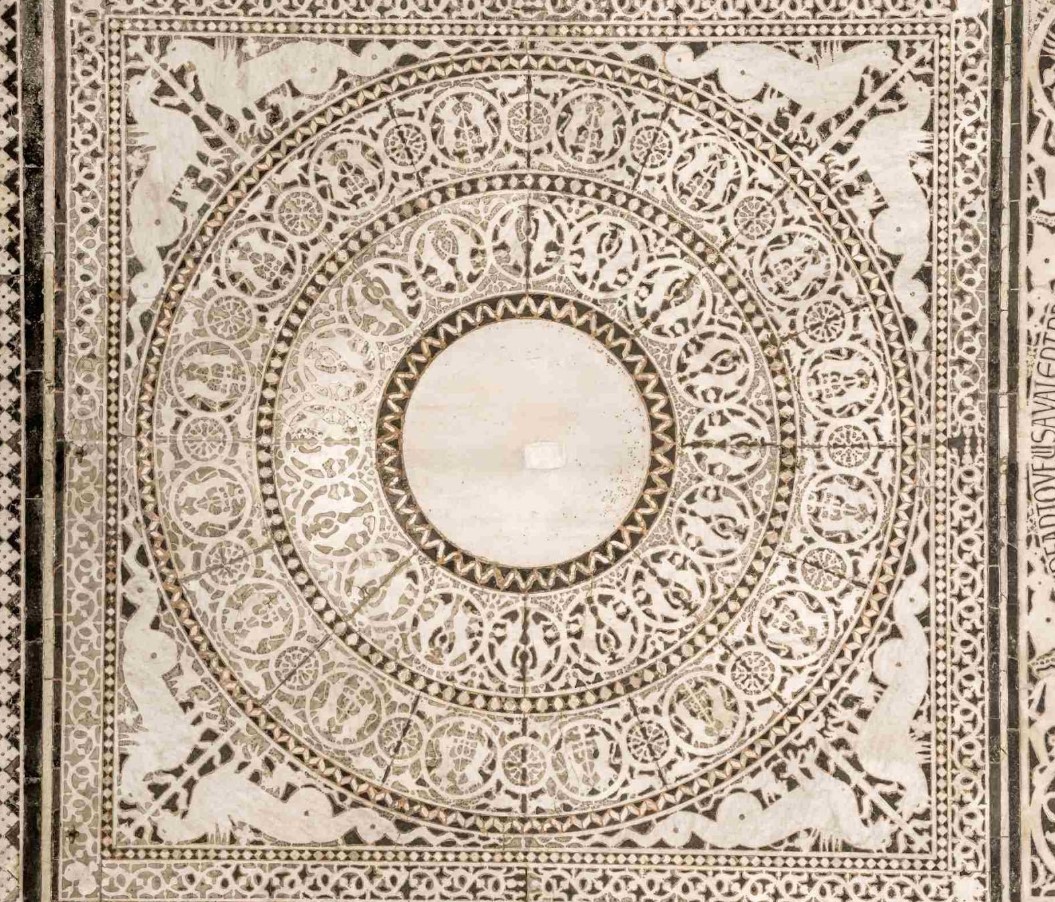
È stato portato a termine il restauro della Madre Terra, un intarsio marmoreo del pavimento del Battistero di Firenze realizzato in marmo bianco apuano e serpentino verde di Prato.
L’intricato lavoro raffigura animali fantastici orientaleggianti derivanti dai simurg, cioè i volatili della mitologia persiana assieme all’albero della vita, fiere e grifi rampanti.
Lo straordinario tappeto marmoreo nel corso degli anni è stato consumato dal continuo calpestio che aveva cancellato del tutto o in parte i tratti del disegno originale. Il restauro appena ultimato dell’intarsio marmoreo quadrato di 3,30 metri per lato, ha consentito di recuperare la leggibilità dell’opera.
L’intervento è stato diretto ed eseguito dal personale dell’Opera di Santa Maria del Fiore grazie al contributo economico di Tauck, principale operatore turistico e di crociere americano, che celebrerà il suo 100° anniversario a Firenze durante la prima settimana di febbraio.

Il restauro del Battistero
L’intervento sui pavimenti marmorei del Battistero fa parte di un più ampio progetto dell’Opera di Santa Maria del Fiore – sotto l’alta sorveglianza della Soprintendenza Archeologia, Belle Arti e paesaggio per la Città metropolitana di Firenze e le province di Prato e Pistoia – che prevede il restauro di tutto il monumento più antico di Firenze.
A partire dal 2014, sono state restaurate le facciate esterne e il manto di copertura per poi proseguire con le pareti interne con i mosaici. A oggi sono in corso di restauro i pavimenti e i mosaici medievali della volta, che ha preso avvio nel 2023 e terminerà tra 4 anni.
La storia e le caratteristiche della Madre Terra
La Madre Terra è uno dei tappeti marmorei a intarsio che forma la parte più antica della pavimentazione del Battistero. Si ipotizza possa risalire agli inizi del 1200 circa.
Faceva parte di un cammino sacro, eseguito in ogni processione, che prendeva avvio varcando la porta principale del Battistero più nota come la Porta del Paradiso, passando sopra il tappeto della Madre Terra, che simboleggiava il mondo terrestre con animali e piante, attraversava lo Zodiaco, la sfera celeste, per concludersi al fonte battesimale (rimosso nel Cinquecento) con il raggiungimento del mondo della grazia e della salvezza.
Il restauro
La Madre Terra è formata da lastre di marmo bianco apuano, accostate tra di loro con giunti di cinque millimetri, con intarsi in serpentino verde di Prato.
Prima del restauro mostrava un consumo notevole della superficie e importanti mancanze delle tarsie che rendevano illeggibile il quadrante così come nell’attigua pavimentazione dello Zodiaco.
In particolare il degrado del verde di Prato inizia con la frantumazione e il distacco di piccole scaglie e che tende ad accelerare velocemente nel tempo fino al suo completo disfacimento.
Il fenomeno è stato notevolmente amplificato dal calpestio avvenuto nel corso dei secoli e per questo l’Opera di Santa Maria del Fiore ha deciso di interdire l’accesso in queste parti della pavimentazione garantendone la visibilità al pubblico. L
’intervento di restauro ha restituito all’opera la sua leggibilità andando a ricostruire le geometrie scomparse, sulla base del disegno originale ancora presente su una parte dell’opera, seguendo i principi del restauro basati sui criteri di riconoscibilità e reversibilità dell’intervento.
Per il momento il sempre vostro Michelangelo Buonarroti vi saluta dandovi appuntamento ai prossimi post e sui social.
Florence Baptistery: Restoration of Mother Earth Completed
The restoration of Mother Earth, a marble inlay on the floor of the Baptistery of Florence made of white Apuan marble and green serpentine from Prato, has been completed.
The intricate work depicts fantastic oriental animals derived from the simurg, the birds of Persian mythology, along with the tree of life, wild beasts and rampant griffins.
Over the years, the extraordinary marble carpet has been worn down by constant trampling that had completely or partially erased the features of the original design. The recently completed restoration of the square marble inlay measuring 3.30 meters per side has made it possible to recover the legibility of the work.
The intervention was directed and carried out by the staff of the Opera di Santa Maria del Fiore thanks to the financial contribution of Tauck, the main American tour and cruise operator, which will celebrate its 100th anniversary in Florence during the first week of February.
The restoration of the Baptistery
The intervention on the marble floors of the Baptistery is part of a larger project by the Opera di Santa Maria del Fiore – under the high supervision of the Superintendence of Archaeology, Fine Arts and Landscape for the Metropolitan City of Florence and the provinces of Prato and Pistoia – which includes the restoration of the entire oldest monument in Florence.
Starting in 2014, the external facades and the roofing were restored and then continued with the internal walls with the mosaics. The medieval floors and mosaics of the vault are currently being restored, which began in 2023 and will end in 4 years.
The history and characteristics of Mother Earth
Mother Earth is one of the inlaid marble carpets that form the oldest part of the Baptistery flooring. It is thought to date back to around the beginning of 1200.
It was part of a sacred path, performed in every procession, which began by crossing the main door of the Baptistery better known as the Gates of Paradise, passing over the carpet of Mother Earth, which symbolized the terrestrial world with animals and plants, crossed the Zodiac, the celestial sphere, to end at the baptismal font (removed in the sixteenth century) with the achievement of the world of grace and salvation.
The restoration
Mother Earth is made up of slabs of white Apuan marble, joined together with five-millimeter joints, with inlays in green serpentine from Prato.
Before the restoration it showed considerable wear on the surface and important missing in the inlays that made the dial illegible as well as in the adjacent flooring of the Zodiac.
In particular, the degradation of the green of Prato begins with the shattering and detachment of small flakes and tends to accelerate quickly over time until its complete disintegration.
The phenomenon has been significantly amplified by trampling over the centuries and for this reason the Opera di Santa Maria del Fiore has decided to prohibit access to these parts of the pavement, guaranteeing visibility to the public. The
restoration intervention has returned the work to its legibility by reconstructing the disappeared geometries, on the basis of the original design still present on a part of the work, following the principles of restoration based on the criteria of recognizability and reversibility of the intervention.
For the moment, your ever Michelangelo Buonarroti bids you farewell, making an appointment with you in the next posts and on social media.

Sostienici – Support Us
Se questo blog ti piace e ti appassiona, puoi aiutarci a farlo crescere sempre più sostenendoci in modo concreto condividendo i post, seguendo le pagine social e con un contributo che ci aiuta ad andare avanti con il nostro lavoro di divulgazione. . ENGLISH: If you like and are passionate about this blog, you can help us make it grow more and more by supporting us in a concrete way by sharing posts, following social pages and with a contribution that helps us to move forward with our dissemination work.
10,00 €
Condividi:


Questo sono io





sostienici

Sostienici – Support Us
Se questo blog ti piace e ti appassiona, puoi aiutarci a farlo crescere sempre più sostenendoci in modo concreto condividendo i post, seguendo le pagine social e con un contributo che ci aiuta ad andare avanti con il nostro lavoro di divulgazione. . ENGLISH: If you like and are passionate about this blog, you can help us make it grow more and more by supporting us in a concrete way by sharing posts, following social pages and with a contribution that helps us to move forward with our dissemination work.
€10,00


