

Le simbologie nelle opere del Rinascimento: dadi, fichi, noci, ruote…
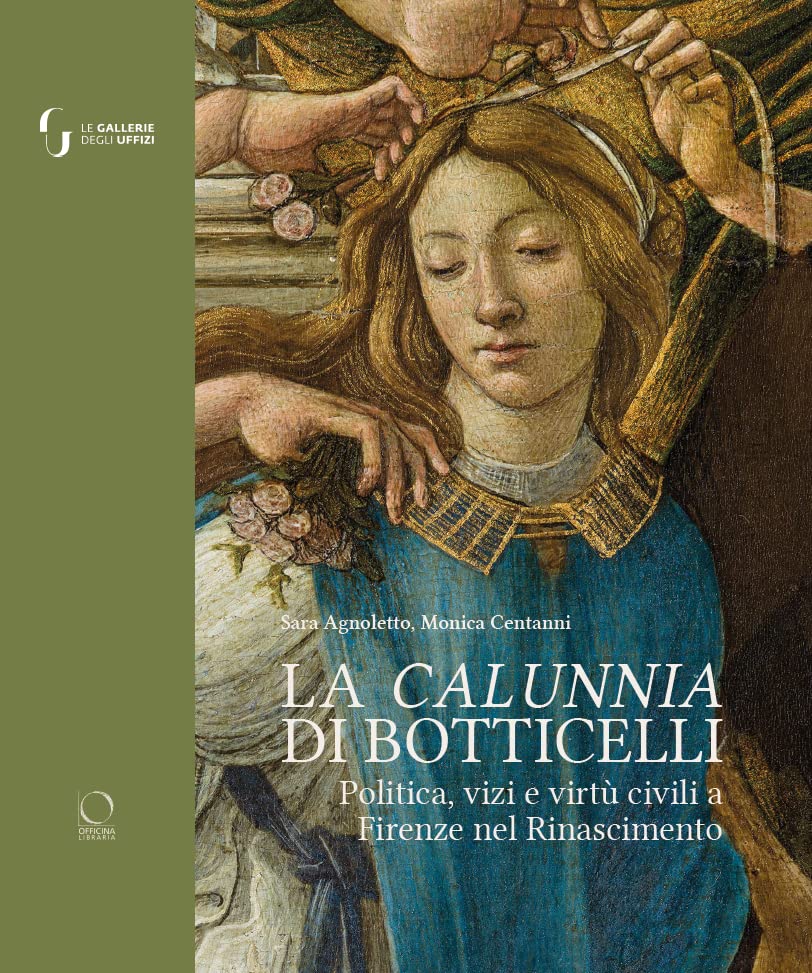
Quando ci si trova davanti a un dipinto o a una scultura realizzati nel periodo del Rinascimento, per comprenderne appieno il significato è necessario osservare con attenzione ogni dettaglio.
Non c’è mai niente di casuale e anche l’oggetto o l’atteggiamento che può di primo acchito sembrare trascurabile, quasi sempre cela un significato ben più profondo.
Le simbologie sono talvolta complicate da leggere ma rispettano schemi precisi. Guardate per esempio un dipinto in cui compaiono dei Santi. Per individuarli con sicurezza basta osservare i loro attributi iconografici: Santa Caterina d’Alessandria sarà per esempio dipinta assieme alla ruota dentata, San Gerolamo avrà al suo fianco un leone e San Lorenzo una griglia.

La corona di spine e chiodi, lancia e spugna fanno esplicito riferimento alla flagellazione mentre se si vedono fune, dadi e martello, l’episodio a cui rimanda l’opera col pensiero è il tradimento di Giuda.
Vi è mai capitato di vedere un teschio in qualche dipinto o disegno? E’ un richiamo alla mortalità dell’uomo ma se compare in una Crocifissione è quello di Adamo e allude alla redenzione del peccato originale.
Ceri e clessidre rimandano col pensiero al tempo che fugge veloce ma anche ala vanità. Monete, gioielli corone e scettri sono sì simboli regali ma spesso vengono adoperati come allegoria della transitorietà del potere terreno.
Se su uno sfondo di un dipinto si intravede una nave, è la raffigurazione della madre Chiesa che accoglie i fedeli portandoli verso la salvezza. Vi siete mai chiesti perché le navate delle chiese abbiano proprio questo nome? Fanno riferimento proprio a tale simbologia, ovvero del trasporto dei fedeli verso la salvazione. Il vascello è anche il simbolo di San Pietro apostolo e della speranza.
La luna e il sole, dipinti soprattutto nelle opere del Medioevo e del primo Rinascimento, simboleggiano rispettivamente l’Antico e il Nuovo Testamento. L’eclissi invece è la raffigurazione del momento in cui Cristo morì sulla Croce mentre le stelle sono un attributo iconografico della Madonna.
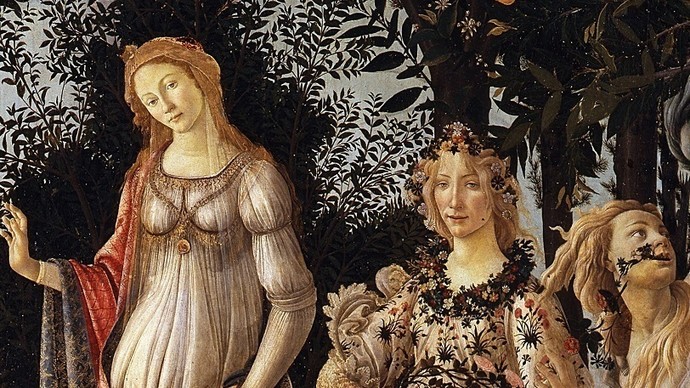
In quanti dipinti del Rinascimento avete notato la presenza di fiori, spesso molto dettagliati?
Ebbene, ogni fiore ha una sua specifica simbologia. Quelli nelle nature morte fanno riferimento alla caducità della vita mentre un anemone rosso è il simbolo della passione di Cristo e del suo sangue.
I garofani sono il simbolo delle promesse d’amore e delle unioni in matrimonio.

Il dente di leone significa dolore, derivato dall’amarezza del suo gusto mentre l’edera sempreverde allude alla vita eterna. Il giglio è simbolo di purezza mentre la mela è il frutto del peccato. Talvolta l’albero di mele viene sostituito con un fico, albero del bene e del male. Ha un’allusione sessuale non troppo velata ma d’altro canto i progenitori cacciati dal paradiso si coprirono con foglie di fico e non di melo.
La noce ha una simbologia piuttosto complessa ma che vi voglio raccontare. Il mallo è la carne di Cristo ovvero l’ostia dell’eucarestia, il guscio rimanda al legno della Croce mentre il gheriglio rimanda alla Sua natura divina.
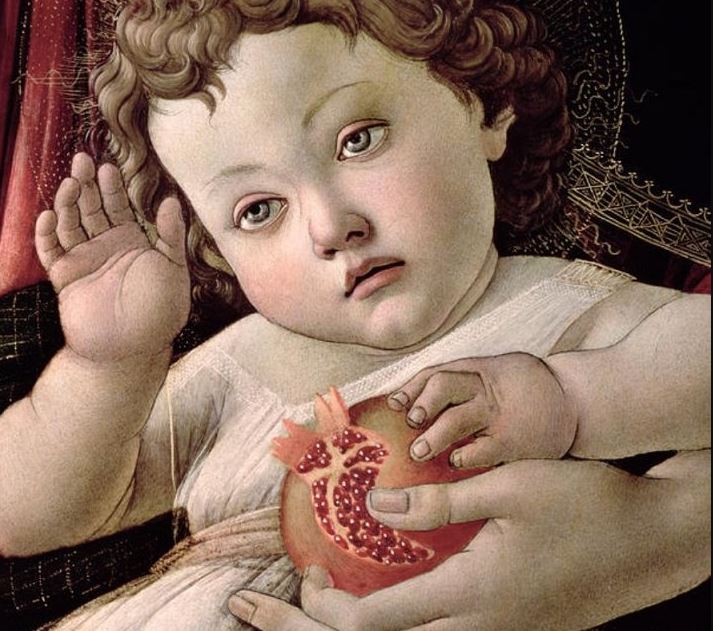
La melagrana, spesso raffigurato con i chicchi rossi bene in vista, è l’allegoria dell‘immortalità e della resurrezione.
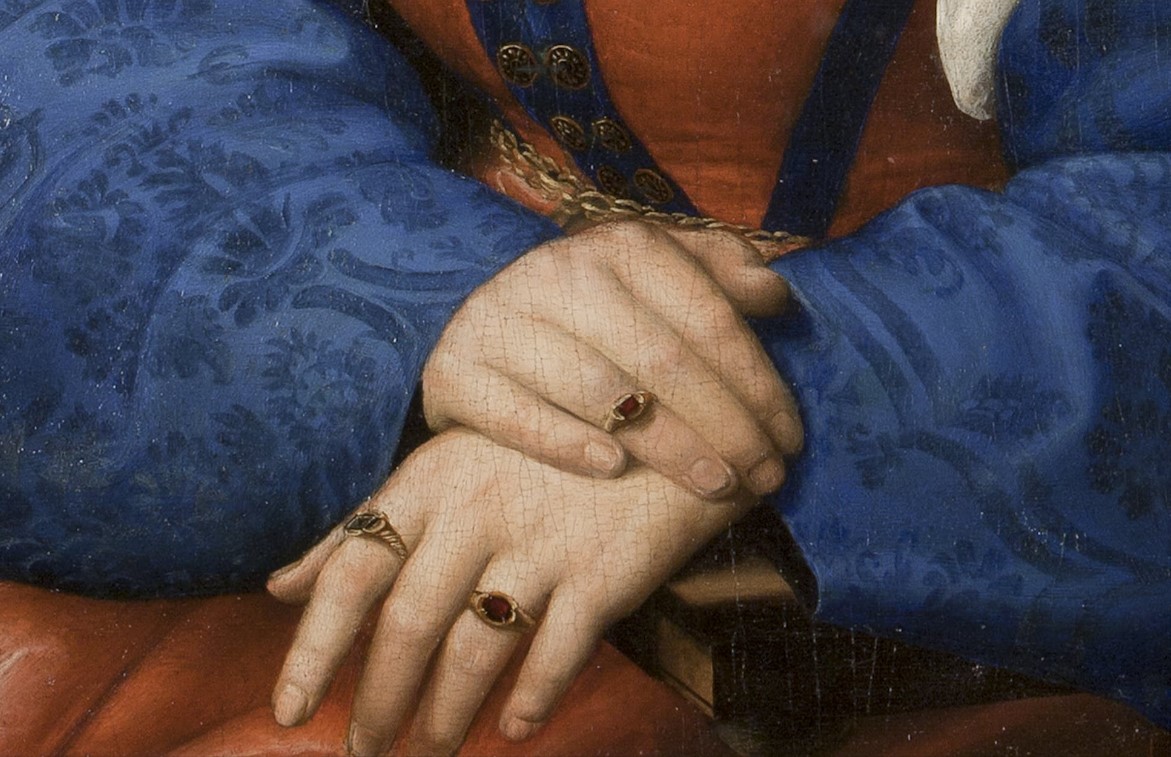
Un capitolo a parte meriterebbe la spiegazione dei gioielli e dell’utilizzo delle pietre preziose: ogni pietra e ogni gioiello racconta infatti diverse storie a seconda di come viene mostrato e usato da chi lo porta.
Il gioiello ha infatti un ruolo fondamentale nell’iconografia e può dare una connotazione della morale del personaggio.
Sperando di avervi dato qualche dritta utile nella lettura delle simbologie delle opere rinascimentali, il sempre vostro Michelangelo Buonarroti vi saluta dandovi appuntamento ai prossimi post e sui social.

Symbolism in Renaissance works
When you find yourself in front of a painting or sculpture made in the Renaissance period, to fully understand its meaning you need to carefully observe every detail. There is never anything casual and even the object or the attitude that may at first glance seem negligible, almost always hides a much deeper meaning.
Symbolism is sometimes complicated to read but it follows precise patterns. For example, look at a painting in which some Saints appear. To identify them with certainty, just observe their iconographic attributes: for example, Saint Catherine of Alexandria will be painted together with the cogwheel, Saint Jerome will have a lion at his side and Saint Lawrence a grill.
When you find yourself in front of the crown of thorns with nails, spear and sponge, there is an explicit reference to the flagellation while if you see rope, nuts and hammer, the episode to which the work refers in thought is the betrayal of Judas.
Have you ever seen a skull in a painting or drawing? It is a reference to the mortality of man but if it appears in a Crucifixion it is that of Adam and alludes to the redemption of original sin.
Candles and hourglasses bring to mind the time that flees quickly but also to vanity. Coins, jewels, crowns and scepters are indeed royal symbols but often used as an allegory of the transitory nature of earthly power.
If in the background of a painting you can see a ship it is the representation of the mother Church that welcomes the faithful leading them towards salvation. Have you ever wondered why the naves of churches have this name? They refer precisely to this symbolism, that is, the transport of the faithful towards salvation. The vessel is also the symbol of Saint Peter the Apostle and of hope.
The moon and the sun, painted especially in the works of the Middle Ages and the early Renaissance, symbolize respectively the Old and New Testaments. The eclipse is the representation of the moment in which Christ died on the Cross while the stars are an iconographic attribute of the Madonna.
In how many Renaissance paintings have you noticed the presence of flowers, often very detailed? Well, each flower has its own specific symbolism. Those in still lifes refer to the transience of life while a red anemone is the symbol of the passion of Christ and his blood.
The dandelion means pain, derived from the bitterness of its taste while the evergreen ivy alludes to eternal life. The lily is a symbol of purity while the apple is the fruit of sin. Sometimes the apple tree is replaced with a fig tree, the tree of good and evil. It has a not too veiled sexual allusion but on the other hand the progenitors expelled from paradise covered themselves with fig leaves and not apple leaves.
The walnut has a rather complex symbolism but I want to tell you about it. The husk is the flesh of Christ or the host of the Eucharist, the shell refers to the wood of the Cross while the kernel refers to His divine nature.
The pomegranate, often depicted with its red seeds clearly visible, is the allegory of immortality and resurrection.
Hoping to have given you some useful tips in reading the symbolism of Renaissance works, the ever-your Michelangelo Buonarroti greets you by making an appointment with you in the next posts and on social media.

Sostienici – Support Us
Se questo blog ti piace e ti appassiona, puoi aiutarci a farlo crescere sempre più sostenendoci in modo concreto condividendo i post, seguendo le pagine social e con un contributo che ci aiuta ad andare avanti con il nostro lavoro di divulgazione. . ENGLISH: If you like and are passionate about this blog, you can help us make it grow more and more by supporting us in a concrete way by sharing posts, following social pages and with a contribution that helps us to move forward with our dissemination work.
10,00 €
Condividi:


Questo sono io





sostienici

Sostienici – Support Us
Se questo blog ti piace e ti appassiona, puoi aiutarci a farlo crescere sempre più sostenendoci in modo concreto condividendo i post, seguendo le pagine social e con un contributo che ci aiuta ad andare avanti con il nostro lavoro di divulgazione. . ENGLISH: If you like and are passionate about this blog, you can help us make it grow more and more by supporting us in a concrete way by sharing posts, following social pages and with a contribution that helps us to move forward with our dissemination work.
€10,00


